

I’ll never forget the day I almost took out a display of cereal boxes at the supermarket because the world decided to do a slow-motion pirouette. It wasn’t a dizzy spell like the kind you get from standing up too fast. It was this weird, floaty imbalance that made me feel like I was perpetually walking on a trampoline. For months, I spent a small fortune on vertigo medications and ear drops that did absolutely nothing but make me drowsy. I was convinced I had a permanent inner ear problem, but the real culprit was hiding right under my chin. I was dealing with what the pros call cervicogenic dizziness, and let me tell you, it is a sneaky beast that mimics a dozen other conditions. [image_placeholder_1]
Your Neck Might Be Lying to Your Brain
My biggest mistake early on was assuming my neck was fine just because it didn’t hurt in the traditional sense. I had some stiffness, sure, but I figured that was just the price of being a human who works at a desk in 2025. I spent so much time rolling my neck in circles trying to crack the tension away, not realizing I was actually irritating the delicate nerves that tell my brain where my head is in space. Your neck is packed with tiny sensors called proprioceptors. When your upper vertebrae get jammed or your posture collapses, these sensors start sending garbage data to your brain. It is like a GPS that is five miles off; you think you are standing straight, but your brain is convinced you are leaning. I even started wondering why your vision changes when your neck is tight because the world just didn’t look right anymore.
Is this actually a neck problem or am I just losing my balance with age?
It is easy to dismiss that lightheaded feeling as a sign of getting older or just being stressed out. I certainly did. But if you notice that your dizziness gets worse when you turn your head to look behind you while driving, or after you have been hunched over a laptop for three hours, there is a massive chance your neck is the conductor of this chaotic orchestra. In fact, research published in the Journal of Manual & Manipulative Therapy indicates that manual therapy and specific neck exercises can significantly reduce symptoms for those suffering from cervical-related balance issues. I had to learn the hard way that chiropractic adjustments aren’t just for when you throw your back out doing yard work. They are about resetting that internal GPS so your brain and body finally start talking the same language again. Have you ever felt that strange, off-balance sensation even when you are sitting perfectly still?
Stop Blaming Your Ears and Start Looking at Your Alignment
Before we dive into the practical tests you can do at home, we need to talk about why this is happening to so many of us right now. Between the gamer lean and the constant text neck, we are putting our cervical spines under more pressure than they were ever designed to handle. Sometimes, it is hard to tell if the issue is truly your spine or if it is actually a referred shoulder injury masquerading as a neck problem. The key is understanding how your mobility affects your equilibrium. When you lose that fluid motion in your upper joints, your body loses its sense of the ground beneath it. I used to think I was just clumsy, but I was actually just misaligned.
Check Your Internal Compass with the Wall Test
To start fixing this, you need to recalibrate your internal sensors. I call this the Wall Reset. It is a simple way to see if your brain is getting faulty data from your neck. Stand with your back against a flat wall, with your heels about two inches away from the baseboard. Ideally, your buttocks, shoulder blades, and the back of your head should all touch the wall comfortably at the same time without you having to tilt your chin up or strain. I remember doing this for the first time after a particularly bad week of vertigo. I was shocked to find that what felt perfectly straight to me was actually a significant forward lean; my head was nearly three inches off the wall. This misalignment means your neck muscles are constantly firing to keep you from toppling over, which creates that floaty sensation. This is exactly how chiropractic adjustments enhance posture and mobility—they reset the physical joints so your proprioceptors can stop sending panic signals. 
Why Your Monitor Height is Killing Your Equilibrium
Next, you must evaluate your workstation. Most of us have our screens positioned far too low, which forces the suboccipital muscles at the base of the skull to work overtime. These tiny muscles are packed with balance-sensing nerves. When they fatigue from holding up a ten-pound head at an angle, they get tight and start glitching. You can see the simple change to your monitor height that kills headaches and dizziness by simply bringing the top third of your screen to eye level. I used a literal stack of heavy textbooks to raise my laptop four inches, and the weird swimming sensation in my vision vanished within a few days. If you find yourself sliding forward toward the screen anyway, you are dealing with the gamer lean. It is a postural collapse that jams the cervical vertebrae together. If you have kids, you need to know how to fix the gamer lean in teenagers before it sticks, as their spinal curves are still developing and much more susceptible to permanent change.
Ditch the Self-Cracking Habit for Real Stability
One of the hardest habits I had to break was the urge to crack my own neck for relief. It felt good for five seconds, but I was actually making the problem worse. Self-adjusting usually moves the joints that are already too loose, while the stuck, problematic joints stay jammed. Before you reach for your chin to give it a twist, read about the truth about cracking your own knuckles and neck at home. Instead of that violent pop, try a controlled chin tuck. Imagine a string pulling the crown of your head toward the ceiling while you gently retract your chin straight back, like you are making a double chin. This move opens up the space between the top two vertebrae where most cervicogenic dizziness originates. When I swapped my aggressive neck rolling for three sets of ten chin tucks daily, I felt a literal whoosh of clarity in my vision. It felt like someone finally cleaned a dirty camera lens. This specific type of mobility work decompresses the nerves and allows the fluid in your inner ear and the signals from your neck to finally sync up again.People often ask me, ‘If I just stand up straight, will the dizziness stop?’ Here is the contrarian truth: trying to force a ‘perfect’ posture is often what keeps you in pain. I see it all the time with people who try to pin their shoulders back like they are at a military inspection. In reality, your perfect posture is actually causing muscle fatigue because you are asking your body to be a statue instead of a fluid organism. True stability doesn’t come from holding still; it comes from having the mobility to move through different positions without your nervous system hitting the panic button. When you are stuck in one rigid ‘ideal’ pose, your muscles eventually give out, leading to that familiar postural collapse.
Why does my neck still feel like a brick even after a professional massage?
This is the ultimate ‘advanced’ frustration. You get the knots worked out, you feel great for an hour, and then—bam—the tension is back. The reason is that your brain is keeping those muscles tight as a protective splint for an underlying joint that isn’t moving. A study published in the Journal of Manipulative and Physiological Therapeutics suggests that unless the underlying joint dysfunction is addressed, muscle hypertonicity will recur as a compensatory mechanism. This is why your traps are always tight even after a massage. If the joint is ‘stuck,’ the muscle has to work overtime to stabilize it. This is where chiropractic adjustments enhance posture and mobility by treating the root cause—the joint restriction—rather than just the symptomatic muscle knot. 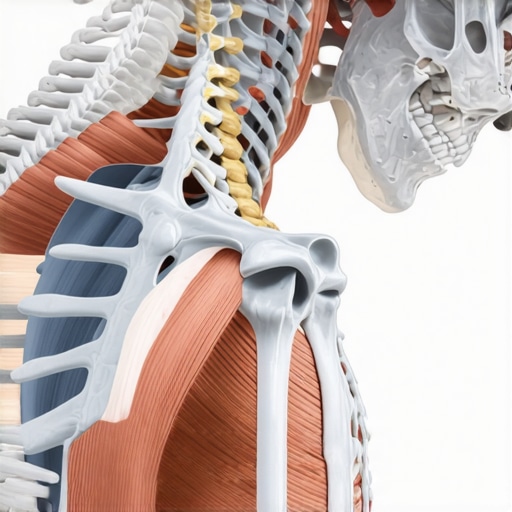 One huge ‘trap’ to avoid is what I call the Stretching Paradox. If your hamstrings feel tight, your instinct is to stretch them until they scream. But the reason why your hamstring stretches aren’t fixing your tightness is often because the issue is actually neural tension or a pelvic tilt coming from your lower back. Stretching a muscle that is already over-lengthened by a tilted pelvis just makes it more unstable. I’ve seen patients who thought they had a ‘tight’ neck, but they were actually dealing with jaw tension or a rib that was out of place, which forced their neck to compensate. Before you assume you need more flexibility, you probably need a better strategy for improving posture through mobility. We need to stop thinking about our bodies as a collection of isolated parts and start seeing the kinetic chain. Have you ever fallen into this trap of stretching the same spot for years with no results? Let me know in the comments below.
I used to think that a single trip to the chiropractor would be a permanent fix, like getting an oil change for a car. But the truth is, your body is constantly fighting against the gravity of your daily habits. If you spend eight hours a day in a ‘gamer lean,’ no amount of adjustment can hold indefinitely without a maintenance plan. For me, that meant looking at my sleep environment. I realized that my morning vertigo was often triggered by how my head rested at night. I had to learn the specific way to adjust your pillow for side sleeping comfort to ensure my cervical spine stayed neutral while I was unconscious. If your pillow is too high or too low, you are essentially spending eight hours in a sustained side-bend, which is a recipe for a dizzy morning.
How do I maintain my spinal alignment without obsessing over it?
Maintenance isn’t about being perfect; it’s about course-correcting before the ‘drift’ becomes a disaster. I’ve integrated what I call ‘postural bookmarks’ into my day. Every time I finish a meeting or close a tab, I perform a quick reset. This is where mobility boosts for posture become your best friend. I don’t go to the gym for an hour to fix my neck; I take sixty seconds to do the 30-second wall squeeze to fix forward shoulder roll. It’s about frequency over intensity. A study published in The Spine Journal (2023) highlighted that consistent, short-duration mobility interventions are significantly more effective at reducing chronic neck tension than infrequent, long-duration sessions. It’s the micro-wins that keep your proprioceptors from sending those floaty, off-balance signals to your brain.
The Recovery Toolkit Every Desk Worker Needs
Beyond the exercises, I have a few non-negotiable tools. First is a dedicated laptop riser. If you are still looking down at a screen on your lap, you are fighting a losing battle. Second, I use a firm foam roller, but not for my lower back—I use it to open up my thoracic spine. You have to be careful here, though, because the truth about foam rolling your lower back is that it can often cause more harm than good if you’ve already got an unstable lumbar curve. I focus exclusively on the mid-back to ensure my neck isn’t compensating for a stiff torso.  I also swear by a simple tennis ball for trigger point release in the suboccipital area. By gently resting the base of my skull on two taped-together tennis balls, I can inhibit the overactive muscles that cause my vision to feel ‘swimming’ or blurred.
Looking ahead, I predict we’re going to see a massive shift toward wearable biofeedback. We already have watches that track our steps, but the next frontier is sensors that vibrate when your head shifts more than 20 degrees forward for a prolonged period. Until that tech becomes mainstream, we have to be our own sensors. I’ve found that improving posture through mobility is the only way to stay ahead of the curve. It’s not just about looking better; it’s about ensuring your brain knows exactly where your body is in space, so you don’t feel like you’re walking on a trampoline in the middle of the grocery store. I want you to try one thing today: set a timer for every hour, and when it goes off, perform the 60-second fix for a stiff jaw. You might be surprised at how much that jaw tension is actually fueling your dizziness.
The Hard Truth About My Failed Quick Fixes
One of the biggest realizations I had during my recovery was that my body wasn’t ‘broken,’ it was just noisy. I spent years looking for a single magic bullet, but I eventually learned that finding lasting relief is a slow conversation with your nervous system, not a loud argument. Here are a few things that changed everything for me:
- Consistency beats intensity every single time. I used to think I needed a grueling hour-long session to see results. In reality, targeted mobility exercises done for just two minutes a few times a day provided more relief than any weekend ‘fix’ ever did.
- My eyes were bullying my neck. I didn’t realize that my screen habits were forcing my cervical spine into a defensive crouch. You have to address the visual triggers if you want the physical tension to stay away.
- The ‘why’ matters more than the ‘what.’ Knowing why chiropractic care is your secret weapon helped me see that my adjustments weren’t just about moving bones—they were about quieting the panic signals in my brain.
The Essential Kit for Your Cervical Health
I get asked all the time what I actually use in my day-to-day life to keep the dizziness at bay. I’m a minimalist, so my toolkit is small but effective. First, I stopped trusting my own ‘feeling’ of what straight was and started using a dedicated monitor riser. [image_placeholder_e] If you’re serious about this, you need the ultimate guide to mobility and posture to help you audit your environment. Second, I keep two taped-together tennis balls in my desk drawer for suboccipital release. Finally, I never underestimate the power of professional oversight. Learning to enhance your posture with expert chiropractic techniques was the missing piece that finally made my home exercises stick.
Reclaim Your Stability One Small Step at a Time
If you are reading this and feeling like the world is still a bit ‘floaty,’ please know that there is a way back to solid ground. You don’t have to live in a state of perpetual imbalance or rely on medications that only mask the problem. By focusing on simple mobility hacks, you can retrain your brain and body to work in harmony again. Your neck is a sophisticated piece of machinery, and with a little patience and the right alignment, it will stop lying to your brain. You’ve got the tools—now it’s just about taking that first steady step. Have you ever felt that strange, floaty sensation while sitting perfectly still at your computer? Let me know your experience in the comments below!