
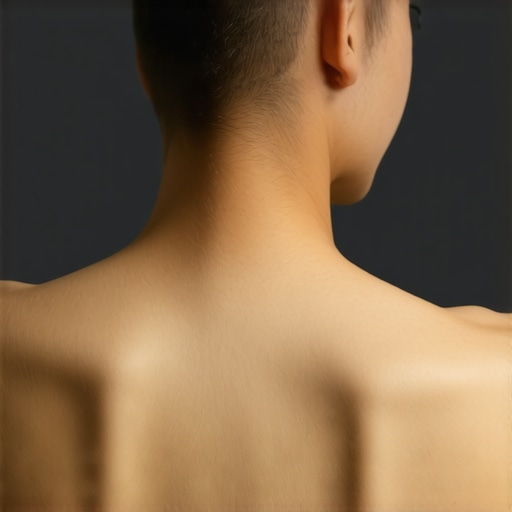
I remember sitting in my car after a sixty-minute deep-tissue session, $100 poorer, feeling that familiar, searing ‘ping’ return to my left shoulder blade before I even cleared the parking lot. It was infuriating. I’d spent months chasing the ‘knot,’ convinced that if someone just pressed hard enough, it would finally surrender. But your traps aren’t just stubborn; they’re usually just doing someone else’s job. Today, we’re going to stop punishing the messenger and actually look at why your upper back feels like a bag of concrete. [image]
Your Shoulders Are Tired of Carrying the Load for Your Ribs
For years, I made the classic mistake of thinking the pain was the problem. I would dig a lacrosse ball into my upper back until I was bruised, only to find the tension back by the next morning. It was a vicious cycle of temporary relief and total frustration. What I didn’t realize back then was that why your neck muscles are hard like a rock often has nothing to do with the muscle itself and everything to do with stability. Your trapezius is like a suspension cable. If the bridge—your spine and ribs—is shifting or unstable, those cables have to pull tighter just to keep your head from falling off. Have you ever felt like your massage therapist was just rearranging the deck chairs on the Titanic? I’d love to hear if your relief lasts more than a few hours in the comments below.
Is This Just Another Temporary Fix That Won’t Last?
It’s easy to be skeptical, especially when you’ve tried every foam roller and ‘miracle’ rub on the market. But the reality is that tight traps are often a secondary symptom. According to research published in the Journal of Manipulative and Physiological Therapeutics, rib cage dysfunction can significantly alter the muscle activity of the trapezius, meaning your tight shoulders might actually be a breathing or structural issue in disguise. When your breathing habits are off, or when you need a rib adjustment, your traps kick into overdrive to help you inhale. Combine that with the fact that why your dominant side is always tighter than the other often points to a pelvic or spinal tilt, and you start to see why a massage only scratches the surface. We need to look deeper at the mechanics of how you move and breathe to get that permanent release you’re looking for.
Stop Using Your Neck as a Set of Spare Lungs
The biggest reason your upper back stays locked up is that you are likely breathing with your shoulders instead of your diaphragm. Think of your rib cage as a pair of bellows. If the bottom of the bellows doesn’t expand, you have to pull the top up to get any air in. This constant upward tugging means your traps and neck muscles are working 20,000 times a day just to help you survive. This is exactly how your breathing habits are creating tightness in your scalenes, and no amount of massage can fix a muscle that is literally keeping you alive. I remember a few years back, I was so stressed that I developed a sharp, stabbing pain every time I took a deep breath. I thought I had a heart problem, but it turned out my mid-back was so stiff that my upper ribs were jammed. I had to learn to send my breath into my belly and sides to stop my shoulders from doing the heavy lifting.

Fix Your Foundation to Relax Your Shoulders
If your rib cage is tilted or flared, your shoulder blades have nowhere stable to sit. It is like trying to park a car on a seesaw. You need to focus on how to stop your ribs from flaring when you lift your arms to ensure your shoulder blades can glide smoothly. When the ribs are out of alignment, you might even feel a localized ‘catch.’ Knowing how to fix a rib that feels out of place is often the first step toward getting those traps to finally go slack. I’ve found that even a single session focusing on how a single rib adjustment can stop that sharp pain when breathing provides more relief than a dozen foam rolling sessions. When the architecture of your chest is sound, your muscles don’t have to act as structural supports.
Reset Your Posture Without Trying So Hard
Most of us try to ‘fix’ our posture by pulling our shoulders back and down with brute force. This actually creates more tension. Instead, you need to address the mechanical reasons why you are slouching in the first place. Start by looking at your environment; the best monitor height for preventing tension headaches is usually much higher than you think. If you spend your day looking down, your brain will naturally tighten the back of your neck to keep your head from rolling off your chest, a phenomenon often called ‘heavy head.’
Actionable Drills for Daily Mobility
You don’t need a gym to start making progress. You can revolutionize your posture with targeted mobility exercises that take less than five minutes. One of my favorites is the 30-second wall squeeze to fix forward shoulder roll. It retrains the small muscles between your shoulder blades to do their job so your traps can take a break. If you are stuck in an office all day, learning how to fix the computer hunch in under two minutes will save you hours of soreness later that night. Remember, why chiropractic care is your secret weapon for better posture is because it resets the joint mechanics that allow these exercises to actually work. Without the proper joint play, you’re just stretching a muscle that’s being pulled tight by a misaligned bone.
Stop Stretching Your Tight Hamstrings
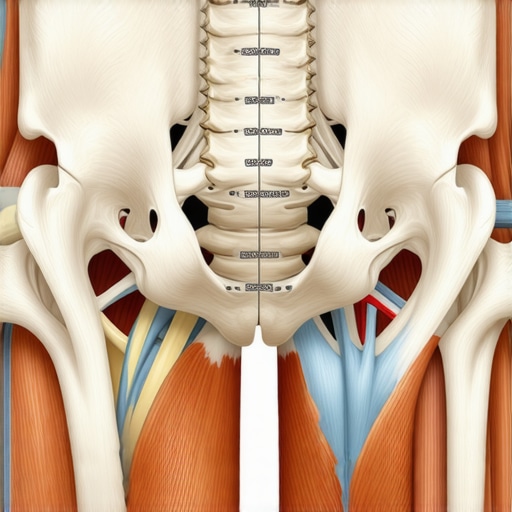
We’ve been conditioned to believe that if a muscle feels tight, we should pull on it until it yields. It sounds logical, right? But here’s the contrarian truth: most of the time, that ‘tightness’ you feel in your legs isn’t a short muscle; it’s a protective neurological state. If your pelvis is tilted forward, your hamstrings are already being pulled like a guitar string. When you add a traditional stretch on top of that, you aren’t lengthening the muscle; you’re just irritating the sciatic nerve. This is exactly why stretching your hamstrings might actually make your back pain worse. Instead of finding relief, you’re telling your brain that the area is under even more threat, causing it to lock down harder to protect the nerve. Have you ever spent twenty minutes stretching only to feel even stiffer an hour later? Let me know if you’ve fallen into this trap in the comments below.
The Dangerous Trap of Protective Spasms
One of the biggest mistakes I see—and one I’ve made myself—is trying to ‘beat’ a muscle into submission when it’s trying to save your spine. In the world of clinical biomechanics, we call this ‘protective guarding.’ If a joint is unstable or a disc is under pressure, your brain will recruit nearby muscles to act as a natural splint. When you use a foam roller or a high-powered massage gun to aggressively release that ‘knot,’ you’re essentially removing the only thing keeping your joint stable. As Dr. Stuart McGill, a world-renowned expert in spine mechanics, often points out, ‘stiffness’ is frequently a functional requirement for spinal health. This is the real reason your hamstrings stay tight despite stretching; they are working overtime to compensate for a core that isn’t providing enough stability. This is why chiropractic adjustments unlock a pain-free lifestyle today by restoring the joint alignment so those muscles no longer feel the need to guard the area with tension.
Why does your dominant side always feel like it belongs to someone else?
It’s rare to find a body that is perfectly symmetrical, but if you’re constantly wondering the truth about why one shoulder sits higher than the other, you’re looking at a deeper neurological pattern rather than a simple muscle imbalance. Your brain naturally prioritizes your dominant side, which can lead to a ‘functional short leg’ or a rotated pelvis over time. This isn’t just about ‘bad’ habits like leaning on one leg; it’s about how your nervous system maps your movement and protects your center of gravity. Understanding why your dominant side is always tighter than the other involves looking at your gait, your vision, and even how you shift your weight when you’re tired. If you only treat the tight side, you’re missing the fact that the ‘loose’ side might actually be the one lacking the stability to hold a neutral position. Have you ever found that your ‘good’ side is actually the one that causes the most problems in the long run?
Stop Wasting Money on Fancy Massage Guns
I see it everywhere: people spending $400 on a high-end percussion massager thinking it will solve their chronic stiffness. In my experience, those tools are great for temporary blood flow, but they are often just ‘loud’ distractions for your nervous system. If you really want to move better, you need tools that address the structural curves of your spine. I personally swear by the Denneroll or a high-quality cervical roll. Unlike a massage gun that just pummels the surface, these orthotics use a precise amount of pressure to help restore the natural C-curve in your neck. When you understand how chiropractic adjustments enhance posture and mobility, you realize that the goal isn’t just to feel loose for ten minutes; it is to remodel the connective tissue that has hardened into bad shapes over decades.
How do I keep my spine from relapsing?
Consistency isn’t about doing an hour of yoga every morning; it’s about the small, ‘low-friction’ habits you bake into your day. For me, that meant moving my monitor six inches higher and using mobility hacks: simple adjustments for a more active life like standing up every time I take a phone call. Dr. Deed Harrison, a leading researcher in Chiropractic BioPhysics (CBP), has published extensive data showing that spinal remodeling requires sustained, specific loading over time—not just occasional stretching. This is why I tell people to focus on ‘micro-dosing’ their mobility. Five minutes of the 30-second wall squeeze to fix forward shoulder roll done four times a day is infinitely more effective than a single grueling session on the weekend.
The AI Coach Living in Your Shirt
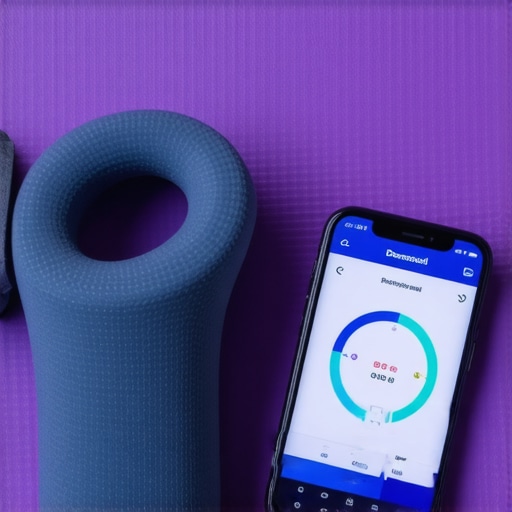
Looking forward, I’m incredibly excited about the shift toward wearable biofeedback. We are moving away from passive ‘support’ (like those awful posture corsets that actually make your muscles weaker) and toward active ‘reminders.’ I’ve experimented with sensors like the Upright Go, which vibrates when you slouch. The future of this tech is in AI-integrated clothing that can predict muscle fatigue before you even feel the ache. Imagine your shirt subtly tightening to remind you to engage your core when it detects your lumbar spine is starting to round. This kind of tech, combined with the ultimate guide to improving mobility and posture in 2025, will turn our daily environments from ‘posture killers’ into active recovery zones. It’s not about working harder; it’s about building a world where you don’t have to think so much about sitting straight.
Take the 48-Hour No-Slouch Challenge
I want you to try one thing today: set a timer on your phone for every 30 minutes. Every time it goes off, perform a ‘Bruegger’s Relief Position’—sit at the edge of your chair, spread your knees, turn your palms out, and take three deep belly breaths. It sounds too simple to work, but this tiny reset breaks the neurological pattern of the ‘computer hunch.’ If you’re serious about long-term results, you should see why chiropractic care is your secret weapon for better posture and how it can provide the structural foundation that these tools need to actually succeed. Don’t wait until you’re in a crisis to start caring for your frame; start with the small shifts tonight.
The Real Reason My Traps Refused to Relax
After years of thinking my traps were just ‘naturally tight,’ I had a few lightbulb moments that changed everything. First, I realized that more pressure isn’t the answer. If a muscle is guarding, digging a lacrosse ball into it just makes your brain scream louder. Second, the spot that hurts is almost never the spot that needs work. If your upper back is screaming, check your ribs and your breath first. Finally, I learned that ‘perfect’ posture is a myth—the best posture is your next posture. Movement is the only real cure for the stagnation that leads to rock-hard muscles.
The Only Gear I Use to Keep My Spine in Check
I’ve wasted hundreds on gadgets, but these are the ones that actually move the needle. For structural changes, I highly recommend looking into the Denneroll—it’s one of the few tools that actually helps restore your neck curve by using sustained, specific pressure. If you want to dive deep into the ‘why’ behind your movement, ‘Becoming a Supple Leopard’ by Dr. Kelly Starrett is the ultimate Bible for understanding human mechanics. I also suggest checking out mobility boosts for posture: expert tips for daily adjustments to keep your routine fresh and effective without needing an hour of gym time. These tools work because they respect the anatomy of your frame rather than just numbing the symptoms.
#IMAGE_PLACEHOLDER_E#
Start Rebuilding Your Frame Today
You don’t have to live with a ‘bag of concrete’ for an upper back. By understanding the link between mobility and posture: a chiropractor’s guide, you can start making the small, structural shifts that lead to lasting relief. Remember, your body isn’t broken; it’s just adapted to the shapes you put it in most often. With a few improving posture through mobility: practical chiropractor strategies and a bit of consistency, you can find that light, fluid feeling again. It’s time to stop fighting your muscles and start working with your architecture through why chiropractic care is your secret weapon for better posture. Have you ever felt a ‘ping’ of pain return right after a massage? Let me know about your experience with stubborn knots in the comments below!