
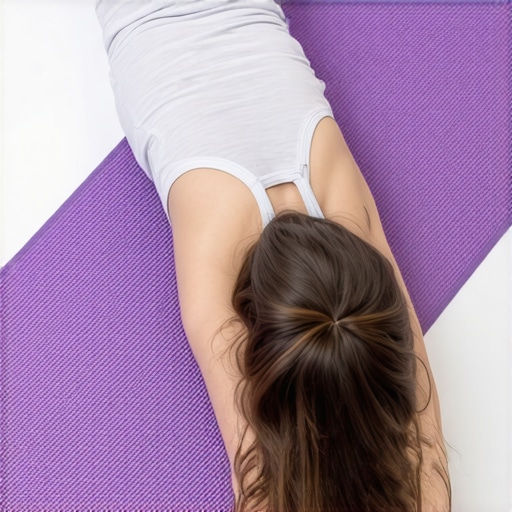
I’ll never forget the Tuesday morning I tried to pull on my left sock and felt a literal ‘clunk’ in my lower back. It wasn’t a standard muscle pull; it felt like a bolt had jammed in a gear that was never meant to stop. I spent the next three days walking like a pirate with a wooden leg, wondering why my lower back hurts so much just to stand up straight. I tried every generic stretch in the book, only to realize I was actually making the inflammation worse. Today, I’m going to show you the exact side-lying reset that saved me from another expensive trip to the clinic and how you can use it to find relief in under two minutes.
Stop Making the SI Joint Mistake I Did
When I first started dealing with hip ‘stickiness,’ I did what everyone else does: I grabbed a foam roller. I thought if I just mashed the tissue enough, it would release. Huge mistake. I eventually learned that foam rolling your lower back can actually destabilize the very joint you’re trying to fix. My SI joint wasn’t tight; it was misaligned and angry. According to research published by the Journal of Physical Therapy Science, the sacroiliac joint is responsible for transferring the weight of the upper body to the lower limbs, meaning even a tiny shift can cause a massive chain reaction of pain. This is exactly why your body feels like it’s betraying you when you try to enhance your mobility through sheer force.
Does a simple stretch actually work or is it just hype?
I get the skepticism. When you’re in that much pain, a ‘simple stretch’ sounds like trying to put out a forest fire with a water pistol. But the side-lying reset isn’t about flexibility; it’s about leverage and gapping the joint just enough for it to slide back into its happy place. Have you ever felt that ‘locked’ sensation where you’re afraid to even sneeze? If so, you’re not alone. You might be tempted to jump into a 15-minute hip flow, but when you’re in the middle of a flare-up, less is usually more. You need a targeted way to fix the feeling of a locked SI joint without aggravating the nerves. Let’s get into the mechanics of why this works before I walk you through the movement.
Get the Hinge Back on Track with the Side-Lying Reset
Think of your SI joint like a massive heavy-duty door hinge. When it’s working perfectly, you don’t even notice it exists. But when it shifts just a millimeter out of alignment, the whole door drags on the floor and ruins the carpet. To fix it, you don’t just keep slamming the door; you have to lift it slightly and guide it back onto the pin. This reset uses your own muscle contraction to provide that mechanical lift. Unlike many practical chiropractor strategies that require a professional’s hands, this leverage comes entirely from the force of your own legs acting as levers for your pelvis.
Find Your Starting Position on a Firm Surface
Don’t try this on a soft mattress; the foam will swallow the necessary counter-pressure and leave you frustrated. I learned this the hard way during a rest stop on a long drive to Georgia. My back was so locked I could barely operate the gas pedal. I tried to do a quick reset on the backseat of my car, but the cushions were too plush. I eventually had to lay a jacket on the grass behind the vehicle to get the floor-feedback I needed. Lie on your side—the side that feels ‘stuck’ or more painful should be facing up toward the ceiling. Bend both knees toward your chest at about a 90-degree angle. This fetal-like position naturally begins to fix the feeling of a locked SI joint by decompressing the lower lumbar segments.
Use the Scissor Method for Pelvic Realignment
Place your top hand on the front of your top knee and your bottom hand behind your bottom thigh. Here is where the physics of the body takes over: you are going to create an isometric ‘scissor’ motion. Push your top knee forward into your hand while simultaneously pulling your bottom leg backward into your other hand. You aren’t trying to actually move your limbs through space; you are creating a internal tug-of-war. Hold this tension for five seconds. This creates a specific gapping effect in the pelvic ring. It is essentially a self-directed version of how chiropractic care is your secret weapon for better posture because it targets the bone-to-bone relationship through neurological muscle activation.#IMAGE_PLACE_HOLDER_B#
Sync Your Breath to Release the Guarding Reflex
If you hold your breath while performing this scissor move, your core will ‘guard’ the joint and prevent any real movement. I’ve watched people turn bright red trying to force a loud ‘pop’ that never comes because they are too tense. Instead, exhale slowly and deeply as you apply the resistance. There is a critical hidden link between your breathing pattern and lower back stability that most people ignore. When you exhale, your pelvic floor softens just enough for the SI joint to slide back into its proper groove without force.
Why You Must Stop Stretching Your Hamstrings Right Now
When your back is out, your hamstrings will feel like taut steel cables. Your first instinct is to reach for your toes. You must resist that urge. In many cases, stretching your hamstrings might actually make your back pain worse because those tight muscles are acting as emergency brakes. They are trying to hold your unstable pelvis together. If you stretch that tension away, the SI joint becomes even more vulnerable. Focus on the simple hip reset for people who sit for 8 hours instead of traditional yoga stretches. You want to prioritize stability and alignment before you ever worry about deep flexibility.
Stop trying to stand like a statue
We’ve been told since kindergarten to stand up straight with shoulders back and chest out. But here’s the contrarian truth: that perfect military-style posture is often a recipe for disaster. When you force your body into a rigid, static position, you’re actually creating a massive amount of isometric tension that your muscles weren’t designed to hold for hours. I see it all the time—people who are so focused on alignment that they become stiff as a board, only to find that why your perfect posture is actually causing muscle fatigue and keeping your joints in a state of high alert. Real stability isn’t about being frozen; it’s about a dynamic neutral where your body is free to micro-adjust. If you aren’t moving, you aren’t stabilizing; you’re just bracing for a blow that never comes.
Why chasing the ‘pop’ is a dangerous game
The biggest trap I see people fall into is the audible release obsession. We’ve all been there—twisting in an office chair until we hear that satisfying crack. But here is the oops factor: that sound isn’t always a joint moving back into place. Often, you’re just cavitation-venting gas from a joint that is already hyper-mobile, while the stuck segment stays exactly where it is. This is the danger of the truth about cracking your own knuckles and neck at home; you end up over-stretching the ligaments around the wrong area, which eventually leads to more instability and a chronic need to crack it every twenty minutes. Have you ever fallen into this trap, thinking a louder pop meant a better fix? Let me know in the comments.#IMAGE_PLACE_HOLDER_C#
How can my vision actually impact my lower back?
It sounds like a reach, but the human body operates as a sophisticated closed kinetic chain. If you are constantly leaning into your screen because your prescription is slightly off or your monitor is poorly placed, your suboccipital muscles at the base of your skull tighten up. Because these muscles have a high density of spindle fibers that talk directly to your balance centers, your pelvis will actually tilt to compensate for the shift in your head position. I’ve found that how your vision is forcing your neck into a forward lean is a primary driver for why some people’s SI joints never seem to stay set despite doing all the right exercises. You cannot fix the foundation if the top of the tower is leaning.
The hidden nuance of regional interdependence
In the clinical world, we call this Regional Interdependence. According to research often highlighted in the Journal of Manual & Manipulative Therapy, clinicians must look away from the site of pain to find the true source of mechanical dysfunction. This means your hip problem might actually be a mid-back mobility issue, or your lower back pain could be a result of a locked ankle. This is why how chiropractic adjustments enhance posture and mobility isn’t just about clicking a single bone; it’s about clearing the neurological static between your brain and your entire spine. When you understand the link between mobility and posture through this lens, you stop chasing symptoms and start fixing the system. You need a strategy that looks at the body as a whole, rather than a collection of parts that need fixing individually.Once you’ve successfully hit that reset button, the real work begins. It’s one thing to get the joint back into place; it’s another to keep it there when life tries to drag you back into a slumped-over mess. I’ve found that the biggest enemy of a stable pelvis is actually the chair you’re sitting in right now. I personally swear by a firm lumbar support, but you have to know the proper way to use a lumbar roll in your office chair or you’ll just be shoving your spine into an unnatural arch that causes more problems than it solves. It’s the difference between supporting the natural curve and creating a new, painful one.
Don’t let your hips seize up again
Maintenance isn’t about doing an hour of yoga every night; it’s about the small, consistent inputs you give your nervous system. I follow a rule of ‘micro-adjustments’ throughout the day. If I’m stuck at my desk for three hours, my SI joint will inevitably start to complain. This is where mobility boosts for posture become your lifeline. I set a timer on my phone to remind me to just stand up and tilt my pelvis back and forth for thirty seconds. It prevents the soft tissues from ‘setting’ in a shortened position. #IMAGE_PLACE_HOLDER_D#
How do I stay mobile for the long haul?
The secret to long-term results is identifying the moment your form breaks. It’s easy to stay aligned when you’re fresh, but why your posture collapses when you get tired at the gym is the real question you need to solve. When the fatigue hits, your brain defaults to the path of least resistance, which is usually your old, painful slouch. To combat this, I focus on ‘active recovery’—meaning I don’t just sit on the couch after a workout; I use targeted mobility exercises to signal to my body that the new, aligned position is the safe one. According to Dr. Stuart McGill, a world-renowned expert in spine biomechanics, the key to spinal health isn’t just flexibility, but ‘stiffness’ in the right places to protect the joints from shearing forces. This means you need to learn to brace properly.
Postural sensors are the next big thing
I predict that by 2030, we won’t just be guessing about our alignment. We’ll be wearing thin, haptic sensors that vibrate the second our lumbar curve flattens or our head drifts too far forward. This shift is already starting in the ultimate guide to improving mobility and posture in 2025, where we see technology finally catching up to human biology. Until those wearables are mainstream, you are your own sensor. You have to develop the ‘internal map’ of where your hips are in space. Before your next big physical task, whether it’s the gym or the garden, I want you to try the bracing technique that protects your spine during heavy yard work. It creates a cylinder of stability that keeps your SI joint locked and loaded against injury. Give it a shot today and see if you feel that ‘clunk’ go away for good.
The Hard Truths I Learned While My SI Joint Was Held Hostage
Looking back at my years of struggling with a ‘finicky’ back, the biggest lesson wasn’t a specific exercise, but a mindset shift. I spent far too long believing that more force equaled more relief. I eventually realized that forcing a movement is the quickest way to trigger a guarding reflex that sets you back weeks. This is why understanding the link between mobility and posture is so vital; you can’t have one without the other. My second big ‘aha’ moment was that pain is a terrible coach. If a stretch feels like it’s ripping something apart, it probably is. True progress feels like a subtle release, not a violent change.
Lastly, I learned that sitting is a skill. We often think of sitting as a passive act, but it requires intentional mobility boosts for posture throughout the day to keep the fluid in your joints moving. If you wait until you’re in pain to move, you’ve already lost the battle for the day.
The Small Toolkit That Keeps Me from Re-Locking
I don’t leave my spinal health to chance anymore. I’ve curated a few specific items that act as my ‘early warning system’ and maintenance crew. First, I never sit in a standard office chair without knowing the proper way to use a lumbar roll in your office chair. It’s the simplest tool in the world, yet most people use it as a cushion rather than a mechanical support. Second, I highly recommend checking out the ultimate guide to improving mobility and posture in 2025 for the latest on ergonomic tech. Finally, I swear by a dedicated morning routine that stops your back from clicking. It sets the tone for my nervous system before I even have my first cup of coffee.
#IMAGE_PLACE_HOLDER_E#
Reclaiming the Body You Were Meant to Move In
It is incredibly easy to feel defeated when your body feels like a collection of rusted hinges. But remember: your tissues are plastic, and your nervous system is adaptable. You aren’t stuck with the back you have today. By implementing these resets and respecting the mechanical limits of your pelvis, you’ll find that chiropractic adjustments unlock a pain-free lifestyle today that was previously hidden behind a wall of inflammation. Don’t be afraid to take it slow. The goal isn’t to be a gymnast by tomorrow morning; it’s to be 1% more mobile than you were yesterday. Have you ever felt that ‘clunk’ in your back that just wouldn’t go away, and what did you try to fix it? Let me know in the comments below!