
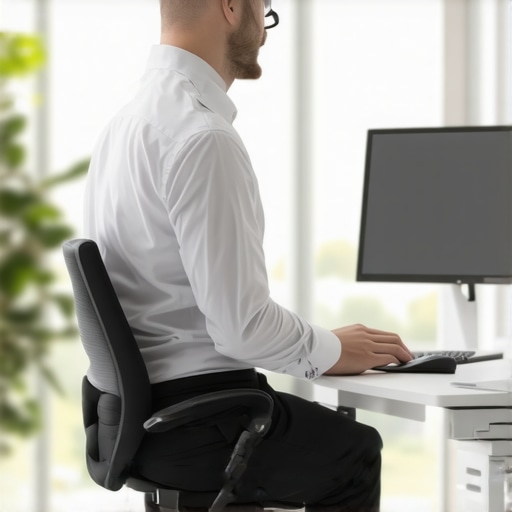
I’ll never forget the Tuesday my lower back finally surrendered. I’d just spent a small fortune on a top-of-the-line standing desk, convinced it was the holy grail of office ergonomics. I stood for seven hours straight, chest out, chin tucked, like some kind of corporate soldier. By the time I tried to walk to my car, my lumbar spine felt like it had been fused together with rusted bolts. I actually had to crawl into the driver’s seat. It was humiliating, painful, and honestly, a bit of a wake-up call. I realized that standing isn’t a magic wand; it’s a tool, and I was using it like a sledgehammer when I needed a scalpel. Today, I want to share the hard-won timing strategy that actually works, so you don’t end up like I did—flat on your back wondering where it all went wrong.
Why Standing All Day Is a Recipe for Disaster
In my early enthusiasm, I fell into the trap of thinking more is always better. I thought if sitting was the ‘new smoking,’ then standing must be the ‘new marathon.’ I was dead wrong. When you stand still for hours, your muscles eventually fatigue, and your weight shifts onto your ligaments and joints. This is exactly why your perfect posture is actually causing muscle fatigue. My biggest mistake was ignoring the micro-pains that started around hour two. I pushed through, thinking I was building ‘core strength,’ but I was actually just compressing my vertebrae. The key isn’t just standing; it’s the transition. You need to know the best way to transition from a sitting to a standing desk to keep the blood flowing and the joints lubricated. If you just lock your knees and type, you’re just trading one type of back pain for another.
Is standing really better than sitting for eight hours?
The skepticism is real, and it’s valid. You might be wondering if this whole standing desk trend is just a fancy way to get sore feet. According to research from Cornell University’s ergonomics department, the optimal breakdown isn’t just ‘sit’ or ‘stand,’ but a 20:8:2 ratio: sit for 20 minutes, stand for 8, and move for 2. That movement piece is the ‘secret sauce’ most people miss. When I finally stopped trying to be a statue and started using mobility hacks and simple adjustments, the chronic ache in my sacrum finally vanished. I went from needing a chiropractor every week to feeling light and springy at 5:00 PM. Have you ever felt that deep, throbbing ache in your heels or lower back after trying to stand all day? It’s a sign your intervals are off, and we’re going to fix that right now.
Master the 20:8:2 Rhythm Without Losing Your Mind
To get this strategy right, you need more than just a vague intention; you need a tactile reminder. I used a simple kitchen timer at first, but the aggressive ‘ding’ made my shoulders jump every time. Now, I use a subtle haptic vibration on my watch. Think of your body like a hydraulic system; it hates sudden, stagnant pressure. When the 20-minute sit-clock runs out, don’t just spring up like a jack-in-the-box. This sudden jolt is often why your lower back hurts when you try to stand up straight. You need to engage your core before you ever hit the ‘up’ button on your desk. Use mobility boosts for posture expert tips for daily adjustments to find your center before you even change positions.
Wait for the Desk Instead of Chasing It
Most people start typing while the desk is still moving. I remember a Tuesday where I was mid-email and followed the desk up with my neck, essentially craning my chin toward the ceiling as the surface rose. By noon, I had a blinding headache. Instead, keep your eyes on the horizon, not the screen, as the motor whirs. This prevents that awkward ‘forward-head’ drift that happens when you’re impatient. Understanding the best way to transition from a sitting to a standing desk means treating the travel time as a mini-break for your eyes and neck.
Fix the Casual Lean Before It Fixes You
Once you’re standing, the temptation to ‘perch’ on one hip is overwhelming. I call this the ‘Casual Lean,’ and it’s a killer for your SI joint. If you feel your weight shifting to one side, you’re basically turning your spine into a leaning tower of Pisa, putting thousands of pounds of pressure on one side of your pelvis. You need to learn how to fix the way you stand in line to save your hips and apply those same principles to your workstation. Distribute weight through your mid-foot, and keep your knees ‘soft’—never locked. Locked knees act like a dam, stopping blood flow and forcing your lower back to take the brunt of your body weight.
Keep Your Ribs Tucked During the Transition
As you stand, your lower back naturally wants to arch in an exaggerated curve. I spent months with a constant ache in my mid-back because I didn’t realize I was ‘flaring’ my ribcage out like a peacock every time I stood up. This creates massive tension in the thoracolumbar junction. Focus on how to stop your ribs from flaring when you lift your arms or reach for your mouse. Imagine a string connecting your bottom rib to your hip bone; keep that string taut as you move.
The 2-Minute Reset That Actually Clears the Cobwebs
The final piece of the 20:8:2 puzzle is the two minutes of movement. This isn’t a HIIT workout; it’s a lubrication cycle for your joints. I used to think walking to the fridge counted, but that’s just more mindless movement. Now, I perform the simple hip reset for people who sit for 8 hours. It takes ninety seconds and clears the ‘cobwebs’ out of my hip sockets. It’s like oiling a rusty hinge—suddenly, the next twenty minutes of sitting don’t feel like a chore because the joint is actually prepared to hold weight again. If you skip this movement phase, the 8 minutes of standing is just delayed sitting.
Stop Stretching Your Hamstrings if Your Back Hurts
Many people assume that because their legs feel tight after standing, they need to double down on stretching. I used to spend twenty minutes every night touching my toes, only to wake up stiffer the next morning. Here is the contrarian truth: that ‘tight’ feeling is often your body’s way of creating stability because your core isn’t doing its job. When you stretch a muscle that is already overextended due to an anterior pelvic tilt, you are actually making the problem worse by further destabilizing the joint. This is exactly why your hamstring stretches aren’t fixing your tightness. Instead of lengthening the muscle, you need to look at the link between mobility and posture from a stability perspective. Most of my clients find that once they stop ‘yanking’ on their hamstrings and start bracing their midsection, the tightness vanishes on its own.
Your Body Isn’t a Statue—So Why Do You Stand Like One?
A massive ‘oops’ factor I see with new standing desk users is the ‘Military Correction.’ You feel yourself slouching, so you pull your shoulders back and puff your chest out like a drill sergeant. This doesn’t fix your posture; it just moves the stress from your upper back to your lower back. A 2014 study in the Journal of Physical Therapy Science demonstrated that prolonged static postures, even those considered ‘perfect,’ lead to increased carotid artery stiffness and muscle fatigue. You cannot ‘hold’ a good posture; you have to live in it. If you find yourself forcing your spine into a rigid line, you are likely suffering from why your perfect posture is actually causing muscle fatigue. The goal is a ‘neutral’ spine, not a straight one.
Could your neck tension be affecting your eyesight?
It sounds like a reach, but advanced biomechanics shows that the suboccipital muscles at the base of your skull are neurologically linked to your eye movements. When you ‘crane’ your neck to look at a monitor that is even half an inch too low, these muscles seize up, which can actually cause blurred vision or difficulty focusing. This is how your vision is forcing your neck into a forward lean. If you are getting headaches or eye strain by 3:00 PM, it’s not your prescription; it’s your C1 and C2 vertebrae screaming for a better angle. This is where professional help becomes a game-changer. Learning how chiropractic adjustments enhance posture and mobility can unlock those tiny, deep-seated muscles that no amount of foam rolling can reach.
The Nuance of the ‘Stuck’ Joint
Sometimes, no matter how many ‘mobility hacks’ you try, a joint simply won’t budge. This is the difference between a soft-tissue issue and a mechanical ‘lock.’ If you feel a sharp, localized catch when you move, you might be dealing with the difference between a sore muscle and a slipped disc. Stretching a locked joint is like trying to open a door with a broken hinge by pulling harder on the handle. You need a targeted ‘reset’ to get the joint surfaces gliding again. This is why I advocate for a hybrid approach: use mobility boosts for posture expert tips for daily maintenance, but don’t be afraid to see a specialist when the ‘catch’ won’t go away. Have you ever fallen into this trap of over-correcting your posture only to feel worse? Let me know in the comments.Maintenance is where most people fail. They buy the desk, they do the 20:8:2 for a week, and then they slip back into old habits. To keep this working long-term, I’ve had to get tactical with my environment. First off, get rid of your flat anti-fatigue mat. I switched to a topographic mat—one with mounds, ridges, and varied terrain—because it forces your feet to constantly adjust. This micro-movement is a total game changer for your calves and lower back because it prevents blood from pooling in your lower extremities. It stops you from becoming a statue. If you’re still wearing thick-soled running shoes at your desk, you’re dampening the feedback your brain needs. I recommend looking into the best way to transition to zero-drop shoes safely to reconnect your brain to your base of support. By feeling the floor, you naturally engage your glutes and core more effectively.
Ditch the Flat Mat for Something Better
Flat surfaces are an evolutionary anomaly; our feet were designed for uneven ground. By using a mat with varying terrain, your proprioceptors—the tiny sensors in your joints and skin—stay awake and active. This prevents the ‘neurological shutdown’ that happens during a long, stressful shift. I also swear by the ‘Mirror Feedback’ loop. I placed a small, unobtrusive mirror on the wall perpendicular to my desk. Every few minutes, I catch a glimpse of my side profile. If I see my chin drifting toward the screen like a turtle, I don’t panic; I just use mobility boosts for posture expert tips for daily adjustments to reset my shoulder blades. This visual cue is significantly more powerful than any phone notification because it’s instant, visceral, and impossible to ignore.
How do I stay mobile when I’m too busy to think about it?
When the pressure is on and deadlines are looming, your ‘defaults’ take over. This is where the link between mobility and posture becomes your safety net. You need a baseline that doesn’t feel like a chore or another item on your to-do list. As Dr. Kelly Starrett points out in his seminal book on movement, Becoming a Supple Leopard, ‘movement snacks’—short, frequent bouts of mobility—are far more effective for tissue health than one long, grueling session at the end of the day. I’ve programmed my computer to lock for 90 seconds every hour. During that time, I do one simple hip reset for people who sit for 8 hours. It’s a non-negotiable part of my workflow, like checking my inbox.
AI and the Future of the Active Workspace
I predict that in the next five years, we won’t need to remind ourselves to move at all. We’ll see AI-integrated chairs and desks that subtly shift their angles by fractions of a degree every few minutes, forcing our bodies to stay ‘active’ and adaptive without us even noticing the change. This ‘passive exercise’ will revolutionize office health. Until then, we have to be our own advocates and engineers. If you’ve been struggling with that one stubborn, ‘locked’ spot in your mid-back that won’t release despite your best efforts, it might be time to see how chiropractic adjustments enhance posture and mobility. Sometimes you need a professional to clear the mechanical path before your ergonomic tools can actually do their job. I want you to try one thing today: take your shoes off at your desk for at least thirty minutes. Feel the texture of the floor. Notice how it changes your balance and your core engagement almost instantly. It sounds small, but a grounded foot is the foundation of a healthy spine.I’ll never forget the Tuesday my lower back finally surrendered. I’d just spent a small fortune on a top-of-the-line standing desk, convinced it was the holy grail of office ergonomics. I stood for seven hours straight, chest out, chin tucked, like some kind of corporate soldier. By the time I tried to walk to my car, my lumbar spine felt like it had been fused together with rusted bolts. I actually had to crawl into the driver’s seat. It was humiliating, painful, and honestly, a bit of a wake-up call. I realized that standing isn’t a magic wand; it’s a tool, and I was using it like a sledgehammer when I needed a scalpel. Today, I want to share the hard-won timing strategy that actually works, so you don’t end up like I did—flat on your back wondering where it all went wrong.
Why Standing All Day Is a Recipe for Disaster
In my early enthusiasm, I fell into the trap of thinking more is always better. I thought if sitting was the ‘new smoking,’ then standing must be the ‘new marathon.’ I was dead wrong. When you stand still for hours, your muscles eventually fatigue, and your weight shifts onto your ligaments and joints. This is exactly why your perfect posture is actually causing muscle fatigue. My biggest mistake was ignoring the micro-pains that started around hour two. I pushed through, thinking I was building ‘core strength,’ but I was actually just compressing my vertebrae. The key isn’t just standing; it’s the transition. You need to know the best way to transition from a sitting to a standing desk to keep the blood flowing and the joints lubricated. If you just lock your knees and type, you’re just trading one type of back pain for another.
Is standing really better than sitting for eight hours?
The skepticism is real, and it’s valid. You might be wondering if this whole standing desk trend is just a fancy way to get sore feet. According to research from Cornell University’s ergonomics department, the optimal breakdown isn’t just ‘sit’ or ‘stand,’ but a 20:8:2 ratio: sit for 20 minutes, stand for 8, and move for 2. That movement piece is the ‘secret sauce’ most people miss. When I finally stopped trying to be a statue and started using mobility hacks and simple adjustments, the chronic ache in my sacrum finally vanished. I went from needing a chiropractor every week to feeling light and springy at 5:00 PM. Have you ever felt that deep, throbbing ache in your heels or lower back after trying to stand all day? It’s a sign your intervals are off, and we’re going to fix that right now.
Master the 20:8:2 Rhythm Without Losing Your Mind
To get this strategy right, you need more than just a vague intention; you need a tactile reminder. I used a simple kitchen timer at first, but the aggressive ‘ding’ made my shoulders jump every time. Now, I use a subtle haptic vibration on my watch. Think of your body like a hydraulic system; it hates sudden, stagnant pressure. When the 20-minute sit-clock runs out, don’t just spring up like a jack-in-the-box. This sudden jolt is often why your lower back hurts when you try to stand up straight. You need to engage your core before you ever hit the ‘up’ button on your desk. Use mobility boosts for posture expert tips for daily adjustments to find your center before you even change positions.
Wait for the Desk Instead of Chasing It
Most people start typing while the desk is still moving. I remember a Tuesday where I was mid-email and followed the desk up with my neck, essentially craning my chin toward the ceiling as the surface rose. By noon, I had a blinding headache. Instead, keep your eyes on the horizon, not the screen, as the motor whirs. This prevents that awkward ‘forward-head’ drift that happens when you’re impatient. Understanding the best way to transition from a sitting to a standing desk means treating the travel time as a mini-break for your eyes and neck.
Fix the Casual Lean Before It Fixes You
Once you’re standing, the temptation to ‘perch’ on one hip is overwhelming. I call this the ‘Casual Lean,’ and it’s a killer for your SI joint. If you feel your weight shifting to one side, you’re basically turning your spine into a leaning tower of Pisa, putting thousands of pounds of pressure on one side of your pelvis. You need to learn how to fix the way you stand in line to save your hips and apply those same principles to your workstation. Distribute weight through your mid-foot, and keep your knees ‘soft’—never locked. Locked knees act like a dam, stopping blood flow and forcing your lower back to take the brunt of your body weight.
Keep Your Ribs Tucked During the Transition
As you stand, your lower back naturally wants to arch in an exaggerated curve. I spent months with a constant ache in my mid-back because I didn’t realize I was ‘flaring’ my ribcage out like a peacock every time I stood up. This creates massive tension in the thoracolumbar junction. Focus on how to stop your ribs from flaring when you lift your arms or reach for your mouse. Imagine a string connecting your bottom rib to your hip bone; keep that string taut as you move.
The 2-Minute Reset That Actually Clears the Cobwebs
The final piece of the 20:8:2 puzzle is the two minutes of movement. This isn’t a HIIT workout; it’s a lubrication cycle for your joints. I used to think walking to the fridge counted, but that’s just more mindless movement. Now, I perform the simple hip reset for people who sit for 8 hours. It takes ninety seconds and clears the ‘cobwebs’ out of my hip sockets. It’s like oiling a rusty hinge—suddenly, the next twenty minutes of sitting don’t feel like a chore because the joint is actually prepared to hold weight again. If you skip this movement phase, the 8 minutes of standing is just delayed sitting.
Stop Stretching Your Hamstrings if Your Back Hurts
Many people assume that because their legs feel tight after standing, they need to double down on stretching. I used to spend twenty minutes every night touching my toes, only to wake up stiffer the next morning. Here is the contrarian truth: that ‘tight’ feeling is often your body’s way of creating stability because your core isn’t doing its job. When you stretch a muscle that is already overextended due to an anterior pelvic tilt, you are actually making the problem worse by further destabilizing the joint. This is exactly why your hamstring stretches aren’t fixing your tightness. Instead of lengthening the muscle, you need to look at the link between mobility and posture from a stability perspective. Most of my clients find that once they stop ‘yanking’ on their hamstrings and start bracing their midsection, the tightness vanishes on its own.
Your Body Isn’t a Statue—So Why Do You Stand Like One?
A massive ‘oops’ factor I see with new standing desk users is the ‘Military Correction.’ You feel yourself slouching, so you pull your shoulders back and puff your chest out like a drill sergeant. This doesn’t fix your posture; it just moves the stress from your upper back to your lower back. A 2014 study in the Journal of Physical Therapy Science demonstrated that prolonged static postures, even those considered ‘perfect,’ lead to increased carotid artery stiffness and muscle fatigue. You cannot ‘hold’ a good posture; you have to live in it. If you find yourself forcing your spine into a rigid line, you are likely suffering from why your perfect posture is actually causing muscle fatigue. The goal is a ‘neutral’ spine, not a straight one.
Could your neck tension be affecting your eyesight?
It sounds like a reach, but advanced biomechanics shows that the suboccipital muscles at the base of your skull are neurologically linked to your eye movements. When you ‘crane’ your neck to look at a monitor that is even half an inch too low, these muscles seize up, which can actually cause blurred vision or difficulty focusing. This is how your vision is forcing your neck into a forward lean. If you are getting headaches or eye strain by 3:00 PM, it’s not your prescription; it’s your C1 and C2 vertebrae screaming for a better angle. This is where professional help becomes a game-changer. Learning how chiropractic adjustments enhance posture and mobility can unlock those tiny, deep-seated muscles that no amount of foam rolling can reach.
The Nuance of the ‘Stuck’ Joint
Sometimes, no matter how many ‘mobility hacks’ you try, a joint simply won’t budge. This is the difference between a soft-tissue issue and a mechanical ‘lock.’ If you feel a sharp, localized catch when you move, you might be dealing with the difference between a sore muscle and a slipped disc. Stretching a locked joint is like trying to open a door with a broken hinge by pulling harder on the handle. You need a targeted ‘reset’ to get the joint surfaces gliding again. This is why I advocate for a hybrid approach: use mobility boosts for posture expert tips for daily maintenance, but don’t be afraid to see a specialist when the ‘catch’ won’t go away. Have you ever fallen into this trap of over-correcting your posture only to feel worse? Let me know in the comments. Maintenance is where most people fail. They buy the desk, they do the 20:8:2 for a week, and then they slip back into old habits. To keep this working long-term, I’ve had to get tactical with my environment. First off, get rid of your flat anti-fatigue mat. I switched to a topographic mat—one with mounds, ridges, and varied terrain—because it forces your feet to constantly adjust. This micro-movement is a total game changer for your calves and lower back because it prevents blood from pooling in your lower extremities. It stops you from becoming a statue. If you’re still wearing thick-soled running shoes at your desk, you’re dampening the feedback your brain needs. I recommend looking into the best way to transition to zero-drop shoes safely to reconnect your brain to your base of support. By feeling the floor, you naturally engage your glutes and core more effectively.
Ditch the Flat Mat for Something Better
Flat surfaces are an evolutionary anomaly; our feet were designed for uneven ground. By using a mat with varying terrain, your proprioceptors—the tiny sensors in your joints and skin—stay awake and active. This prevents the ‘neurological shutdown’ that happens during a long, stressful shift. I also swear by the ‘Mirror Feedback’ loop. I placed a small, unobtrusive mirror on the wall perpendicular to my desk. Every few minutes, I catch a glimpse of my side profile. If I see my chin drifting toward the screen like a turtle, I don’t panic; I just use mobility boosts for posture expert tips for daily adjustments to reset my shoulder blades. This visual cue is significantly more powerful than any phone notification because it’s instant, visceral, and impossible to ignore.
How do I stay mobile when I’m too busy to think about it?
When the pressure is on and deadlines are looming, your ‘defaults’ take over. This is where the link between mobility and posture becomes your safety net. You need a baseline that doesn’t feel like a chore or another item on your to-do list. As Dr. Kelly Starrett points out in his seminal book on movement, Becoming a Supple Leopard, ‘movement snacks’—short, frequent bouts of mobility—are far more effective for tissue health than one long, grueling session at the end of the day. I’ve programmed my computer to lock for 90 seconds every hour. During that time, I do one simple hip reset for people who sit for 8 hours. It’s a non-negotiable part of my workflow, like checking my inbox.
AI and the Future of the Active Workspace
I predict that in the next five years, we won’t need to remind ourselves to move at all. We’ll see AI-integrated chairs and desks that subtly shift their angles by fractions of a degree every few minutes, forcing our bodies to stay ‘active’ and adaptive without us even noticing the change. This ‘passive exercise’ will revolutionize office health. Until then, we have to be our own advocates and engineers. If you’ve been struggling with that one stubborn, ‘locked’ spot in your mid-back that won’t release despite your best efforts, it might be time to see how chiropractic adjustments enhance posture and mobility. Sometimes you need a professional to clear the mechanical path before your ergonomic tools can actually do their job. I want you to try one thing today: take your shoes off at your desk for at least thirty minutes. Feel the texture of the floor. Notice how it changes your balance and your core engagement almost instantly. It sounds small, but a grounded foot is the foundation of a healthy spine.
The Most Expensive Mistakes I Made With My Spine
The biggest lesson I’ve learned is that an expensive desk cannot compensate for a lack of body awareness. I spent thousands on gear but zero on learning how my body actually moves through space. Here is the insider truth: improving posture through mobility practical chiropractor strategies isn’t about being a rigid statue; it’s about being fluid and adaptable. If you feel a sharp catch that won’t go away, stop self-diagnosing and look into what a chiropractor actually looks for during your first exam. Often, a simple mechanical adjustment is the only way to get your mobility routines back on track. Remember, pain is a request for change, not a signal to just push harder.
A Few Tools to Keep You Moving
If you want to move beyond the basic standing desk setup, I highly suggest exploring the ultimate guide to improving mobility and posture in 2025 for a comprehensive deep dive. For your immediate environment, invest in a topographic mat and a small mirror for side-profile feedback. These visual and tactile cues are far more effective than digital timers. Finally, understand that why chiropractic care is your secret weapon for better posture often comes down to maintenance; periodic check-ins ensure that your spine remains the resilient foundation it’s meant to be.
You Don’t Need a Perfect Setup to Start Feeling Better
You aren’t destined for chronic pain just because your job requires a computer. By integrating small mobility hacks and simple adjustments, you can transform your workday into a training session for your longevity. Start today by simply paying attention to your feet. A grounded base leads to a liberated spine. Which part of your body feels the tightest after a long day at the desk—is it your neck, your hips, or your lower back? Let me know in the comments.