
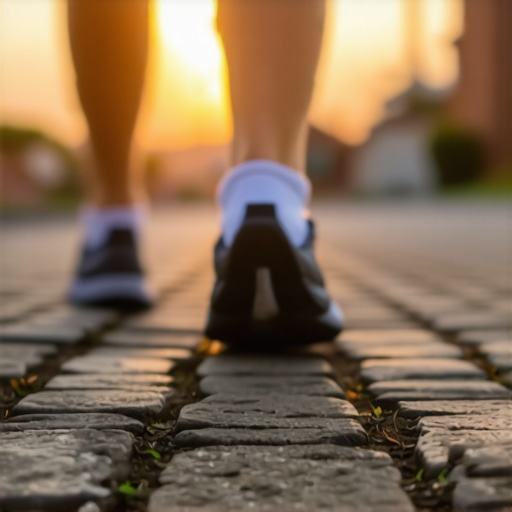
I remember the morning I first tried to be a minimalist runner. I laced up a brand-new pair of paper-thin shoes, felt incredibly light, and headed out for a five-mile loop. By mile three, my calves felt like they were being squeezed by hot pliers. By the next morning? I had to crawl to the coffee maker because your first step out of bed feels like walking on glass when you disrespect your Achilles tendon. I made the classic mistake of thinking my feet were ready for a marathon when they had been coddled in ‘foot coffins’ for thirty years. If you are tired of cramped toes and want to regain your natural gait without ending up in a walking boot, I am here to help you avoid my ego-driven blunders.
Stop Your Calves from Screaming at You
Most of us have spent our entire lives in shoes with a significant heel-to-toe drop. Even your ‘flat’ loafers usually have a hidden lift. When you suddenly remove that lift, your calf muscles and Achilles tendons are forced to stretch further than they have in decades. This is why your ankles feel weak when you run on uneven ground or why you might feel a strange pull in your arches. Transitioning isn’t just about buying new gear; it is about physical therapy for your feet. A study published in the Journal of Foot and Ankle Research notes that habitual use of elevated heels can actually shorten muscle fibers and increase tendon stiffness. You are literally fighting against your own biology, so we have to play it smart.
Is zero-drop actually worth the hype?
I get the skepticism. My neighbor once asked if I was just paying more money for ‘less shoe.’ But the truth is, once you fix the foundation, the rest of your body starts to fall into place. I used to wonder why my hamstrings stay tight despite stretching, and it turned out my shoes were tilting my pelvis forward every single day. By moving to a level platform, you allow your spine to stack naturally. It is a slow process, but the payoff is a body that moves the way nature intended. Have you ever tried a pair of minimalist shoes only to go back to cushions after one day of soreness? I’d love to hear your story in the comments below.
The secret to success isn’t a ‘no pain, no gain’ attitude—it’s a ‘don’t be a hero’ strategy. We are going to break down how to gradually reintroduce your feet to the earth without triggering a flare-up that sends you back to the chiropractor for an emergency session.
Start With Your Toes on the Floor
The biggest mistake I ever made was treating my transition like a gear change rather than a physical reconstruction. You wouldn’t try to lift 300 pounds on your first day at the gym, yet we expect our feet to handle 5,000 impacts a mile without their usual ‘crutches.’ The first phase of your journey shouldn’t involve running at all. Start by wearing your zero-drop shoes for just 30 minutes of walking around your house. Think of your feet like a dormant muscle group; they need to wake up before they can work. During this time, you might notice the hidden connection between flat feet and chronic hip pain as your body realizes it no longer has an artificial wedge under its heel. If you feel a dull ache, stop. That is your body telling you the ‘biological suspension’ is maxed out.
Rebuild Your Foundation with Foot Isometrics
To speed up the process, you need to actively train the muscles that have been sleeping in your cushioned sneakers. I spent three weeks doing ‘towel curls’—literally using my toes to scrunch up a hand towel on the hardwood floor—while I drank my morning coffee. It felt ridiculous until I realized I could finally see the definition in my arches for the first time in my life. Strengthening these small muscles helps prevent the issues where how to fix the sharp pain in your foot when you first wake up becomes a daily Google search. By building this intrinsic strength, you are creating a natural shock absorber that protects your knees and lower back.
Fix Your Gait to Save Your Spine
Once you actually start moving faster, you have to kill the heel strike. Modern shoes allow us to slam our heels into the pavement because there is two inches of foam to hide the impact. In minimalist shoes, that same move feels like hitting your heel with a hammer. You must transition to a midfoot or forefoot strike. I remember my first successful ‘quiet’ run; I focused on keeping my feet under my center of gravity rather than reaching out in front of me. This shift in mechanics is why how chiropractic adjustments enhance posture and mobility—because when your feet land correctly, your pelvis doesn’t have to tilt to compensate for the jarring force. Shortening your stride is the most effective way to keep your joints happy.
Address the Kinetic Chain Reaction
Transitioning your feet will inevitably change how your hips and back feel. Everything is connected. If your ankles are stiff, your lower back will try to do the work of flexing for you. I highly recommend incorporating a 15-minute flow to open up sticky hips into your weekly routine. This ensures that as your feet become more mobile, your larger joints are ready to follow suit. I’ve seen people give up on barefoot shoes because their lower back started hurting, not realizing the shoes were simply exposing tight hip flexors that had been hidden by their old sneakers. This is where the link between mobility and posture becomes painfully obvious. You aren’t just changing shoes; you are auditing your entire movement pattern.
The Two-Day Rule for Recovery
My ego almost ruined my progress when I tried to run two days in a row during my second month. Even if your lungs feel great, your tendons are on a different timeline. I now live by a strict rule: never do back-to-back days in minimalist shoes for the first ninety days. Use the off days for targeted mobility exercises to flush out lactic acid and check for hotspots. One time, I ignored a slight twinge in my mid-foot and ended up needing a month of rest. Now, I treat recovery with the same respect as the workout. If you find your progress stalling, it might be time to look at chiropractic adjustments to unlock a pain-free lifestyle, as a professional can help realign the bones in your feet and ankles that may have shifted during this transition phase.
I used to be obsessed with the ‘plumb line’—that imaginary string pulling the top of my head toward the ceiling. I thought if I could just hold that rigid, upright position long enough, my transition to minimalist movement would be seamless. I was wrong. The biggest myth in the world of mobility is that ‘perfect posture’ is a static destination. In reality, holding yourself in a fixed, upright position is often why your perfect posture is actually causing muscle fatigue. Your body wasn’t designed to be a statue; it was designed to be a spring. When we force ourselves into a stiff, ‘proper’ stance, we actually lock up the very joints we are trying to set free.
Stop Chasing a Static Pose
One of the most common mistakes I see—and one I lived through for months—is the ‘military stance’ trap. We pull our shoulders back so hard our shoulder blades almost touch and puff our chests out. While it looks disciplined in a mirror, this over-correction leads to a subtle but damaging mechanical failure. Specifically, it causes your lower ribs to tilt upward and outward. Learning how to stop your ribs from flaring when you lift your arms or even when you’re just standing still is the real ‘advanced’ move. When your ribs flare, your diaphragm can’t stabilize your spine correctly, and your lower back ends up taking the brunt of the load. Have you ever tried to ‘fix’ your posture only to end up with more back pain than when you started? Let me know in the comments, because I definitely fell into that hole.
Why do my traps stay tight even when my feet feel great?
This is the question that plagues runners who have already mastered their gait. You’ve fixed your shoes, you’re landing on your midfoot, but your neck and shoulders still feel like they’re made of concrete. This happens because your body is a closed loop. If you are still carrying tension in your upper body as a ‘counterbalance’ to your new way of walking, you’ll find why your traps are always tight even after a massage. A study published in the European Spine Journal suggests that postural variability—the ability to move through different positions—is far more important for spinal health than maintaining one ‘correct’ angle. You need to allow your upper body to rotate naturally with your stride rather than holding it in a rigid, forward-facing block.
The Truth About Professional Adjustments
I used to think a chiropractor was just for when I ‘threw my back out’ lifting a couch. But as I deepened my mobility journey, I realized that why chiropractic care is your secret weapon for better posture isn’t about the cracks; it’s about neurological feedback. When a joint is stuck, your brain stops getting accurate data about where that limb is in space. This is where the link between mobility and posture becomes a literal game-changer. An adjustment ‘resets’ the sensor, allowing you to actually feel when you are slouching or over-correcting. Without that internal map being accurate, all the mobility boosts for posture in the world won’t stick because your brain is working with old, faulty blueprints. You aren’t just looking for a quick fix; you are seeking a more responsive connection between your brain and your base.
The Three Tools I Actually Pack in My Suitcase
I’ve spent thousands of dollars on fancy ergonomic chairs and high-tech gadgets, but the real needle-movers for my mobility cost less than a decent steak dinner. First on my list is a standard Lacrosse ball. I use it for the move that instantly relieves tension in your lower ribs by pinning it between my shoulder blade and a wall. It’s brutal, but it works because it breaks up the ‘fuzz’—the sticky fascia that binds our muscles together after a long day of sitting. Next, I never travel without toe spacers. They look like something you’d wear at a spa, but they are essential for undoing the damage of narrow shoes. By wearing them for just an hour while I’m watching TV, I’m actively reversing the mechanics that lead to the hidden connection between flat feet and chronic hip pain. Finally, I use a simple slant board for my calves. If you can’t get your ankles to flex past 90 degrees, your knees and back will pay the price.
How do I keep my body from resetting to factory settings every night?
Consistency is the boring truth that no one wants to hear. You can’t ‘fix’ your posture in a weekend workshop. I think of my body like a high-performance car that needs a daily alignment check. This is why mobility hacks and simple adjustments are part of my pre-sleep ritual. I’ve found that the best sleeping position for side sleepers with shoulder issues is non-negotiable if I want to wake up without feeling like a rusted hinge. Even the way you set up your bedroom matters; I recently went through the 4-point checklist for choosing a new mattress because if your bed is sagging, your spine is spending eight hours in a ‘C’ curve. You are essentially undoing all your hard work from the day. Maintenance is about closing those gaps where poor habits sneak back in.
The Future of Biofeedback and Wearable Tech
I predict that in the next five years, we are going to see a massive shift away from ‘passive’ stretching and toward ‘active’ neurological training. We are already seeing the rise of smart clothing that vibrates when your shoulders slump. A 2021 study published in the journal Sensors highlighted that real-time postural biofeedback significantly reduces musculoskeletal pain compared to traditional ergonomic advice alone. This confirms what I’ve felt: we need constant reminders until the new movement pattern becomes the default. Instead of just doing targeted mobility exercises in a vacuum, we will be wearing tech that forces us to stay integrated throughout the day. This isn’t about being ‘perfect’ all the time; it’s about having a system that catches your failures before they become injuries. For now, your best ‘wearable’ is your own awareness. Try this today: the next time you find yourself scrolling on your phone, see if you can pull your chin back without holding your breath. It’s the simplest way to test if your neck is supporting your head or if your muscles are just hanging on for dear life.
The Honest Truth About Reclaiming Your Natural Stride
Reflecting on my own transition, the biggest lightbulb moment wasn’t about the shoes—it was about patience. First, I realized that sensation is a skill. I had spent so long in thick foam that I couldn’t actually feel the ground. Once I learned to listen to the subtle signals from my arches, the pain stopped. Second, mobility isn’t a chore; it’s maintenance. I used to think I didn’t have time for mobility hacks and simple adjustments, but I eventually realized I didn’t have time for the injuries that come without them. Lastly, don’t ignore the kinetic chain. Your feet might be the foundation, but your spine is the structural beam. This is why the link between mobility and posture is the most important concept you can master for long-term health.
Tools That Actually Earned a Permanent Spot in My Gym Bag
If you are serious about this shift, you don’t need a room full of expensive equipment. I recommend starting with the ultimate guide to improving mobility and posture in 2025 to build a structured plan that fits your lifestyle. Beyond that, a simple firm ball for foot rolling and a set of silicone toe spacers are non-negotiable for undoing years of narrow shoe damage. I also suggest bookmarking revolutionize your posture with targeted mobility exercises for those days when your body feels like it’s reverting to its old, hunched-over habits. These tools aren’t just for ‘fixing’ problems; they are for reinforcing the new, stronger version of yourself you are building every day.
#IMAGE_PLACEHOLDER_FINAL#
Your Path to Living Pain-Free Starts Beneath You
The journey from ‘foot coffins’ to functional movement isn’t always linear, but it is incredibly rewarding. There is a specific kind of freedom that comes from knowing your body can support itself without artificial props or massive cushions. Remember that chiropractic adjustments unlock a pain-free lifestyle today by ensuring your skeletal alignment keeps pace with your new movement patterns. Take it one block at a time, one barefoot walk at a time, and listen to your body’s feedback. You aren’t just changing your shoes; you are reclaiming the birthright of effortless, natural movement. What has been the hardest part of your transition to flatter footwear? Let me know in the comments below!