

I remember the moment clearly: standing in a quiet supermarket aisle, reaching for a carton of eggs, and suddenly feeling like I was on the deck of a ship in a storm. My feet were planted, but my body was tipping. It wasn’t an inner ear infection or a lack of coffee. It was my head. It had spent so many hours hunched over a laptop that my brain actually forgot where “up” was. I felt like a human version of those nodding-head dogs on car dashboards, and let me tell you, it was terrifying.
The Hidden Tax Your Brain Pays for a Slumping Head
When your head shifts forward by even an inch, it effectively doubles the weight your neck has to carry. My mistake early on was thinking this was just a cosmetic issue—that I just needed to “sit up straighter” to look more professional. I didn’t realize that my forward-slumped noggin was actually scrambling my proprioception, which is just a fancy way of saying my brain’s internal GPS was glitching out. If you’ve noticed your gait getting a bit clunky, you might be dealing with the silent epidemic of text neck that is affecting more than just our vertebrae. It is a fundamental shift in how your nervous system perceives gravity.
Is this balance connection actually worth the hype?
You might be thinking, “Come on, a little slouching cannot make me fall over.” I was a skeptic too. But here is the reality: your vestibular system—the balance center in your head—relies on your neck muscles to tell it where your body is in space. When those muscles are strained and stretched because your head is three inches in front of your chest, the signals get muddy. It is like trying to navigate with a compass that is being held next to a giant magnet. This is exactly why your head feels heavy after staring at a monitor all day; your muscles are fatigued, and your balance suffers as a result. A study published in the Journal of Physical Therapy Science found that individuals with a significant forward head posture showed a marked decrease in their ability to maintain steady balance compared to those with neutral alignment. I spent years trying to “fix” my balance by buying more stable shoes, but the answer was actually much higher up. Today, I am going to show you how to recalibrate that internal GPS. We are going to look at why chiropractic care is your secret weapon for resetting these systems and how simple mobility hacks and adjustments can keep you upright and confident. Have you ever experienced that weird, sudden feeling of instability while doing something totally normal, like walking down a hallway? Let me know, because I am willing to bet you are not as clumsy as you think you are—your neck might just be lying to your brain.
Check If Your Neck Is the Real Reason You Are Dizzy
To stop the world from spinning, you first have to figure out if your neck is the culprit. A simple way to test this is the ‘Chair Swivel Test.’ Sit in a swiveling office chair, keep your head fixed on a point in front of you, and rotate your body back and forth using your legs. If you feel that familiar wooziness while your head stays still but your neck twists, you likely have cervicogenic dizziness. This happens because the receptors in your upper neck are sending conflicting data to your brain. You can how to tell if your dizziness is caused by your neck by paying attention to whether the sensation worsens with head movement rather than just standing up quickly. I remember trying to walk a straight line in my hallway after an eight-hour editing marathon; I kept veering left like a shopping cart with a busted wheel. It wasn’t a balance issue in my feet; my neck was simply telling my brain that ‘straight’ was actually five degrees to the port side.
Clear the Static with a Targeted Adjustment
When your spine is misaligned, it creates what I call ‘neural static.’ Imagine trying to listen to a delicate symphony through a radio station that isn’t quite tuned in. The music is there, but the crackling makes it impossible to enjoy. This is why chiropractic care is your secret weapon for balance. A chiropractor doesn’t just ‘crack’ your back; they perform precise movements to reset the joint receptors. These how chiropractic adjustments enhance posture and mobility by physically moving the vertebrae back into a position where they aren’t screaming at your nervous system. Think of it as hitting the ‘factory reset’ button on your internal compass. Once that mechanical interference is gone, your brain can finally hear what your inner ear is saying without the neck muscles shouting over it. 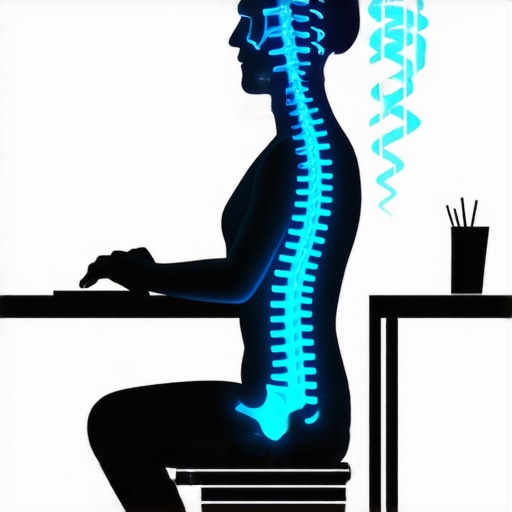
The Daily Drill That Keeps Your Head on Straight
You cannot just get adjusted and then go right back to the ‘human pretzel’ shape at your desk. You need to build a protective buffer of mobility. Most people instinctively try to fix stiffness by rolling their head in big, grinding circles, but you should stop rolling your neck in circles and do this instead: focus on axial retractions. Imagine there is a string pulling the crown of your head toward the ceiling while you tuck your chin straight back, like you are trying to make a double chin. This move specifically targets the deep neck flexors that have gone dormant. Combine this with the wall stretch that fixes slumped shoulders fast to open up the chest. I started doing this ‘chin-tuck-and-wall-slide’ combo every time I finished a cup of coffee. At first, it felt clunky and my muscles actually felt tired, but within a week, that ‘heavy head’ feeling vanished. You are essentially teaching your muscles how to hold your head in a neutral zone so your balance system doesn’t have to work overtime just to keep you from tipping over. By improving posture through mobility practical chiropractor strategies, you turn these movements into second nature, ensuring your brain’s GPS stays calibrated even during your busiest workdays.Now, here is where most people get it wrong. We are told from birth to ‘sit up straight,’ but the ‘statue’ approach is a total trap. I used to spend my entire workday trying to hold my spine in what I thought was a perfect vertical line, only to end the day with more tension than when I started. The reality is that your body wasn’t designed for static perfection; it was designed for movement. This is exactly why your perfect posture is actually causing muscle fatigue. When you force your muscles to hold a single, rigid position, you are essentially asking them to do a marathon without a single break. This creates a state of ‘ischaemic’ fatigue, where the blood flow to your tissues is restricted because the muscle never relaxes.
Stop Trying to Be a Statue
The biggest nuance that most influencers miss is that ‘good posture’ is actually ‘dynamic posture.’ Instead of staying frozen, you need to be shifting. I see people spend thousands on the latest chairs, yet why your ergonomic desk chair is still giving you back aches often comes down to the fact that you are staying in it for too long. My rule now? The ‘best’ posture is the next posture. If you aren’t moving, your joints are stagnating. 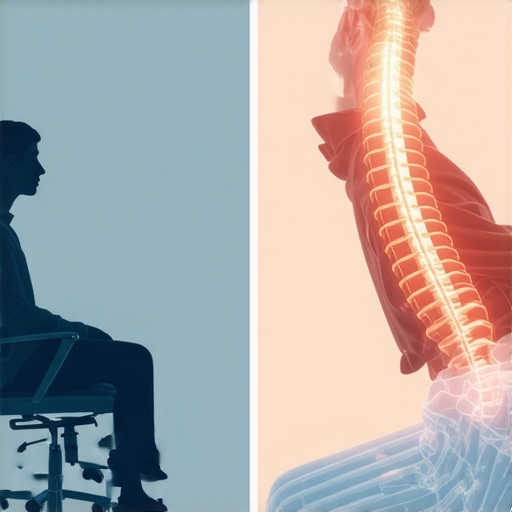
Why does my dominant side always feel tighter than the other?
If you have ever felt like your right shoulder is permanently hitched higher than your left, you aren’t imagining it. This is a classic advanced-level hurdle. Most of us have a ‘functional asymmetry.’ Because you use your dominant hand for everything from mousing to carrying groceries, your brain develops a bias. It stops recruiting the non-dominant side effectively, leading to why your dominant side is always tighter than the other. When you go into a chiropractic office, this is a huge part of what a chiropractor actually looks for during your first exam. They aren’t just looking for ‘stiff spots’; they are looking for these neurological patterns where one side of your body has essentially checked out.
The Over-Correction Trap That Most Beginners Fall Into
A common mistake I see is the ‘chest-out, shoulders-back’ hyper-correction. People try so hard to avoid the slump that they end up arching their lower back too much, which just trades neck pain for a lumbar disc issue. A study published in the Journal of Biomechanics actually found that there is very little direct correlation between specific spinal curves and pain in large populations—meaning your ‘curve’ might be fine, but your *stiffness* is the problem. You need to revolutionize your posture with targeted mobility exercises that focus on the ‘stuck’ segments of your mid-back rather than just forcing a shape. Have you ever tried to ‘fix’ your posture only to end up with a brand-new pain in your lower back or hips? Let me know in the comments, because I’ve been there too. To truly find long-term relief, you have to look at the ultimate guide to improving mobility and posture in 2025 to understand that the goal isn’t to look like a mannequin—it’s to move like an athlete.
My Daily Rig for Spinal Survival
I have spent an embarrassing amount of money on ergonomic gadgets over the years, but the tools that actually moved the needle were surprisingly low-tech. My absolute favorite is a simple lacrosse ball. Why? Because standard foam rollers are often too blunt to hit the specific trigger points in your upper traps and rhomboids. I place the ball between my shoulder blade and the wall, leaning in just enough to feel that deep, productive release. It is a form of self-myofascial release that complements professional work perfectly. Speaking of rollers, the truth about foam rolling your lower back is that it can actually do more harm than good by putting excessive pressure on the lumbar vertebrae without enough muscular stabilization.
Foam Rolling the Low Back Is a Trap
Instead of smashing your lower back, focus that energy on your hip flexors and mid-back. I use a peanut roller—two massage balls taped together—to mobilize my thoracic spine. This allows the spine to move into extension without putting direct pressure on the bony spinous processes. For the digital side of things, I use a screen-locking app set to twenty-minute intervals. It sounds annoying, but it forces me to reset my gaze and posture. When setting up my workspace, I looked toward the stars for inspiration. NASA’s MSIS-Standard-3000 documentation regarding Neutral Body Posture (NBP) describes the state where the human body naturally rests in microgravity to minimize musculoskeletal stress. By mimicking these angles—slightly reclined, elbows at ninety degrees, and eyes level—I finally found the best monitor height for preventing tension headaches. 
How do I keep my posture from backsliding over time?
Maintenance is not about being perfect every second; it is about having a reliable system to return to neutral. I treat my spine like I treat my teeth: daily brushing in the form of mobility drills and periodic check-ups with a professional. This is why I schedule mobility boosts for posture expert tips for daily adjustments into my calendar just like a gym session. You should also look to enhance your posture with expert chiropractic techniques in 2025 by focusing on functional longevity rather than just waiting for a crisis. Regular check-ins ensure that those tiny micro-shifts in your vertebrae do not turn into major neural static down the road.
Your Future Chair Might Be Smarter Than You
Looking ahead, I predict we are moving toward an era of active bio-feedback. Within the next few years, we will likely see wearable sensors woven directly into our work shirts that provide gentle haptic vibrations the moment your shoulders start to round forward. We are going to stop guessing and start measuring our spinal health in real-time. Until those sensors are standard, you have to be your own feedback loop. If you want to ensure chiropractic adjustments unlock a pain-free lifestyle today, it starts with consistent, small wins. If you are feeling that familiar mid-back burn right now, stop reading and go do a two-minute spinal rotation drill. Your body will thank you for the movement.#IMAGE_PLACEHOLDER_E#
Lessons from the Aisle Where I Almost Toppled Over
Reflecting on my journey from that dizzying supermarket aisle to where I am today, I have realized a few truths that you rarely find in standard health brochures. First, your body is a master of compensation; it will sacrifice your balance and stability just to keep your eyes level with a screen, leading to a breakdown in your internal GPS. I also learned that ‘fixing’ things isn’t about a one-time stretch, but about removing the neurological noise from your nervous system. If you want to know how to tell if your dizziness is caused by your neck, start by noticing if the world tilts specifically when you turn your head, not just when you stand up. Finally, I discovered that the ultimate guide to improving mobility and posture in 2025 isn’t about standing like a soldier—it is about keeping your joints in constant, fluid motion.
My Go-To Kit for a Balanced Life
I no longer leave my spinal health to chance. I rely on a few specific tools that keep my internal compass calibrated and my energy levels high. I highly recommend finding a ‘peanut’ massage roller for your mid-back; it is the only tool that effectively targets the thoracic spine without putting pressure on the vertebrae. I also use a simple screen-locking app that forces me to reset my gaze every twenty minutes, which directly addresses why your head feels heavy after staring at a monitor for hours on end. Lastly, I treat chiropractic care as a form of preventative maintenance, much like a dental cleaning, to ensure my posture never reaches a crisis point again.
Take Back Your Center of Gravity
You don’t have to live in a world that feels like it’s constantly tilting or swaying. By combining consistent daily movement with professional corrections, you can recalibrate your brain’s connection to your body and feel grounded again. Remember, chiropractic adjustments unlock a pain-free lifestyle today because they clear the communication lines between your neck receptors and your brain. Don’t wait for the floor to feel like it’s moving beneath you to start paying attention to your posture. Have you ever felt that weird, sudden sense of dizziness after a long day at the computer? Let me know in the comments below!