

I was halfway through a late-night scroll—probably looking at vintage cast iron pans—when it happened. My pinky finger went completely cold. Not cold like the weather, but cold like it didn’t belong to my body anymore. I shook my hand, expecting a quick tingle of pins and needles, but nothing changed. My neck felt like a rusted hinge. It was a terrifying realization that I’d been trading my long-term nerve health for a few extra minutes of social media. We’re all tethered to these glowing rectangles, but we rarely talk about the physical price of that connection. Today, I’m going to share how I reversed the damage and what you need to stop doing immediately to save your spine from becoming a permanent casualty of the screen.
How a Numb Hand Forced Me to Face My Screen Habits
The text neck phenomenon isn’t just a catchy phrase for chiropractors to throw around; it’s a mechanical disaster happening inside your body. I spent years thinking my posture was good enough because I didn’t have a visible hump yet. I was wrong. Early on, I made the classic mistake of thinking I could just stretch the pain away with random, aggressive movements. I’d grab my head and pull it to the side, hoping for a loud pop to solve my problems. In reality, rolling your neck in circles or forcing cracks can actually irritate the very nerves you’re trying to soothe. I was basically poking an angry hornet’s nest with a stick. [image-placeholder-1]
Can a phone really cause permanent nerve damage?
It sounds like a scare tactic, doesn’t it? But here’s the visceral reality: your head weighs about 10 to 12 pounds when you’re looking straight ahead. When you tilt it down 60 degrees to check a text, you’re effectively asking your neck to hold a 60-pound weight. According to research published by Dr. Kenneth Hansraj in Surgical Technology International, this repeated stress can lead to early wear, tear, and eventual disc herniation. If you’ve noticed why your head feels heavy after staring at a monitor, you’re already feeling the initial stages of that structural strain. It starts as a dull ache, but left unchecked, it transitions into that scary numbness I felt. Have you ever noticed your grip strength weakening or a weird tingle in your arm after a long day at the desk? This isn’t about throwing your phone in the trash. It’s about learning the secret to fixing tech neck without quitting your phone. I had to learn the hard way that cracking your own neck at home is a recipe for instability, not a solution for nerve health. We need to focus on real structural changes before that temporary tingle becomes a permanent guest.
Bring the World Up to Your Eyes Instead of Your Face to the Screen
Think of your neck like a fishing pole. When you lean your head forward to look at a phone, that pole bends under the weight of a ‘fish’ that gets heavier every inch it drops. To fix this, you have to stop the lean. I remember the day I finally gave in and bought a laptop stand; before that, I was stacking six dusty cookbooks under my MacBook. It looked ridiculous, and once a stack of encyclopedias actually slid off onto my feet, but it was the first time in years I didn’t have a burning sensation in my traps by 3:00 PM. The simple change to your monitor height that kills headaches is the most immediate relief you can give yourself. Your eye line should hit the top third of your screen. If you are looking down, even slightly, you are losing the battle against gravity.
The Simple Test to See How Stiff You Really Are
Before you start any crazy exercises, you need a baseline. I used to think I was flexible because I could touch my toes, but my neck was a different story. I tried how to test your own spinal rotation at home by sitting in a chair and seeing how far I could look over my shoulder without my torso moving. I realized I could barely see past my own shoulder blade on the left side. This kind of localized stiffness is usually why your body starts ‘borrowing’ mobility from other places, leading to those weird aches in your mid-back. 
Move the Joints That Actually Matter
Most people try to fix neck pain by pulling on their neck. That’s like trying to fix a jammed door by tugging on the handle instead of oiling the hinges. The ‘hinge’ of your upper body is actually your thoracic spine—the part of your back where your ribs attach. When this area gets locked up from sitting, your neck has to work twice as hard. I started incorporating mobility boosts for posture that focused specifically on ‘opening’ the chest. One afternoon, I spent just two minutes doing thoracic extensions over the back of my office chair. I heard a muffled ‘zip’ sound in my spine, and suddenly, the numbness in my pinky finger vanished for three full hours. It was a messy, loud adjustment, but it proved that my neck wasn’t the only culprit.
Why Your Wrist is Lying to You About Your Pain
Here is a reality check: that tingling in your hand might not be carpal tunnel at all. The nerves that control your fingers actually start in your neck. If those nerves are pinched at the source, you’ll feel the ‘static’ at the end of the wire. There is a hidden connection between wrist pain and your neck that most office workers miss. When I finally addressed my forward-head posture, my ‘wrist issues’ disappeared without me ever touching a brace. Instead of icing your hands, you need to focus on revolutionizing your posture with targeted mobility exercises that decompress the cervical spine. Stop focusing on where it hurts and start looking at where the signal is being blocked.
Most people treat their posture like a construction project—if you just bolt the beams in place, the building will stand straight. I’ve seen thousands of people try to force themselves into a rigid, military-style stance, only to find that their back hurts even worse by noon. This is what I call the Human Statue trap. Real, functional posture isn’t about holding a position; it’s about the ability to move through positions without losing your center. In fact, why your perfect posture is actually causing muscle fatigue is one of the most overlooked aspects of ergonomic health. Your muscles aren’t designed to be isometric anchors for eight hours straight.
I learned this the hard way when I obsessed over standing desks. I thought if I just stood up, my spine would magically realign. But why most standing desks are set at the wrong height taught me that I was just trading one set of problems for another. If you’re locking your knees and arching your low back while standing, you’re essentially crushing your lumbar discs to save your neck. It’s a bad trade. Have you ever fallen into this trap where you try to fix one area only to have another scream in pain? Let me know in the comments below.
Why do I feel taller for a few days but then slouch again?
This is the question that separates the beginners from the pros. When you get a spinal adjustment, it isn’t just a mechanical clunk into place; it’s a massive neurological reset. Research in the Journal of Manipulative and Physiological Therapeutics suggests that chiropractic adjustments stimulate mechanoreceptors that literally quiet down overactive muscles and wake up dormant ones. Why you feel taller after a spinal adjustment isn’t just a psychological trick; your nervous system has temporarily lowered the tone of your muscles, allowing you to occupy your full height. However, without addressing the underlying mobility of the joints above and below, your brain will eventually revert to its old, safe (slouched) software setting. This is why how chiropractic adjustments enhance posture and mobility is a long-term game of neurological retraining, not a one-time fix.

One of the biggest mistakes I see—and one I definitely made—is aggressively stretching the hamstrings to fix lower back pain. It feels intuitive: my back is tight, so I’ll stretch the muscles connected to it. But here is the nuance: why stretching your hamstrings might actually make your back pain worse is because those muscles are often tight as a protective mechanism. If your pelvis is unstable, your brain locks your hamstrings to keep you from falling over. If you rip that emergency brake off without stabilizing your core, your lower back takes the full brunt of the force. Instead, you should be looking at the hip hinge fix for chronic lower back aches to change how you move, rather than just how much you can stretch. Stop thinking of your body as a collection of separate parts and start seeing it as a connected web of tension.
I used to think that buying an expensive ergonomic chair was the final boss of spinal health. I spent nearly a thousand dollars on a mesh throne that looked like it belonged in a spaceship, yet my mid-back still felt like a slab of concrete by Friday afternoon. The truth is, gadgets are useless if you don’t know how to use them. Why your ergonomic desk chair is still giving you back aches often comes down to the fact that we use them as a crutch rather than a tool. I had to stop relying on the chair to ‘fix’ me and started taking ownership of my own structural maintenance.
How do I maintain my spinal mobility when life gets busy?
The secret isn’t a grueling hour-long gym session; it’s about micro-adjustments scattered throughout the day. I swear by mobility boosts for posture that take less than sixty seconds. My personal favorite is the ‘Bruegger’s Relief Position’—you sit at the edge of your chair, turn your palms out, pull your shoulder blades back, and tuck your chin. It’s like hitting the reset button on your nervous system. If you want to scale your results, you need to understand how chiropractic adjustments enhance posture and mobility by clearing the path for these movements to actually work. Without that clear neurological signal, your stretches are just hitting a wall of muscle guarding.
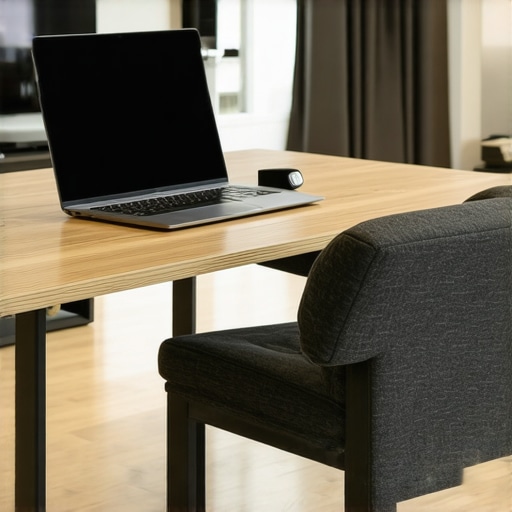
One tool that changed the game for me was the humble lumbar roll. I stopped using the built-in chair support and started using a dedicated firm roll positioned exactly at my belt line. Learning the proper way to use a lumbar roll in your office chair prevents your pelvis from tucking under, which is the root cause of that ‘C-shape’ slump. I combine this with keeping my screen high. I’ve found that the best monitor height for preventing tension-headaches is significantly higher than most people think—your eyes should be level with the top edge of the actual display area, not the frame. This forces your cervical spine into a neutral position without you even thinking about it.
The Future of Wearable Tech and Spinal Awareness
As we look toward 2025 and beyond, I predict we will see a massive shift toward biofeedback wearables that don’t just track steps, but monitor the specific angle of your T-spine. We are already seeing apps that use your webcam to alert you when your head drifts forward. However, no piece of software can replace the mechanical stability of a strong core. As Dr. Stuart McGill, a world-renowned expert in spine biomechanics, often emphasizes in his research on ‘The Big 3’ exercises, true spinal health comes from creating ‘stiffness’ in the right places so your joints can move freely in others. I’ve integrated the core move that prevents lumbar disc bulges into my morning routine to ensure my spine has that internal ‘brace’ before I even sit down at my desk.
If you really want to jumpstart this process, stop trying to do it all at once. Pick one thing—maybe it’s adjusting your screen height or finally trying the wall stretch that fixes slumped shoulders fast—and do it every time you take a phone call today. Consistent, small windows of movement are the only way to convince your brain that a slumped posture is no longer the ‘safe’ default. Your spine is a living, adapting structure; give it the right inputs, and it will stop screaming at you.
The Lessons I Learned While Rebuilding My Spine From Scratch
After months of trial and error, I realized that my body wasn’t broken; it was just highly adapted to the wrong environment. One of the most profound shifts was moving away from the idea of static perfection. I used to think I needed to sit like a statue to be healthy. Now I know that why your perfect posture is actually causing muscle fatigue is a real phenomenon that happens when we stop moving and force rigid positions. I also learned that the pop I was chasing by cracking my own neck was actually creating more instability and long-term irritation. Real progress came when I stopped trying to self-adjust and started focusing on improving posture through mobility with a professional who could identify the specific mechanical blocks I couldn’t see myself.
The Maintenance Kit That Keeps Me Moving
If you are serious about staying pain-free while working a desk job, you need more than just a fancy chair. I have narrowed my daily survival kit down to three essentials that changed everything for me. First, a firm lumbar roll is non-negotiable; I use it to maintain my natural curve during those marathon Zoom sessions. Second, I swear by short bursts of movement instead of long, grueling stretches. Lastly, I have integrated why chiropractic care is your secret weapon for better posture into my monthly routine to catch small misalignments before they turn into numb fingers again. This proactive approach ensures my nervous system stays clear and responsive regardless of how busy work gets. [image-placeholder-final]
Take Control of Your Mechanical Health Today
Your spine is the central highway for every signal in your body, from the beat of your heart to the movement of your fingers. When you prioritize the ultimate guide to improving mobility and posture in 2025, you are not just getting rid of a temporary headache; you are investing in your future independence and vitality. Do not wait for the numbness to start or for a disc to bulge before you make a change. Start today by lifting your phone to your eye level or booking that initial assessment to see what a chiropractor actually looks for during your first exam. Your body is incredibly resilient, but it needs the right inputs to thrive. Have you ever felt that weird tingling in your hands after a long day of scrolling? Let me know in the comments below!