
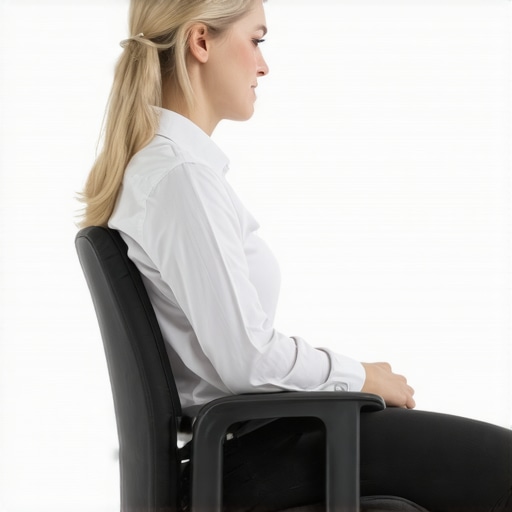
I will never forget the Tuesday afternoon I almost threw my expensive ergonomic office chair out the second-story window. My lower back wasn’t just aching; it felt like it had been compressed by a hydraulic press for eight hours straight. I had the fancy mesh seat, the adjustable armrests, and even one of those trendy foam cylinders, but nothing worked. In fact, the harder I tried to sit ‘correctly,’ the worse it got. I was doing exactly what many of my neighbors do—fighting against my own anatomy because I didn’t understand the simple physics of how my spine actually wants to rest while I’m typing away. We often think that more gear equals less pain, but the reality is that a simple tool used the wrong way is just another source of irritation.
Stop Shoving That Cushion Just Anywhere
When I first started using a lumbar support, I made the classic rookie mistake: I strapped it right into the curve of my upper-mid back, thinking it should support my whole spine. All I got for my trouble was a weird rib cramp and a neck that felt like it was being shoved forward. It took a few weeks of trial and error (and a lot of grumbling) to realize that the ‘roll’ isn’t there to push you around; it’s there to fill a very specific gap. Most of us are chasing a ghost because the truth about perfect posture and why it doesn’t exist is that our bodies are dynamic, not statues. However, if you’re stuck at a desk, you need to support the natural inward curve of your lower back, known as the lordosis. According to research published by the Journal of Physical Therapy Science, maintaining this natural lordotic curve while sitting is the single most effective way to reduce pressure on your spinal discs. If you’ve been looking for a desk setup trick for people who hate standing desks, mastering the lumbar roll is your best bet for immediate relief.
Is a $20 foam roll actually better than a $1,000 chair?
It sounds like a marketing gimmick, doesn’t it? But here’s the thing: many high-end chairs have built-in support that is either too aggressive or sits at the wrong height for your specific torso length. A portable lumbar roll allows you to customize the fit to your own body. I used to think I needed a back brace to keep me upright, but I quickly learned why most posture braces actually make your back weaker—they do the work for your muscles. A lumbar roll is different; it’s a passive reminder and a physical bridge that lets your muscles relax while your bones stay stacked. Have you ever spent a fortune on a gadget that promised to save your spine, only to end up more stiff than when you started? I’ve been there, and today I’m going to show you exactly how to position that roll so you can finally stop fidgeting and start focusing.
Find the sweet spot at the base of your spine
To get this right, you need to find the L4 and L5 vertebrae—essentially the small of your back just above your belt line. If you place the roll too high, you’ll end up slouching forward over it. If it’s too low, you’re just sitting on it. I remember a grueling twelve-hour drive through the Midwest where I forgot my lumbar cushion and tried to improvise with a rolled-up hoodie. For the first two hours, I had it jammed against my mid-back, and by hour three, my legs were buzzing. It wasn’t until I shimmied the roll down to that deep curve in my lower back that the pressure lifted. This is essentially how you can learn how to sit in a car for 5 hours without sciatica flares without needing a prescription.
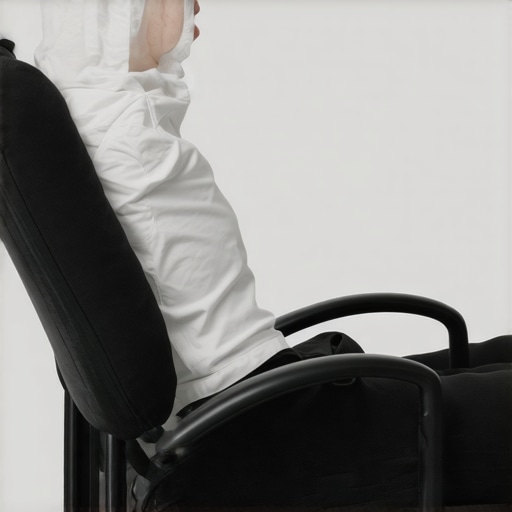
The Pelvic Tilt test for instant verification
Once the roll is in place, your pelvis should feel slightly tilted forward, rather than tucked under. A great way to check this is to perform a mini version of the pelvic tilt move for instant pregnancy back relief while seated. If you can rock your pelvis back and forth without the roll getting in the way or falling down, you’ve hit the bullseye. If your tailbone feels like it’s being crushed, the roll is likely too low. The goal is to create a ‘neutral’ base where your weight is distributed through your sit-bones, not your fleshy glutes or your lower spine. Integrating these mobility hacks simple adjustments for a more active life ensures that your body doesn’t become reliant on the support, but rather uses it as a guide. Most office chairs are too deep for the average person. If your knees hit the edge of the seat before your back hits the support, you’re in trouble. You might need to add a seat-back cushion behind your lumbar roll to bring the entire support system forward. I once worked with a client who thought her roll was broken, but it turned out her chair was designed for someone six inches taller than her. We adjusted the depth, and suddenly, the roll could actually do its job. Mastering these nuances is a key part of improving posture through mobility practical chiropractor strategies that actually stick.
Thickness matters more than you think
I’ve seen people use rolls that look like giant pool noodles. If the roll is too thick, it pushes your entire torso away from the backrest, leaving your shoulders hanging in space. This creates a whole new problem: ‘upper cross syndrome.’ Your roll should only be thick enough to fill the gap between your back and the chair. Think of it as a bridge, not a mountain. If you feel like your chest is being thrust toward the monitor, your roll is too chunky. You can find more mobility boosts for posture expert tips for daily adjustments to help loosen those tight chest muscles that often overcompensate when your lower back is unsupported. When I finally switched to a slimmer, high-density foam roll, the tension in my traps practically evaporated overnight. It wasn’t about the cushion itself, but how it allowed my skeletal system to take the load off my muscles.
Most people think that ‘good posture’ is a static position you have to defend like a fortress. They pull their shoulders back, tuck their chin, and hold their breath—essentially turning themselves into a human statue. But here is the contrarian truth: a rigid spine is a dying spine. In my years of looking at spinal health, I’ve seen more damage from people trying to stay perfectly upright than from people who just move naturally. When you force a position, you create ‘postural load,’ which fatigues the very muscles meant to support you. It’s a common misconception that we can ‘fix’ ourselves by simply refusing to slouch.
Stop defending your posture like a fortress
The trap most of us fall into is thinking that a chair or a cushion will do the work of a functional nervous system. We treat our bodies like a car that needs an alignment once a year, rather than a living system that needs constant, varied movement. If you’ve been focusing solely on the ‘shape’ of your back while ignoring how it moves, you’re missing half the equation. True stability comes from the ability to transition between positions, not from staying stuck in one ‘ideal’ shape for eight hours. This is why even the best ergonomic setup fails if the person in the chair is functionally frozen.
Why do some adjustments seem to ‘wear off’ faster than others?
It’s not that the adjustment ‘didn’t take.’ It’s usually because the surrounding tissues are still locked in an old, protective movement pattern. According to research published in the Journal of Manipulative and Physiological Therapeutics, patients who combine spinal manipulation with active mobility training see much more durable results than those who rely on passive care alone. This is exactly how chiropractic adjustments enhance posture and mobility—they open a window of neurological opportunity, but you have to walk through it by moving. If you just go back to sitting like a statue after your visit, your brain will revert to its stiffest settings to protect what it perceives as a weak structure.

The dangerous cycle of self-adjusting
Then there’s the ‘Oops’ factor that almost everyone gets wrong: the self-crack. I see people in coffee shops twisting their necks or slamming their backs against chairs to get that satisfying ‘pop.’ This is a massive mistake that I see way too often. When you crack your own back, you are almost always hitting the joints that are already too loose (hypermobile), while the truly ‘stuck’ segments stay stuck. This creates a vicious cycle of instability. That’s why you should stop cracking your own back every hour and instead focus on targeted movement. You are essentially ‘borrowing’ temporary relief from joints that actually need more stability, not more noise.
If you want long-term relief, you need to understand the link between mobility and posture a chiropractors guide provides. It’s about being able to move into and out of various positions with ease, not holding one perfectly. Have you ever fallen into this trap of trying to ‘hold’ your posture until your muscles started to scream? Let me know in the comments. To really see a change, you should revolutionize your posture with targeted mobility exercises that teach your nervous system that it’s safe to be fluid. When your body stops fearing movement, the pain usually stops too.
The tools that actually earned a spot on my desk
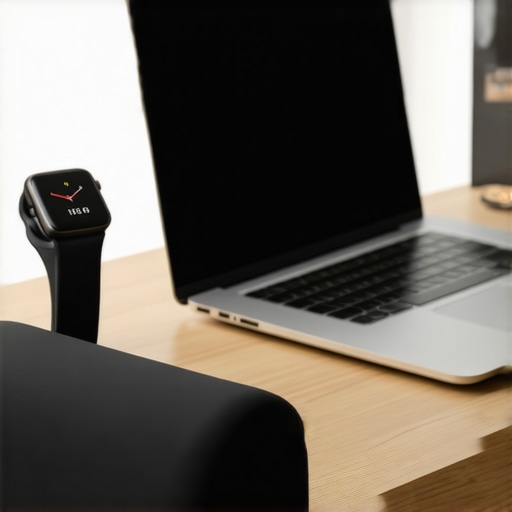
I have a closet full of ‘spine-saving’ gadgets that failed me, but three specific things have remained part of my daily ritual for years. First is a 4-inch firm, high-density foam roll—specifically one with a strap so it doesn’t migrate to the floor every time I stand up. I’ve found that memory foam is far too soft; you need a material that offers actual resistance to the weight of your torso. Second, I use a simple haptic feedback app on my smartwatch that vibrates every thirty minutes. It’s a physical cue to perform the 10-second move to reset your shoulders at work. Lastly, I’ve traded my cushioned sneakers for minimalist footwear when I’m at the desk to keep my feet engaged. These are the kinds of mobility hacks simple adjustments for a more active life that actually stick because they don’t require an hour of your time.
How do I maintain my spinal health over time?
Maintenance is where most people fall off the wagon. They feel great after a few weeks of stretches and then stop, only to have the pain return with a vengeance. I look at it like dental hygiene: you don’t stop brushing your teeth just because you don’t have a cavity. To keep things moving, I rely on the ultimate guide to improving mobility and posture in 2025 as my baseline. According to Dr. Stuart McGill, a leading expert in spine biomechanics and author of Back Mechanic, the key to long-term stability isn’t just flexibility—it’s the endurance of your core stabilizers. This means doing the ‘boring’ work consistently rather than the ‘heavy’ work occasionally. I personally combine these habits with regular professional check-ins, as why chiropractic care is your secret weapon for better posture lies in its ability to clear neurological ‘static’ before it manifests as physical pain.
The future of your workspace is adaptive
We are quickly moving toward an era where our environment will do more of the heavy lifting for our health. I predict that within the next five years, AI-driven ‘smart chairs’ will become the norm, adjusting their lumbar depth in real-time based on your specific fatigue levels and sitting duration. Until then, you have to be the pilot of your own alignment. If you want to enhance your posture with expert chiropractic techniques in 2025, you have to be proactive. Start tomorrow by setting a timer for the best standing desk interval for maximum back health and actually following it. Give it one week of honest effort. Your spine—and your future self—will thank you for not waiting for a crisis to take action.
The Hard Truth About My Failed Posture Journey
For years, I treated my spine like a structural beam that needed to be bolted into place. I eventually realized that how chiropractic adjustments enhance posture and mobility isn’t just about the ‘click’—it’s about the freedom to move without fear. My biggest mistake was assuming that a better chair would solve a lack of movement. I’ve learned that the best position is always the next one. Also, remember that why most people do the cat-cow stretch wrong often comes down to forcing the range of motion rather than feeling the segments move. Respect your limits to expand them.
#IMAGE_PLACEHOLDER_E#
The Three Things I Keep on My Desk for Longevity
If you are serious about your spinal health, I highly recommend ‘Back Mechanic’ by Dr. Stuart McGill. It is the most practical guide I have ever read for understanding how to protect your discs during daily activities. Along with that, I swear by a firm D-shaped lumbar roll; unlike round pillows, it stays exactly where you put it against the chair back. Finally, I use a physical kitchen timer. It sounds primitive, but it’s the only thing that consistently breaks my deep-work trance to remind me to perform a few mobility hacks simple adjustments for a more active life every hour.
Start Building a Spine That Doesn’t Limit You
Your body is incredibly resilient, but it needs the right signals to thrive. By using these tools and understanding the link between mobility and posture a chiropractors guide provides, you are taking the power back from your desk. You don’t need a thousand-dollar setup to feel good; you just need to understand the physics of your own body. This journey is about longevity, not just getting through the next deadline. Trust that chiropractic adjustments unlock a pain-free lifestyle today when paired with these daily habits. Have you ever found a specific desk adjustment or tool that completely changed your comfort levels? Let me know in the comments below!