

I remember the day I finally unboxed my shiny new motorized desk; I felt like I’d just bought a ticket to a lifetime of perfect health. I stood there, stiff as a palace guard, for six hours straight because I thought that was the goal. By 5 PM, my lower back felt like it had been through a trash compactor and my heels were pulsing with a dull, angry heat. I’d fallen into the trap of thinking that ‘standing’ was the cure, but I’d actually just traded one form of static stress for another. It was a classic rookie error that left me wondering if I’d just wasted five hundred dollars on a fancy table.
Standing Still Is Just Sitting Without a Chair
If you’re standing at your desk like a statue, you’re missing the point entirely. The biggest mistake people make—and the one I lived through for a solid month—is remaining static. Your body is designed for motion, not for holding a single pose until your joints lock up. When we stand still, gravity just hammers down on our lumbar spine and compresses the discs. I realized that my quest for ‘perfect’ posture was actually making me more rigid and brittle. To truly see results, you need to incorporate mobility hacks and simple adjustments into your routine. Surprisingly, research published in the Journal of Physical Activity and Health shows that standing only burns about 8 or 9 more calories per hour than sitting. The real magic isn’t the standing itself; it’s the transitioning between positions. Have you ever felt that weird, buzzing ache in your calves or a sharp pinch in your shoulder after a day of ‘healthy’ standing?
Is a Standing Desk Actually Worth the Hype?
You might be skeptical if your expensive setup hasn’t magically solved your aches yet. I certainly was. But the truth is, the desk is just a tool, and most of us are using it with the wrong settings. For instance, I didn’t realize why most standing desks are set at the wrong height until my elbows started tingling. We focus so much on our feet that we forget our neck and wrists. If you’re constantly reaching up or looking down, you’re just swapping back pain for ‘text neck.’ My early failure taught me that we need to find the best standing desk interval for maximum back health rather than trying to be a marathon stander. Today, I’m going to show you how to break the ‘statue’ habit and finally make that desk work for your spine instead of against it.
Fix Your Desk Height Right Now
Most people crank their desk up until their forearms are parallel to the floor, but then they unconsciously hunch their shoulders toward their ears. Think of your desk like a keyboard—it should be at a height where your hands can dance across the keys while your shoulders stay tucked into your back pockets. I once tried to fix a desk that was too short by standing on a stack of old textbooks; I felt like a circus performer until the whole tower slid out from under me, sending my lukewarm coffee flying across the room. Don’t be like me. Instead, use the 10-second move to reset your shoulders at work to find that neutral sweet spot where gravity stops pulling your chin toward the screen.
The 20-Minute Movement Rule
Your body isn’t a statue, so stop treating it like one. The golden ratio I found that actually works for me is the 20-8-2 rule: 20 minutes of standing, 8 minutes of sitting, and 2 minutes of moving. This prevented my muscles from ‘setting’ like wet concrete after a long morning of emails. You can find the simple trick to standing for hours without back fatigue by slightly tucking your tailbone under, which takes the intense pressure off the facet joints in your lower spine. If you stay in one spot too long, your hip flexors tighten up like a guitar string, and that’s when the lower back pain starts screaming. You can combat this by using the 30-second move that opens up tight hips in seconds every time you transition back to your chair.
Why Your Bare Feet Are Killing Your Progress
Standing on a hardwood floor in thin socks is a recipe for plantar fasciitis and a dull, throbbing ache in your lumbar. When I first started, I thought being ‘natural’ was better for my body, but by noon, my heels felt like they were being hit with hammers. You need a buffer between you and the floor. An anti-fatigue mat is essential for dispersing that weight, but if you’re really struggling with soreness, mobility boosts for posture can help you recover from the physical strain of a long day. If your ankles feel like they’re locked in place by the end of the shift, it might be time to learn how to fix stiff ankles so your weight distributes evenly through your feet instead of jamming into your knees.
Professional Alignment Makes the Habit Stick
You can have the most expensive motorized desk in the world, but if your spine is already out of whack, you’re just standing on a crooked foundation. This is where why chiropractic care is your secret weapon for better posture becomes incredibly obvious. An adjustment clears the mechanical ‘noise’ in your nervous system, making it easier for your brain to hold onto these new ergonomic habits. I personally found that my standing desk sessions went from painful to productive only after I cleared out the mechanical blocks in my mid-back with a professional. Combining improving posture through mobility with regular adjustments creates a feedback loop where your body actually enjoys being upright rather than fighting against it.Let’s dig deeper. One of the biggest lies we’re told in the wellness world is that stretching is a universal cure-all. If your neck feels tight after three hours of standing, your first instinct is probably to pull your head to the side and hold it. But here’s the advanced nuance: you might actually be making things worse. In many cases, that ‘tight’ feeling isn’t a short muscle; it’s a muscle that is being overstretched because your spine is out of alignment. When you stretch a muscle that is already under tension from a structural shift, you’re just pulling a rubber band that’s already at its limit. This is exactly why your gentle stretching is actually causing more inflammation and why you need to stop. If you’ve ever wondered why stretching your neck is making your headaches worse, it’s likely because you’re irritating the nerves that are already fighting for space. 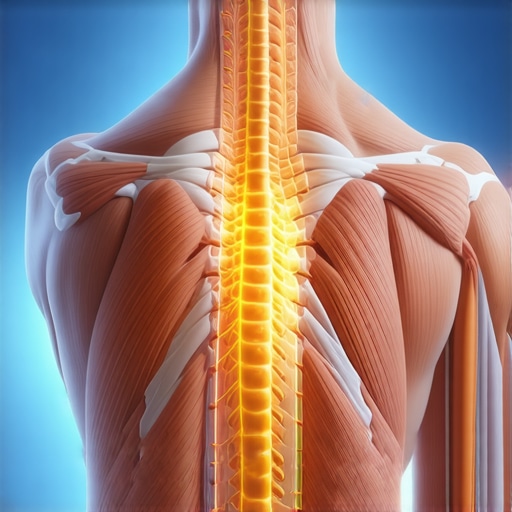
Stop Chasing the Symptom and Start Fixing the System
To truly understand the link between mobility and posture, we have to look at the ‘joint-by-joint’ approach. If your ankles are stiff, your knees take the hit; if your hips are locked, your lower back pays the price. Most people assume that if their back hurts, the back is the problem. In my experience, the back is just the victim of immobile hips. This is why why your hamstring stretch is actually irritating your sciatic nerve—you’re trying to create length in a muscle that’s actually tight because it’s trying to stabilize a weak pelvis. Dr. Stuart McGill, a world-renowned expert in spine biomechanics, has often noted that excessive flexibility in the spine—often sought through generic stretching—can actually decrease the stability needed to protect your discs and lumbar health.
The Dangerous Habit of Self-Adjusting
Then there’s the ‘pop’ addiction. I used to be the guy who twisted his torso every forty-five minutes just to hear that satisfying crack. I thought I was ‘adjusting’ myself for free. In reality, I was just creating hyper-mobility in the joints above and below the ones that were actually stuck. It’s a classic trap where you provide temporary relief to the wrong area while the real problem stays frozen. This is why you should stop cracking your own back every hour and instead focus on specific mobility drills that target the actual restriction. A study published in the Journal of Manipulative and Physiological Therapeutics highlights that targeted spinal manipulation by a professional significantly improves proprioception—your brain’s ability to know where your body is in space—something a ‘random pop’ at your desk will never achieve. Professional chiropractic adjustments enhance posture and mobility by specifically targeting those ‘stuck’ segments, rather than just moving whatever is easiest to move.
Why does your left hip always feel tighter than your right?
It’s rarely about the hip itself. Often, your body develops a ‘side-bias’ based on how you lean while standing or how you sit in your car. If you’re constantly shifting your weight to one leg at your standing desk, you’re creating a functional leg-length discrepancy. This is why your left hip always feels tighter than your right, and no amount of standing will fix it unless you address the underlying pelvic tilt. You can dive into the ultimate guide to improving mobility and posture in 2025 to see how these subtle imbalances ripple up your entire kinetic chain. Have you ever fallen into this trap of ‘fixing’ a symptom only to have it pop up somewhere else? Let me know in the comments below.Addressing that side-bias isn’t just about awareness; it’s about the tools you surround yourself with. To break my habit of leaning on my left hip, I invested in a contoured anti-fatigue mat. Unlike those flat, squishy kitchen rugs, these have calculated ‘terrains’ that keep your feet moving subconsciously. I also found that mobility hacks and simple adjustments aren’t just for the office. Even when I’m relaxing, I’ve had to learn how to fix your posture while using your laptop on the couch because ‘off-the-clock’ slumping undoes all the hard work we do during the day.
The Gear That Actually Earns Its Keep
It’s easy to get sucked into the ‘ergonomic’ marketing trap. I’ve tried the posture shirts, the vibrating buzzers, and the lumbar pillows that felt like bricks. What actually works for me? A simple vertical mouse and a split keyboard. These tools stop the internal rotation of your shoulders before it even starts. Dr. Eric Goodman, the visionary behind Foundation Training, notes that ‘the modern environment is essentially a trap for our posterior chain,’ and we have to actively build the strength to resist it. This is why I integrate the hip hinge fix for chronic lower back aches into my morning routine. It’s not just an exercise; it’s a way of moving that protects your spine while you’re doing laundry or lifting a toddler. 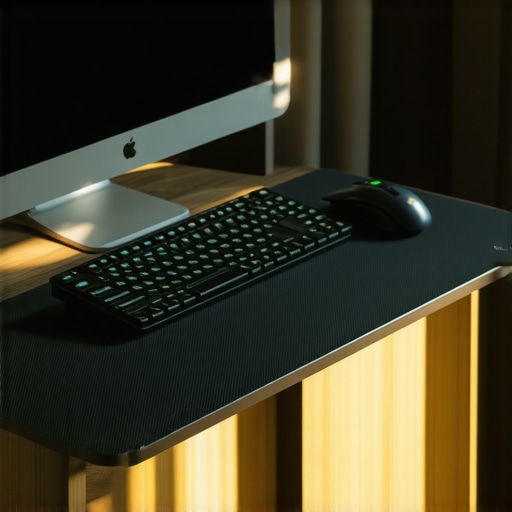
How do I maintain these results over time?
Consistency usually dies when things get complicated. I keep it simple with a ‘daily maintenance’ ritual. For me, that’s two minutes of the dead bug variation that actually protects your spine. It resets the relationship between my ribcage and my pelvis, which is the cornerstone of any decent adjustment. Speaking of which, I still schedule a monthly check-in with my chiropractor. I treat it like a ‘tune-up’ for my nervous system. Understanding why chiropractic care is your secret weapon for better posture changed my perspective—it’s not about fixing a broken back, it’s about keeping a healthy one mobile. By combining professional how chiropractic adjustments enhance posture and mobility with my daily drills, I’ve managed to stay pain-free for three years straight.
Where the Future of Posture is Heading
Looking ahead to 2026 and beyond, I predict we’re going to see a massive shift toward ‘smart furniture.’ Imagine a desk that senses your weight distribution through the floor and gently adjusts its height to nudge you out of a static lean. Until then, the burden of maintenance is on us. I highly recommend checking out the ultimate guide to improving mobility and posture in 2025 to get ahead of these trends. My challenge to you today: Don’t just read this and keep sitting. Get on the floor and try that dead bug variation I mentioned. Your lower back will thank you before you even stand back up.
The Lessons My Sore Heels Taught Me
Looking back, my biggest realization was that static is the enemy. I used to think if I found the perfect height, I could stay there forever, but the body thrives on variety. I learned that your desk height actually shifts depending on whether you are wearing sneakers, slippers, or standing on a mat. Another lightbulb moment was realizing that discomfort is data; it is your body telling you exactly where your link between mobility and posture is breaking down. Finally, I stopped viewing my chiropractor as a mechanic I only visited when I was broken and started seeing them as a partner in long-term performance.
#IMAGE_PLACEHOLDER_E#
My Essential Setup for All-Day Energy
If you are serious about making this habit stick, I recommend a few non-negotiables. First, get a contoured anti-fatigue mat; it forces your ankles to make micro-adjustments that keep blood flowing. Second, I swear by specific mobility boosts for posture like the dead bug or the hip hinge to keep the core engaged. These are not just exercises; they are the armor that protects your spine while you work. Lastly, use the ultimate guide to improving mobility and posture in 2025 as your roadmap whenever you feel your progress hit a plateau.
Build a Body That Supports Your Ambition
Your standing desk should not be a source of stress; it should be a tool that helps you feel as energized at 5 PM as you did at 9 AM. By prioritizing why chiropractic care is your secret weapon for better posture and staying consistent with your dead bug variation that actually protects your spine, you are investing in a future where back pain does not dictate your productivity. You have the tools and the knowledge; now it is time to put them into motion. Have you ever tried the 20-8-2 rule, or do you have your own secret standing interval that works? Let me know in the comments below!