
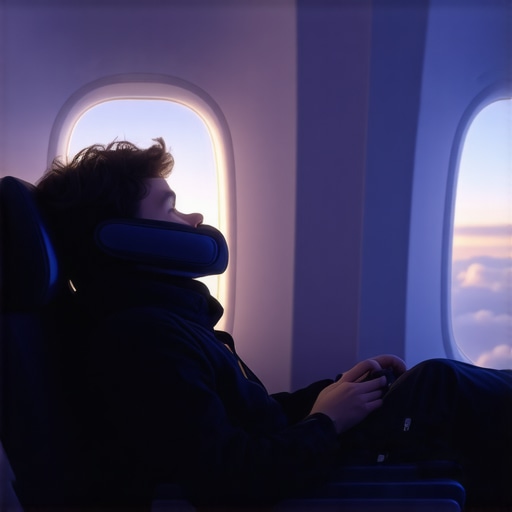
I’ll never forget the flight from New York to Paris where I woke up, tried to reach for my water, and felt a lightning bolt of pain shoot from my ear to my shoulder blade. I had “won” the window seat, but I had lost the battle for my spine. I’d spent four hours leaning my head against the cold plastic of the cabin wall, thinking I was being clever. By the time we landed, my neck was locked. It wasn’t just an inconvenience; it ruined my first two days in the City of Lights. This happens to the best of us because we treat airplane seats like lounge chairs when they are actually ergonomic nightmares. We focus on the softest pillow or the best noise-canceling headphones, but we ignore the actual mechanics of how our vertebrae are stacked.
Stop the In-Flight Rigor Mortis Before It Starts
The reality is that most of us make the mistake of trying to “settle in” by slumping. Early on, I was the king of the slump. I thought if I just slid my hips forward, I’d be more comfortable. In reality, I was just creating a massive strain on my lower back and forcing my neck into a forward-leaning crane position. This is why your tailbone hurts after a long flight as much as your neck does. The secret isn’t just about where your head goes; it’s about the foundation. If your pelvis is tilted wrong, your neck has no chance. I learned the hard way that a little bit of lumbar support can change everything. Even a rolled-up sweatshirt tucked into the small of your back can prevent the dreaded “C-curve” that leads to a week of stiffness. We are aiming for a neutral spine, even when the airline only gives us seventeen inches of width to work with.
Does a Tiny Seat Adjustment Really Make a Difference?
You might be thinking that no amount of fidgeting will save you from a middle seat in economy. I get it. But even minor shifts in your center of gravity can offload the pressure on your cervical discs. According to research published in the Journal of Physical Therapy Science, even a 15-degree change in sitting posture can significantly reduce the load on the neck muscles. I used to carry those massive U-shaped pillows, but I realized they often do more harm than good by pushing the chin toward the chest. Now, I check if my pillow is too flat or too bulky before I even pack it. Usually, a thin scarf or a small inflatable support that keeps the neck from dropping sideways is all you need. Have you ever walked off a plane feeling like you needed a literal crane to straighten your head? The goal today is to give you a roadmap for your next trip. We are going to look at the “stacking” method and why improving mobility and posture before you even get to the airport is your best defense. We’ll also cover the correct way to stretch your neck after a long flight so you can actually enjoy your vacation instead of hunting for the nearest pharmacy.
Build a Foundation That Does Not Sink
Imagine your spine is a stack of dinner plates. If you tilt the bottom plate, the whole tower is going to wobble. Most airline seats are designed with a bucket shape that forces your pelvis into a ‘slumped’ position. This is the root of the problem. To fix it, you need to manually tilt your pelvis back into a neutral position. I have found that using a lumbar roll correctly—or even a rolled-up plane blanket—tucked right above your belt line forces your lower back to maintain its natural curve. This prevents the chain reaction of pain that travels up to your shoulders. When I flew to Tokyo last year, I actually sat on a firm, folded scarf to keep my sit-bones level because the seat cushion was so worn out. It felt strange for five minutes, but I walked off that plane without the usual ‘old man’ hobble and avoided the need to fix my pelvic tilt immediately upon arrival.#IMAGE_PLACE_HOLDER_B#
Stop the Bowling Ball Effect on Your Cervical Spine
Your head weighs about 10 to 12 pounds. For every inch it slides forward, the effective weight on your neck muscles doubles. In a cramped economy seat, we naturally lean forward to look at screens or drop our heads to sleep. This is why your balance decreases as your head slumps forward and why you might feel slightly dizzy or disoriented after landing. The trick is not to hold your head up with brute force, but to ‘stack’ your ears directly over your shoulders. If you are a side-sleeper, skip the generic U-shaped pillows that push your chin down and use something that fills the gap between your shoulder and ear without tilting your head sideways. This is the same logic behind how to sleep on your side without crushing your shoulder; it is all about maintaining a straight line from the base of your skull to your tailbone. Every fifteen minutes, try to ‘grow’ through the top of your head to reset your height.
Micro-Movements to Keep Your Spinal Discs Hydrated
Stagnation is the enemy of the spine. When you sit still for hours, the discs in your back are not getting the ‘pump’ they need to stay hydrated and healthy. You do not need to do yoga in the aisle to fix this. Every hour, perform a simple ‘seated cat-cow’ by tilting your pelvis forward to arch your back, then gently tucking it under. This movement lubricates the joints and is one of the most effective mobility hacks for a more active life even when you are stuck in 32B. I also suggest understanding the link between mobility and posture before you even board the plane. If your hips are locked up before the flight, your neck will inevitably pay the price during the flight. Spend ten minutes in the terminal doing some basic hip hinges or ankle circles to ‘unlock’ the system before you enter the metal tube for six hours. These small, direct actions are the difference between a vacation and a recovery mission.Most people think the goal of a long flight is to find one ‘perfect’ ergonomic position and hold it like a statue until the wheels touch the tarmac. This is the single biggest myth in the world of spinal health. In my experience, the person trying to maintain a rigid, military-style posture for six hours often ends up in more pain than the person who fidgets. The reality is that the truth about perfect posture and why it doesn’t exist centers on the fact that your best posture is actually your next posture. When you stay static, you are essentially asking your muscles to perform an isometric hold for hours on end, which leads to oxygen deprivation in the tissues and that familiar ‘brick-like’ feeling in your traps.
The Trap of Sitting Perfectly Still
Research published in the European Spine Journal indicates that sedentary loading is less about the specific angle of the spine and more about the lack of ‘postural variability.’ If you aren’t moving, you aren’t pumping. Your intervertebral discs rely on a process called imbition—literally sucking in nutrients and fluid through movement. By sitting perfectly still in what you think is a ‘good’ position, you are actually starving your discs of the hydration they need to stay resilient. This is why I always tell my clients that expert tips for daily adjustments must include frequent, micro-shifts in weight. 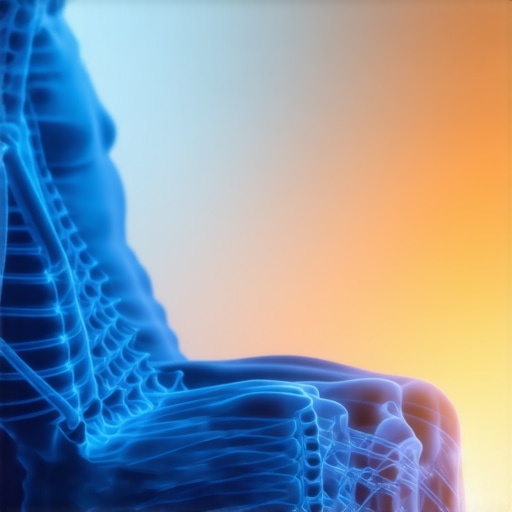
Why Your Post-Flight Stretch Might Be Backfiring
Here is the ‘oops’ factor most travelers fall for: the aggressive post-flight neck pull. You land, your neck feels tight, so you grab your head and yank it to the side until you hear a pop. Stop doing that. If your stiffness is actually coming from a sensitized nerve—which is common after being compressed in a small seat—that aggressive stretch is like pulling on a raw nerve ending. Understanding the difference between nerve pain and muscle soreness is vital here. If you feel a sharp, electric, or radiating sensation, why stretching your neck is making your headaches worse becomes very clear: you are irritating the nervous system rather than soothing the muscle. Instead of pulling, try gentle rotations or ‘nerve glides’ that encourage the nerve to slide through the tissue without being over-tensioned.
Is Your ‘Perfect Posture’ Actually Starving Your Joints?
A sophisticated traveler knows that a flight is an endurance event for the nervous system. This is where chiropractic adjustments unlock a pain-free lifestyle by ensuring that your joints are actually capable of moving through their full range once you leave the plane. If a segment of your spine is ‘stuck’ or restricted before you even board, no amount of lumbar rolls or fancy pillows will help because the foundation is compromised. This is why I advocate for how chiropractic adjustments enhance posture and mobility as a preventative measure. You want your spine to be a dynamic, moving system, not a frozen one. Have you ever fallen into the trap of ‘sitting straight’ for hours only to feel more stiff? Let me know in the comments.
My Secret Weapon for Long-Haul Comfort
I’ve tried every gimmick in the travel catalog, from the ‘ostrich pillows’ to the weird chin straps, but the only thing that consistently saves me is a high-quality inflatable lumbar roll. Why inflatable? Because airplane seats are not uniform. A foam roll that works in a Boeing 737 might be too thick for an Airbus A350. With an inflatable version, I can micro-adjust the pressure to the exact depth of the seat’s bucket. I’ve found that using a lumbar roll correctly is less about ‘propping yourself up’ and more about filling the negative space between your spine and the seat back. When that gap is filled, your muscles can finally stop firing just to keep you upright. This small tool acts as an external skeleton, allowing you to relax without collapsing into a heap that wrecks your alignment.
Small Shifts Keep Your Discs Alive
While the lumbar roll provides the foundation, you still have to deal with the stagnation of cabin life. I swear by the ‘Micro-Reset’ every 45 minutes. I’m talking about a five-second contraction of the glutes followed by a gentle pelvic tilt. If you can master this, you can actually use your flight time to fix your pelvic tilt rather than making it worse. These expert tips for daily adjustments are what separate the people who land ready for a hike from the people who land ready for a heating pad. It’s about being an active participant in your seating rather than a passive victim of it. 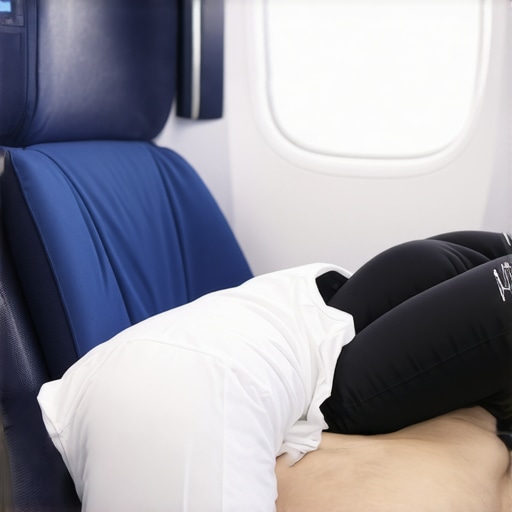
How can I keep my spine healthy for the long haul?
Maintenance is a game of consistency, not intensity. You don’t need a two-hour gym session after you land; you need a five-minute protocol that addresses the specific compression you just endured. I always recommend following the ultimate guide to improving mobility and posture in 2025 as your baseline. For travel specifically, I focus on ‘decompression’ moves. Dr. Stuart McGill, author of Back Mechanic and a leading expert in spine biomechanics, suggests that the best way to handle long-term sitting is through ‘spine hygiene’—avoiding the specific postures that sensitize your discs in the first place. I’ve noticed that if I do the 2-minute drill for better spinal rotation immediately after checking into my hotel, the ‘stuck’ feeling in my mid-back disappears almost instantly.
The Future of Travel Ergonomics
Looking ahead, I predict we are going to see a massive shift in ‘Active Seat Technology.’ We are already seeing prototypes of seats with piezoelectric sensors that detect pressure points and automatically adjust the lumbar support to force micro-movements in the passenger’s spine. Until then, you are your own best advocate. Understanding how chiropractic adjustments enhance posture and mobility gives you the hardware upgrade you need so that these software fixes—your stretches and rolls—actually work. Don’t wait until you’re in pain to care about your alignment. Try the ‘Micro-Reset’ on your next commute, even if it’s just a 20-minute drive, and feel the difference it makes in your energy levels by the time you arrive.
Lessons from a Decade of Transatlantic Middle Seats
If there is one thing I’ve learned after years of chasing air miles, it is that your body does not care about your frequent flyer level; your nervous system always keeps the score. One of the biggest lightbulb moments for me was realizing that my post-flight headaches weren’t just from altitude—they were from my neck being pushed forward by the headrest. I also learned that expert tips for daily adjustments aren’t just for the office; they are life-savers at 35,000 feet. Another myth I had to bust was the idea that I needed a ‘perfect’ seat. In truth, the best seat is the one where you move the most, preventing your joints from locking up in the first place.
My Personal Survival Kit for Long-Haul Economy
I never board a plane without three specific items anymore. First, an inflatable lumbar roll is mandatory because it allows me to adapt to different cabin seat depths. Second, I always review practical chiropractor strategies before I pack, ensuring my body is actually mobile enough to handle the cramped quarters. Third, I carry a small massage ball in my carry-on for a quick glute and upper-back release in the terminal. I trust these tools because they address the root cause of stiffness rather than just masking the symptoms. If you find yourself consistently sore after flying, it might be time to look at why chiropractic care is your secret weapon for better posture before your next major trip.
The Freedom of Landing Without the Ache
Travel is supposed to be about discovery, not recovery. When you prioritize your spinal health during the journey, you give yourself the gift of a better destination. Remember that your posture is a dynamic reflection of how you move through the world, even when that world is a pressurized metal tube. By incorporating the ‘Micro-Reset’ and being mindful of how you stack your cervical spine, you aren’t just avoiding a stiff neck; you are enhancing your overall vitality for the trip ahead. Don’t let a bad seat ruin a great vacation. Start with a simple ritual like the daily move that prevents hip impingement and watch how much lighter your legs feel when you finally step off the plane. You have the tools and the knowledge—now it is time to travel without the pain. Have you ever found a specific travel pillow that actually supported your neck, or have they all been a disappointment? Let me know below.