

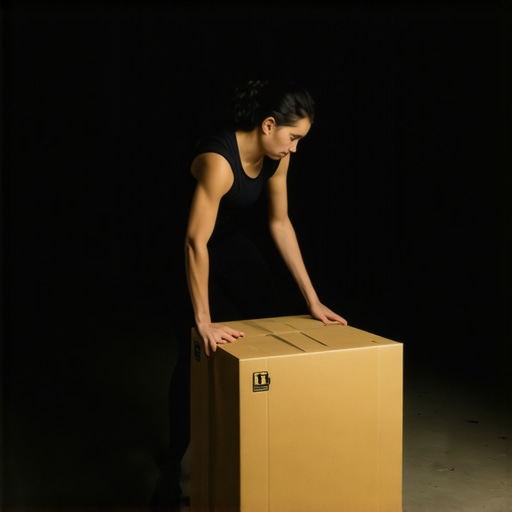
The air in the garage was stale, smelling of old cardboard and packing tape. I grabbed the ‘kitchen’ box—the one filled with cast iron—and gave it a confident tug. Snap. That was the sound of my weekend plans evaporating into a cloud of ibuprofen and heating pads. I’ve been there, staring at the ceiling, wondering why my body betrayed me over a box of frying pans. We’ve all seen the posters of the guy squatting perfectly, but when you’re in the middle of a move, who actually does that? Today, I’m going to share the hard-won secrets of moving heavy stuff without ending up in a waiting room.
Stop Treating Your Spine Like a Mechanical Crane
Most of us make the same mistake I did: we treat our back like a mechanical hoist. According to the Mayo Clinic, improper lifting is one of the leading causes of acute back strain because it puts hundreds of pounds of pressure on those delicate spinal discs. Early in my journey to better mobility, I thought ‘lifting with my legs’ just meant bending my knees a little bit while my torso did all the heavy tilting. I was wrong. If you don’t know how to safely pick up a heavy box from the floor, you’re basically playing Russian Roulette with your L5-S1 vertebrae. It’s about more than just raw leg strength; it’s about the hinge. Have you ever felt that terrifying ‘catch’ in your back while reaching for something surprisingly heavy? Drop a comment and tell me if you’ve ever been humbled by a box of books.
Does fancy lifting gear actually protect you?
I used to wear one of those velcro back belts, thinking I was invincible. Spoiler: I wasn’t. Those belts often give a false sense of security that leads to overreaching. Real protection comes from internal stability and knowing the hip hinge secret that keeps the load on your glutes instead of your lumbar spine. We’re going to dive into the mechanics that actually matter so you can get through your next move—or even just a heavy grocery run—without needing to know how to handle a sudden back spasm. When you understand the vital link between mobility and posture, lifting heavy objects stops being a gamble and starts being a routine task.
Get Your Feet Right Before You Touch the Box
Get your feet right before you even touch the box. I once tried to move an old CRT television—the kind that weighs as much as a small moon—with my feet pinned together like I was standing at attention. I felt like a Jenga tower in a hurricane the moment I shifted the weight. Since that day, I’ve learned to widen my base significantly. You want your feet at least shoulder-width apart, with one foot slightly ahead of the other. This isn’t just about balance; it creates a stable foundation that allows your center of gravity to stay low. If your feet are too close, you’re forced to bend at the waist, which is exactly how you end up needing to know the difference between nerve pain and muscle soreness after the job is done.
The Hip Hinge is Your Back’s Best Friend
The hip hinge is your back’s insurance policy. Most people ‘squat’ by dropping their knees forward, but a true power lift comes from the hips. Think of it like trying to close a car door with your butt because your hands are full of groceries. That backward motion of the pelvis is the hip hinge secret for pain-free deadlifts and heavy lifting. By shifting your weight into your heels and driving your hips back, you take the load off those tiny spinal muscles and put it on your glutes. I remember a move where I had to haul thirty boxes of books; by focusing on the hinge instead of the spinal bend, I woke up the next morning feeling like I’d hit the gym, not like I’d been hit by a truck.
Why Your Breath is the Secret to Core Stability
We often hold our breath when we’re nervous about a heavy load, but that actually makes your spine more vulnerable. You need ‘intra-abdominal pressure.’ Before you lift, take a deep breath into your belly—not your chest—and brace your core as if someone is about to punch you in the stomach. This creates a natural weight belt from the inside out. Research shows why your breathing pattern determines your lower back stability. If you exhale the moment you start the upward drive, you lose that internal pressure and your spine can ‘buckle’ under the weight. Keep that brace tight until the box is safely at its destination.
Don’t Let Your Ankles Sabotage Your Spine
Don’t let your ankles sabotage your spine. If you can’t get deep enough into a squat without your heels lifting off the floor, your body will automatically compensate by rounding your lower back. This is a classic mobility trap that many fall into. I spent years wondering why my back hurt after gardening until I realized my ankles were as stiff as frozen wood. Learning how to fix stiff ankles that limit your squat depth changed everything for me. When your joints move correctly, you can stay upright while grabbing a heavy object, ensuring the best way to lift heavy boxes without throwing your back out is physically possible for your frame. It’s all connected—once you start improving posture through mobility, the heavy lifting becomes a secondary thought to the way your body naturally wants to move.
While we’re talking about mechanics, I need to address the elephant in the room: the ‘Perfect Posture’ myth. We’ve been conditioned to think that a straight spine is a healthy spine, but science suggests otherwise. In fact, the truth about perfect posture and why it doesn’t exist is that your body is designed for movement, not for being a statue. When you try to maintain a rigid, military-style posture while lifting, you actually increase the ‘shear’ force on your vertebrae. Your muscles become pre-fatigued from the tension of just standing there, leaving them less capable of reacting when the weight of the box actually hits your hands.
The Myth of the Perfectly Straight Spine
In my years of studying movement, I’ve found that people who focus too much on a ‘flat back’ often end up locking their joints. This rigidity is a recipe for disaster. A study published in the Journal of Biomechanics suggests that movement variability—the ability of your nervous system to distribute load across different tissues—is a far better indicator of spinal health than rigid alignment. Instead of aiming for a perfectly straight line, aim for a ‘neutral’ spine where your natural curves can act as shock absorbers. If you’re too stiff, you’re essentially turning your spine into a brittle glass rod rather than a resilient carbon-fiber pole.
Why does one side of your body always feel like rusted iron?
If you’ve noticed that your right hip feels like a block of concrete while your left moves like butter, you aren’t alone. This is the nuance most ‘how-to’ guides miss. Most of us have a dominant side that we instinctively lead with, leading to significant imbalances. Understanding why your dominant side always feels tighter than the other is crucial for safe lifting. If you don’t account for this asymmetry, you’ll subconsciously twist your spine mid-lift to compensate for a tight hip. This ‘micro-rotation’ under load is the number one reason people ‘blow out’ a disc on a lift that didn’t even feel that heavy.
The Dangerous Trap of Overstretching
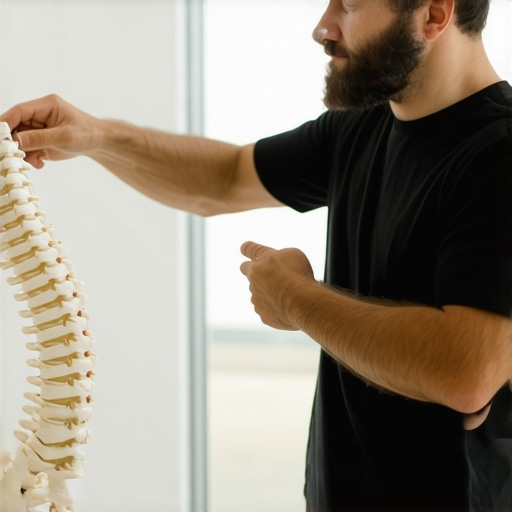
Here is the ‘oops’ factor I see constantly: the urge to stretch a ‘tight’ lower back. When your back feels locked up after a heavy lift, your instinct is to touch your toes or pull your knees to your chest. Stop. Often, that tightness is actually ‘protective tension’ your brain has created because your spine feels unstable. If you force a stretch, you might be irritating the nerves further. In many cases, why your gentle stretching is actually causing more inflammation becomes clear when you realize you’re pulling on tissues that need stability, not more length. Instead of stretching, focus on how chiropractic adjustments enhance posture and mobility by resetting the joint position rather than just yanking on the muscle.
Avoid the Foam Roller Mistake
Another common mistake is attacking the lower back with a foam roller. I see people rolling their lumbar spine like they’re trying to flatten pizza dough, but the truth about foam rolling your lower back is that those vertebrae aren’t protected by the rib cage. You’re essentially smashing your lumbar discs into your spine. If you want to use tools, focus on the glutes and the upper back (thoracic spine). Have you ever fallen into the trap of trying to stand ‘perfectly’ straight only to end up more stiff, or tried to ‘roll out’ a sore back only to feel worse the next day? Let me know in the comments. We’re all learning to navigate the ultimate guide to improving mobility and posture in 2025 together, and sometimes the biggest breakthroughs come from unlearning the ‘common knowledge’ that’s been holding us back.
If the foam roller is the blunt instrument of the mobility world, the lacrosse ball is the surgical scalpel. After years of trial and error, I’ve stopped trying to ‘roll out’ my lower back and started focusing on the actual culprits: the psoas and the gluteus medius. When these muscles get glued down, they pull on your lumbar spine like a rigged sail on a boat. I personally use a high-density lacrosse ball to pin and stretch the tissue around my hip flexors every single morning. According to the Journal of Bodywork and Movement Therapies, targeted pressure on the psoas can significantly reduce lumbar lordosis strain by releasing the anterior pull on the spine. It’s uncomfortable, bordering on painful, but it’s the difference between walking like a tin man and moving with fluid grace.
Ditch the Blunt Tools for Pinpoint Pressure
I don’t just roll aimlessly anymore; I hunt for ‘hot spots.’ When you find that one spot in your glute that makes your toes curl, that’s where the magic happens. By staying on that point and slowly moving your leg through its range of motion, you’re performing a self-directed version of mobility hacks for a more active life. This is how I’ve managed to keep lifting heavy boxes and kettlebells well into my late 30s without the constant ‘twinge’ that used to haunt me. It’s about being precise. If you’re just rolling back and forth on a giant blue cylinder, you’re mostly just tenderizing your skin rather than fixing your mechanics.
How can I stay mobile without it becoming a full-time job?
The secret isn’t a grueling 90-minute yoga session every night; it’s the ‘greasing the groove’ method. I keep my mobility tools right next to my coffee maker. While the water boils, I do the 3-minute evening routine for a less stiff morning—except I do it in the AM. Consistency beats intensity every single time. For the deep-seated issues that my lacrosse ball can’t reach, I rely on professional intervention. I’ve found that how chiropractic adjustments enhance posture and mobility isn’t just about ‘cracking’ things back into place; it’s about resetting the nervous system so your muscles stop over-contracting in a panic. Think of it as a hard reboot for your body’s hardware.
Professional Maintenance is Your Secret Weapon
I used to think seeing a professional was only for when I was ‘broken.’ That was a massive mistake. Now, I view it as high-performance maintenance, much like changing the oil in a car before the engine seizes. Regular visits are why chiropractic care is your secret weapon for better posture. These adjustments ensure that when I do decide to move a heavy oak dresser, my joints are actually stacked and ready to handle the load. We are seeing a massive shift in how we approach spinal health; I predict that by 2030, we will all be using wearable biofeedback sensors that vibrate when our spinal shear force reaches a dangerous threshold. Until then, we have to rely on our internal ‘sensors’ and the expertise of those who study spinal mechanics for a living. If you want to see how this fits into a broader strategy, check out the ultimate guide to improving mobility and posture in 2025.
If you’re serious about never ‘throwing your back out’ again, I want you to try one thing tomorrow morning: the ‘Belly Breathing Brace’ before you even get out of bed. Build that internal pressure before your feet hit the floor, and see if your first steps feel just a little bit lighter. This simple habit is one of many practical chiropractor strategies that turn a fragile back into a resilient one.
Three Harsh Realities of Moving Boxes I Had to Learn the Hard Way
Reflecting on my own spinal mishaps, I’ve realized that pain is a lagging indicator. Most people wait for the ‘pinch’ before they change their form, but by then, you’re already dealing with inflammation. Secondly, your ‘strong’ dominant side is often your biggest liability because it’s the one that overcompensates and twists under pressure, leading to why your dominant side always feels tighter than the other. Lastly, a spine that can’t move is a spine that will eventually break. Flexibility isn’t just about touching your toes; it’s about making sure your joints can handle unexpected shifts in weight.
#IMAGE_PLACEHOLDER_E#
Stuff I Actually Use When My Joints Feel Like Sandpaper
I don’t leave my physical health to chance anymore. My daily toolkit includes a high-density lacrosse ball for pinpoint tissue release and a simple lumbar roll for long drives. I also swear by the dead bug variation that actually protects your spine to keep my core ‘awake’ before I lift anything heavier than a coffee mug. For the deeper structural issues, I prioritize mobility boosts for posture through regular professional check-ins. These aren’t just luxuries; they are the baseline for staying active as I get older.
Stop Being Afraid of Your Own Body
It’s easy to become ‘kinesiophobic’—scared to move because you’re afraid of the next spasm. But your body is incredibly resilient when you give it the right mechanics and enough recovery. Whether you’re reorganizing the garage or just picking up a toddler, remember that chiropractic adjustments unlock a pain-free lifestyle today by ensuring your ‘hardware’ is aligned for the ‘software’ of your movements. Start small, breathe deep, and trust the process of building a more durable version of yourself. Have you ever felt a sudden ‘twinge’ while lifting something you thought was light? Let me know in the comments below!