
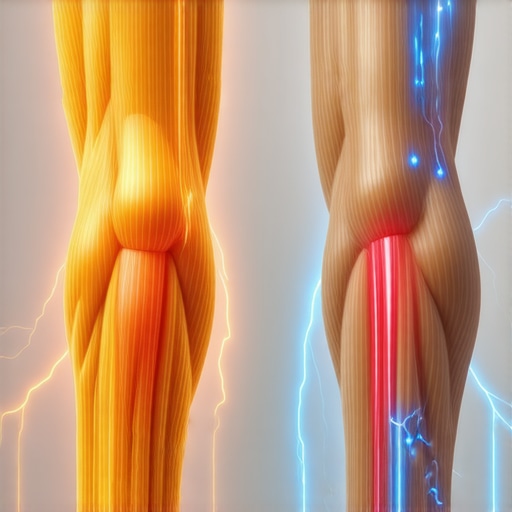
I’ll never forget the Tuesday I thought I’d finally mastered the back squat. I went home, felt that familiar tightness, and patted myself on the back. But by midnight, my right leg wasn’t just tired; it was singing a high-pitched, electric tune that felt like a localized lightning strike. I spent the next hour trying to “stretch it out,” only to find that every time I touched my toes, the pain got sharper. I was making a classic rookie error. I was treating a nerve like a muscle, and trust me, nerves have a very long memory when they’re offended. [IMAGE_PLACEHOLDER]
Stop Treating Every Ache Like a Workout Victory
We’ve been conditioned to believe that “pain is weakness leaving the body,” but that’s dangerous advice when you don’t know who’s talking to you. If it’s your muscles, they’re usually just rebuilding. But if it’s your nerves? They’re screaming for help. Learning to distinguish the two is the difference between a three-day recovery and a three-month physical therapy stint. My goal today is to help you read your body’s internal Morse code so you can stop guessing and start healing.
Is that “tightness” actually worth the hype?
One of the biggest mistakes I made early in my fitness journey was assuming that more stretching always equals more relief. I used to think the truth about foam rolling your lower back was simply “roll until it stops hurting.” I couldn’t have been more wrong. When you have nerve irritation, that “tight” feeling isn’t a short muscle; it’s a protective tension. If you try to power through it, you’re essentially tugging on a live wire. According to the Mayo Clinic, nerve pain (neuralgia) is often described as burning, stabbing, or electric, while muscle pain is typically a dull, deep ache. Have you ever felt a “zing” that traveled down your arm or leg after what you thought was a simple stretch?
The Electric Slide vs The Heavy Thud
Think of muscle soreness like a heavy blanket. It’s localized, it feels tender when you press on it, and it usually peaks about 48 hours after you’ve done something active. It’s predictable. Nerve pain, however, is a chaotic roommate. It might start in your lower back but end up making your big toe go numb. It’s why chiropractic care is your secret weapon; it focuses on clearing the path for those nerves so they stop sending those frantic SOS signals. I once tried to fix what I thought was a tight hip by doing aggressive stretches for twenty minutes straight. By the end, I couldn’t sit in my car without a shooting pain because why your hamstring stretch is actually irritating your sciatic nerve often comes down to the fact that nerves don’t like being stretched like rubber bands—they prefer to glide. Once I swapped the aggressive stretching for a simple nerve glide that stops sciatica, the “tightness” vanished in days. We need to stop the smash and stretch mentality and start looking at the mechanics of our movement.Start by testing your range without adding weight. I remember a specific morning in my living room when I thought my neck was just ‘stiff’ from a bad pillow. I tried to force a rotation, and the resulting headache felt like a drum beating against my skull. I learned the hard way that why stretching your neck is making your headaches worse is often because you’re pulling on an inflamed nerve root. Before you reach for the foam roller, you need to know how to test your own spinal rotation at home using zero-tension movements. If you feel a catch or a spark, stop immediately. That’s your nervous system hitting the brakes. 
Run your own spinal diagnostic tonight
Instead of guessing, use a simple rotation check. Sit in a chair with your feet flat, keep your hips forward, and slowly turn your head and torso. If the movement is a ‘dull’ stop, it’s likely soft tissue. If it’s a ‘sharp’ stop or sends a tingle down your arm, you’re dealing with a nerve. To fix this, you don’t need force; you need a 2-minute drill for better spinal rotation that emphasizes rhythm over range.
Ditch the static stretch for a fluid glide
Nerves prefer movement to tension
Imagine a garden hose caught in the grass. If you pull it hard from one end, it kinks. If you walk over and gently shake it, it slides free. Your nerves are that hose. When they get ‘trapped’ by tight muscles or misaligned vertebrae, the truth about cracking your own back for relief is that you’re usually just creating temporary endorphins without fixing the trap. You need to perform nerve glides—movements that slide the nerve through its pathway without putting it on max tension. This prevents the inflammatory cycle that keeps you stuck on the couch.
Clear the signal interference at the source
Why professional alignment beats DIY cracking
I used to be a chronic ‘self-cracker.’ Every twenty minutes, I’d twist my torso until I heard a pop. It felt great for ten seconds, then the tightness returned. It wasn’t until I understood how chiropractic adjustments enhance posture and mobility that I realized I was just irritating the same joint over and over. A targeted adjustment acts like a reset button for the nervous system. By realigning the bones, chiropractic adjustments unlock a pain-free lifestyle today by removing the physical pressure on those ‘live wires.’ It turns down the volume of the pain signal so your muscles can finally stop guarding and start relaxing naturally.
The myth of the frozen soldier
Many people think good posture is a static pose they have to ‘hold’ all day, like a mannequin in a shop window. This is the fastest way to fatigue your paraspinal muscles and create new trigger points. In my experience, the best posture is your next posture. Research published in the *Journal of Bodywork and Movement Therapies* suggests that postural variability—the ability to shift and move frequently—is more protective against pain than any single ‘correct’ position. If you’re trying to stay perfectly upright for eight hours, you’re just creating a different kind of strain. This is why the truth about perfect posture and why it doesn’t exist is so liberating; it gives you permission to move and breathe naturally.
Why does my body fight the new alignment?
If you’ve ever wondered why you feel like you’re slouching again thirty minutes after a session, it’s not because the adjustment ‘didn’t take.’ Your nervous system has a ‘set point,’ and if you’ve spent years slumped over a laptop, that’s what your brain considers ‘home.’ When we shift things back into place, the brain initially feels ‘off’ even when the alignment is ‘on.’ It takes time to improve mobility and posture because we are essentially rewiring your internal GPS. You might notice why you feel taller after a spinal adjustment—it’s the decompression of the joints and the sudden clarity of the nerve signals finally reaching your brain without static interference.
Don’t let a brace do your core’s job
Here is the ‘oops’ factor I see constantly: people buying those $20 posture braces from social media ads. It feels like a quick fix, but why most posture braces actually make your back weaker is quite simple. When the brace pulls your shoulders back, your rhomboids and traps stop working. They get lazy because they don’t have to fight gravity anymore. The moment you take the brace off, you collapse further than before because your natural support system has gone on vacation. Instead of outsourcing your stability to a piece of elastic, you should revolutionize your posture with targeted mobility exercises that teach your muscles to do the heavy lifting themselves. Have you ever fallen into the ‘quick fix’ trap with a brace or a gadget? Let me know in the comments below, I’d love to hear what worked (or didn’t) for you.Instead of throwing money at velcro straps and vibrating sensors, I started looking at the tools I already had. The most effective piece of ‘equipment’ I own is a simple, two-dollar lacrosse ball. I use it for my pec minor, that tiny muscle in your chest that, when tight, pulls your shoulders into that familiar ‘C’ shape. By pinning the ball between my chest and a wall, I can release the tension that an hour of stretching couldn’t touch. This is the foundation of the ultimate guide to improving mobility and posture in 2025: targeted pressure followed by intentional movement. If you’re not clearing these physical blockages, you’re essentially trying to drive a car with the parking brake on. 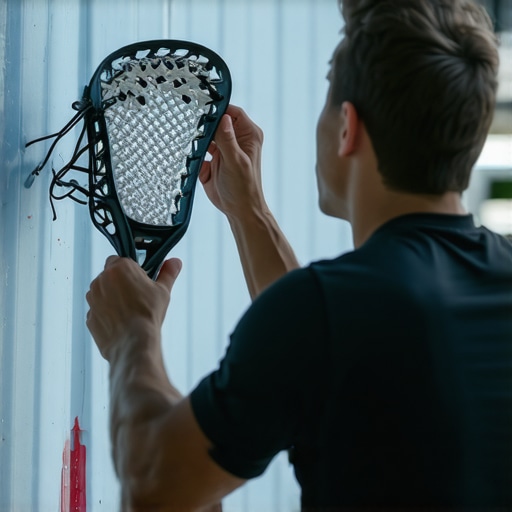
Stop buying gadgets and start using gravity
For the longest time, I thought I needed a fancy ergonomic chair to fix my life. The reality? No chair can save you if you don’t know how to stack your weight. I realized why most standing desks are set at the wrong height only after I started paying attention to my elbow angle and eye line. If your screen is too low, your neck becomes a crane, and no amount of lumbar support will stop the inevitable ache. A study published in Nature Scientific Reports (2021) highlighted that prolonged static sitting—even in ergonomic chairs—leads to significantly reduced disc height and increased stiffness compared to dynamic movement. This is why I treat my workspace as a tool. I swap between sitting, standing, and even kneeling to keep my nervous system guessing.
How do I maintain my mobility results for the long haul?
Maintenance isn’t about a grueling hour-long routine; it’s about the small, ‘invisible’ wins you stack throughout the day. I’ve found that why your breathing pattern determines your lower back stability is the biggest secret to long-term success. If you’re chest-breathing all day, your neck muscles are doing the work your diaphragm should be doing. I make it a point to do three deep, ‘belly-to-back’ breaths every time I finish a task or send an email. It’s a literal reset for your posture. I also swear by the hip hinge secret for pain-free deadlifts, even when I’m just picking up a grocery bag or a laundry basket. Integrating these mechanics into your daily life is how you graduate from ‘fixing a problem’ to ‘owning your health.’
Smart sensors and the future of spinal tech
Looking ahead, I predict we are moving away from passive supports and toward biofeedback. Within the next few years, I expect we’ll see AI-integrated clothing that doesn’t just pull your shoulders back but actually measures the electrical activity in your muscles to tell you when they’re fatiguing. We are moving toward a world where your phone might nudge you because it detects your head is slumping before you even feel the tension. But until that high-tech future arrives, you need to focus on the best exercises for building a spine that doesnt ache. You can’t outsource your strength to a computer. Even the best tech is just a mirror; you still have to do the work. Don’t forget to check your foundation, too—it’s worth learning how to tell if your back pain is coming from your shoes before you blame your chair. I want you to try this tonight: find a firm ball, spend 60 seconds on each side of your chest, and see how much lighter your shoulders feel.
The Breakthroughs That Changed My View of Spinal Health
The most important realization I had was that ‘more’ isn’t always ‘better.’ I spent years trying to stretch my way out of pain, only to realize I was just irritating my nervous system further. These days, I focus on mobility hacks for a more active life that prioritize flow over force. Another major shift was understanding the link between mobility and posture; it is a two-way street where your structural alignment dictates your daily function. Finally, I stopped looking for a one-size-fits-all solution and started listening for the sharp ‘zing’ versus the dull ‘thud’ in my own movements—that distinction alone saved me months of recovery time.
Gear That Actually Earned a Permanent Spot in My Gym Bag
You do not need a thousand-dollar setup to fix your back. I swear by a simple lacrosse ball for breaking up sticky tissue in the chest and glutes. I also highly recommend checking out the single best exercise for preventing a dowagers hump to combat the ‘tech neck’ we all struggle with in a digital world. For my foundation, learning how to restore your natural arch without expensive orthotics was a game-changer for my lower back stability during long walks. These tools are simple, but when used with consistency, they outperform any high-priced gadget on the market.
[IMAGE_PLACEHOLDER]
Your Body is Waiting for a Better Signal
Healing isn’t a straight line, but it is a journey worth taking. By choosing to enhance your posture with expert chiropractic techniques in 2025, you aren’t just fixing a temporary ache; you are investing in your future self. Remember that chiropractic adjustments are about more than just ‘cracking’ sounds—they are about restoring the clear communication your body needs to thrive. Don’t let another day of ‘manageable’ pain hold you back from the life you want to lead. Have you ever found yourself ‘stretching’ a pain only to realize it was actually making the inflammation worse? Let me know in the comments below.