

I was three hours into a project when the fire started—not in my kitchen, but right between my shoulder blades. I kept rolling my shoulders, trying to crack the tension away, but the relief lasted about six seconds. Then I noticed it. My jaw was so tight I could barely open my mouth to take a sip of coffee. It was a lightbulb moment: every time I clenched my teeth, my shoulders hiked up toward my ears. I wasn’t just working; I was bracing for impact. I used to think I just needed a better chair, but I was wrong. It wasn’t my furniture; it was my face. Today, we are going to bridge that gap between your mouth and your mid-back. I’ll show you why your tech neck might actually be tension jaw and how to finally loosen those knots for good.
Your Jaw Is Pulling the Strings on Your Upper Back
If you feel like you have a permanent knot under your shoulder blade that won’t quit, you aren’t alone. I used to think I just needed to revolutionize my posture with more gym time. But here is the reality: your body is a closed loop. The muscles you use to chew and clench are neurologically linked to the ones that stabilize your neck and upper back. When the jaw (the TMJ) is under constant pressure, it sends a danger signal down the chain. This leads to that heavy, lead-like feeling in your traps. I spent months buying every gadget on the market, but the relief was always temporary because I was ignoring the source.
Is it really possible for my teeth to hurt my shoulders?
It sounds like a reach, doesn’t it? I was incredibly skeptical at first. I thought, “How can my mouth affect a muscle six inches away?” But the fascia—the biological Saran wrap holding us together—doesn’t care about our anatomical categories. A fascinating study published in the Journal of Oral Rehabilitation highlights that people with jaw dysfunction almost always show significant changes in their neck muscle activity and head posture. My big mistake early on was thinking I could just stretch my way out of it. I spent hours on a foam roller, but because I didn’t address the tension in my face, the knots came back by lunchtime.
Stop Chasing the Pain and Start Finding the Source
We often focus on where the pain lives, but that is rarely where it starts. I have found that chiropractic adjustments enhance posture by addressing these hidden misalignments that keep our muscles in a state of high alert. If you are constantly stretching your neck and making headaches worse, you might be missing the jaw-to-back connection entirely. Have you ever caught yourself grinding your teeth during a stressful drive and felt your shoulders tighten instantly? Let me know, because once you see the pattern, you can’t unsee it. We are going to dive into how to break this cycle, from simple jaw releases to understanding how your choice of pillow impacts your mid-back health while you sleep.I remember sitting at a red light on 72nd Street, my shoulders practically touching my earlobes. I was so wound up I didn’t even realize my teeth were fused together. I tried the “N-position” I’d read about: placing the tip of my tongue just behind my upper front teeth without them touching. Within seconds, my traps felt like they dropped two inches. It was messy at first—I kept forgetting and going back to the clench—but that one shift changed how I handled my daily commute.
Break the Cycle of Clenching and Cramping
To stop the tug-of-war between your jaw and your spine, you have to address the neurological feedback loop. Think of your jaw as the lead singer and your shoulders as the backup dancers; if the singer is screaming, the dancers are going to be frantic. Most of us treat the dancers while the singer is still losing its mind.
Give your teeth some breathing room
The simplest way to start is by checking your “freeway space.” In a relaxed state, your teeth should never be touching unless you are chewing or swallowing. There should be about 2-3mm of space between your upper and lower molars. If you find your teeth are constantly locked, your brain assumes you are in a “fight or flight” mode. This triggers the connection between jaw clicking and chronic headaches. Every time you catch yourself clenching, simply blow a little puff of air through your lips like you are cooling down soup. This force-resets the muscles around your mouth. 
The “N” trick for instant facial relaxation
This is my favorite stealth move for Zoom calls. Say the letter “N” and hold that tongue position—the tip should be resting on the ridge of tissue just behind your top teeth. Now, keep your tongue there and let your jaw drop open. This position is the anatomical “neutral” for your jaw. When your tongue is at the roof of your mouth, it’s like putting a kickstand on a bike; it supports the structure so the muscles don’t have to work so hard. Integrating these mobility boosts for posture into your day prevents the “burnout” that usually hits your upper back by mid-afternoon.
Skip the DIY neck cracks
When that knot under your shoulder blade gets unbearable, the temptation is to grab your own chin and twist until you hear a pop. Please, stop doing that. While it feels like a release, the truth about cracking your own back for relief is that you are often just over-stretching already loose ligaments while the actual stuck joint stays stuck. This creates more instability, which makes your jaw clench harder to try and stabilize your neck. Instead of a self-crack, try a gentle masseter massage. Place two fingers on the meaty part of your jaw just below your cheekbones. Open your mouth slowly while pressing in and down. It might feel tender, but that is the sensation of your upper back finally getting permission to relax.
Why your daily stretching routine might be backfiring
Most people believe that if a muscle feels tight, it needs to be pulled, elongated, and stretched into submission. I used to be the poster child for this approach. I would spend twenty minutes every morning pulling my ear to my shoulder, trying to force my traps to let go. But here is the hard truth: why your gentle stretching is actually causing more inflammation is a conversation we need to have. When your jaw is perpetually locked, your brain perceives a lack of stability in the upper cervical spine. In response, it ‘shrinks wraps’ your neck muscles to protect you. If you keep stretching those protective guards without addressing the jaw tension, your nervous system will only tighten them further to compensate. It is a biological tug-of-war you will never win.
Could your jaw be acting as a neurological safety brake?
This is where the nuance of the link between mobility and posture becomes fascinating. Advanced clinical studies, including research published in the Journal of Bodywork and Movement Therapies, suggest the existence of a ‘trigemino-cervical reflex.’ Essentially, the nerves that control your chewing muscles are hardwired to the nerves that control your upper neck. If your jaw is ‘on,’ your neck cannot turn ‘off.’ I have seen people spend years in physical therapy for mid-back pain, only to find relief when they realized their nighttime teeth-grinding was keeping their spinal stabilizers in a state of constant fatigue. Have you ever fallen into this trap of stretching the same spot for months with zero permanent change? Let me know in the comments, because you might be treating the symptom rather than the source.
Stop stretching muscles that are already too long
One of the biggest mistakes I see—and one I made for far too long—is the ‘locked-long’ trap. We often feel ‘tightness’ in our upper back and assume the muscles are short. In reality, because we slouch over laptops, those muscles are often over-stretched and exhausted. They aren’t short; they are strained to their limit. Adding more stretching to a muscle that is already over-lengthened is like pulling on a frayed rope. Instead, we need to enhance your posture with expert chiropractic techniques in 2025 that focus on bringing the joints back into alignment so the muscles can finally go slack. 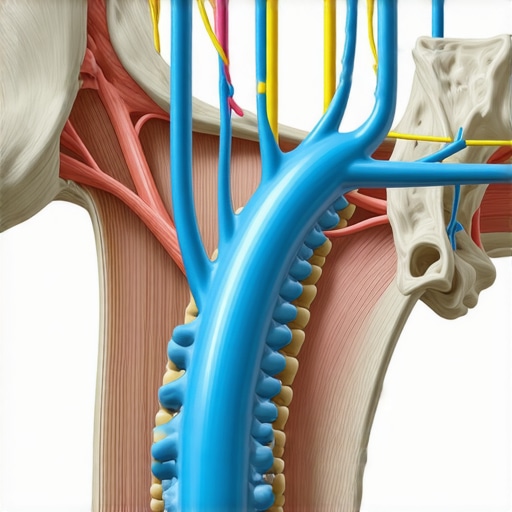
The myth of the perfect posture fix
We’ve been sold a lie that there is a single ‘perfect’ position we should hold all day. The truth is that the truth about perfect posture and why it doesnt exist is that your best posture is your next posture. Movement is the only way to flush out the lactic acid and inflammatory markers that build up when we clench our jaws and freeze our shoulders. If you are waiting for a gadget or a specific chair to fix you, you are ignoring the neurological feedback loop between your TMJ and your mid-back. Real relief comes from breaking the clench-and-brace habit at the source, not just rubbing the spot where it hurts.
So, how do we keep these changes from evaporating the moment life gets stressful again? I spent years in a cycle of feeling great for two days and then waking up with a brick for a shoulder. The secret isn’t just one big fix; it’s about creating a toolkit that works on autopilot. For me, that meant integrating mobility boosts for posture into my actual work hours rather than siloing them into a morning routine. I started using a small acrylic mirror on the side of my monitor. Why? Because you cannot feel what you cannot see. When I see my jaw jutting forward or my chin lifting, I know my upper back is about to pay the price.
I also stopped relying on generic pharmacy mouthguards. If you struggle with clenching, a poorly fitted guard can actually give your jaw more to chew on, increasing the muscle load. I follow the clinical protocols suggested by Dr. Jeffrey Okeson, a world-renowned authority on orofacial pain and author of Management of Temporomandibular Disorders and Occlusion, who emphasizes that stabilization appliances should reduce muscle activity, not encourage it. This is why why chiropractic care is your secret weapon for better posture; it addresses the joint mechanics while you work on the muscular habits.
How do I maintain these results over time?
Consistency beats intensity every single time. I recommend setting what I call a reversion trigger. For example, every time you take a sip of water or receive a notification, perform the 10-second move to reset your shoulders at work. This prevents the cumulative load from reaching a breaking point by the end of the day. I predict that in the next few years, we will see a massive surge in wearable biofeedback—think tiny sensors on your jawline or behind your ears that vibrate when your muscle tension spikes. We are moving toward a world where smart posture isn’t just about your spine, but your entire facial structure.
If you find yourself in a pinch, don’t panic. Knowing how to manage a flare-up of lower back pain at work or upper back tension is about calming the nervous system first.  I want you to try this right now: for the next hour, every time you touch your computer mouse, check if your tongue is at the roof of your mouth in that N-position we discussed. It sounds small, but these practical chiropractor strategies are what actually build a resilient body. If you can master the mouth-to-back connection, you will stop being a victim of your desk setup and start owning your movement.
The Hard Lessons I Learned While Chasing Upper Back Relief
Looking back at my years of chronic knots, I realize I was playing a game of whack-a-mole with my symptoms. One big lightbulb moment was discovering that my stress wasn’t just in my mind; it was physically stored in my masseter muscles. I also learned that the link between mobility and posture is more about nervous system safety than just muscle strength. If your brain thinks your jaw is under attack, it won’t let your shoulders relax. Another hard truth? No amount of expensive ergonomic chairs can fix a jaw that is fused shut. Real change happened when I stopped trying to fix my posture and started trying to feel my body again.
My Personal Arsenal for Fighting Tension Every Day
You don’t need a gym full of equipment to break this cycle, but you do need the right strategy. My desk toolkit now includes a simple sticky note that says “Tongue Up?” to remind me of that N-position. I also swear by the 30-second drill for better overhead shoulder mobility when I feel that mid-afternoon slump. For those who need a deeper reset, I’ve found that why chiropractic care is your secret weapon for better posture becomes obvious once you feel your spine move without resistance. I also highly recommend the work of Dr. Jeffrey Okeson for anyone wanting to geek out on the science of orofacial pain—it changed how I view my dental health in relation to my spine.
#IMAGE_PLACEHOLDER_E#
The New Relationship Between Your Jaw and Your Spine
You are now equipped with the knowledge that your jaw and upper back are a team, not enemies. It takes time to rewrite decades of clenching habits, but every little puff of air and every N-position reset is a win for your nervous system. By integrating these mobility boosts for posture, you are giving your body the freedom to move without the neurological brake of a tight jaw. Don’t be discouraged by flare-ups; they are just signals that it’s time to check in. When you combine practical chiropractor strategies with daily awareness, you aren’t just managing pain—you’re building a more resilient version of yourself. Have you ever noticed your jaw tightening during a stressful task and felt it immediately in your shoulders? Let me know in the comments below!