

It was a chilly Tuesday morning, and I was just pulling into the grocery store parking lot. I turned off the ignition, gathered my keys, and did what I had done a thousand times before: I threw my left leg out of the door, twisted my torso like a wet dishcloth, and pushed myself up. Pop. A sharp, hot needle shot straight through my lower lumbar region, instantly freezing me in place. I was half-in and half-out of my sedan, gripped by a sudden panic. It took me a full three minutes of agonizingly slow micro-movements just to stand upright. It was humiliating, painful, and entirely preventable. Early on in my fitness journey, I made the massive mistake of treating my spine like a swivel chair, completely ignoring how delicate the lumbar vertebrae really are when subjected to rotational forces under load.
The Daily Commute is Quietly Wrecking Your Back
Most of us don’t think twice about how we exit our vehicles. We do it on autopilot. But that simple, repetitive motion of twisting and reaching simultaneously is a prime trigger for debilitating muscle spasms and joint misalignments. If you already suffer from existing issues, you might even notice that your sciatica gets worse when you drive a car, which is only compounded by a sloppy exit strategy. Today, I want to show you exactly how to protect your back during this everyday transition. We are going to fix your mechanics so you can step out of your vehicle with absolute confidence, fluid mobility, and zero pain.
Is a simple car exit really worth all this fuss?
You might be skeptical. Can a minor tweak in how you swing your legs out of a car door really make or break your spinal health? Absolutely. According to a study published in the Journal of Biomechanics, the human lumbar spine is structurally limited to only about 10 to 12 degrees of rotation, meaning any excessive twisting under load puts immense pressure directly on your spinal discs. When you force your body to rotate while sitting in a deep, bucket-style car seat, you are essentially shearing those sensitive discs. By learning to move your body as a single, cohesive unit, you can dramatically reduce this wear and tear. Over time, practicing these safer movement patterns is just as crucial as incorporating expert tips for daily adjustments to keep your frame properly aligned. Have you ever felt that warning twinge in your lower back while stepping out of your driver’s seat?
The Two-Step Method to Protect Your Spinal Discs
To keep your lower back from twisting under load, you need to turn your entire lower body into a solid, unyielding block. Think of your pelvis and your rib cage as a single cylinder. In a classic car exit, most people twist their spine like a wet towel, trying to wring out every last drop of mobility. Instead, your goal is to keep that cylinder perfectly aligned. The first time I forced myself to do this was right after that humiliating parking lot incident. I felt incredibly self-conscious, moving like a rigid wooden toy, but the instant relief from that sharp pinching sensation proved it was worth the awkwardness.
Turn Both Feet First
Before you even think about lifting your weight off the seat, you must rotate your entire pelvis toward the open door. To do this, pivot on your buttocks and swing both legs out of the car simultaneously. Keep your knees glued together as if you have a tight strap wrapped around your thighs. This simple grouping of your lower limbs prevents your pelvis from tilting sideways, which is a major factor in why why your dominant side always feels tighter than the other. Your feet should both be resting flat on the pavement, shoulder-width apart, before you proceed to stand.

Use the Door Frame for Mechanical Leverage
Once your feet are planted, do not just lean forward and try to hoist yourself up using only your lower back muscles. This is where most spinal discs take a beating. Instead, create external anchor points. Place one hand on the sturdy part of the car door frame and the other on the steering wheel or the dashboard. This acts exactly like a set of crutches, redistributing your body weight. Push down through your heels and use your arm strength to assist your legs, keeping your spine straight and neutral. By utilizing your upper body, you completely bypass the need for a violent spinal extension to get upright.
Slide Your Seat Back for Extra Clearance
If you drive a compact car or a sports sedan with deep bucket seats, you are fighting a losing battle against physics. When your hips are sunken lower than your knees, your lumbar spine is forced into flexion before you even try to move. My personal breakthrough happened when I started manually sliding my driver’s seat all the way back before attempting to swing my legs out. That extra eight inches of clearance completely changed the game, giving my hips the room they needed to rotate without scraping my knees against the steering column. It is a tiny habit that offers massive mobility hacks simple adjustments for a more active life.
Why Tight Glutes Rob You of Your Turning Power
When your hip rotators are locked up from hours of sitting, your body will naturally look for movement elsewhere. Typically, it steals that rotation directly from your lower back. If you struggle to swing your legs out together, you are likely dealing with profound hip restriction. Real, lasting relief often requires more than just mechanical awareness; incorporating regular chiropractic adjustments unlock a pain-free lifestyle today can restore that lost joint play, ensuring your hips actually do the rotating so your delicate lumbar spine does not have to.
When most people think about fixing their mobility, they fall headfirst into a dangerous trap: they assume more stretching always equals more safety. In my experience, this couldn’t be further from the truth. For years, I watched well-meaning fitness enthusiasts try to tackle their back stiffness by twisting their spines to the absolute limit. They assumed that because their backs felt tight, they needed to aggressively force rotational stretching. But as a classic biomechanics study published in the Spine Journal points out, hypermobility in the lumbar spine is actually a leading predictor of disc herniation. Your lower back doesn’t crave extreme mobility; it craves stability. When you are twisting like a pretzel to get out of your vehicle, you aren’t showing off great mobility. You are actually micro-tearing the passive tissues that keep your spinal cord safe.
Why does stretching your lower back often make the pain worse?
If you have ever spent ten minutes on the living room rug twisting your spine to relieve an ache, only to find you can barely stand up afterward, you have experienced this firsthand. This is the ultimate “oops” factor of self-treatment: mistaking a protective muscle spasm for a simple tight muscle. When your joint is misaligned or unstable, your brain commands the surrounding muscles to lock down like a natural splint. When you force a deep stretch on those locked-down muscles, you override your body’s safety mechanism, exposing the vulnerable joint to further damage. To truly break this cycle, you must understand the difference between a sore muscle and a misaligned joint before trying to force movement.
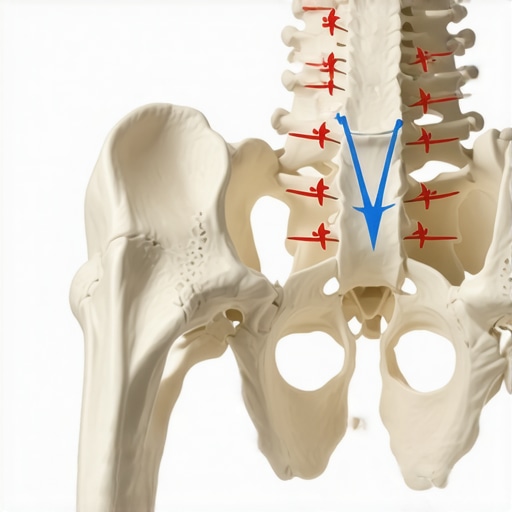
Another massive mistake is isolating your lower back issues from the rest of your kinetic chain. The human body is a master of compensation. If your ankles are stiff from years of wearing supportive boots or sitting at a desk, your body will steal the necessary movement from the joints directly above them. This means your knees and your lower back end up absorbing forces they were never structurally designed to handle. We often look at the spine in isolation, but there is a profound, undeniable link between your ankle mobility and your lower back. If you do not address the restrictions in your feet and hips, even the most perfect car-exit technique will eventually fail under the weight of repetitive daily stress.
Ultimately, achieving a pain-free life is not about finding one magic stretch; it is about building a daily movement practice that respects your biological architecture. This is why professional care is so effective. Rather than just rubbing a sore muscle, targeted chiropractic adjustments enhance posture and mobility by restoring proper alignment to the joints, allowing your nervous system to finally let go of its protective spasms. Have you ever fallen into this trap of over-stretching a painful lower back only to make it worse? Let me know in the comments below.
Once you understand that your lower back thrives on stability rather than extreme, loose twisting, the question shifts from temporary damage control to permanent maintenance. Over the years, I have realized that hoping you will remember proper mechanics when rushing out of your car in a rainstorm is a losing strategy. You have to build physical safeguards into your everyday routine so that your default movements are naturally protective. To do this, I rely on a few carefully selected physical tools and a highly structured weekly checklist that keeps my joints moving precisely how they were designed to.
How do I maintain my spinal alignment over time?
Consistency in spinal health does not mean spending hours in the gym or undergoing exhausting daily therapy sessions. Instead, it relies on small, strategic interventions that protect your structural alignment during your most passive hours. Personally, I never go on a drive longer than fifteen minutes without placing a dedicated lumbar support cushion behind my lower back. I highly recommend using a high-density memory foam roll with an adjustable strap that buckles directly to your car seat frame. This simple addition physically prevents your pelvis from tucking into a posterior tilt, which is the exact slouched position that leaves your discs vulnerable the moment you try to step out. If you are struggling with a sedentary job, learning how to use a lumbar roll correctly in an office chair is the perfect starting point to build this habit outside of your vehicle.
Beyond external supports, my daily maintenance routine hinges on a single, non-negotiable movement pattern: the short-lever glute bridge. Before I even put my shoes on in the morning, I spend two minutes on my bedroom floor firing up my glutes. Your gluteus maximus is the primary engine of your pelvic movement. If your glutes are sleeping when you go to exit your car, your lower back will try to do the heavy lifting for them. To make this work long-term, you must proactively build a resilient body by practicing the best exercises for building a spine that doesn’t ache, which acts as your ultimate insurance policy against sudden spasms.
Looking ahead, the future of personal spinal care is rapidly moving toward real-time biofeedback. Research published by spine biomechanist Dr. Stuart McGill emphasizes that muscle stiffness, when properly coordinated by the nervous system, is the absolute key to preventing joint shear. Within the next few years, I expect we will see smart car seats with embedded pressure sensors that gently vibrate when your pelvis is misaligned, training you to sit and exit correctly without you even realizing it. Until that technology arrives, we have to rely on our own sensory awareness and professional guidance. Regular structural check-ins are vital here; utilizing professional chiropractic adjustments unlock a pain-free lifestyle today by cleaning up the joint restrictions that your daily habits slowly build up. I challenge you to try the seat-slide trick today: manually push your seat back before you exit your car just once, and feel the immediate difference in your lower back.
It was a chilly Tuesday morning, and I was just pulling into the grocery store parking lot. I turned off the ignition, gathered my keys, and did what I had done a thousand times before: I threw my left leg out of the door, twisted my torso like a wet dishcloth, and pushed myself up. Pop. A sharp, hot needle shot straight through my lower lumbar region, instantly freezing me in place. I was half-in and half-out of my sedan, gripped by a sudden panic. It took me a full three minutes of agonizingly slow micro-movements just to stand upright. It was humiliating, painful, and entirely preventable. Early on in my fitness journey, I made the massive mistake of treating my spine like a swivel chair, completely ignoring how delicate the lumbar vertebrae really are when subjected to rotational forces under load.
The Daily Commute is Quietly Wrecking Your Back
Most of us don’t think twice about how we exit our vehicles. We do it on autopilot. But that simple, repetitive motion of twisting and reaching simultaneously is a prime trigger for debilitating muscle spasms and joint misalignments. If you already suffer from existing issues, you might even notice that your sciatica gets worse when you drive a car, which is only compounded by a sloppy exit strategy. Today, I want to show you exactly how to protect your back during this everyday transition. We are going to fix your mechanics so you can step out of your vehicle with absolute confidence, fluid mobility, and zero pain.
Is a simple car exit really worth all this fuss?
You might be skeptical. Can a minor tweak in how you swing your legs out of a car door really make or break your spinal health? Absolutely. According to a study published in the Journal of Biomechanics, the human lumbar spine is structurally limited to only about 10 to 12 degrees of rotation, meaning any excessive twisting under load puts immense pressure directly on your spinal discs. When you force your body to rotate while sitting in a deep, bucket-style car seat, you are essentially shearing those sensitive discs. By learning to move your body as a single, cohesive unit, you can dramatically reduce this wear and tear. Over time, practicing these safer movement patterns is just as crucial as incorporating expert tips for daily adjustments to keep your frame properly aligned. Have you ever felt that warning twinge in your lower back while stepping out of your driver’s seat?
The Two-Step Method to Protect Your Spinal Discs
To keep your lower back from twisting under load, you need to turn your entire lower body into a solid, unyielding block. Think of your pelvis and your rib cage as a single cylinder. In a classic car exit, most people twist their spine like a wet towel, trying to wring out every last drop of mobility. Instead, your goal is to keep that cylinder perfectly aligned. The first time I forced myself to do this was right after that humiliating parking lot incident. I felt incredibly self-conscious, moving like a rigid wooden toy, but the instant relief from that sharp pinching sensation proved it was worth the awkwardness.
Turn Both Feet First
Before you even think about lifting your weight off the seat, you must rotate your entire pelvis toward the open door. To do this, pivot on your buttocks and swing both legs out of the car simultaneously. Keep your knees glued together as if you have a tight strap wrapped around your thighs. This simple grouping of your lower limbs prevents your pelvis from tilting sideways, which is a major factor in why why your dominant side always feels tighter than the other. Your feet should both be resting flat on the pavement, shoulder-width apart, before you proceed to stand.
Use the Door Frame for Mechanical Leverage
Once your feet are planted, do not just lean forward and try to hoist yourself up using only your lower back muscles. This is where most spinal discs take a beating. Instead, create external anchor points. Place one hand on the sturdy part of the car door frame and the other on the steering wheel or the dashboard. This acts exactly like a set of crutches, redistributing your body weight. Push down through your heels and use your arm strength to assist your legs, keeping your spine straight and neutral. By utilizing your upper body, you completely bypass the need for a violent spinal extension to get upright.
Slide Your Seat Back for Extra Clearance
If you drive a compact car or a sports sedan with deep bucket seats, you are fighting a losing battle against physics. When your hips are sunken lower than your knees, your lumbar spine is forced into flexion before you even try to move. My personal breakthrough happened when I started manually sliding my driver’s seat all the way back before attempting to swing my legs out. That extra eight inches of clearance completely changed the game, giving my hips the room they needed to rotate without scraping my knees against the steering column. It is a tiny habit that offers massive mobility hacks simple adjustments for a more active life.
Why Tight Glutes Rob You of Your Turning Power
When your hip rotators are locked up from hours of sitting, your body will naturally look for movement elsewhere. Typically, it steals that rotation directly from your lower back. If you struggle to swing your legs out together, you are likely dealing with profound hip restriction. Real, lasting relief often requires more than just mechanical awareness; incorporating regular chiropractic adjustments unlock a pain-free lifestyle today can restore that lost joint play, ensuring your hips actually do the rotating so your delicate lumbar spine does not have to.
When most people think about fixing their mobility, they fall headfirst into a dangerous trap: they assume more stretching always equals more safety. In my experience, this couldn’t be further from the truth. For years, I watched well-meaning fitness enthusiasts try to tackle their back stiffness by twisting their spines to the absolute limit. They assumed that because their backs felt tight, they needed to aggressively force rotational stretching. But as a classic biomechanics study published in the Spine Journal points out, hypermobility in the lumbar spine is actually a leading predictor of disc herniation. Your lower back doesn’t crave extreme mobility; it craves stability. When you are twisting like a pretzel to get out of your vehicle, you aren’t showing off great mobility. You are actually micro-tearing the passive tissues that keep your spinal cord safe.
Why does stretching your lower back often make the pain worse?
If you have ever spent ten minutes on the living room rug twisting your spine to relieve an ache, only to find you can barely stand up afterward, you have experienced this firsthand. This is the ultimate “oops” factor of self-treatment: mistaking a protective muscle spasm for a simple tight muscle. When your joint is misaligned or unstable, your brain commands the surrounding muscles to lock down like a natural splint. When you force a deep stretch on those locked-down muscles, you override your body’s safety mechanism, exposing the vulnerable joint to further damage. To truly break this cycle, you must understand the difference between a sore muscle and a misaligned joint before trying to force movement.
Another massive mistake is isolating your lower back issues from the rest of your kinetic chain. The human body is a master of compensation. If your ankles are stiff from years of wearing supportive boots or sitting at a desk, your body will steal the necessary movement from the joints directly above them. This means your knees and your lower back end up absorbing forces they were never structurally designed to handle. We often look at the spine in isolation, but there is a profound, undeniable link between your ankle mobility and your lower back. If you do not address the restrictions in your feet and hips, even the most perfect car-exit technique will eventually fail under the weight of repetitive daily stress.
Ultimately, achieving a pain-free life is not about finding one magic stretch; it is about building a daily movement practice that respects your biological architecture. This is why professional care is so effective. Rather than just rubbing a sore muscle, targeted chiropractic adjustments enhance posture and mobility by restoring proper alignment to the joints, allowing your nervous system to finally let go of its protective spasms. Have you ever fallen into this trap of over-stretching a painful lower back only to make it worse? Let me know in the comments below.
Once you understand that your lower back thrives on stability rather than extreme, loose twisting, the question shifts from temporary damage control to permanent maintenance. Over the years, I have realized that hoping you will remember proper mechanics when rushing out of your car in a rainstorm is a losing strategy. You have to build physical safeguards into your everyday routine so that your default movements are naturally protective. To do this, I rely on a few carefully selected physical tools and a highly structured weekly checklist that keeps my joints moving precisely how they were designed to.
How do I maintain my spinal alignment over time?
Consistency in spinal health does not mean spending hours in the gym or undergoing exhausting daily therapy sessions. Instead, it relies on small, strategic interventions that protect your structural alignment during your most passive hours. Personally, I never go on a drive longer than fifteen minutes without placing a dedicated lumbar support cushion behind my lower back. I highly recommend using a high-density memory foam roll with an adjustable strap that buckles directly to your car seat frame. This simple addition physically prevents your pelvis from tucking into a posterior tilt, which is the exact slouched position that leaves your discs vulnerable the moment you try to step out. If you are struggling with a sedentary job, learning how to use a lumbar roll correctly in an office chair is the perfect starting point to build this habit outside of your vehicle.
Beyond external supports, my daily maintenance routine hinges on a single, non-negotiable movement pattern: the short-lever glute bridge. Before I even put my shoes on in the morning, I spend two minutes on my bedroom floor firing up my glutes. Your gluteus maximus is the primary engine of your pelvic movement. If your glutes are sleeping when you go to exit your car, your lower back will try to do the heavy lifting for them. To make this work long-term, you must proactively build a resilient body by practicing the best exercises for building a spine that doesn’t ache, which acts as your ultimate insurance policy against sudden spasms.
Looking ahead, the future of personal spinal care is rapidly moving toward real-time biofeedback. Research published by spine biomechanist Dr. Stuart McGill emphasizes that muscle stiffness, when properly coordinated by the nervous system, is the absolute key to preventing joint shear. Within the next few years, I expect we will see smart car seats with embedded pressure sensors that gently vibrate when your pelvis is misaligned, training you to sit and exit correctly without you even realizing it. Until that technology arrives, we have to rely on our own sensory awareness and professional guidance. Regular structural check-ins are vital here; utilizing professional chiropractic adjustments unlock a pain-free lifestyle today by cleaning up the joint restrictions that your daily habits slowly build up. I challenge you to try the seat-slide trick today: manually push your seat back before you exit your car just once, and feel the immediate difference in your lower back.
The Hardest Lesson I Learned About Spine Stability
For years, I believed that if my back felt tight, the solution was to make it looser. I spent hours twisting, twisting, and twisting some more on my yoga mat. What I failed to realize was that my nervous system was locking down my lower back for my own safety. Stretching that protective shield was like trying to unscrew a support beam in an unstable house. Real freedom did not come from force-feeding my lumbar spine more range of motion. It came from demanding my hips and thoracic spine do their job, allowing my lower lumbar region to finally enjoy the stability it was designed for. Your lower back is a bridge, not a pivot point; let your hips do the turning.
My Essential Daily Toolkit for Lasting Spinal Health
I do not rely on willpower or luck to keep my joints functioning smoothly. I rely on a select handful of physical resources that keep me aligned without overthinking. First, a high-quality, firm lumbar roll is non-negotiable for any drive over ten minutes. Second, I highly recommend reading “Back Mechanic” by Dr. Stuart McGill; this book completely changed my relationship with my posture and gave me a framework for pain-free living. Finally, I maintain a bi-weekly check-in with a trusted chiropractor to address micro-misalignments before they can snowball into full-blown muscle spasms.
Begin Small and Stay Consistent
You do not need to overhaul your entire lifestyle to make a profound impact on how your body feels. By simply committing to a safer car-exit strategy and giving your spine the support it craves, you are laying the foundation for long-term health. Remember that every movement is either building up your body or wearing it down. Choose to move with intention, protect your joints, and keep your body moving fluidly for years to come. Have you ever struggled with sudden spasms when getting out of your vehicle? Let me know in the comments below.