
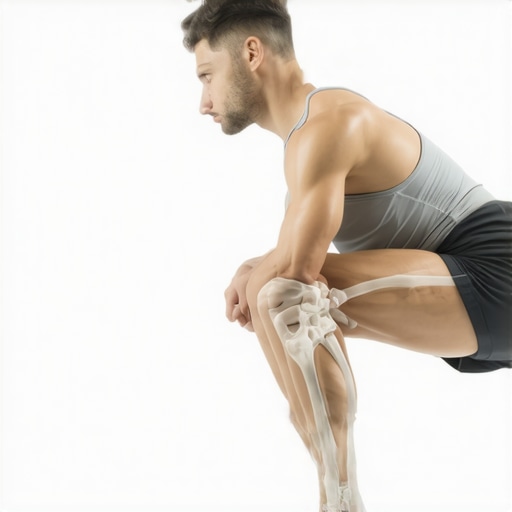
I remember the exact moment it happened. I was hitting the bottom of a heavy back squat, feeling invincible, when a sharp, biting sensation shot right through the front of my hip crease. It felt less like a stretch and more like a bone-on-bone collision. I’m the kind of guy who usually thinks “no pain, no gain,” but this was different. I spent the next three weeks trying to “stretch it out” with aggressive lunges and pigeon poses, only to find that every time I went deep again, the pinch returned with a vengeance. It turns out, I was making the classic mistake of trying to force a joint that was essentially running out of room. I was grinding my own labrum into the socket because I didn’t understand the mechanics of hip centration. We are going to fix that today by looking at your hip mechanics from the ground up and teaching you how to move without that “blocked” sensation.
Stop Blaming Tight Muscles for That Sharp Grinding Feeling
When I first felt that “bite” in my groin, I assumed my hip flexors were just chronically tight. I went on a crusade of stretching my psoas without hurting my lower back, thinking if I could just pull the tissue long enough, the joint would magically clear. But here is the hard reality: that pinch is often Femoroacetabular Impingement (FAI). This isn’t always a permanent deformity, but rather a functional bottleneck. According to research cited by Harvard Health Publishing, this “pinch” often occurs because the femoral head—the ball of your hip—isn’t sitting deep enough in the socket during the descent. If you keep pushing into that pinch, you’re not getting more flexible; you’re just irritating the cartilage. This is why the secret to walking without constant hip pinching often starts with how we stack our pelvis, not how hard we pull on our muscles. I made the mistake of ignoring the signal, which led to months of inflammation. Have you ever felt that sharp “stop” at the bottom of your squat and wondered if your body was just telling you to give up? Tell me in the comments if you’ve been “stretching” for months with zero relief.
Is this pinch something I can actually fix on my own?
Most people fear that once the “pinch” starts, they are destined for surgery or have to give up deep squats forever. I certainly did. I thought my squatting days were over and I’d be stuck doing leg extensions for the rest of my life. But the truth is that most of us are just squatting with a pelvis that is tilted too far forward—an anterior pelvic tilt—which effectively “closes” the hip joint before we even get to parallel. By using mobility hacks and learning how to fix the way you stand in line to save your hips, you can usually find a pain-free path to the floor. We need to stop thinking about “flexibility” and start thinking about “room to move.” If you’ve been struggling with this, you aren’t alone, and you definitely haven’t “broken” your hips just yet. We just need to change the way the joint is oriented before you add the weight.
Stop Shoving the Bone into the Wall
Think of your hip joint like a kitchen drawer. If that drawer is pulled out and then tilted downward, you cannot just shove it back in; the top edge will catch on the frame every single time. That is exactly what happens when you squat with an over-arched back. Your pelvis is tilted forward, and the front of the socket—the acetabulum—is literally hitting the top of your thigh bone. No amount of stretching will fix a mechanical collision. To clear that space, we have to level the drawer. One of the most effective mobility hacks I ever learned was the ‘tuck and exhale’ technique. Before you even think about descending into a squat, you need to bring your ribcage down and your pelvis up into a neutral ‘stacked’ position.
Reset Your Pelvis Before You Drop
The first time I tried this, it felt completely alien. I was so used to having a ‘proud’ chest and a massive arch in my back that tucking my tailbone felt like I was losing power. But the result was instant. By pulling my belt buckle slightly toward my chin, I created the internal room needed for the femur to glide. If you find yourself constantly battling this, you might need to try the simple hip reset for people who sit for 8 hours. This reset uses a low-threshold glute squeeze to pull the femoral head back into the center of the socket, preventing that forward ‘shove’ that causes the pinch. 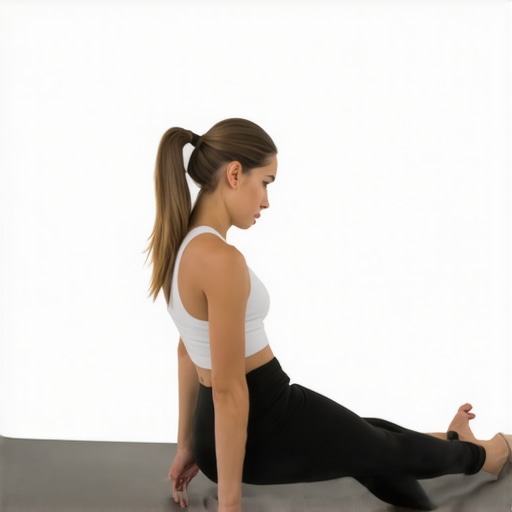
Breathe Into Your Hips to Create Space
We often forget that the pelvic floor and the diaphragm work like a piston. If you are holding your breath in your chest, you are creating massive downward pressure that jams the hip joint. I remember a specific session where I couldn’t get past parallel without a sharp ‘stab’ in my right hip. My coach told me to stop bracing like I was about to be hit by a truck and instead focus on ‘inhaling into my back pockets.’ This sounds like hippy-dippy advice until you realize that the hidden link between your breathing pattern and lower back stability is exactly what dictates hip room. When you learn how to use your breath to relax your pelvic floor, you allow the deep rotators of the hip to let go. When those muscles relax, the ‘ball’ of your hip can finally sit deep in the socket where it belongs.
The Wall Squeeze That Changed Everything
If the ‘tucking’ isn’t enough, you likely have an issue with adductor tension pulling your knees inward and closing the joint. I started performing a 30-second isometric squeeze with a foam roller between my knees before my heavy sets. This ‘shortens’ the inner thigh muscles and forces the lateral hip stabilizers to wake up. It’s a bit messy at first—you might feel a bit of a cramp—but this internal tension is what prevents the hip from ‘crashing’ into the labrum at the bottom. Combining this with targeted mobility exercises turns a structural ‘pinch’ into a smooth, fluid movement. You aren’t just moving; you are managing the space within the joint.We need to talk about the ‘more is better’ trap in mobility. Most people assume that if a joint feels blocked, the solution is to pull on the surrounding muscles until they give up. I spent years in this cycle, but here is a contrarian reality: if your hip is pinching, it is often because your brain is using muscle tension as a ‘brake’ to prevent you from jamming the joint further. When you force a stretch, you are literally fighting your body’s safety mechanism. This is particularly true for the back of the leg. In many cases, why stretching your hamstrings might actually make your back pain worse is a lesson learned too late, as over-stretching can pull the pelvis into a position that further compromises the hip socket. You aren’t ‘tight’ because your muscles are short; you are tight because your joint is out of position.
Stop Chasing the Feeling of Tightness
I used to think that a successful session meant feeling a deep, tearing stretch in my groin and hamstrings. I was wrong. If you are constantly stretching and the ‘tightness’ returns within an hour, you aren’t fixing a problem—you are managing a symptom. Deep-seated hip tension is often a sign that your core isn’t stabilizing your spine, forcing the hips to take over the job. This is where understanding the link between mobility and posture becomes vital. If you don’t address the ‘why’ behind the tension, you are just spinning your wheels. Have you ever fallen into this trap of stretching the same spot for months with zero permanent change? Let me know in the comments.
Why does my hip still catch even when my form looks perfect?
This is a sophisticated question that often points toward ‘femoral version’—the actual anatomical angle of your thigh bone. A study published in the Journal of Orthopaedic & Sports Physical Therapy highlights that structural variations in the acetabulum (the hip socket) mean that a ‘perfect’ squat for one person might be a mechanical nightmare for another. You cannot ‘stretch’ your way out of your bone shape. If your hip catches even with a neutral pelvis, you likely need to widen your stance or flare your toes out more. This is why what a chiropractor actually looks for during your first exam is so important; it’s about identifying whether your ‘pinch’ is a soft tissue issue or a structural boundary. 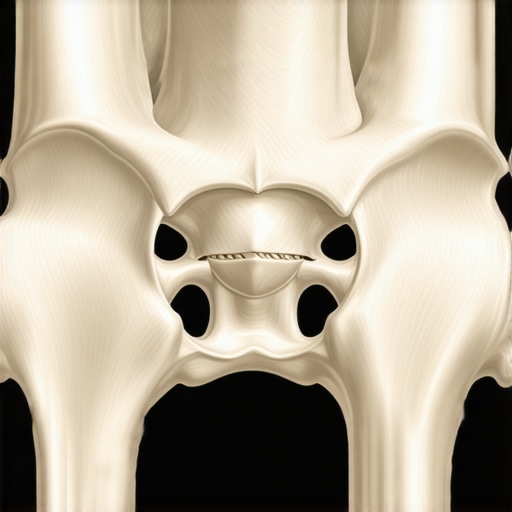
Beware the Dangers of the Perma-Tuck
Here is the ‘oops’ factor that many people miss: in an effort to fix an over-arched back, they start ‘tucking’ their pelvis all day long. This creates a flat-back posture that is just as dangerous as the arch. When you lose your natural lumbar curve, you lose your spine’s ability to absorb shock. This rigid over-correction is a primary reason the truth about why your lower back spasms suddenly is often linked to ‘good’ posture gone wrong. You don’t want a pelvis that is locked in a ‘neutral’ position; you want a pelvis that is free to move through its full range. Using how chiropractic adjustments enhance posture and mobility helps restore this fluid motion rather than forcing you into a static, brittle ‘alignment.’ Stop trying to be a statue and start trying to be an athlete.To transition from a static statue to a fluid athlete, you need a maintenance plan that doesn’t feel like a second career. I’ve found that the most successful way to stay consistent is to stop treating mobility as a ‘workout’ and start treating it as ‘biological hygiene.’ Integrating the daily move to keep your spine young into your morning coffee routine or your pre-sleep ritual is far more effective than a once-a-week marathon stretching session. I personally use a simple 36-inch firm foam roller, but not for the reasons you might think. Instead of aimlessly rolling my IT bands, I use it as a postural guide to ensure my ribs aren’t flaring, which is one of those mobility hacks simple adjustments for a more active life that actually prevents the hip from jamming during a squat.
The Three Tools I Actually Pack in My Gym Bag
I don’t believe in a trunk full of gadgets, but there are three specific tools that changed the game for my hip impingement. First is a heavy-duty resistance band for joint distraction. By looping the band around the hip crease and pulling the femur laterally while I move into a lunge, I am manually creating the ‘room’ that my anatomy sometimes lacks. This is a core component of the ultimate guide to improving mobility and posture in 2025. Second is a 5-inch massage ball—not a lacrosse ball, which is often too hard and causes the muscles to guard—to release the deep rotators. Finally, I use a simple doorframe for ‘prying’ my hips open. Dr. Stuart McGill, author of Back Mechanic and a world-renowned spine expert, emphasizes that ‘spinal hygiene’ is about these small, repeated movements that spare the joints from unnecessary wear. If you are serious about this, why chiropractic care is your secret weapon for better posture becomes clear when you realize a professional can help you identify exactly where your mechanics are failing before you get injured. 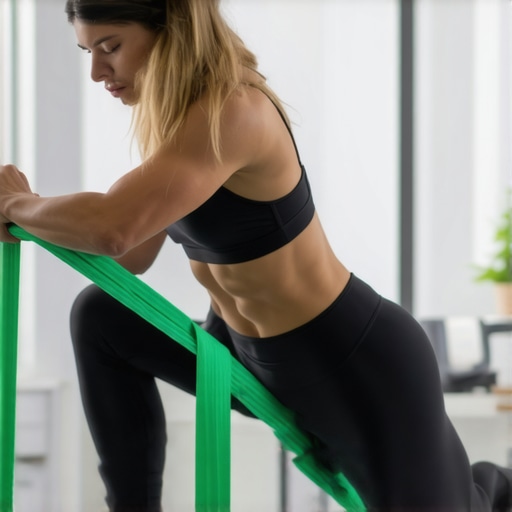
How do I keep my hips healthy for the long haul?
Maintenance isn’t about being perfect; it’s about checking in with your body’s ‘warning lights.’ For me, that check-in happens every time I sit down. If I feel that familiar ‘stuck’ sensation, I know I’ve spent too much time in an anterior tilt. Utilizing mobility boosts for posture expert tips for daily adjustments like the 90/90 hip flow for just two minutes a day can prevent the need for more aggressive interventions later. I also recommend a monthly session with a professional to see the link between mobility and posture in action, as they can feel ‘stuck’ joints that your brain has simply started to ignore.
Where Mobility Science is Heading Next
We are moving away from the era of ‘general’ stretching and into the era of ‘precision mechanics.’ In the next few years, I expect we will see a massive rise in wearable haptic feedback sensors that vibrate when your pelvis drifts into a high-risk position. This real-time neurological training will make ‘perfect form’ an subconscious habit rather than a constant mental chore. We are also seeing how how chiropractic adjustments enhance posture and mobility by specifically targeting the nervous system’s ability to relax the muscles around the hip socket. Don’t wait for the technology to catch up, though. Try this today: before your next workout, perform five slow, deep ‘exhales’ while in a deep squat position (holding onto a doorframe for support). This simple act forces your pelvic floor to relax and your hip bones to find their natural center.
The Hardest Truths I Learned About My Chronic Hip Catch
It took me nearly two years to realize that the sharp bite in my groin wasn’t a badge of honor or a sign of a ‘good workout.’ It was a mechanical warning. The first lightbulb moment was accepting that my ‘tight’ muscles were actually my brain’s way of protecting a joint that was poorly positioned. I spent so long fighting my own anatomy instead of working with it. I also learned that anatomical variation is real; some of us simply have deeper hip sockets that require a wider stance to avoid impingement. Finally, I discovered that why stretching your hamstrings might actually make your back pain worse was a lesson in pelvic tilt; by over-stretching the back, I was actually tilting my pelvis forward and making the hip pinch even more aggressive.
My Personal Toolkit for Unlocking Glides and Slides
I don’t believe in cluttering your gym bag with every gadget on the market, but there are four resources I swear by for maintaining hip health. First, Dr. Stuart McGill’s ‘Back Mechanic’ is essential reading for anyone serious about spinal and hip longevity. Second, a 36-inch firm foam roller is my go-to for mobility hacks simple adjustments for a more active life, specifically for keeping my ribcage from flaring during heavy lifts. Third, heavy-duty pull-up bands are non-negotiable for performing lateral joint distractions to create space in the socket. Lastly, I recommend studying improving posture through mobility practical chiropractor strategies to understand how your daily habits affect your squat depth.
Your Path to a Squat Without the Sting
Getting back to a pain-free squat isn’t about one magic stretch; it’s about a consistent commitment to joint centration and better movement patterns. It might feel frustrating to slow down and focus on your pelvic tilt or your breathing, but the reward is a body that performs at its peak without the constant threat of inflammation. By incorporating the daily move to keep your spine young and respecting your body’s mechanical limits, you can turn your mobility from a liability into your greatest asset. You have the tools, the knowledge, and the roadmap—now it’s time to get under the bar and move with confidence. Have you ever tried a ‘joint reset’ or a stance change only to find that your hip pinch vanished instantly? Let me know your experience in the comments below!