

Three years ago, I found myself literally crawling across a bed of fresh mulch because my lower back had seized into a rigid, agonizing knot. I’d spent six hours planting Heirloom tomatoes, feeling like a champion of the earth, until I tried to stand up. I couldn’t. I was stuck in a semi-permanent “L” shape, shuffling toward the patio like a human question mark. It was embarrassing, painful, and honestly, a little heartbreaking. I love my garden, but that day, it felt like my hobby was waging war on my spine. I realized then that my “weekend warrior” approach was a recipe for disaster. If you’ve ever felt that terrifying “twinge” while reaching for a stubborn weed, you know exactly what I’m talking about.
Stop Treating Your Spine Like a Hinged Door
The biggest mistake I made—and maybe you’re doing it too—was bending from my waist for every single task. I treated my lumbar spine like a rusty hinge, folding over repeatedly until the discs finally screamed for mercy. It turns out, your back isn’t designed to be your primary crane. Today, I’m going to show you how to overhaul your movement patterns so you can prune, plant, and mulch until the sun goes down without the dreaded “flare-up” the next morning. We’re going to talk about real-world mobility adjustments that actually stick.
Is a pain-free Sunday actually possible after a big garden project?
You might be skeptical. I certainly was. I thought back pain was just the “tax” we paid for beautiful flower beds. But the truth is, your body is incredibly resilient if you stop sabotaging your alignment. A study published in the Journal of Biomechanics suggests that repetitive lifting with a flexed spine can increase intradiscal pressure by over 100% compared to neutral alignment. That’s why the hip hinge fix is the absolute game-changer for anyone with a green thumb. It shifts the load from those tiny back muscles to your powerful glutes and hamstrings. Have you ever had to call off work or cancel plans because you “did too much” in the yard over the weekend? Drop a comment or send me a note; I’d love to hear your story. Before we dive into the specific tools and stretches, we need to address the foundation. Often, the reason your back “goes out” isn’t the gardening itself, but the underlying stiffness you carried into the yard. If your spine is already out of whack, even a light bag of potting soil can be the straw that breaks the camel’s back. That’s where chiropractic adjustments come into play—they reset the baseline so your body can handle the physical demand. Let’s look at how to prep your body before you even pick up a trowel. I’ve even found that the secret to pain-free gardening often starts with what you’re wearing on your feet, so don’t overlook restoring your natural arch to keep your base stable.
Ditch the Rounding and Master the Hinge
Think of your spine as a delicate stack of porcelain plates and your hips as a heavy-duty industrial hinge. When you round your back to reach a weed, you’re essentially trying to bend those plates. It doesn’t work. Instead, you need to initiate every movement from the pelvis. This is where the hip hinge secret comes into play—it’s not just for the gym; it’s the gold standard for yard work. To do this, imagine there’s a wall about six inches behind you. Your goal isn’t to reach down; it’s to tap that wall with your glutes while keeping your chest proud.
The 30-Second Reset Before You Dig
Before you even touch a bag of mulch, you need to wake up your hip flexors. I remember one humid Saturday when I skipped my warm-up because I was in a rush to beat the rain. Within twenty minutes, my left hip felt like it was encased in concrete, and every shovel turn sent a spark into my tailbone. Now, I never start without the 30-second move that opens up tight hips. It creates the necessary slack in your system so your lower back doesn’t have to compensate for your stiff legs.
Why Your Kneeling Position is Sabotaging Your Neck
Most people focus so much on their lower back that they forget their neck is part of the same chain. If you’re kneeling and craning your head up to look at the next row or the bird feeder, you’re creating massive tension at the base of your skull.  This is why stretching your neck is making your headaches worse if you aren’t fixing the underlying posture first. Keep your chin tucked slightly, as if you’re holding a tennis ball between your chin and throat. This long neck approach keeps your cervical spine neutral and prevents that post-gardening tension headache.
Build a Bulletproof Core While You Weed
You don’t need a gym membership to strengthen your back; you just need to engage your inner corset. While you’re pulling those stubborn dandelions, focus on a light abdominal brace. It’s like someone is about to poke you in the stomach and you’re gently tightening up to resist. If you struggle with this, practicing the dead bug variation in the morning can teach your brain how to keep the spine stable while your limbs are moving.
Switch Sides to Balance the Load
We all have a dominant side. I used to mulch exclusively with my right arm, leading to a nasty twist in my mid-back that took weeks of daily adjustments to fix. Now, I force myself to switch hands every ten minutes. It feels clunky at first, like writing with your non-dominant hand, but it prevents one side of your body from taking 90% of the mechanical stress. This simple habit, combined with targeted mobility exercises, ensures that your muscles fatigue evenly rather than snapping under uneven pressure.
Why Stretching Your Way Out of Pain Usually Backfires
Most people assume that if a muscle feels tight after a day in the dirt, the solution is to pull on it until it yields. I used to be the poster child for this approach, spending twenty minutes every evening doing deep hamstring stretches because my back felt like a coiled spring. But here is the contrarian truth: your brain often creates tightness as a protective ‘brake’ system. If your spine lacks stability, your nervous system will lock down your hamstrings and glutes to prevent you from injuring yourself further. Research published in the Journal of Electromyography and Kinesiology suggests that core stability is less about raw strength and more about the precision of muscle ‘firing’ sequences. When you force a stretch on a muscle that is trying to protect your spine, you aren’t improving mobility; you’re actually stripping away your body’s last line of defense. This is precisely the real reason your hamstrings stay tight despite stretching. Have you ever spent an hour stretching only to feel even stiffer the next morning? Have you ever fallen into this trap? Let me know in the comments.
The Foam Roller Trap That Aggravates Inflammation
While we are on the subject of ‘self-maintenance’ gone wrong, we have to talk about the lumbar spine and the foam roller. It’s a common sight: a gardener comes inside with a literal ache in their lower back and immediately tries to roll it out on a hard plastic cylinder. This is a massive ‘oops’ factor. Unlike your mid-back, which is protected by your rib cage, your lumbar spine is vulnerable. Aggressive rolling here can actually cause the tiny joints in your back to become hypermobile or inflamed, leading to more spasms. Instead of crushing the tissue, you need to focus on mobility hacks that address the joints above and below the pain point. If you want the real scoop on why this tool can be a double-edged sword, check out the truth about foam rolling your lower back before your next session. 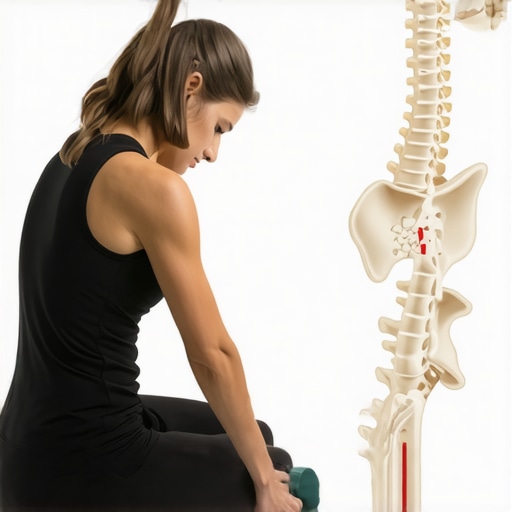
Does your back feel ‘stuck’ even after you’ve rested for a week?
Many gardeners assume that rest is the ultimate healer. While rest reduces acute inflammation, it does nothing to fix a ‘functional block’—that sensation where your spine just doesn’t seem to rotate correctly. This is where the nuance of the link between mobility and posture becomes clear. A joint that is slightly misaligned won’t ‘reset’ just because you sat on the couch for three days. In fact, prolonged sitting often makes the problem worse by allowing the surrounding ligaments to shorten in a compromised position. This is why how chiropractic adjustments enhance posture and mobility is so critical; it’s about restoring the mechanical slide-and-glide of the joints so that your ‘rest’ actually becomes productive. If you’ve been ‘resting’ a nagging ache for weeks with no progress, you likely have a mechanical issue that no amount of ice or ibuprofen can reach. By focusing on targeted mobility exercises that prioritize joint health over muscle length, you can finally break the cycle of seasonal back pain and get back to what you love.After three years of trial and error, I’ve realized that willpower isn’t enough; you need the right gear to bridge the gap between your physical limits and your garden’s demands. I stopped using standard trowels and switched to ‘pincer-style’ weeders that allow me to stand upright. I also swear by a rolling garden cart—it’s basically a low-profile stool on wheels that lets you scurry between rows without ever loading your lumbar spine. These are the kind of mobility hacks that turn a grueling afternoon into a light workout. I’ve even integrated the morning routine that stops your back from clicking into my pre-garden ritual, which has been a lifesaver for my SI joints. 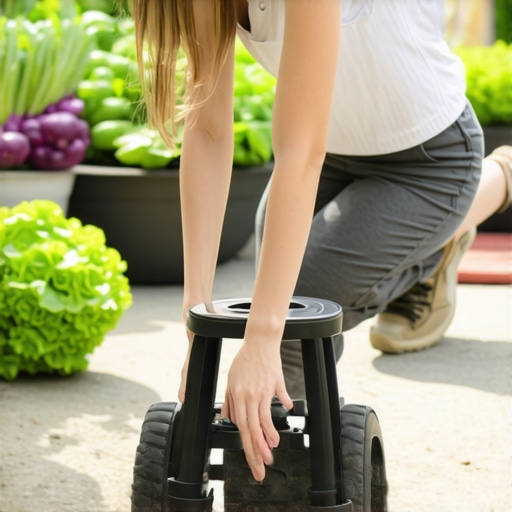
How can I keep my spine healthy as I get older?
Maintenance isn’t a one-and-done event; it’s a lifestyle shift. I follow what I call the ’15-minute buffer’ rule. Every hour I spend in the dirt, I spend 15 minutes moving in the opposite direction. If I was hunched forward, I do standing extensions or targeted mobility exercises to reset the tension. This consistency is why the ultimate guide to improving mobility and posture in 2025 emphasizes frequent, small adjustments over one massive weekly stretch. Think of it like dental hygiene for your back. Dr. Stuart McGill, a world-renowned expert in spine mechanics from the University of Waterloo and author of Back Mechanic, stresses that maintaining a ‘neutral’ spine during activity is the most effective way to prevent disc herniation. He argues that most injuries occur when we deviate from this neutral zone under load. This is why why chiropractic care is your secret weapon for better posture; it ensures your neutral zone is actually accessible and not blocked by joint restrictions. I predict we’re going to see a massive shift toward ‘smart’ gardening apparel. Imagine a pair of gloves or a belt that vibrates when you lose your hip-hinge form. Until that’s mainstream, we have to rely on our own internal sensors. If you’re serious about this, I want you to try one thing this week: set a timer on your phone for every 20 minutes to perform daily adjustments to your position. It sounds tedious, but it’s the same logic behind the best standing desk interval for maximum back health—it breaks the cycle of static loading. Try setting that 20-minute timer during your next session and see how much fresher you feel by dinner time.
Lessons From a Gardener Who Refused to Quit
After years of thinking my body was just ‘aging out’ of my favorite hobby, I stumbled upon a few harsh truths. First, pain is a lagging indicator. By the time your back spasms, the mechanical breakdown has been happening for weeks. This is why daily adjustments to your routine are more valuable than a once-a-year massage. Second, the ground is a long way down—don’t be afraid to bring the soil to you with raised beds or vertical planters if your current mobility is limited. Finally, I learned that ‘powering through’ is an ego-driven lie that leads to surgery. Listening to the subtle whispers of stiffness today prevents the loud screams of a herniated disc tomorrow.
My Personal Survival Kit for Long Afternoons
If you want to stay active, you need more than just grit. I highly recommend investing in a ‘pincer’ style long-handled weeder to keep your spine neutral. For reading material, nothing beats Back Mechanic by Dr. Stuart McGill; it changed how I view every lift. I also suggest bookmarking mobility hacks for quick reference when you feel a ‘catch’ in your movement. These tools, combined with the ultimate guide to improving mobility and posture in 2025, form a defensive perimeter around your spinal health.
#IMAGE_PLACEHOLDER_E#
Planting Seeds for a More Mobile Future
Your garden should be a place of peace, not a source of physical dread. By shifting your focus from ‘getting the job done’ to ‘moving with intention,’ you ensure that you will still be planting perennials decades from now. Remember that why chiropractic care is your secret weapon for better posture often comes down to the simple fact that a well-aligned spine handles the load of life much more efficiently. Don’t let a single weekend of over-exertion steal your season. Start small, hinge often, and keep your head high.
Which part of your yard work usually leaves you feeling the stiffest the next day? Is it the weeding, the heavy lifting, or the constant kneeling? Let me know in the comments below!