

I used to wake up every single morning feeling like my left arm belonged to someone else. It was cold, tingly, and had that dull, deep ache right in the socket that felt like I had been pinned under a heavy weight for hours. I tried to ignore it. I told myself I was just a deep sleeper. But when I reached the point where I could not even lift my morning coffee without a sharp wince, I realized my favorite sleeping position was actually a slow-motion injury. For the longest time, I thought the answer was just to buy a softer bed, but that mistake only made things worse because my torso sank while my shoulder stayed jammed against the frame. Today, I am going to show you how I completely redesigned my sleep setup to stop the crushing sensation and finally wake up with full mobility. [image_placeholder]
Stop Waking Up with a Dead Arm
Side sleeping is incredibly common, but most of us are doing it with zero regard for our anatomy. According to the Sleep Foundation, nearly 54% of adults prefer side sleeping, yet a huge portion of those people deal with nocturnal shoulder pain because of poor mechanics. I spent years essentially using my own body weight to grind my rotator cuff into the mattress. It was a miserable cycle of trying to fall asleep, feeling the throb, and flipping over like a rotisserie chicken every twenty minutes. We are going to solve that today by looking at how you can create a ‘pocket’ for your shoulder to rest in, rather than letting it take the full brunt of your weight. We will also look at how the best sleeping position for side sleepers with shoulder issues actually involves more than just your shoulder—it starts with your hips and spine alignment.
Is a High-End Orthopedic Pillow Actually Necessary?
You might be wondering if you really need to drop two hundred dollars on a fancy piece of foam. The short answer is: not necessarily. Before you go spending a fortune, you should probably see if your pillow is too flat using a simple five-second check. I wasted so much money on ‘miracle’ products before I understood that the height of the pillow is what dictates whether your neck is neutral or if it is actively pushing your shoulder into the mattress.
Your Shoulder Needs Breathing Room Not Just Softness
One of the biggest realizations I had was that ‘soft’ does not mean ‘supportive.’ My early mistake was thinking a fluffy pillow would solve everything. Instead, it collapsed under my head, forcing my shoulder to roll forward to find stability. This caused a massive amount of tension in my upper back. If you have ever felt like your traps are always tight even after a massage, your sleeping posture is likely the silent culprit. Have you ever woken up and realized you can’t even reach for your phone because your shoulder is screaming at you? If so, you are in the right place, because we are about to fix that with a few simple adjustments to your nightly routine.
Create a Pocket for Your Shoulder Instead of a Trap
Think of your shoulder like a delicate hinge. When you lie directly on it, you are basically trying to shut that hinge with a rock stuck in the middle. The first thing I changed was my physical orientation on the mattress. Instead of rolling my entire weight onto the point of my shoulder, I started shimming my torso back about ten degrees. This small shift moves the pressure off the acromion process and onto the sturdier muscles of the upper back. To make this work, you need to literally pull your bottom shoulder forward and then lean back into a support pillow tucked behind your spine. I remember the first night I tried this; I used a rolled-up beach towel behind my shoulder blades because I did not have a wedge yet. It felt awkward for ten minutes, but for the first time in three years, I did not wake up at 3:00 AM needing to shake life back into my fingers. This simple shift is a major part of how chiropractic adjustments enhance posture and mobility—by creating space where there was once constant friction.
Find Your Ideal Pillow Loft to Stop the Crush
If your pillow is too low, your head drops, and your shoulder has to hike up toward your ear to fill the gap. If it is too high, your neck is cranked upward, putting massive tension on the nerves that travel down your arm. You are looking for a neutral line from the center of your nose down to your breastbone. I found that I was using a pillow that was way too soft, which is the nighttime habit that is ruining your spinal alignment for many people. To test this, have someone take a photo of you from behind while you are lying down in your usual spot. If your neck looks like a bent straw, you are cutting off the fluidity of your nerve signals. Proper loft is the difference between a restful night and having to learn how to fix a pinched nerve in your shoulder blade because you spent eight hours in a komodo dragon pose.
The Hug Technique Saves Your Rotator Cuff
The death roll happens when your top shoulder collapses forward toward the mattress. This stretches the muscles in your back while shortening the ones in your chest, creating a pincer effect on the shoulder joint. The solution is simple: hug a pillow. Not a tiny decorative one, but a firm bed pillow or a body pillow. By resting your top arm on this support, you keep your chest open. Think of it like a kickstand for your torso. When I started doing this, the deep ache in my front delt disappeared within a week. If you are already feeling that stuck sensation in your joints during the day, incorporating the 30-second drill for better overhead shoulder mobility can help flush out the inflammation while you work on your sleep posture. You are trying to prevent your body from folding in on itself like a cheap lawn chair. When your top arm is supported, your spine stays in a straight line, and you avoid the rotational torque that ruins your mid-back health.
The biggest nuance that most people miss is that alignment isn’t a ‘set it and forget it’ situation. In fact, why your perfect posture is actually causing muscle fatigue is a concept many athletes and desk workers struggle with; if you are forcing a rigid position, you are essentially asking your muscles to run a marathon while you sleep. I used to be obsessed with staying perfectly still, but I eventually learned that the link between mobility and posture is entirely dynamic. You aren’t a statue; you are a living system that needs to breathe and shift without losing its structural integrity.
Let’s talk about a major ‘oops’ factor I see constantly: the posture brace. It seems like a logical shortcut, right? If you can’t hold yourself up, let a strap do it for you. However, why most posture braces actually make your back weaker is because they provide a false sense of stability that leads to muscle atrophy. You want your nervous system to learn how to support your skeleton, not a piece of elastic. This is why how chiropractic adjustments enhance posture and mobility is so vital—it is about resetting the joint’s ability to move through its full range, which naturally encourages the muscles to fire correctly rather than relying on external crutches.
Why Does Your Neck Still Ache After Upgrading Your Entire Bedroom?
This is the question I get most often from people who have already bought the $3,000 mattress and the $150 pillow. The answer usually lies in ’tissue creep.’ According to research often cited in the Journal of Manipulative and Physiological Therapeutics, prolonged static loading—even in a technically ‘good’ position—can cause the ligaments to stretch and lose their elastic recoil over several hours. If you go to bed with high stress levels, you might also be clenching your teeth, and why your jaw tension might be the root cause of your neck pain was the final piece of my personal puzzle. No pillow in the world can fix a neck that is being pulled from the front by a tight, stressed jaw.
Stop Rolling Your Lower Back Without a Plan
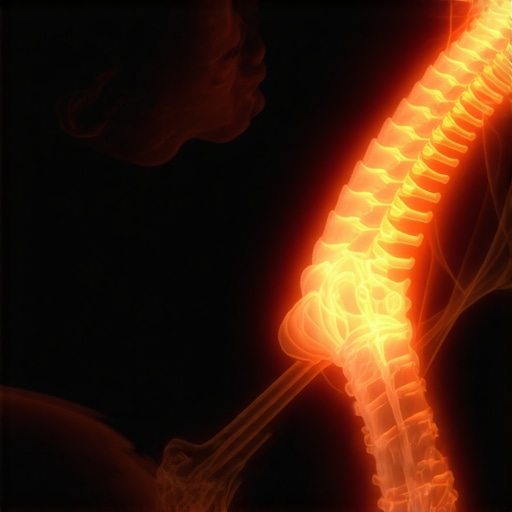
Another advanced mistake is aggressive foam rolling. The truth about foam rolling your lower back is that the lumbar spine lacks the ribcage’s protection, and the ‘tightness’ you feel is often protective guarding, not a muscle knot. If you are mashing your lower back to fix it, you might actually be irritating the nerves or the facet joints. Instead, you should be looking at mobility boosts for posture that focus on the thoracic spine and the hips. By opening the areas surrounding the lower back, you take the pressure off the lumbar region without the risk of injury. Have you ever fallen into the trap of over-correcting your posture or buying every gadget on the market only to end up in more pain? Let me know in the comments—I’d love to hear what ‘miracle’ fix failed you so we can troubleshoot it together.
Speaking of troubleshooting, I’ve found that the real ‘secret’ isn’t a one-time fix but the toolkit you keep in your nightstand and office drawer. For me, the most indispensable tool hasn’t been a fancy electric massager, but a simple pair of lacrosse balls taped together into a ‘peanut.’ I use this religiously against a wall to pin down the muscles between my shoulder blades. Why? Because it allows me to target the exact spot where the rhomboids meet the thoracic spine without putting direct pressure on the bone. This kind of self-maintenance is why why chiropractic care is your secret weapon for better posture—it’s about having a professional reset the joints so your at-home tools can actually do their job.
How do I keep my joints feeling this good long-term?
Consistency beats intensity every single time. I used to spend two hours on a Saturday trying to ‘fix’ my back, only to sit like a pretzel for the rest of the week. Now, I focus on mobility hacks: simple adjustments for a more active life that take less than five minutes. This includes a dedicated morning routine that stops your back from clicking before I even take my first sip of coffee. By moving the joints through their full range of motion early, I’m essentially ‘greasing the groove’ for the day ahead. Dr. Kelly Starrett, author of Becoming a Supple Leopard, famously argues that ‘all human beings should be able to perform basic maintenance on themselves.’ His ‘upstream/downstream’ philosophy is why I no longer just look at my shoulder; I look at how my neck and mid-back are contributing to the load.
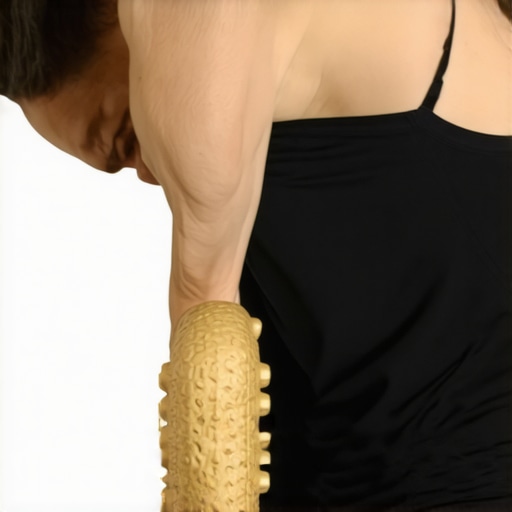
I’m also a huge advocate for using a simple lumbar roll when I’m not in bed. Keeping that natural curve in your low back while sitting prevents the ‘slump’ that eventually pulls on your neck and shoulders. If you are serious about this, checking out the ultimate guide to improving mobility and posture in 2025 will give you a roadmap for the specific gear that actually works versus the gimmicks that just take up space in your closet.
The Future of Your Spine is Probably Digital
Looking ahead, I predict we are going to see a massive shift toward AI-integrated wearables that don’t just track your steps, but analyze the exact degrees of your spinal curvature in real-time. Imagine a shirt that gently vibrates the moment your top shoulder starts to collapse during a nap. Until that tech is mainstream, your best bet is a mirrors and a partner who isn’t afraid to tell you that you’re slouching. My challenge to you today: pick just one ‘maintenance’ tool—whether it’s a lacrosse ball or a better pillow loft—and commit to using it for seven days straight. You’ll be surprised how quickly the ‘dead arm’ becomes a thing of the past.
Why I Wish I Had Stopped Over-Correcting Months Earlier
After years of trial and error, I realized that the hardest lesson was learning to trust my body’s signals rather than a rigid set of rules. I used to think I had to stay frozen in the ‘perfect’ pose, but that just led to more stiffness. Here are a few ‘lightbulb moments’ from my journey: first, your body isn’t a project to be solved but a system to be supported; second, if you wake up with a tight face, you should try the 60-second fix for a stiff jaw after waking up because tension rarely stays in one place; and finally, don’t ignore the small ‘clicks’ in your back, as they are often your joints asking for a little more breathing room. [image_placeholder]
My Personal Rig for Waking Up Pain-Free
I do not believe in cluttering your life with gadgets, but three specific things have changed everything for me. I swear by a firm body pillow to prevent that chest-collapsing ‘death roll’ that ruins the rotator cuff. I also keep a pair of taped-together lacrosse balls handy for a quick thoracic reset before bed. Most importantly, I keep a digital copy of the ultimate guide to improving mobility and posture in 2025 for when I feel a new ache starting. These aren’t just tools; they are my insurance policy against waking up with that dreaded ‘dead arm’ sensation. You might also find that why chiropractic care is your secret weapon for better posture becomes much clearer once you start combining professional help with these simple at-home habits.
A Better Relationship With Your Body Starts Tonight
You do not have to overhaul your entire life by tomorrow morning. Just pick one small change—maybe it is the ‘hug technique’ or finally checking your pillow loft—and see how your shoulder feels after three nights. Remember that how chiropractic adjustments enhance posture and mobility isn’t just about the time spent on a table; it is about how you carry that freedom into your sleep. You deserve to wake up feeling refreshed and ready to move, not like you have been in a wrestling match with your mattress. Have you ever found a specific pillow or sleeping ‘prop’ that actually worked for your shoulder pain, or did it just end up on the floor by midnight? Let me know in the comments!