

It was 3:14 AM, and I was staring at a flickering streetlamp through my window, my right arm feeling like it was being plugged into a faulty electrical socket. I’d made a classic mistake: I thought if I just ignored the ‘zingers’ during the day, they’d magically vanish once I hit the mattress. Instead, every time I drifted off, a sharp jolt would snap me back to reality. I spent weeks trying to ‘muscle through’ the exhaustion before I realized that my desperate, haphazard pillow stacking was actually making the compression worse. If you’re currently dreading the sunset because you know the pain is coming, I’ve been exactly where you are. Today, we’re going to fix your sleep setup so you can finally stop fearing the night.
Stop Tossing and Turning Every Thirty Minutes
The ‘neighborly’ truth is that most of us are sleeping in positions that actively choke our nerves. When a nerve is pinched, it’s often because of inflammation or a slight misalignment that’s putting pressure on a sensitive path. If you’re struggling with leg issues, you need to determine if your leg pain is actually coming from your spine or if it is localized. For me, the breakthrough came when I stopped treating my bed like a wrestling mat. I used to think more height was better, but the right pillow height trick is what actually stops that morning stiffness and night-time throbbing. According to the Mayo Clinic, nerve compression is often exacerbated by prolonged positions that reduce the space through which the nerve travels, leading to the ‘pins and needles’ sensation. By the time morning rolls around, you probably need to know the safest way to get out of bed without causing a secondary spasm. Have you ever found yourself sleeping on the floor just to find a hard surface that doesn’t ‘give,’ only to wake up even more stiff?
Is This Actually Going to Work for Me?
I know what you’re thinking because I thought it too: ‘My nerve is physically trapped; how is a different sleeping position going to change that?’ It’s a fair bit of skepticism. While we aren’t performing surgery in the bedroom, we are focused on decompression. By strategically placing support, we create a ‘neutral zone’ where the nerve isn’t being pinched by your own vertebrae or tight muscles. Even chiropractic adjustments focus on this same principle of creating space. If you’ve been relying on a heating pad and a prayer, it’s time to look at the structural reason why your body is sounding the alarm at 2 AM. We are going to look at the exact angles your body needs to maintain to keep that nerve happy until your alarm goes off.
Think of Your Nerve Like a Kinked Garden Hose
The mechanical reality of a pinched nerve is simple: something is pressing on a line that needs to stay open. Imagine a garden hose with a heavy truck parked on one small section. You can turn the faucet up as high as you want, but the water won’t flow until the truck moves. In your bed, that “truck” is usually your own bone, a tight muscle, or a bulging disc. To move it, we have to create a “neutral” spine. This isn’t about being comfortable in the moment; it’s about structural decompression. Many people mistakenly think aggressive stretching is the answer, but why stretching your hamstrings might actually make your back pain worse becomes clear when you realize you’re just pulling on an already irritated nerve line. We want to slacken the rope, not pull it tighter.
Stop Squeezing Your Hips While You Side Sleep
If you’re a side sleeper, your top leg is often your biggest enemy. When that leg drops forward and hits the mattress, it rotates your lower back and yanks on the sciatic nerve. I remember a Tuesday night three years ago when I tried to fix this by using a massive, five-foot body pillow. I felt like I was wrestling a giant marshmallow. I woke up at 4 AM tangled in the fabric, my leg completely numb because the sheer bulk of the pillow had actually pushed my hip into an awkward, hiked position. The fix wasn’t more fluff; it was precision. You need a firm pillow between your knees and your ankles—crucially, both must be supported—to keep your hips parallel. This is the specific way to adjust your pillow for side sleeping comfort without creating a secondary problem like a “locked” feeling in your pelvis by dawn.
Keep Your Lower Back From Arching into the Abyss
For those who prefer sleeping on their back, the danger is the “bridge” effect. Your mattress, no matter how expensive, often fails to support the natural curve of your lower spine perfectly. This leaves your lumbar region hanging in mid-air, creating a constant tug-of-war on your nerves. If you’ve noticed that your back feels tight after lying flat for twenty minutes, you’re likely experiencing this micro-strain. You need to fill that gap. Using a small, rolled-up hand towel can make a massive difference. It’s the same logic behind the proper way to use a lumbar roll; you are providing a physical shelf for your vertebrae to rest on so the muscles can finally stop guarding.
The SI Joint Trap and How to Escape It
Sometimes the pain isn’t just in the nerve; it’s a mechanical jam in the basement of your spine. If you wake up feeling like your hip is “stuck” or heavy, you might be dealing with sacroiliac dysfunction. Learning how to fix the feeling of a locked si joint involves subtle shifts in how you transition from lying down to sitting up. I found that if I didn’t engage my core before rolling to my side to exit the bed, that first “twist” would snag the nerve and ruin my entire day. It’s about bracing the spine so the nerve doesn’t get pinched during the transition. This is especially vital if you’re already managing the best sitting position for lower back disc bulges during your 9-to-5. By stabilizing the basement of the spine, you give the nerves upstairs the room they need to breathe.
Establishing a neutral spine is only the first layer of the recovery process. Most people think that ‘perfect posture’ means sitting like a statue, but why your perfect posture is actually causing muscle fatigue becomes obvious once you realize that static tension is just another form of compression. In my experience, the biggest mistake isn’t ‘bad’ posture—it’s the obsession with fixing it through aggressive, poorly timed stretching. If your nerve is already inflamed, pulling on it like a high-tension rubber band is the fastest way to trigger a defensive muscle spasm. This is why your hamstring stretches aren’t fixing your tightness; you’re likely tensioning a sciatic nerve that desperately needs slack, not more strain.
Stop Pulling on Your Already Irritated Nerves
A study published in the Archives of Physical Medicine and Rehabilitation highlights that ‘neural mobilization’—gentle movements that allow the nerve to slide through its pathway—is significantly more effective than traditional static stretching for reducing the irritability of radiculopathy. When you stretch a pinched nerve, you are essentially ‘strangling’ its blood supply. Instead of long, painful holds, focus on micro-movements that create space. 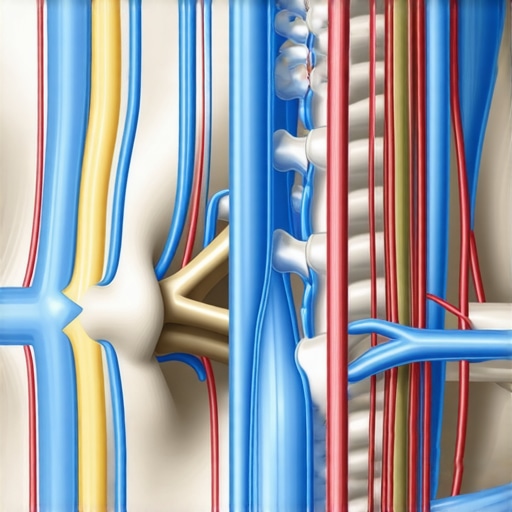 This nuance is why professional chiropractic adjustments are so focused on joint mechanics; you have to fix the ‘hinge’ before the ‘wire’ can move freely. If you’ve been trying to ‘stretch out’ a sharp pain for weeks with no luck, you’ve likely been falling into the tension trap.
The Self-Crack Trap That Keeps You In Pain
Another common ‘oops’ factor is the habit of self-adjusting. I used to think a quick crack of my own neck would reset things, but you should really stop rolling your neck in circles to get that relief. Those repetitive, uncontrolled movements often move the segments *above* and *below* the actual problem, leaving the stuck joint exactly where it was while over-stretching your ligaments. This creates a cycle of temporary relief followed by increased instability. It’s the same reason why knowing the truth about using heat versus ice is critical; applying heat to an already swollen, ‘angry’ nerve can actually increase the local pressure by drawing more fluid to the area, even if it feels good for those first ten minutes.
How Can My Breathing Patterns Actually Protect My Spine?
Real progress happens when we view the link between mobility and posture as a dynamic relationship. One of the most overlooked tools for spinal decompression is actually your diaphragm. The hidden link between your breathing pattern and lower back stability is often the missing piece for chronic sufferers. By using your diaphragm to create internal pressure, you support the spine from the inside out, providing a natural ‘cushion’ for your discs. This internal support system is exactly how chiropractic adjustments enhance posture and mobility—they clear the mechanical interference so your body can actually use its own stabilization muscles. Have you ever fallen into the trap of trying to ‘stretch away’ a sharp nerve pain only to have it come back worse an hour later? Let me know in the comments below.
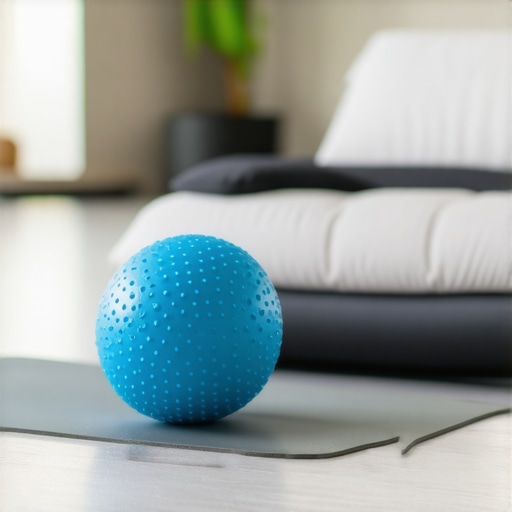
I’ve found that the real ‘secret sauce’ for keeping a nerve from flaring up again isn’t a one-off session; it’s the inventory of tools you keep in your living room. For me, a standard foam roller wasn’t enough. I switched to a high-density ‘peanut’ ball specifically to target the thoracic spine without putting direct pressure on the spinous processes. This allows for localized decompression that a flat roller just can’t touch. These are the kinds of mobility hacks for a more active life that bridge the gap between your monthly visits to the clinic. I also swear by a lumbar support that isn’t just a soft cushion, but a firm, adjustable strap that I take into the car. If you spend any time behind the wheel, you’ll quickly realize why your back stiffens up; you’re losing that natural curve for hours at a time.
How do I maintain my spinal alignment over the long haul?
The answer is less about ‘fixing’ and more about ‘checking.’ I use a daily mirror check to see if my shoulders are leveling out or if I’m starting to lean into one hip. This is essentially a DIY version of the ultimate guide to improving mobility and posture in 2025. According to Dr. Stuart McGill, a world-renowned expert in spine biomechanics and author of Back Mechanic, ‘stiffness in the right places is actually a protective mechanism.’ He argues that building ‘core endurance’ is more vital for long-term health than raw strength. This is why I’ve integrated the bracing technique that protects your spine during heavy yard work into my daily life—even when I’m just lifting a laundry basket or reaching for a high shelf.
Future-Proof Your Back With Smart Tech
In the next few years, I predict we will see a massive shift toward wearable biofeedback. We already have apps that track steps, but soon we’ll have shirts with integrated sensors that vibrate when your mid-back starts to ‘hunch’ or collapse. This technology will fundamentally change how chiropractic adjustments enhance posture and mobility, moving from a reactive ‘fix me’ model to a proactive, data-driven partnership between patient and practitioner. For now, the best way to transition from a sitting to a standing desk remains the most accessible way to keep the spine moving throughout the workday. And don’t forget the small things—like the 60-second fix for a stiff jaw—because tension in the head and neck often travels down the chain to the lumbar region. Try this advanced tip tonight: Before you get into bed, spend two minutes doing ‘dead bugs’ on a firm floor. It resets your pelvis and activates the deep stabilizers so your spine stays ‘locked in’ and supported while you sleep.
The Hardest Lesson I Learned About Healing Nerves
If there’s one thing I’ve learned from years of managing spinal health, it’s that your body doesn’t care about your schedule; it only cares about mechanical consistency. My biggest lightbulb moment was realizing that the link between mobility and posture isn’t just about how you look in the mirror—it’s about how much space your nerves have to function. I used to think I could ‘fix’ a week of bad sitting with one long stretching session on Saturday, but the nerve doesn’t work that way. It needs the pressure removed and kept off. I also realized that pain is the last symptom to show up and the first one to leave; just because the zinger is gone doesn’t mean the structural issue is solved. Finally, I learned that why chiropractic care is your secret weapon for better posture becomes clear when you realize that sometimes you need an external force to reset a joint that your muscles have effectively ‘welded’ shut.
The Toolkit I Use to Keep My Spine in Check
I don’t leave my recovery to chance anymore. Beyond the bedside tricks, I’ve curated a few essentials that keep me out of the ‘danger zone.’ First, Dr. Stuart McGill’s Back Mechanic is essentially my spinal bible; it taught me more about the ‘why’ of my pain than any five-minute clinic visit ever could. I also rely heavily on mobility boosts for posture like using a dedicated thoracic foam roller twice a day. For my workspace, I stopped using a ‘soft’ chair and switched to a firm stool that forces me to engage my core, which is one of those targeted mobility exercises you can do without even leaving your desk. These tools aren’t just gadgets; they are physical reminders to my nervous system that we are staying in a neutral, safe zone.
Your Path to Waking Up Refreshed Starts Tonight
You don’t have to live in fear of the 3 AM jolt forever. Healing a pinched nerve is a marathon, not a sprint, and every small adjustment you make to your pillow height or your breathing pattern is a deposit into your long-term health bank. I know how exhausting the cycle of chronic pain can be, but remember that your body is incredibly resilient when you stop fighting its natural mechanics. Professional chiropractic adjustments unlock a pain-free lifestyle today by giving your system the reset it needs so your daily habits can actually take hold. Try the ‘dead bug’ reset before you climb into bed tonight and see how your spine feels in the morning. Have you ever tried a specific pillow arrangement that made your nerve pain worse instead of better? Let me know your experience in the comments below.