

I used to wake up every single morning feeling like my head was a bowling ball being held up by a wet noodle. I tried everything. I spent a small fortune on memory foam, convinced that how your choice of pillow impacts your mid-back health was the only variable that mattered. I even started doing weird chin tucks at red lights. But the dull ache at the base of my skull persisted until one afternoon when I caught my reflection in a shop window. I wasn’t just slouching; I was leaning forward because my stylish, overly-cushioned sneakers were literally pushing my center of gravity onto my toes. It was a lightbulb moment: my neck wasn’t the problem, it was the victim of what was happening at ground level. Today, we are going to stop treating the symptoms and start looking at the foundation, because your heels might be the reason your cervical spine is screaming for help.
Stop blaming your workstation for your morning headaches
For the longest time, I made the classic mistake of thinking my body was a series of disconnected parts. I thought I could treat my neck tension with a massage while continuing to wear shoes that offered zero support. According to the National Academy of Sports Medicine, the ‘Kinetic Chain’ concept explains that a misalignment in the feet can cause a compensatory shift all the way up to the head. When your arches collapse or your heels are artificially elevated, your pelvis tilts, your lower back arches, and your neck has to crane forward just to keep your eyes level. I realized that the hidden impact of high heels on your pelvic floor was just the tip of the iceberg; those shoes were tilting my entire skeleton like a Jenga tower. Have you ever noticed that your neck feels tighter after a long walk in those ‘comfortable’ loafers?
Is a shoe change actually enough to fix chronic pain?
You might be skeptical that something as simple as a sole could dictate the health of your cervical spine. I certainly was. I thought I needed complex expert chiropractic techniques or expensive surgeries. But think of your body like a house: if the foundation is slanted, the roof will never sit straight. Early in my journey, I made the mistake of jumping straight into rigid orthotics, which only made my feet weaker. The real secret was learning how to restore your natural arch without expensive orthotics and slowly moving toward a more natural gait. Once I understood the link between mobility and posture, the neck pain I had carried for a decade started to dissolve in weeks, not years. If you are ready to stop the cycle of temporary relief, we need to talk about how to choose shoes that actually support your spine’s natural curve. Many people find that the best way to transition to minimalist footwear is the key to waking up those dormant foot muscles and finally letting the neck muscles relax.
Rebuild your foundation from the floor up
To fix the neck, we have to look at the basement. I spent years chasing the ‘perfect’ pillow before I realized my feet were the ones screaming. When your foundation is unstable, every joint above it has to compensate, creating a ripple effect of tension that eventually lands right at the base of your skull.
How your old sneakers tell a story about your neck
Grab your most-worn pair of shoes and look at the soles. If the outer edge of the heel is ground down while the inner front is untouched, you are likely supinating. This forces your knees outward and tilts your pelvis, eventually making your neck muscles work overtime just to keep your head level. I remember looking at my favorite pair of running shoes and seeing a literal slant—I was basically walking on a ramp without knowing it. This misalignment is why there is such a strong connection between flat feet and recurring back pain. If your base is unstable, the rest of the tower is going to wobble. 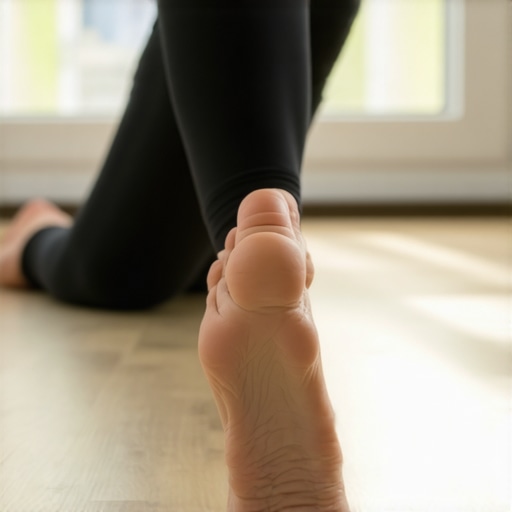
Wake up your dormant foot muscles
You cannot just buy a new pair of shoes and call it a day. You have to teach your feet how to be feet again. Start with the ‘short foot’ exercise: sit with your feet flat and try to pull the ball of your foot toward your heel without curling your toes. It sounds easy, but the first time I tried it, I got a cramp so bad I had to hop around the room for five minutes. However, learning how to restore your natural arch without expensive orthotics is the single best thing I did for my posture. When those muscles activate, your pelvis stabilizes, and suddenly that ‘bowling ball’ feeling in your neck starts to lighten.
Don’t rush the switch to minimalist soles
Once your feet have some basic strength, you can look at your footwear. Most modern shoes are shaped like coffins—narrow at the toes and elevated at the heel. This keeps your calves in a constant state of contraction. When I first switched to wide-toe-box shoes, I made the mistake of wearing them for an eight-hour shift on day one. I woke up the next morning feeling like I’d been kicked in the shins. You need to follow the best way to transition to minimalist footwear to avoid injury. Start with thirty minutes a day at home. As your ankles become more flexible, you’ll find that mobility hacks: simple adjustments for a more active life become much more effective because you aren’t fighting your own shoes.
Resetting the hardware with professional help
Sometimes, the compensation patterns have been there so long that your joints are effectively ‘stuck.’ This is where structural alignment becomes non-negotiable. While you work on your feet, chiropractic adjustments unlock a pain-free lifestyle today by resetting the segments of your spine that have been compensating for those bad shoes for years. It’s like getting a wheel alignment on a car; even if you put on new tires, you’ll still pull to the left if the axle is bent. Combining foot activation with professional care ensures that your neck isn’t just temporarily relieved, but permanently supported by a balanced frame.Once you start fixing your foundation, you begin to see the cracks in conventional wisdom. Most people assume that if a muscle feels tight, the logical solution is to stretch it until it lets go. In my experience, this is the most common mistake that keeps people in a cycle of chronic pain. We have to understand that tension is often a protective mechanism, not a malfunction.
Stop stretching the muscles that feel tight
I spent years aggressively pulling my head to the side to ‘loosen’ my upper traps, only to find they felt even tighter an hour later. The nuance most people miss is that those muscles are often tight because they are weak or because they are overcompensating for a lack of stability elsewhere. When you stretch a muscle that is already fighting to hold your head up, you are essentially telling your nervous system to panic. This is exactly why stretching your neck is making your headaches worse for so many office workers. Instead of length, your body is actually craving stability. Research published in the Journal of Orthopaedic & Sports Physical Therapy suggests that addressing motor control and strengthening the deep cervical flexors is far more effective than static stretching for long-term relief. If you keep pulling on a muscle that is trying to protect you, it will only guard harder.
Why does your neck still hurt even when your workstation is perfect?
You can have the most expensive ergonomic chair and a standing desk set to the exact millimeter, but you might still be suffering. This is because ‘posture’ isn’t a static position you hold; it’s a dynamic ability to move through different ranges. I’ve learned that the truth about perfect posture and why it doesn’t exist is the most liberating realization you can have. Your neck hurts because it’s stuck in one ‘perfect’ position for too long. Movement is the only true lubricant for your joints. Even if you are sitting ‘correctly,’ if you haven’t moved your spine in two hours, your tissues will start to adapt to that stillness. 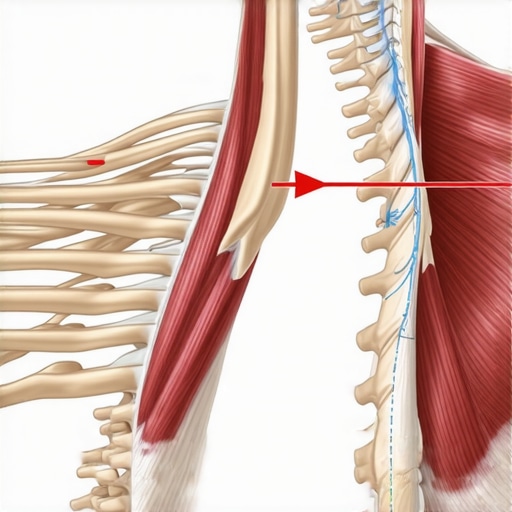
The hidden danger of self-adjusting for quick relief
We’ve all done it—that quick twist of the neck to get a satisfying ‘pop’ and a temporary sense of ease. This is the biggest ‘trap’ in the world of spinal health. When you crack your own neck, you are usually hitting the segments that are already hypermobile (moving too much). The segments that are actually ‘stuck’ and causing the problem stay stuck. You get a temporary rush of endorphins, but you are actually making your neck more unstable over time. This cycle is why the truth about cracking your own back for relief is so important to understand; you’re treating the symptom while making the underlying instability worse. Instead of self-adjusting, you need to learn how to tell if your headache is coming from your neck or if it’s a structural issue that requires a targeted, professional adjustment. Moving toward a more resilient body means stoping the ‘quick fix’ habits and starting the work of building a spine that can handle the modern world. Have you ever fallen into the ‘stretch-pain-stretch’ trap? Let me know in the comments.If you want to keep the gains you have made, you have to treat your spine with the same daily respect you give your teeth. Dr. Stuart McGill, a legendary professor emeritus of spine biomechanics at the University of Waterloo, often talks about ‘spine hygiene’—the idea that small, repetitive movements throughout the day matter more than one hour at the gym. I stopped thinking about ‘working out’ and started thinking about ‘moving well.’ This shift is the backbone of the ultimate guide to improving mobility and posture in 2025 that I swear by now. Once you stop the constant cycle of inflammation, the goal becomes building a buffer so that a long day at the office doesn’t send you back to square one.
The one core drill that changed everything for my neck
It sounds counterintuitive, but the best way to fix my neck was to strengthen my core. Not the ‘six-pack’ muscles, but the deep stabilizers that act like a natural corset. My absolute favorite is the dead bug variation that actually protects your spine because it teaches you how to move your limbs without letting your lower back arch and your neck crane forward. I do three sets of these every morning before I even touch my coffee. It’s like recalibrating my internal GPS so that when I sit at my desk, my body defaults to a neutral position rather than a slouch. This foundational strength is what keeps your vertebrae aligned when fatigue sets in during the mid-afternoon slump.
Invest in the gear that saves your skeleton
I am a bit of a nerd when it comes to tools because I realized that relying on pure willpower to sit up straight is a losing battle. Instead, I use physical cues to stay honest. Learning how to use a lumbar roll correctly in an office chair was a game-changer for me. It is a simple piece of foam that provides the constant feedback my brain needs to stay upright. I also keep a set of resistance bands at my desk for mobility boosts for posture: expert tips for daily adjustments during phone calls. I found that the most important ‘tool’ was actually a mental trigger; every time I walk through a doorway, I do a quick ‘check-in’—shoulders back, chin tucked. This is part of the improving posture through mobility: practical chiropractor strategies that keep me from sliding back into the habits of my twenties. 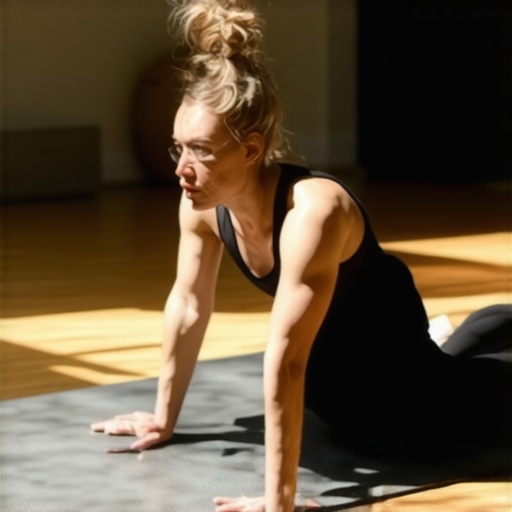
How do I maintain these results for the long haul?
The biggest question I get is how to stay consistent once the initial pain fades. The secret is integrating maintenance into your life rather than adding it to an already overflowing to-do list. I still see a professional regularly because why chiropractic care is your secret weapon for better posture isn’t just about fixing a crisis; it is about preventing the next one before it starts. I predict that in the next few years, we are going to see a massive surge in bio-feedback wearables—sensors built into our clothes that vibrate when our mid-back starts to round. Until then, we have to be our own sensors. If you want to take your stability to the next level, I challenge you to try the dead bug variation I mentioned above for the next seven days and see how much lighter your head feels.
The Lightbulb Moments That Stopped My Constant Neck Cracking
Looking back at my decade of chronic pain, I realized that my body wasn’t failing me; it was communicating in a language I didn’t yet understand. The most profound shift happened when I stopped viewing ‘tightness’ as an enemy to be stretched away and started seeing it as a sign of instability elsewhere. I learned that why your breathing pattern determines your lower back stability was the missing link to my upper trap tension. When I fixed my diaphragm movement, my shoulders finally dropped. I also stopped the mistake of ignoring a dull ache in your glutes, realizing that a ‘quiet’ hip often leads to a ‘loud’ neck. These lightbulb moments transformed my approach from chasing symptoms to building a foundation of true mobility.
My Daily Gear for a Pain-Free Frame
I don’t leave my spinal health to chance anymore; I use a curated set of tools that provide constant feedback to my nervous system. First, understanding how to use a lumbar roll correctly in an office chair was like finding the ‘on’ switch for my postural muscles. It stops the slouch before it even starts. I also treat why chiropractic care is your secret weapon for better posture as a non-negotiable part of my monthly maintenance, ensuring my spinal segments move freely. For those mid-afternoon slumps, I rely on mobility boosts for posture: expert tips for daily adjustments to keep my joints lubricated even during a heavy workload. #IMAGE_PLACEHOLDER_E#
Your Journey Toward a Resilience That Lasts
Transitioning from chronic pain to proactive health is not an overnight feat, but it is entirely possible once you start looking at the body as an interconnected web. Every pair of shoes you choose and every core drill you perform is a vote for a more mobile, pain-free future. By following the ultimate guide to improving mobility and posture in 2025, you can stop feeling like a victim of your workstation and start feeling like the architect of your own movement. Your neck deserves a foundation that supports it, not one that constantly pulls it out of alignment. What was the one shoe choice or habit that surprised you by affecting your neck pain? Let me know below!