
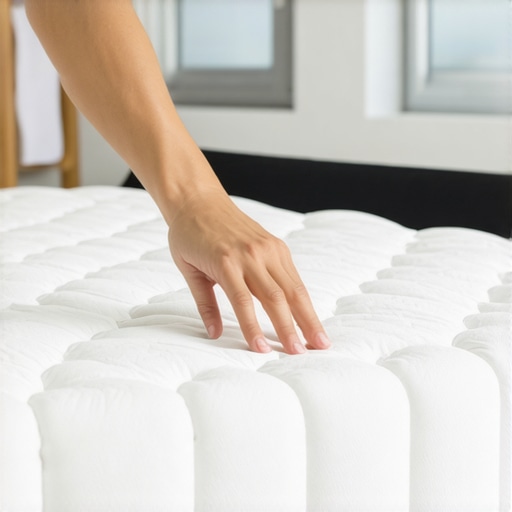
I remember the Tuesday morning I finally cracked. I didn’t just wake up; I unfolded. My spine made a sound like a bag of gravel being dropped on concrete, and for a split second, I wasn’t sure if I could actually reach for my coffee. I’d spent three years blaming my job, my gym routine, and even my shoes. But as I sat there, staring at the saggy valley in the middle of my bed, the truth hit me. My mattress was essentially a giant, expensive trap. It was keeping me stuck in the same bad patterns that led to why your lower back hurts when you try to stand up straight every single day. I had fallen for the marketing fluff and bought something that felt ‘cloud-like’ in the store but offered the structural support of a marshmallow. I was trying to fix my body while sleeping on a surface that was actively breaking it down. [image_placeholder_1]
How My Quest for Comfort Almost Wrecked My Back
When I first went mattress shopping, I made the classic rookie mistake: I equated ‘expensive’ with ‘effective.’ I walked into a showroom, laid on five different beds for thirty seconds each, and picked the softest one. I thought I was treating myself. In reality, I was setting myself up for months of chiropractic visits. I eventually learned that regular chiropractic adjustments unlock a pain-free lifestyle, but they can’t do all the heavy lifting if your bed is fighting your spine for eight hours every night. According to researchers at Oklahoma State University, simply replacing a mattress older than five years can improve sleep quality and reduce back pain by up to 63%. That lack of structural integrity in an old or poorly chosen bed is often a hidden culprit behind morning neck stiffness and that nagging ache in your mid-back that just won’t quit. Have you ever felt like you’re fighting your own bed just to find a comfortable spot?
Do you really need to spend thousands for a good night’s sleep?
The short answer is no. But the slightly longer, more honest answer is that you have to know exactly what you’re paying for. Most people fear that if they don’t buy the ‘top-of-the-line’ model, they’ll wake up in pain, but price tags are often more about brand names and cooling-gel gimmicks than actual spinal alignment. I spent nearly three thousand dollars on my first ‘premium’ foam bed, only to realize it was causing my hips to sink too deep, throwing my whole lumbar region out of whack. If you’ve ever bought a bed that felt amazing for the first month and then suddenly felt like a torture device, you’re definitely not alone. It’s a frustrating, expensive cycle that stops here. Today, I’m going to share the exact 4-point checklist I developed after my own disastrous purchase. This isn’t just about soft vs. firm; it’s about how your bed interacts with your unique body. We’re going to fix your sleep setup so it supports your goals in the ultimate guide to improving mobility and posture in 2025.
The Simple Filter I Use to Avoid Buying a Lemon
Before you even step foot in a store or click ‘add to cart’ online, you need to understand that a mattress is a tool for recovery, not just a soft place to land. My big turning point was realizing that my sleeping position as a side sleeper meant I needed specific pressure relief that my old bed just didn’t provide. If you’re tired of guessing and waking up stiff, this checklist will be your new best friend. We’re looking for the sweet spot where support meets comfort, ensuring you wake up ready to move rather than ready for a heating pad.
Keep Your Spine Straight Like a Plumb Line
When you lie down, your spine should maintain the same natural curves it has when you are standing with perfect posture. Think of your spine as a high-tension suspension bridge; if the cables (your muscles and ligaments) are pulled too tight or allowed to sag too low, the whole structure weakens. I learned this the hard way when I bought a mattress that was so soft I felt like I was sleeping in a hammock. Within three days, my lumbar spine was screaming because my midsection was sinking several inches lower than my shoulders. To test this in a store, have someone take a photo of you lying on your side. If your spine looks like a winding river instead of a straight line, that mattress is a recipe for why your lower back hurts when you try to stand up straight. You need a base that pushes back against your heaviest points—your hips and shoulders—without being so hard that it cuts off circulation.
The Hip Sink Test for Real Support
This is the specific method I used to finally find a bed that didn’t leave me crippled by 7:00 AM. While lying on your back, try to slide your hand under the small of your back. If there is a huge gap, the mattress is too firm and isn’t contouring to your shape. If you can’t get your hand in there at all because you’ve sunk so deep into the foam, it’s too soft. You want just enough resistance to feel supported but not crushed. This balance is critical because your mobility boosts for posture depend on your joints being able to recover in a neutral position. When I finally found a hybrid mattress that passed this test, the nagging ache in my SI joint vanished within a week.
Why Edge Support Is Non-Negotiable
Most people ignore the perimeter of the bed, but if the edges are weak, the usable surface area of the mattress shrinks. I once owned a memory foam bed with zero edge reinforcement; every time I rolled near the side, I felt like I was about to slide onto the floor. This lack of stability forces your core muscles to stay ‘on’ all night just to keep you centered, which is why you might wake up feeling like you did a thousand crunches. Furthermore, solid edges are essential for the safest way to get out of bed when your back is locked up. If you can’t sit on the edge of the bed to find your footing, you’re going to torque your spine the second you try to stand.
Give Your Nervous System Time to Adjust
Don’t judge a mattress by the first night. Your body has spent years compensating for a bad bed, and your muscles have likely developed ‘memory’ for those poor positions. It’s a lot like why chiropractic care is your secret weapon for better posture; the first adjustment might feel strange or even slightly sore because your body is being introduced to a new, correct alignment. I tell everyone to give a new bed at least 30 nights. During this transition, you can use improving posture through mobility drills to help your tissues adapt to the new support. If you’re still waking up with a ‘click’ in your spine after a month, then you know the bed truly isn’t the right match for your frame. Consistent support is the only way to facilitate a morning routine that stops your back from clicking before you even reach for your slippers.People often think that once they get a great mattress and a few chiropractic sessions, they just need to ‘sit straight’ to be cured. This is the biggest lie in ergonomics. In my journey, I discovered that why your perfect posture is actually causing muscle fatigue is a real phenomenon. You aren’t a statue, yet most people treat their spine like a marble column. Your body is designed for dynamic movement, not static holding. If you are forcing yourself into a rigid upright position, you are simply swapping one type of strain for another. A study published in the British Journal of Sports Medicine emphasizes that there is no single ‘correct’ posture that prevents pain; instead, it is the lack of movement variability that leads to discomfort. This means your mobility hacks simple adjustments for a more active life are far more important than how straight you can sit for eight hours.
Is your ‘perfect’ posture actually a rigid prison?
When we focus too hard on ‘correcting’ our stance, we often create a state of perpetual muscular guarding. I used to keep my shoulders pinned back so hard I developed a why your ribs feel bruised when you take a deep breath sensation. My nervous system was stuck in ‘fight or flight’ because I was literally bracing for impact all day. Real the link between mobility and posture is about fluid transitions, not a fixed point on a map. Have you ever fallen into this trap of trying to stand so ‘correctly’ that you actually felt more stiff? Let me know in the comments.
Don’t let your hamstrings trick you
Here is the ‘oops’ factor that almost cost me my progress: I spent years aggressively stretching my hamstrings because I thought they were ‘tight.’ In reality, why stretching your hamstrings might actually make your back pain worse is a common pitfall. If your pelvis is unstable, your hamstrings will tighten up to act as ’emergency brakes’ for your spine. When you stretch them out, you’re essentially cutting the brake lines. Your lower back then has to work twice as hard to keep you upright, which leads to that deep, nagging ache. Instead of chasing the stretch, I had to focus on the core move that prevents lumbar disc bulges to give my brain the signal that it was safe to let those muscles relax.
What happens when the adjustment doesn’t ‘stick’?
Many people get frustrated when they feel great after a session but wake up stiff again. This usually happens because you haven’t addressed the environmental triggers in the ultimate guide to improving mobility and posture in 2025. You can’t expect twenty minutes of enhance your posture with expert chiropractic techniques to undo 2,000 hours of looking down at a laptop. The ‘secret sauce’ isn’t the adjustment itself; it’s the improving posture through mobility habits you build in between. It is about training your body to find a neutral home base without you having to think about it constantly. If you’re still struggling with why your lower back hurts when you try to stand up straight, it’s time to stop looking for a single ‘fix’ and start looking at how you move through your entire day.I don’t believe in those vibrating posture gadgets that buzz every time you slouch; they’re just annoying reminders of a problem they don’t actually solve. Instead, I’ve curated a small, tactile toolkit that addresses the mechanics of movement. The most important ‘tool’ in my bag is a standard, six-dollar lacrosse ball. Unlike those giant, squishy foam rollers, a lacrosse ball allows for surgical precision. I use it to pin down the small knots in my levator scapulae—that muscle that makes your neck feel like it’s made of dry wood. I found that the truth about foam rolling your lower back is that it’s often too broad for the deep work needed in the thoracic spine. By pinning the ball between my shoulder blade and the wall, I can create a ‘tack and stretch’ effect that an expensive massage chair simply can’t replicate.
The Monitor Hack That Saved My Vision and My Neck
Beyond the physical tools, your environment needs a permanent audit. I used to think I was doing enough with my standing desk, but I was still getting those afternoon clusters of pain. The culprit wasn’t my legs; it was my eyes. I finally realized that the simple change to your monitor height that kills headaches involves bringing the screen much higher than you think. If you aren’t looking at the top third of your screen with your chin tucked and your ears over your shoulders, you are slowly suffocating your nervous system. A 2014 study published in the Journal of Physical Therapy Science by Kim et al. demonstrated that significant forward head posture actually decreases vital lung capacity. You aren’t just getting a stiff neck; you are literally getting less oxygen. I now use a gas-spring monitor arm that allows me to adjust the screen to my exact eye level whether I am sitting or standing, which helps me how to fix the computer-hunch in under two minutes without even leaving my chair.
How do I maintain my mobility results over the long term?
Maintenance isn’t about doing a grueling 90-minute yoga session once a week; it’s about ‘micro-dosing’ your movement. I live by a 30/3 rule: for every 30 minutes of deep focus, I spend 3 minutes doing revolutionize your posture with targeted mobility exercises. This keeps the fascia from becoming ‘sticky’ and prevents the cumulative load that leads to injury. Looking ahead, I predict we are moving toward an era of ‘smart furniture’ that won’t just move up and down, but will use AI-driven pressure sensors to tell you when your weight is shifting unevenly. Until then, you have to be your own sensor. I recommend starting tomorrow morning with one specific advanced habit: every time you walk through a doorway, perform a ‘doorway stretch’ to open your chest. It’s a simple mobility hack for a more active life that ensures your body doesn’t revert to that collapsed, rounded shape the moment you stop thinking about it.
Why My Third Mattress Finally Taught Me the Real Meaning of Support
Finding the right bed wasn’t a linear path; it was a series of expensive mistakes that taught me more about my body than any textbook ever could. Here are the hard-won truths I wish someone had whispered to me before I swiped my credit card:
- The 15-Minute Showroom Lie: A mattress that feels like a ‘cloud’ for fifteen minutes in a showroom is often a nightmare after six hours of dead weight. True support is about how your spine feels at 4:00 AM, not 4:00 PM.
- Morning Pain Isn’t a Birthday Tax: I used to think waking up stiff was just part of getting older. It’s not. It’s a mechanical failure of your environment. When I finally combined the right surface with how chiropractic adjustments enhance posture and mobility, that ‘age-related’ ache vanished.
- Your Symmetry Matters: If you notice the truth about why one shoulder sits higher than the other, no mattress can fix that alone. You have to address the muscular imbalances alongside your sleep setup.
#IMAGE_PLACEHOLDER_E#
The Recovery Arsenal I Won’t Go a Day Without
I’ve tested dozens of gadgets, but only a few have earned a permanent spot in my routine. If you are serious about following the ultimate guide to improving mobility and posture in 2025, these are your non-negotiables:
- The Monitor Arm: Stop stacking books. A high-quality gas-spring arm allows you to keep your head in a neutral position, preventing the ‘forward lean’ that ruins your progress.
- A Lacrosse Ball: This is the most cost-effective physical therapy tool on the planet. Use it daily to find and release those ‘sticky’ spots in your upper back and glutes.
- A Dedicated Mobility Flow: I highly recommend committing to a revolutionize your posture with targeted mobility exercises routine every single evening. It signals to your nervous system that it’s time to let go of the day’s stress.
Take Your Power Back From the Chair
You aren’t destined for a life of ‘managing’ pain. Your body is incredibly resilient, but it needs a consistent environment to thrive. By upgrading your mattress, auditing your workspace, and staying curious about how you move, you are essentially giving your spine a second chance. This isn’t about being perfect; it’s about being better today than you were yesterday. Let’s stop letting our furniture dictate our health and start building a lifestyle that supports our longevity. What’s the one thing in your daily setup—be it your chair, your shoes, or your bed—that you suspect is sabotaging your back? Let’s chat in the comments below!