
I remember the exact moment I realized my bed was my enemy. It was 3:14 AM, and my left shoulder felt like it had been crushed by a hydraulic press while I slept. I’m a dedicated side sleeper—it’s the only way I can actually drift off—but for years, I woke up with that nagging, deep ache that made even reaching for my coffee mug a chore. I tried ‘toughing it out,’ thinking my body would just adapt. Big mistake. I eventually learned that I was essentially strangling my own joints by using my body weight as a blunt instrument. If you’ve ever noticed why your shoulder clicks every time you reach for the seatbelt during the day, your nighttime habits are likely the silent culprit. Today, I’m going to show you how to stack your pillows and align your spine so you can actually wake up feeling refreshed, not like you need a physical therapist on speed dial. Have you ever spent a whole morning rubbing your shoulder because you ‘slept on it wrong’? Drop a comment below if you’ve done the 3 AM pillow-punching routine too.
Stop Crushing Your Rotator Cuff Every Night
The biggest error I made early on was assuming a firmer mattress would solve everything. I spent a fortune on a bed that felt like a brick, only to find my shoulder pain intensified. The reality is that side sleeping creates a massive pressure point right at the glenohumeral joint. When you don’t create a ‘pocket’ for your shoulder, you’re essentially jamming the humerus into the socket for eight hours straight. This leads to what researchers in the Journal of Applied Ergonomics describe as localized ischemia—a fancy way of saying you’re cutting off blood flow to the very tissues trying to heal. I’ve found that using the pillow height trick that stops morning neck stiffness is actually half the battle for the shoulder, too. By stabilizing the neck, you stop the head from collapsing downward, which relieves the sheer force on the shoulder blade. Sometimes, what we think is a joint issue is actually referred pain, so it’s vital to learn how to tell if your neck pain is actually a referred shoulder injury before you start changing your whole routine.
Is an Expensive Orthopedic Pillow Actually Worth the Hype?
I used to be the biggest skeptic. I thought ‘specialty pillows’ were just a marketing scam to get us to spend $100 on foam. But after weeks of restless nights, I finally experimented with the specific way to adjust your pillow for side sleeping comfort and it changed my life. You don’t necessarily need a NASA-engineered device, but you do need the right loft. If your pillow is too thin, your bottom shoulder takes the full weight of your torso. If it’s too thick, you’re straining the top side. The goal is a neutral ‘floating’ sensation. When I finally stopped my ego from getting in the way and started using a body pillow to support my top arm, the clicking in my joints vanished within a week. We’re going to dive into the exact ‘hug’ technique that keeps your top shoulder from collapsing forward, which is usually the missing piece of the puzzle for side sleepers.
Build Your Nightly Support System
To stop the crushing sensation, you have to treat your bed like a construction site where the goal is a level foundation. Start with the ‘Shoulder Scoop.’ Instead of lying directly on the point of your shoulder, pull the bottom shoulder blade slightly forward toward your chest as you descend into the mattress. This shift moves the weight away from the sensitive acromion process and onto the sturdier muscles of the upper back and chest. Think of your shoulder like a bicycle kickstand; if it is tucked directly under the frame, it is going to buckle under the weight. By pulling it forward, you land on the ‘meat’ of the deltoid rather than the bone of the joint. I once tried to hack this during a rainy camping trip by stuffing a fleece jacket into a dry bag because the ground was so hard and my travel pillow was soaked. It was a lumpy mess at first, but once I got the height right and scooped my shoulder forward, the familiar throbbing in my joint stopped instantly. This simple adjustment helps prevent the common issue where why your dominant side is always tighter than the other because it distributes your mass more evenly across the ribcage.

Stop the Top Shoulder from Collapsing Forward
The top shoulder is often the secret source of nagging neck tension. If it falls forward while you sleep, it drags the scapula with it, stretching the muscles between your spine and your shoulder blade until they scream. Think of your top arm like a heavy branch; without a prop, it is going to break the limb it is attached to. You need to ‘hug’ a medium-firm pillow against your chest. This keeps the humerus at a 90-degree angle to your torso, maintaining an open chest and a neutral shoulder position. This is one of the most effective mobility hacks for a more active life because it prevents the ‘closed-off’ posture we often carry into the next day. If you find yourself constantly trying to figure out how to stop your shoulders from shrugging towards your ears, this pillow-hug technique is the primary fix for your nighttime recovery.
Lock in Your Hips to Save Your Spine
Side sleeping is a full-body sport. If your top knee drops down to touch the mattress, your pelvis rotates, pulling your lower back into a twist. That torque travels up your spine like a kinetic wave, eventually putting pressure on your ribcage and shoulders. Placing a pillow between your knees is not just for people with ‘bad backs’; it is a structural requirement for neutral alignment. I learned this the hard way after a week of intense hiking when I thought I could skip the extra pillow to save space in the tent. I woke up with my hips feeling so locked I could barely tie my boots. The pillow should ideally extend from your knees down to your ankles to keep the entire leg on a level plane. This is similar to how you would check how to fix the way you stand in line to save your hips—it is all about weight distribution and avoiding that lateral tilt. If you have been searching for the simple hip reset for people who sit for 8 hours, you will realize it starts with not messing them up while you sleep. By keeping the knees stacked, you ensure that the truth about why one shoulder sits higher than the other does not become your permanent reality due to a twisted spine.
Even with the perfect pillow setup, I see people fail because they think their recovery ends the moment they get out of bed. We have been conditioned to believe that ‘stiffness’ always equals ‘tight muscles’ that need to be stretched into submission. I used to be that guy, spending twenty minutes every morning yanking on my neck, only to feel more unstable by noon. The contrarian truth is that over-stretching can actually sabotage your progress. Often, your brain keeps a muscle tight to protect a joint that it perceives as unstable. If you keep forcing it, you’re essentially ripping away your body’s internal bracing system. This is why why your hamstring stretches aren’t fixing your tightness—the root cause is usually a lack of stability elsewhere, not a lack of length in the muscle. Instead of just pulling on things, we need to focus on how how chiropractic adjustments enhance posture and mobility by recalibrating the nervous system’s tension dial. 
Stop treating your muscles like stubborn rubber bands
The biggest mistake most people make when trying to ‘fix’ their posture is focusing exclusively on flexibility while ignoring motor control. Think of your body like a suspension bridge; if the cables are too loose, the entire structure sags. The goal is ‘tensegrity’—a balance of tension and integrity. This is a nuance often missed in basic fitness advice. When we look into practical chiropractor strategies for posture, the emphasis is on teaching the brain when to turn muscles ‘on’ and ‘off.’ Research in the Journal of Bodywork and Movement Therapies suggests that chronic tightness is often a neurological defense mechanism. If you keep stretching without addressing the underlying joint dysfunction, you’re fighting a losing battle against your own nervous system. It is one of those mobility hacks for a more active life that sounds counterintuitive until you feel the difference.
The dangerous trap of the ‘self-crack’ habit
One major trap I see is the ‘relief-seeking’ self-adjustment. When you feel that nagging pressure in your neck, it is so tempting to just twist your head until it pops. I call this the ‘hyper-mobility trap.’ When you crack your own neck, you are usually moving the joints that are already too loose, while the stuck, problematic segment stays frozen. Over time, you’re actually making yourself more prone to injury. This is the real truth about cracking your own knuckles and neck at home: you’re creating a cycle of temporary relief followed by increased instability. It is much safer to stop rolling your neck in circles and instead focus on controlled, isometric movements that build strength in the deep neck flexors. If you’ve been doing the ‘3 AM neck twist’ alongside the pillow-punching I mentioned earlier, you’re likely making your shoulder pain worse by destabilizing your cervical spine.
Why does my neck still feel tight after a professional adjustment?
It is a question I hear often, and the answer lies in the ‘muscle memory’ of your soft tissues. A study published in the Journal of Manipulative and Physiological Therapeutics highlights that while an adjustment improves joint mechanics and neural drive, the surrounding ligaments and muscles have often spent years adapting to a skewed position. If you don’t address the soft tissue ‘guarding,’ your body will try to pull that joint right back into its old, painful habit. This is specifically what a chiropractor actually looks for during your first exam—it isn’t just about the ‘bone out of place,’ it’s about the entire functional ecosystem of your movement. Have you ever fallen into the trap of thinking a loud crack meant you were ‘fixed’? Let me know in the comments.
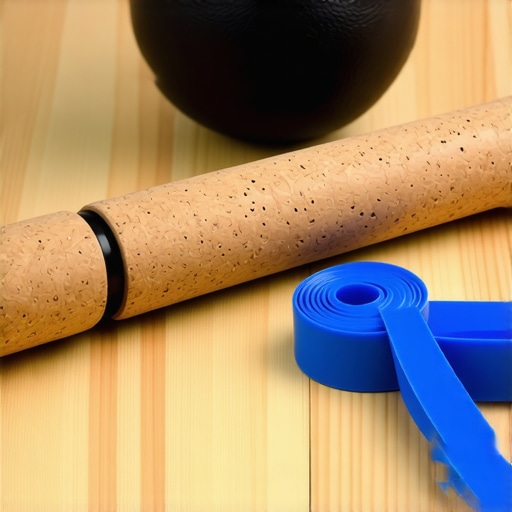
Maintaining the progress from a professional adjustment requires more than just good intentions; it requires a literal toolkit. I’ve gone through dozens of gadgets, but I always return to the basics that actually provide leverage. For me, the most indispensable tool is a simple lacrosse ball. While people love fancy vibrating rollers, a dense rubber ball allows for targeted trigger point release in the infraspinatus and teres minor—the muscles that actually dictate how your shoulder sits. I’ve found that using it against a wall is much more effective than lying on it because you can control the pressure. This is very similar to the proper way to use a tennis ball for glute pain, where the goal isn’t to bruise the tissue, but to signal the nervous system to let go of its protective guarding.
My Go-To Kit for Daily Maintenance
Beyond the lacrosse ball, I’m a firm believer in using a lumbar roll, but not just in the office. I take mine into the car. Most people don’t realize that the specific way to sit in a car for long commutes determines how your lower back behaves for the rest of the day. If you’re slumped for an hour-long drive, your hip flexors are already locked before you even reach your desk. I also keep a set of resistance bands at my workstation. Instead of just stretching, I use them for face pulls to activate the mid-trapezius. This provides the ‘tensegrity’ I mentioned earlier. It’s one of those mobility boosts for posture that takes sixty seconds but saves you hours of stiffness later. I’ve noticed that if I skip these ‘micro-hits’ of movement, even the best chiropractic adjustments struggle to overcome eight hours of static sitting.
Why I Ditched My Fancy Office Chair
It sounds like heresy, but your thousand-dollar ergonomic chair might be making you lazy. I switched to a simple stool for part of the day because it forced my core to actually do its job. When we lean back into a chair, our deep spinal stabilizers essentially go on vacation. This is why why your ergonomic desk chair is still giving you back aches—it’s providing too much external support and not enough internal engagement. Dr. Stuart McGill, a leading expert in spinal biomechanics at the University of Waterloo, has often noted that ‘the best posture is the next posture.’ This means the ‘tool’ isn’t the chair itself, but the frequency with which you change your position. I now use a timer to ensure I’m applying the best way to transition from a sitting to a standing desk every forty-five minutes. This keeps the blood flowing and prevents the tissues from creeping into a permanent hunch.
How do I make these mobility gains stick for the long haul?
The secret to long-term results isn’t more intensity; it’s more consistency. You have to treat your spinal alignment like brushing your teeth. I recommend picking one ‘anchor habit’—like the 30-second wall squeeze to fix forward shoulder roll—and doing it every time you finish a phone call or get up for water. Over months, these tiny corrections rewrite your brain’s map of where your body ‘should’ be in space. This process of improving posture through mobility is how you scale your health beyond the clinic walls. If you only focus on your posture when you’re in pain, you’re always playing catch-up.
The High-Tech Future of Your Spine
Looking ahead, I predict we’re going to see a massive shift toward wearable biofeedback. We already have watches that track our steps, but the next decade will bring smart clothing with integrated sensors that vibrate when your scapula starts to wing or your head leans too far forward. This real-time data will make revolutionizing your posture with targeted mobility exercises much easier because you won’t have to guess if you’re doing them right. We are moving away from passive care and toward a model of ‘active monitoring’ where you are the primary driver of your own alignment. I challenge you to try one thing today: set a ‘posture alarm’ for every hour on your phone. When it goes off, don’t just sit up straight—perform the move that instantly relieves tension in your lower ribs and see how much lighter your breathing feels by the evening.
Lessons that took me a decade of stiff mornings to learn
If there is one thing I could tell my younger, 3-AM-pillow-punching self, it is that pain is a messenger, not an enemy. I spent years trying to silence the message with Ibuprofen and aggressive stretching, but the real breakthrough came when I looked at my body as an integrated system. I realized that my tight neck was actually my body’s way of trying to stabilize a shaky shoulder. The biggest “lightbulb moment” was discovering that the link between mobility and posture is a two-way street; you can’t have one without the other. I also learned that “good posture” isn’t a static military pose—it is the ability to move through your day with efficiency. If you feel stuck, it is often because your nervous system is stuck in a protective loop.
The toolkit I actually use when things feel tight
You don’t need a gym full of equipment to maintain a healthy spine, but you do need a few high-value items. I swear by my high-density lacrosse ball for digging into those stubborn knots in the upper back. For anyone serious about long-term change, I highly recommend reading the ultimate guide to improving mobility and posture in 2025 to stay ahead of the curve. I also keep a simple lumbar roll in my car because the proper way to use a lumbar roll is just as important for your commute as it is for your desk. #IMAGE_PLACEHOLDER_E# These tools aren’t just gadgets; they are my daily insurance policy against the return of that hydraulic-press shoulder pain.
Your path to a lighter and more mobile life
Changing how you sleep and move won’t happen overnight, but the compound effect of these small adjustments is massive. Think of it as a gift to your future self. By choosing to prioritize expert chiropractic techniques and intentional movement, you’re not just avoiding pain—you’re reclaiming your energy. When your spine is aligned, your brain doesn’t have to waste resources on “guarding” your joints, leaving you with more focus for the things that actually matter. It is time to stop surviving your sleep and start using it as the ultimate recovery tool. We have seen why chiropractic care is your secret weapon, and by integrating practical chiropractor strategies into your routine, you are setting the stage for long-term health. Don’t be afraid to take that first step toward a more active, pain-free version of yourself.
Have you tried any specific pillow setups or exercises that finally stopped your morning stiffness? Let me know in the comments below!