
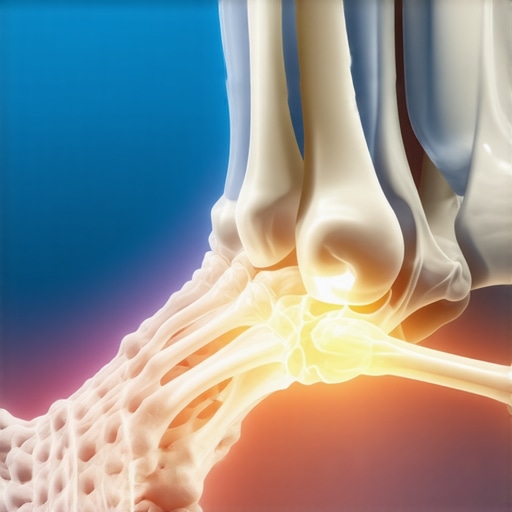
I still remember the crisp October morning when my right hip simply refused to let me get out of my car. I swung my leg out, went to put weight down, and a sharp, dull ache radiated straight through my pelvis. It felt like my joint was filled with dry sand. For months, I did what most people do: I aggressively stretched my hip flexors, bought a fancy ergonomic office chair, and even tried to open up tight hips with daily mobility routines. Nothing worked. The nagging ache always returned by lunchtime. Then, during a frustrated assessment in front of my bedroom mirror, I noticed something strange. My right ankle barely bent forward when I squatted. It was stiff as a board. That was my lightbulb moment: the real culprit wasn’t my hip at all, but the jammed joint all the way down at the end of my leg.
Your Body is a Kinetic Chain and It Starts at the Floor
We tend to treat our bodies like a collection of isolated parts. If your hip hurts, you rub your hip. But your skeletal system is a highly connected kinetic chain. When you walk, run, or squat, your foot hits the ground, and that force has to travel upward. If your ankle lacks the necessary mobility to bend and absorb that impact, your body doesn’t just stop moving. Instead, it forces the joint directly above it—or further up, like your knee and your hip—to work twice as hard to compensate. I spent years making the mistake of treating the symptom rather than the source, ignoring how ankle mobility and your lower back and hips are deeply intertwined.
Are stiff ankles really capable of throwing off my entire pelvic alignment?
It sounds highly skeptical. How can a joint so far away cause that deep, annoying pinch in your pelvic crest? According to structural biomechanics, limited ankle dorsiflexion—the ability to pull your toes toward your shin—forces your shin bone to remain upright too long during your walking stride. To keep you from falling forward, your pelvis has to tilt prematurely. This constant compensation patterns over-activate your deep hip rotators, leading to that chronic, exhausting ache. In fact, clinical research published by the National Institutes of Health confirms that restricted ankle dorsiflexion directly alters lower extremity joint loading and hip muscle activation during dynamic movements. By ignoring your stiff ankles, you are essentially forcing your hips to walk in a permanent state of emergency. Today, we are going to stop chasing the pain and start fixing the actual foundation so you can finally unlock lasting relief.
Have you ever spent weeks stretching a painful joint only to realize the relief lasted for about five minutes? Tell me in the comments below if you suspect your stiff joints are secretly playing dominoes with your posture!
Stop Stretching Your Hip Flexors and Start Testing Your Ankles
Before you spend another minute aggressively stretching your groin or hips, we need to locate the actual roadblock. When I was struggling with that deep pelvic ache, I spent weeks performing heavy lunges and groin stretches, only to feel tighter the next day. The breakthrough came when I realized my ankle was acting like a locked emergency brake. To find out if your ankles are stealing your movement, stand facing a wall with your big toe exactly four inches away from the baseboard. Keep your heel firmly planted on the floor and push your knee straight forward. If your knee cannot touch the wall without your heel lifting, your body is constantly compensating upstream, directly contributing to why your pelvis tilts forward when you run or walk.
The Banded Joint Distraction Method
If you failed the wall test, simple calf stretching won’t solve the issue. Often, the talus bone in your ankle joint gets stuck forward, physically blocking the shin bone from sliding over the foot. To fix this mechanical restriction, loop a heavy resistance band around a sturdy post. Step into the band, placing it directly over the crease of your ankle, right below the two bony bumps on the sides of your ankle. Step forward to create high tension. Step your foot onto a low block, and slowly drive your knee forward over your middle toe, letting the band pull the joint backward. The first time I tried this, I heard a tiny, painless pop, and my ankle suddenly bent two inches further. It felt like someone had finally greased the hinges of my lower body.
Ditch the Built-Up Heel Cushioning
Your footwear might be actively training your ankles to be stiff. Modern athletic shoes with heavily cushioned, elevated heels keep your feet in a constant state of slight downward pointing. Over time, your Achilles tendon shortens and your brain forgets how to access deep ankle flexion. If you transition to a flatter, minimalist shoe or simply spend more time barefoot at home, you force the ankle joint to work through its entire natural range of motion. Making this transition too quickly can irritate your feet, which is a common mistake when looking at why your sit to stand desk transition is causing foot pain. Instead, ease into it by spending just one hour a day barefoot while doing light chores around the kitchen, gradually building up the tolerance of your connective tissues.
The Standing Soleus Press
Most people only stretch their calves with a straight knee, which targets the superficial gastrocnemius muscle. However, the deeper soleus muscle is actually the one that controls deep ankle flexion when your knee is bent. To target this specific tissue, stand with one foot forward, bend both knees slightly, and shift your weight directly onto the front leg while keeping the heel down. Hold this deep, bent-knee stretch for two minutes daily. Consistently expanding this range of motion is a vital step in improving posture through mobility. After just a week of targeting my soleus and using the banded distraction, the chronic, deep pinch in my hip during daily squats completely vanished, proving that the foundation of your movement always begins where your body meets the floor.
When we experience chronic stiffness, our default instinct is to aggressively stretch the exact spot that hurts. If your hips feel like concrete, you spend twenty minutes on a yoga mat forcing yourself into deep lunges. If your shoulders pinch, you pull your arm across your chest. But in my years of studying biomechanics and working with joint recovery, I have realized a contrarian truth: stretching a tight joint is often the worst way to make it move. When a joint feels locked, it is usually not because the muscle itself is short. It is because your brain has actively turned down the neural drive to that area to protect you from an instability elsewhere in the kinetic chain. If you force a stretch on a joint that your brain is actively trying to lock down, you trigger an protective stretch reflex, making the joint feel even tighter an hour later.
Why does stretching my tight hamstrings always seem to make my lower back ache more?
This is the classic kinetic trap. Many people complain that they stretch their legs daily yet never get more flexible. In reality, your brain is using those hamstrings as an emergency brake to stabilize a pelvis that is tilting forward. If you manage to temporarily force those hamstrings to loosen up, you strip away your pelvis’s primary stabilizer, forcing your lower back muscles to seize up to keep you upright. This is exactly why stretching your hamstrings won’t fix your tight back. A study published in the Journal of Strength and Conditioning Research demonstrated that static stretching without active stabilization can actually reduce joint stability and alter firing patterns in neighboring muscle groups, proving that isolating a single muscle group in a vacuum is a recipe for chronic compensation.
The Hyper-Mobility Trap That Ruins Your Adjustments
Another major mistake is confusing joint tightness with a alignment issue that needs to be constantly popped or cracked. When you feel a deep, stuck sensation, you might find yourself twisting your spine or neck until you hear a loud pop. It offers a fleeting moment of relief, but within minutes, the urge to crack it returns. This is because you are likely cracking a hyper-mobile segment above or below the actual restriction. The joint that is truly stuck remains completely frozen, while you are repeatedly over-stretching the ligaments of the joints that are already moving too much. Over time, this self-cracking habit creates localized instability, which is why understanding the truth about cracking your own back for relief is so critical for long-term spinal health.
Instead of chasing local symptoms, we must look at how global alignment dictates local tension. For instance, your head weight and shoulder position directly influence how your pelvis and ankles behave. If you are struggling with a stubborn, recurring ache, the solution lies in integrated movement rather than isolated stretching. To truly build a body that moves fluidly, you must focus on the ultimate guide to improving mobility and posture in 2025, which emphasizes full-body integration over isolated joint pulling. Have you ever fallen into this trap of aggressively stretching a painful area only to find it got tighter? Let me know in the comments below!
Over the years, I have learned that unlocking a joint is only half the battle; keeping it moving smoothly is where the real work begins. When I stopped chasing temporary relief and focused on long-term maintenance, my entire physical routine shifted. I stopped relying on random stretches and started investing in tools and protocols that actually respect human biomechanics. If you want to keep your body moving fluidly, you must treat your joint health as a daily maintenance habit rather than an emergency intervention.
The Precise Tools I Use Daily to Protect My Joints
I do not believe in cluttered gym closets filled with useless plastic gadgets. Instead, my daily maintenance routine relies on three highly specific tools. First, I use a vibrating peanut roller. Unlike a standard flat foam roller, the dual-sphere design of a peanut roller contours perfectly around the thoracic spine and the Achilles tendon. The targeted vibration desensitizes the local nervous system, allowing my muscles to relax without aggressive, painful pressure. Second, I keep a pair of heavy-duty loop resistance bands anchored to my desk leg. I use these for banded joint distractions throughout the workday to keep my hips and ankles from locking up. Finally, I wear zero-drop, wide-toe-box transitional shoes. Keeping my heels flat on the ground ensures my Achilles tendons do not shorten while I walk, which is a massive help in maintaining proper pelvic alignment.
How do I maintain my mobility and posture over time without spending hours doing exercises?
The secret is integration, not isolation. You do not need a dedicated one-hour mobility session every day. Instead, weave your joint check-ins into your existing lifestyle. I practice “mobility snacking”—performing a single, two-minute soleus press while brewing my morning coffee, or doing a quick band distraction between virtual meetings. This consistent, low-dose input keeps the brain comfortable with your full range of motion. Additionally, partnering with an expert for periodic structural tune-ups ensures that your self-maintenance is targeting the right areas. Utilizing mobility boosts for posture through targeted clinical care is the ultimate way to ensure your joints remain aligned while you build strength at home.
Looking ahead, I predict a massive industry shift away from passive stretching toward active, neurologically driven mobility work. Renowned physical therapist and movement expert Dr. Kelly Starrett has long advocated for mobilizing in positions of function rather than passive pulling. In the coming years, we will see smart wearable technology that tracks our joint articulation angles in real time, alerting us when our ankles or hips are starting to stiffen before pain even has a chance to develop. For now, we must rely on our own body awareness and high-quality movement habits to stay ahead of the curve.
If you want to truly solidify your progress, stop relying on random routines. I highly recommend checking out the ultimate guide to improving mobility and posture in 2025 to build a structured, long-term plan. My challenge to you today is simple: grab a heavy resistance band or find a flat wall, perform the five-minute banded ankle distraction we discussed earlier, and feel the immediate release in your lower body. Your hips will thank you.
Over the years, I have learned that unlocking a joint is only half the battle; keeping it moving smoothly is where the real work begins. When I stopped chasing temporary relief and focused on long-term maintenance, my entire physical routine shifted. I stopped relying on random stretches and started investing in tools and protocols that actually respect human biomechanics. If you want to keep your body moving fluidly, you must treat your joint health as a daily maintenance habit rather than an emergency intervention.
The Hardest Lessons from My Journey to Proper Structural Balance
When I first set out to fix my alignment, I fell into the same traps most people do. Through trial, error, and some very uncomfortable flare-ups, I realized a few fundamental truths that changed everything:
- Symptom chasing is a dead end. If your hip feels tight, the actual mechanical restriction is almost always living somewhere else, like a frozen ankle or an unsupportive footbed.
- Your brain values stability over flexibility. If your nervous system feels unsafe, it will actively lock down your muscles. Forcing a stretch against this protective tension only makes your body fight back harder. This is the exact reason why your hamstrings feel tight even though you stretch them daily.
- Popping is not correcting. Constantly self-cracking a joint to find momentary relief only wear down the ligaments of the mobile areas, leaving the actual restricted joint completely frozen in place.
The Daily Toolkit I Use to Stay Fluid and Pain-Free
I do not believe in cluttered gym closets filled with useless plastic gadgets. Instead, my personal maintenance routine relies on high-quality, practical tools that support natural movement:
- Vibrating Peanut Roller: Perfect for desensitizing tight tissues along the spine and Achilles tendon without putting aggressive, direct pressure on the bones.
- Heavy-Duty Loop Resistance Bands: These are essential for performing targeted banded joint distractions that help reset joint mechanics during long workdays.
- Wide Toe-Box Minimalist Footwear: This allows the toes to splay naturally and keeps your heel flat on the floor, preventing the shortening of the calf muscles. If you have ever wondered about the connection between flat feet and recurring back pain, changing your footwear is the first critical step.
- Professional Structural Care: Nothing replaces the trained hands of an expert to identify exactly where your kinetic chain is breaking down. Utilizing mobility boosts for posture through targeted clinical care keeps your spine and pelvis aligned so your home routines actually work.
Take Control of How Your Body Moves Today
You do not have to accept chronic stiffness as a normal part of getting older. Your body is incredibly adaptable, but it requires the right inputs to thrive. By shifting your focus from aggressive stretching to genuine joint mobilization, you can finally break the cycle of daily aches. Working alongside a professional who understands biomechanics can expedite this process tremendously. Learn how chiropractic adjustments enhance posture and mobility so you can build a resilient, fluid body that serves you for decades to come.
Have you ever spent weeks stretching a tight spot only to realize the stiffness came back immediately? Let me know in the comments below which joint you suspect is your body’s secret bottleneck!