
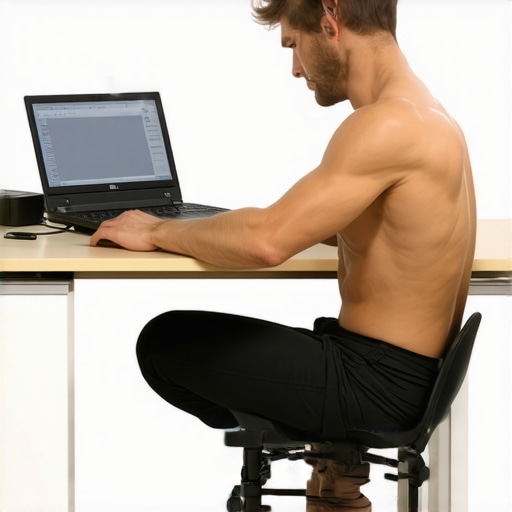
I remember sitting in my home office three years ago, literally sweating because I was trying so hard to keep my spine perfectly aligned. I had the fancy ergonomic chair, my monitor was at the exact eye level recommended by every blog on the internet, and I was holding my shoulders back with the intensity of a soldier on parade. Within twenty minutes, my mid-back was throbbing. By noon, I had a tension headache so sharp it felt like a vise grip. I was doing everything right according to the textbooks, yet I felt like I had just run a marathon while sitting still. It was my biggest early mistake: thinking that posture is a static pose you have to maintain at all costs. I eventually realized that my quest for the perfect position was the very thing making your neck muscles hard like a rock. Today, I want to show you why that rigid uprightness is actually your enemy and how you can find a rhythm of movement that finally lets your muscles breathe.
Stop trying to look like a mannequin
Most of us were told to sit up straight as kids, but we were never told that the human body is actually designed for micro-movements. When you force yourself into a rigid, upright position, you are essentially asking your postural muscles to perform a constant isometric contraction. According to research published in the journal Scientific Reports, even small amounts of static loading can lead to significant muscle fatigue and reduced blood flow. This is why the connection between chronic fatigue and poor spinal alignment is so often misunderstood; it is not just about the shape of your spine, but the lack of blood flow to the tissues holding it up. When you lock into place, you starve your muscles of the oxygen they need, leading to that deep, burning ache. Have you ever noticed that you feel more exhausted after an hour of sitting perfectly straight than after an hour of walking?
Is sitting straight actually a waste of time?
You might be skeptical. After all, isn’t slouching supposed to be the root of all evil? The truth is that the best posture is your next posture. Whether you are trying to figure out how to fix the computer hunch in under two minutes or simply trying to get through a workday, the goal should be variability, not a fixed point. I used to think I needed a back brace to stay upright, but all I really needed was to stop fighting my body’s natural urge to shift. When we over-correct, we often create new problems, like why your shoulder clicks or why your ribs feel like they cannot fully expand. We are going to dive into how you can use the ultimate guide to improving mobility to find a balance between support and freedom. If you have spent years trying to sit like a statue only to end up in more pain, you are not alone—and you are not broken.
Forget the rigid chair and start moving
You have probably spent hundreds of dollars on equipment, but the hard truth is that even the most expensive setup can’t save you from a lack of movement. I see it every week: people come in wondering why your ergonomic desk chair is still giving you back aches despite the lumbar support and memory foam. The issue is that the chair encourages you to stay in one place. Instead of trying to find the perfect angle, I want you to start ‘fidgeting’ with purpose. This means shifting your weight from one sit-bone to the other every ten minutes or switching between a sitting and standing position. If you are struggling with the transition, you might need to look at the best way to transition from a sitting to a standing desk to avoid overtaxing your lower back. Last month, I tried to stay perfectly upright during a three-hour writing session. By the end, my hips were so locked up I could barely walk to the kitchen. The next day, I focused on changing my leg position every few minutes—crossing them, uncrossing them, tucking one foot back—and the difference was night and day. Movement is the lubricant for your joints.
Try this 30-second reset for your shoulders
One of the most effective tools in my arsenal is a simple movement you can do against any flat surface. We often develop a forward slump from staring at screens, but you can fight back by incorporating mobility hacks simple adjustments for a more active life. Stand against a wall with your heels, butt, and head touching the surface. Raise your arms to 90 degrees like a goalpost and slowly slide them up and down. This is essentially the 30 second wall squeeze to fix forward shoulder roll, and it forces your nervous system to remember where your shoulders are actually supposed to live. It is not about forcing them back; it is about reminding the muscles that they have the permission to move.
Stop holding your breath if you want to protect your back
I once worked with a marathon runner who had the worst mid-back stiffness I had ever seen. The culprit? He was ‘bracing’ his core so hard all day that his diaphragm couldn’t move. When you stop breathing deeply, you rely on the tiny muscles in your neck to lift your ribcage. This is how your breathing habits are creating tightness in your scalenes and making your posture feel like a chore. You have to understand the hidden link between your breathing pattern and lower back stability to truly find relief. If your ribs don’t expand, your spine can’t stay supple.
Why a professional adjustment is the ultimate reset button
Sometimes, no matter how much you shift or stretch, you feel like there is a ‘catch’ in your spine that won’t let go. That is usually a joint that has become stuck in a protective pattern. This is why chiropractic care is your secret weapon for better posture. An adjustment isn’t just about ‘cracking’ a bone; it is about sending a high-speed signal to your brain to relax the surrounding muscles. By learning how chiropractic adjustments enhance posture and mobility, you can break the cycle of stiffness that keeps you hunched over. Think of it like rebooting a frozen computer; once the hardware is aligned, the software—your movement patterns—can finally run smoothly. When you combine these professional resets with how to fix the computer hunch in under two minutes at home, you create a sustainable environment for your spine to thrive without the constant ache.But here is where most people get tripped up. We have been conditioned to think that if something feels ‘tight,’ the only solution is to stretch it until it gives up. In my early days, I spent thirty minutes every morning aggressively reaching for my toes because my legs felt like lead pipes. I was convinced that if I could just touch the floor, my back pain would vanish. Instead, my lower back felt more fragile than ever. This is a classic trap: confusing a protective neurological response with a short muscle. In reality, why stretching your hamstrings might actually make your back pain worse is one of the most common things I explain to patients. When your pelvis is tilted too far forward, your hamstrings are already being pulled taut like a rubber band at its limit. Stretching them further just irritates the nervous system and causes the brain to tighten the muscle even more to prevent a tear. You do not need more length; you need more stability.
Stop chasing the stretch and start building stability
If you are constantly stretching the same spot every day with no permanent change, you are likely dealing with ‘neural tension’ or a compensation pattern. This is a nuance often missed by general fitness advice. According to a study published in the Journal of Strength and Conditioning Research, eccentric strengthening—loading the muscle while it lengthens—often yields superior improvements in functional range of motion compared to passive stretching because it re-educates the nervous system’s tolerance for movement. By focusing on improving posture through mobility practical chiropractor strategies, we move away from just pulling on tissues and start teaching the body how to control its own weight. This is the difference between a temporary relief and a permanent fix. 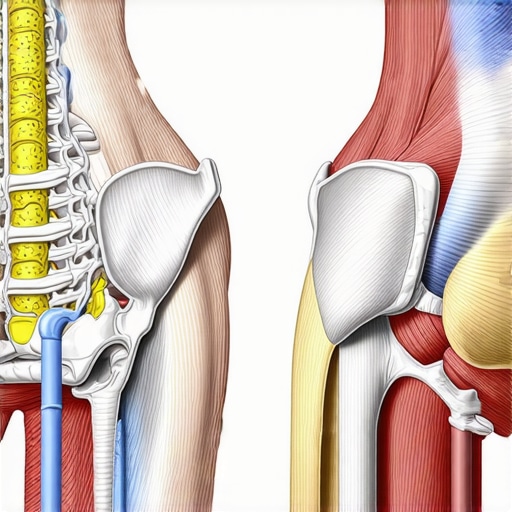
Why does my back pop every time I move?
I get asked this constantly by people who are worried they are ‘falling apart.’ If you find yourself wondering why your back pops every time you twist in your office chair, it is usually just gas bubbles shifting in the joint fluid. However, if that pop is followed by a dull ache, it is a sign of micro-instability. Your body is clicking because it is searching for a solid anchor point that it cannot find. This is where the link between mobility and posture a chiropractors guide becomes essential; we have to differentiate between a joint that is ‘stuck’ and one that is ‘hypermobile’ due to poor muscle control.
The danger of ignoring your joint’s end-range
The biggest ‘oops’ factor I see with advanced desk workers is relying on external supports while ignoring their own internal bracing. You can buy every ergonomic gadget on the market, but if you do not address the truth about why your lower back spasms suddenly, you are just masking the symptoms. Real mobility is about being able to access the full range of your joints under control. When you lose that control, your brain initiates a ‘lockdown’—which you feel as stiffness. If you want to break the cycle, you need to revolutionize your posture with targeted mobility exercises that focus on strength at your end-range, not just flexibility. Have you ever fallen into this trap of stretching a ‘tight’ muscle only to have it feel tighter an hour later? Let me know in the comments.
I’ve tried every ‘smart’ posture corrector on the market, but the best tool I own is a simple $15 lumbar roll. Why? Because it is predictable and doesn’t rely on a battery to tell me I’m slouching. The real secret to maintaining progress isn’t a gadget; it’s a protocol. When I travel, I don’t leave my spine’s health to chance in a hotel chair. I use a specific set of mobility boosts for posture expert tips for daily adjustments to ensure my joints don’t seize up after a flight. If you are serious about scaling your results, you have to look at your environment as a living thing. This means auditing the best monitor height for preventing tension headaches every time you switch desks. I personally keep a small riser in my bag because even two inches of height difference can be the trigger for a three-day migraine.
The three tools I actually pack in my suitcase
Beyond the lumbar roll, I swear by a lacross ball and a dedicated breathing strap. Most people use a lacrosse ball to smash their muscles, but I use it for ‘tacking and stretching’ the fascia around the hips. This is essential if you want to know how to stretch your psoas without hurting your lower back. By pinning the tissue and then moving the joint through its range, you create lasting change rather than just temporary relief. I also rely on chiropractic adjustments unlock a pain-free lifestyle today to clear out any residual joint restrictions that my self-care tools can’t reach. It is a partnership between what I do at home and what the professional does in the clinic.
How do I keep my spine from relapsing into old habits?
Maintenance is where most people fail because they stop as soon as the pain vanishes. To keep the results, you need a ‘minimum effective dose’ of movement. Dr. Stuart McGill, a world-renowned expert in spine biomechanics and author of Back Mechanic, notes that the spine’s tissues have a ‘memory’ for load, and consistent, non-painful movement is the only way to rewrite that memory. I recommend a 5-minute ‘flow’ every morning that includes the move that instantly relieves tension in your lower ribs. This keeps the diaphragm mobile and the spine supple. If you stay consistent, you’ll find that you need fewer ‘reboots’ and more ‘tune-ups’ through enhance your posture with expert chiropractic techniques in 2025.
What the future of sitting looks like
I predict that in the next five years, we will see a shift away from ‘ergonomic’ furniture toward ‘active’ furniture—desks and chairs that subtly shift their angles throughout the day to force micro-adjustments in your core. We are moving toward a world where your workspace is an exercise in itself. Until then, you have to be your own active furniture. Start by implementing mobility hacks simple adjustments for a more active life every single hour. My challenge to you today: set a silent timer for 50 minutes. When it goes off, don’t just stand up—do five slow, deep breaths into your lower ribs while reaching for the ceiling. It’s a small move that pays massive dividends in your long-term comfort.
The brutal lessons that finally stopped my back from screaming
Reflecting on my own journey from a stiff, desk-bound statue to someone who moves with ease, I’ve realized that the biggest hurdle wasn’t my chair—it was my mindset. I had to accept that neutral is a neighborhood, not a coordinate; your body needs the freedom to sway and shift. One of the most painful realizations was that my effort to ‘stretch out’ the pain was backfiring. I discovered that why stretching your hamstrings might actually make your back pain worse is often due to neural tension rather than muscle length. I also learned to stop panicking at every sound my spine made. Once you understand why your back pops every time you twist in your office chair, you realize that movement—even noisy movement—is often just the joints finding their rhythm again.
The specific tools I trust to keep my joints moving
I don’t believe in cluttering your life with ‘posture gadgets,’ but there are a few essentials that have earned a permanent spot in my toolkit. First is a simple, firm lumbar roll. It acts as a tactile reminder rather than a cage, provided you know the proper way to use a lumbar roll in your office chair. Second is the lacrosse ball, which I use for targeted release work; it is the most efficient way I’ve found for how to stretch your psoas without hurting your lower back. Finally, I never skip my monthly chiropractic check-up. Professional care is the ultimate reset button, and understanding why chiropractic care is your secret weapon for better posture helped me transition from reacting to pain to proactively building strength.
Your spine is far more resilient than you have been told
It is easy to feel like you are ‘broken’ when you spend your days hunched over a screen, but your body is designed for recovery. You aren’t destined to a life of stiffness. By applying the principles in the ultimate guide to improving mobility and posture in 2025, you are giving your nervous system the safety it needs to let go of that protective tension. Start with one small shift today—breathe deeper, move more often, and trust that your body wants to feel good as much as you do. Which specific area of your body feels the most ‘locked’ or ‘stuck’ during your workday? Let me know in the comments below!