

I’ll never forget the Tuesday afternoon I finally decided to stop ignoring that dull, nagging pinch in my right groin. I was sitting at my desk, legs twisted into a tight “figure-four,” feeling productive and comfortable—or so I thought. When the delivery guy rang the doorbell, I tried to hop up and nearly collapsed. My hip didn’t just feel stiff; it felt like it belonged to someone thirty years older than me. It was a wake-up call that my favorite “cozy” sitting position was actually a slow-motion wrecking ball for my pelvic alignment.
My Legs Were Crossed But My Hips Were Screaming
We’ve all been there. You find that perfect, tucked-in position on the couch or in your office chair, and it feels like the only way to focus. But here’s the cold, hard truth: your hips aren’t designed to be under that kind of asymmetrical torque for hours on end. When you cross your legs, you’re essentially forcing your femur to jam into the hip socket at an unnatural angle while your pelvis tilts to compensate. I spent years thinking this was just “how I sat,” only to realize I was creating a massive imbalance. If you’ve noticed that your hip feels stuck when you try to cross your legs or get out of a chair, you’re not alone. Today, we are going to dive into why this habit is a hidden mobility killer and how you can reclaim your range of motion without giving up your comfort entirely.
Is the comfort of crossing your legs actually worth the long-term trade-off?
One of the biggest mistakes I made early on was trying to “stretch” my way out of the problem. I’d spend twenty minutes every night cranking on my hamstrings, thinking that more flexibility was the answer. It wasn’t. In fact, I learned the hard way that stretching your hamstrings might actually make your back pain worse if your hips are already misaligned. My real breakthrough came when I stopped trying to pull my muscles apart and started focusing on how chiropractic adjustments enhance posture and mobility by addressing the bones and joints first. According to research cited by Harvard Health, prolonged sitting in asymmetrical positions can lead to a significant increase in pelvic tilt, which eventually translates to lower back strain and even “pseudo-sciatica.” Have you ever felt that sharp, zinging pain down your leg after a long day of sitting? If so, tell me—do you find yourself crossing the same leg every single time? Understanding the “why” behind this hip wrecking ball is the first step. If we don’t fix the foundation, even the simple hip reset for people who sit for 8 hours won’t provide lasting relief. We need to look at how this one tiny habit ripples through your entire body, from your ankles to your neck.[image_placeholder]
Stop the Torque and Reset Your Foundation
The first step to fixing a hip that feels stuck isn’t a magical pill or a fancy gadget; it is the brutal honesty of physical awareness. When you cross your legs, you are essentially asking your pelvis to rotate in two different directions simultaneously. To reverse this, you have to retrain your nervous system to prefer a neutral state. This starts with the ‘tripod foot’ concept—keeping your big toe, pinky toe, and heel all grounded. When your feet are flat, your femur sits where it belongs. I remember trying to walk through the airport after a three-hour flight in a cramped middle seat. I had my right leg tucked under me the entire time. When I stood up, my hip didn’t just hurt; it felt like a door hinge that had rusted shut. I looked like I was walking on a boat deck in a storm because my SI joint was completely jammed. That was the moment I realized that how to fix the feeling of a locked si joint wasn’t about more stretching, but about decompression and neutral alignment.
Keep Your Feet Flat to Save Your Pelvis
One of the most effective ways to break the habit is to change the environment that encourages it. If your chair is too high, you’ll naturally want to cross your legs to find ‘stability.’ Lower your chair until your knees are slightly lower than your hips. This creates an open hip angle. You might also want to explore the best sitting position for lower back disc bulges to ensure you aren’t just swapping one bad habit for another. By keeping your feet grounded, you provide a stable base that prevents the pelvis from tilting. If you feel that urge to cross over, try crossing at the ankles instead. It’s a ‘gateway’ habit that reduces the torque on your lower back while you transition to better mechanics.#IMAGE_PLACE_HOLDER_B#
Ditch the Static Stretch for Active Movement
I spent months doing deep pigeons and butterfly stretches, but the relief lasted exactly ten minutes. Static stretching often just pulls on the tendons without addressing the joint capsule. Instead, you should revolutionize your posture with targeted mobility exercises like hip cars (controlled articular rotations). Think of your hip like a ball in a socket that needs grease. Moving the joint through its full range of motion without the weight of your body ‘greases’ the joint. If you have been sitting for hours, jumping straight into a heavy gym session is a recipe for disaster. This is often the hidden reason your hips feel uneven in the mirror—one side is locked in an anterior tilt while the other is trying to compensate.
Why a Lumbar Roll Changes Everything
Most people ignore the relationship between the low back and the hip, but they are inextricably linked. If your lower back rounds (slumps), your hip flexors have to shorten. This is where the proper way to use a lumbar roll in your office chair becomes a game-changer. A small roll or even a rolled-up towel placed at the base of your spine forces your pelvis into a slight forward tilt, which naturally makes crossing your legs feel uncomfortable. It’s like a built-in alarm system for your posture. When I started using one, I noticed that improving posture through mobility became much easier because I wasn’t fighting my chair all day. You have to stop the constant ‘micro-trauma’ of poor sitting if you want the simple hip reset for people who sit for 8 hours to actually stick long-term.It’s a common misconception that ‘good posture’ is something you can simply switch on like a lightbulb. Most of us were told to ‘sit up straight’ by well-meaning parents, leading us to believe that a rigid, statue-like spine is the goal. In my experience, this rigid approach is exactly why your efforts aren’t sticking. We need to talk about why your perfect posture is actually causing muscle fatigue. The truth is, the human body wasn’t built for stillness. Even the most ergonomic position becomes a stressor if you hold it for more than twenty minutes. Research published in the Journal of Physical Therapy Science suggests that postural variability—the small, unconscious movements we make—is far more important for spinal health than maintaining a fixed ‘correct’ alignment. One of the biggest traps I see—and one I fell into for years—is the ‘military chest’ mistake. We think that by pinning our shoulders back and puffing our chests out, we are fixing our slouch. In reality, this often leads to a massive ‘oops’ factor: rib flaring. When you jam your shoulder blades together, you likely lose your core tension, which forces your mid-back into an aggressive arch. This is exactly how to stop your ribs from flaring when you lift your arms or even just when you’re typing. It creates a domino effect of tension that migrates up to your neck and down to your sacrum.
Should you prioritize stability or variability in your workspace?
If you’re looking for a higher level of mobility, you have to stop thinking about stability as ‘stiffness.’ True stability comes from the ability to transition between positions without losing your center. This is what a chiropractor actually looks for during your first exam—not just where you are ‘crooked,’ but how well your joints adapt to movement. If you’ve been focusing solely on holding a ‘pose’ at your desk, you’re likely ignoring the fact that why chiropractic care is your secret weapon for better posture is because it restores the motion to segments that have become stuck. 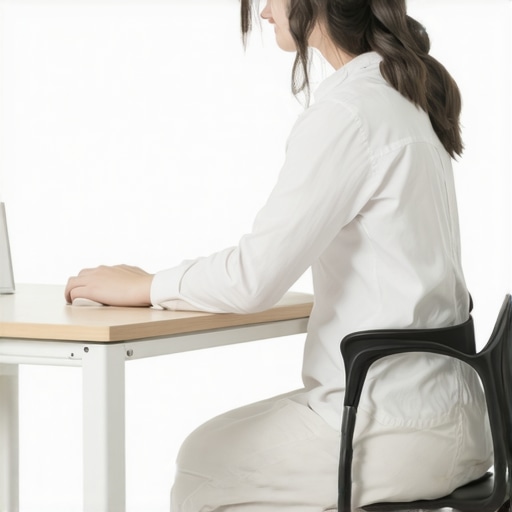 Another nuance often missed is the ‘sensory motor amnesia’ that happens when we sit too long. Your brain literally forgets how to engage certain muscles because they’ve been ‘muted’ by the constant pressure of a chair. To combat this, you need more than just a stretch; you need a neurological reset. This is why improving posture through mobility works where static stretching fails. It’s about re-educating the connection between your brain and your glutes so you don’t feel like a rusted gate every time you stand up. Have you ever fallen into this trap? Let me know in the comments. If you’re tired of the DIY struggle, you can always contact us to see how we can help you find your flow again.To keep the progress I made, I had to stop treating mobility like a chore and start treating it like a system. I eventually invested in a high-density, gridded foam roller—not the soft blue ones that feel like pool noodles, but the kind that actually displaces muscle tissue. I use it specifically on the TFL (tensor fasciae latae) for two minutes every morning because that tiny muscle is the gatekeeper for hip rotation. If you are serious about this, you need to look at mobility hacks simple adjustments for a more active life that fit into your existing routine. I also swear by a percussion massager, but only on the gluteus medius; hitting the bone is a mistake I see too many people make. Using these tools correctly ensures that improving posture through mobility becomes a sustainable habit rather than a weekly struggle.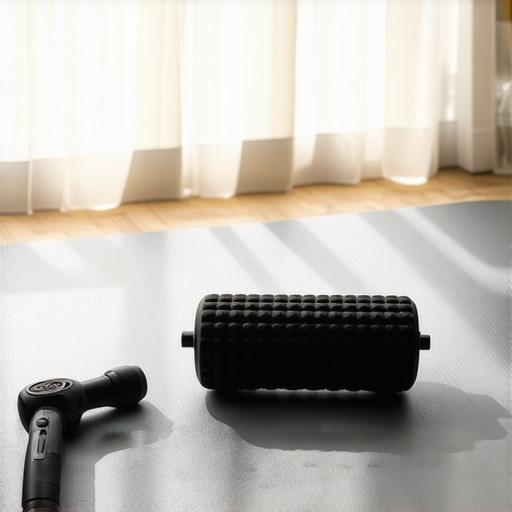
How do I maintain my hip mobility over the long haul?
Consistency always beats intensity in the world of biomechanics. I’ve found that even five minutes of movement every two hours is far more effective than one grueling hour at the gym once a week. This is where the ultimate guide to improving mobility and posture in 2025 comes in handy for those of us who sit for a living. I suspect we are moving toward a future where smart fabrics and wearable biofeedback sensors will alert us the second our pelvis tilts out of neutral or our shoulders begin to round. Until then, we must rely on physical literacy. Dr. Kelly Starrett, a renowned physical therapist and author of Becoming a Supple Leopard, emphasizes that ‘all human beings should be able to perform basic maintenance on themselves.’ This means knowing when your ‘engine’ is running hot before the check engine light—which is usually sharp pain—comes on. If you are still feeling that stubborn pinch despite your best efforts, it is worth exploring why chiropractic care is your secret weapon for better posture because sometimes the joint capsule itself needs a manual reset that a foam roller simply cannot provide. I highly recommend trying the ’90/90 hip switch’ during your next commercial break or phone call; it is the single most effective way to test if your mobility is actually sticking. If you want to dive deeper into these mechanics, contact us to see how we can tailor a plan to your specific skeleton.
Why Consistency Trumped My Intensity Every Single Time
One of the hardest lessons I learned is that you cannot out-stretch a lifestyle of static sitting. For years, I thought if I just did one grueling yoga session on Saturdays, I could “fix” the damage done by forty hours of leg-crossing. It doesn’t work that way. I had to realize that posture isn’t a destination; it’s a constant conversation between your brain and your joints. Another lightbulb moment was discovering how to use your breath to relax your pelvic floor. If you are constantly bracing or shallow-breathing, your hips will stay in a state of high alert, regardless of how much you foam roll. Finally, I learned that the connection between chronic fatigue and poor spinal alignment is incredibly real; when your foundation is off, your body wastes energy just trying to keep you upright. Stop looking for the “magic stretch” and start looking at the microscopic habits you repeat every hour.
My Daily Toolkit for Resilient Hips
To keep my progress from slipping, I rely on a few non-negotiables. First, I use a lacrosse ball for targeted trigger point work on my TFL and glutes—it’s more precise than a standard roller. Second, I highly recommend reading “Becoming a Supple Leopard” by Dr. Kelly Starrett; it’s basically the owner’s manual for the human body. Third, I keep a simple standing desk converter nearby to ensure I’m not stuck in one position for more than thirty minutes. If you’re ready to take it a step further, I’ve found that the link between mobility and posture a chiropractors guide offers the best roadmap for those of us who feel “stuck” in our desks. These tools aren’t just gadgets; they are ways to provide your nervous system with the safety signals it needs to let go of chronic tension. [image_placeholder]
Small Shifts Lead to Massive Change
Your hips aren’t “bad,” and your back isn’t “broken.” They are simply adapting to the environment you’ve provided. By making these tiny shifts—feet flat, frequent movement, and mindful breathing—you are giving your body a chance to reset its default settings. Don’t be afraid to seek professional help to clear the path when you feel a plateau. I’ve seen firsthand how chiropractic adjustments unlock a pain-free lifestyle today by hitting the reset button on joints that have been mechanically jammed for years. If you want to see how these principles apply to your specific skeleton, enhance your posture with expert chiropractic techniques in 2025 and start your journey toward effortless movement. You deserve to move through the world without that nagging, dull pinch. Have you noticed that one of your hips feels significantly tighter than the other when you try to sit cross-legged? Let me know in the comments below!