

I was sitting at my desk last Tuesday, staring at a spreadsheet that seemed to be vibrating. My eyes were burning, and a dull, heavy pressure was creeping from the base of my skull right into my eyebrows. I reached back, clawing at my neck like I was trying to find a reset button that didn’t exist. I’d already downed three glasses of water and a bottle of Ibuprofen, but the vice-grip around my brain wasn’t budging. It is that familiar, soul-crushing tension that makes you want to crawl into a dark closet and stay there until next month. It was in that moment of desperation that I finally stopped guessing and found the one trigger point that actually shuts the pain off.
Stop Attacking Your Temples and Look Here Instead
We have all been there. You feel the squeeze, so you start frantically rubbing your forehead or digging your thumbs into your jaw. I spent years doing exactly that, thinking the pain was where the sensation lived. I even tried every trick in the book for natural ways to manage tension headaches without the medicine cabinet, but I kept missing the mark. The real culprit is almost never where the pain is screaming the loudest. For me, and for most of us desk-dwellers, the issue lies in the suboccipital muscles—those tiny, stubborn bands of tissue right at the very top of your neck, tucked under the base of your skull. When these get angry, they refer pain straight to your forehead. Have you ever felt like your head was literally too heavy for your neck to carry by 3:00 PM? If so, you are likely fighting the same battle I was.
Is this actually worth the hype or just a placebo?
I get it. I was the biggest skeptic. One of my biggest blunders early on was that I used to stop rolling my neck in circles because I thought it was helping, but I was actually just grinding my joints and aggravating the nerves. It felt productive, but it did nothing for the root cause. According to the American Migraine Foundation, tension-type headaches are the most common, yet they are frequently mismanaged because we treat the symptoms rather than the mechanical stress. When your head feels heavy after staring at a monitor, those suboccipital muscles are working overtime just to keep your eyes level. I eventually realized that even the simple change to your monitor height can stop the cycle, but when you are currently in the middle of a flare-up, you need a manual override. We are going to find that exact spot right now.
Find the Hidden Toggle Switch Under Your Skull
To find this “off switch,” you need to perform a bit of self-excavation. Slide your fingers up the back of your neck until you hit the base of your skull. There is a hard ridge there called the occipital bone. If you press your thumbs just underneath that ridge—into the soft, probably very tender tissue—you’ll likely feel a dull ache that shoots right toward your forehead or eyes. This is exactly why your neck muscles are hard like a rock; they are stuck in a state of semi-contraction. I remember doing this while parked at a rest stop on a grueling eight-hour drive. My vision was starting to blur, and I felt like I was wearing a helmet two sizes too small. I held steady pressure on those spots for thirty seconds, and it felt like someone finally let the air out of an over-inflated tire. The pressure didn’t disappear instantly, but the “vibration” in my skull stopped immediately.
The Double Chin Move That Resets Your Spine
Once you have released the immediate muscular pressure, you have to address the mechanical reason it happened. Your head is drifting forward because it is following your eyes into the screen. To counter this, we use the chin tuck. Think of your head like a drawer on a dresser; you want to slide the drawer straight back without tilting it up or down. Pull your chin straight back until you feel a stretch at the base of your skull. It is not a glamorous look, but it is how you perform a structural reset. This is one of the most effective mobility hacks simple adjustments for a more active life because it forces the deep neck flexors to wake up and take the load off those tiny, exhausted suboccipital muscles. 
Stop Chasing the Pain and Fix the Mechanics
If you only rub the sore spots, you are just a gardener trimming weeds instead of pulling the roots. You need to revolutionize your posture with targeted mobility exercises that focus on the mid-back. If your mid-back is frozen like a block of ice, your neck has to over-compensate just to keep you looking forward. This is often why your traps are always tight even after a massage; they are literally straining to hold your skeleton upright because your spine isn’t providing a stable base. You can learn how to fix the computer hunch in under two minutes by simply pinning your shoulder blades back and down while performing your chin tucks.
Check Your Air Intake
Surprisingly, your lungs are part of the headache equation. When we are stressed or hyper-focused, we tend to “chest breathe,” using the muscles in our neck to lift the rib cage. Look into how your breathing habits are creating tightness in your scalenes. These muscles attach directly to your upper ribs and your neck vertebrae. If you are taking 20,000 shallow breaths a day, you are essentially doing 20,000 tiny shrugs. This constant tugging creates a tension loop that ends in a migraine-strength throb. Try breathing into your belly instead, letting your lower ribs expand sideways like an accordion to take the pressure off your neck.
Your military-straight posture is exhausting your spine
We have been told since kindergarten to “sit up straight” and “shoulders back,” but this is one of the most persistent myths in the wellness world. If you are forcing yourself into a rigid, upright position, you are likely creating more tension than you are solving. I spent months trying to maintain a perfect 90-degree angle at my desk, only to realize why your perfect posture is actually causing muscle fatigue. Your body isn’t a statue; it’s a dynamic system designed for movement. When you hold a static position—even a “good” one—for hours, your muscles eventually lock up to protect the spine. Research published in the journal Spine suggests that there is no single ‘ideal’ posture that prevents pain; rather, it is the lack of postural variability that leads to discomfort. Instead of chasing a frozen ideal, you should focus on improving posture through mobility practical chiropractor strategies that encourage frequent micro-movements. Have you ever tried to ‘sit perfectly’ only to end up in more pain? Let me know in the comments. 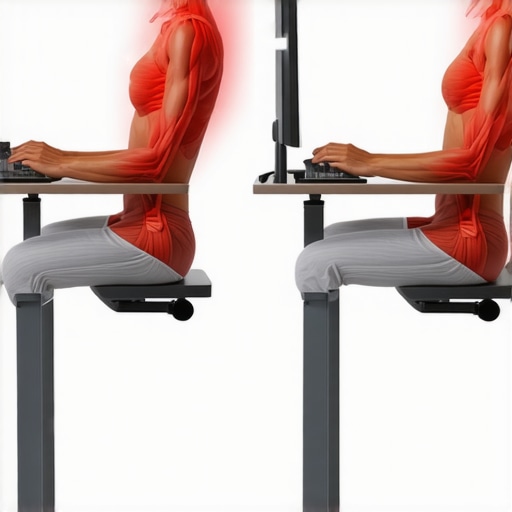
The trap of stretching through the wrong kind of pain
One of the biggest mistakes I see—and one I certainly made—is the “more is better” approach to stretching. When your neck or back feels tight, the instinct is to pull harder. But if that tightness is actually a protective tension from your nervous system, aggressive stretching will only make the brain tighten the muscle further to prevent injury. This is a classic ‘oops’ factor: why stretching your hamstrings might actually make your back pain worse if the root cause is actually coming from your sciatic nerve or a lumbar disc. You cannot stretch a nerve, and trying to do so creates a cycle of inflammation. This is why what a chiropractor actually looks for during your first exam is rarely just a ‘tight muscle.’ They are looking for joints that aren’t moving through their full range, which forces those muscles to stay ‘on’ 24/7.
Is the ‘pop’ really necessary for a successful adjustment?
This is the question that separates the beginners from the experts. Many people think if they don’t hear a loud crack, the adjustment didn’t “take.” In reality, that sound is just gas being released from the joint capsule. While it feels satisfying, the real magic is the neurological input to the brain. This is how chiropractic adjustments enhance posture and mobility: they provide a high-velocity, low-amplitude stimulus that resets the communication between your spine and your central nervous system. It’s like rebooting a frozen computer. You don’t need a loud sound to know the system has restarted. If you want to dive deeper into the science of how these adjustments work long-term, don’t miss the ultimate guide to improving mobility and posture in 2025. Stop looking for the loudest pop and start looking for the greatest return of movement.
The low-cost gear that beats high-end ergonomic chairs
After years of trial and error, I have realized that maintaining a pain-free back isn’t about buying a four-figure chair; it’s about having a few precision tools that you actually use. My absolute go-to is a simple McKenzie lumbar roll. I don’t just use it because experts say so; I use it because it provides the only tactile feedback that forces my lower back into its natural curve while I’m deep in a focus block. Knowing the proper way to use a lumbar roll in your office chair is the difference between active support and just having a pillow behind your back. I also keep a ‘peanut’—two lacrosse balls taped together—in my desk drawer. It is the perfect tool for digging into those stubborn spots between the shoulder blades that a foam roller is too bulky to reach. This is one of those mobility hacks simple adjustments for a more active life that I swear by because it takes thirty seconds but resets my thoracic spine completely.
How do I maintain these spinal gains over time?
Consistency in maintenance is where most people fail. I look at spinal health the same way I look at dental hygiene; you wouldn’t stop brushing your teeth just because you don’t have a cavity. Long-term results come from integrating mobility boosts for posture expert tips for daily adjustments into your existing routine. For me, that means doing three chin tucks every time I finish a phone call or stretching my chest while the coffee brews. This is why chiropractic care is your secret weapon for better posture—it provides the structural baseline, but your daily habits are what keep the foundation from shifting. As noted in the Journal of Manipulative and Physiological Therapeutics, patients who combine clinical adjustments with active home exercise programs show significantly better long-term outcomes than those who rely on passive care alone. 
Why your phone might soon be your posture’s best friend
I predict that in the next few years, we are going to see a massive shift toward biofeedback-driven posture correction. We are already seeing the early stages with wearable sensors, but the real game-changer will be AI-integrated webcams that subtly alert you when your head starts to drift into that ‘text neck’ territory. Instead of being a source of pain, our tech will become the very thing that keeps us aligned. Until that becomes mainstream, you have to be your own sensor. Understanding the link between mobility and posture a chiropractors guide can help you develop that internal ‘check-engine light’ so you can catch the slouch before it becomes a headache. If you haven’t yet, try setting a silent ‘posture alarm’ for every 45 minutes; stand up, reach for the ceiling, and reset your breathing. This simple habit will do more for your longevity than any expensive gadget ever could.
The Hard Truths I Had to Accept Before My Neck Finally Relaxed
After years of thinking I could just stretch my way out of misery, I had a few breakthroughs that changed everything. First, I realized that consistency beats intensity every single time. Doing five chin tucks every hour is infinitely more effective than a long, grueling workout once a week. Second, I stopped looking at my body as a collection of parts and started seeing it as an interconnected web. This is exactly what the link between mobility and posture a chiropractors guide taught me—the foundation must be solid before the top can stay level.
I also learned to stop obsessing over the sound of a joint. I used to think a session was wasted if I did not hear a loud crack, but now I know that how chiropractic adjustments enhance posture and mobility is actually about the neurological reset, not the acoustics. Don’t chase the noise; chase the return of fluid movement. #IMAGE_PLACEHOLDER_E#
Tools That Actually Earned a Permanent Spot on My Desk
I have wasted a lot of money on gadgets, but three specific things are non-negotiable for me now. A McKenzie lumbar roll is my first recommendation because it fixes the lower back curve, which automatically helps your neck stay in line. If you are not sure how to position it, check out the proper way to use a lumbar roll in your office chair to get the most benefit. Next, get a peanut—two lacrosse balls taped together—for your mid-back. It is the simplest way to revolutionize your posture with targeted mobility exercises without even leaving your seat. Finally, I rely on a simple interval timer to remind me to breathe and reset my shoulder blades every 45 minutes.
A Future Without That Heavy Head Feeling
Living without a constant shadow of tension is possible, but it requires a shift in how you view your daily habits. You do not need a perfect thousand-dollar ergonomic setup to start feeling better today. You just need to stop ignoring the signals your body is sending. Whether it is a quick stretch between calls or scheduling your first chiropractic adjustments unlock a pain-free lifestyle today, the momentum of small actions will eventually carry you to a place of comfort you might have forgotten was possible. Your spine is incredibly resilient—it just needs you to stop working against it. Have you ever noticed that a specific time of day is when your tension usually peaks? Let me know in the comments below!