

I thought I was having a heart attack. No joke. I was thirty years old, sitting on my sofa, and I took one deep, satisfying breath only to feel a sensation like a jagged knife was being twisted between my sixth and seventh ribs. There was no bruise. No purple mark. No memory of a fall or a rogue soccer ball to the chest. Just a dull, aching soreness that turned into a sharp spike whenever I tried to fill my lungs. It is a terrifying, frustrating feeling that makes you want to take shallow, “safe” breaths. But here is what I learned the hard way: your ribs aren’t just a cage; they are a complex series of joints that can get “stuck” just like a door hinge. Today, we are going to peel back the mystery of why your ribs feel bruised when you inhale and, more importantly, how you can stop that stabbing sensation from ruining your day.
Stop Searching for a Bruise That Isn’t There
I spent a week convinced I had a hairline fracture. I even stopped my morning stretches because I was afraid I would make it worse. That was my first big mistake. By staying still, I was actually letting the real culprit—a subluxated rib joint—stiffen up even more. Your rib cage is meant to expand and contract like an accordion. When a rib stops moving at the point where it meets your spine or your sternum, the surrounding muscles go into a protective spasm. It feels like a deep bone bruise, but it is often just a mechanical failure. It is estimated that a significant portion of “unexplained” chest pain is actually musculoskeletal in nature, with the British Journal of General Practice noting that chest wall pain accounts for up to 50% of cases in primary care settings.
Does this mean my ribs are actually broken?
It is the first thing everyone asks, and I totally get the panic. If you did not take a physical blow to the chest, the answer is almost always a resounding “no.” But that does not mean the pain is not real. You might be dealing with costochondritis or a simple rib misalignment. I used to think I could just “tough it out,” but I eventually realized that how a single rib adjustment can stop that sharp pain when breathing was the piece of the puzzle I was missing. Have you ever felt that weird, sharp “catch” in your chest that makes you stop mid-sentence? You are not alone, and you are not “broken.” The connection between your breath and your structure is tight. Often, why your ribs feel tight when you are under high stress comes down to the way we hunch over our laptops, forcing our rib cage to stay in a compressed state for hours. We are going to look at the move that instantly relieves tension in your lower ribs so you can finally take a full breath without wincing.
Reset the Way Your Rib Cage Moves
To get that ‘knife’ out of your ribs, you have to think about your rib cage as a bucket handle. When you inhale, those ribs should lift up and out. If one rib is stuck, it is usually because the joint where it meets your spine is jammed. This is why you feel that sharp, localized pain. The first step to fixing this isn’t just taking deeper breaths—it is regaining thoracic rotation. I remember one Tuesday morning when I could barely turn my head to check my blind spot while driving because the pain was so sharp. I tried to just ‘stretch it out’ by leaning over a chair, but that was too aggressive. Instead, I had to focus on mobility hacks that focused on the middle back rather than the ribs themselves. By loosening the ‘anchor’ (the spine), the rib has room to move again.
Stop Bracing Your Core for Every Single Breath
When we are in pain, our instinct is to guard. We flex our abs and take shallow chest breaths. This is a disaster for rib mobility. It forces your secondary breathing muscles—the ones in your neck—to do all the heavy lifting. This explains how your breathing habits are creating tightness in your scalenes. To break this cycle, you need to practice ‘360-degree breathing.’ Imagine your lower ribs are an umbrella opening up. If you only breathe into your upper chest, you keep those middle ribs locked in a depressed state. I found that placing my hands on my lower rib cage and literally feeling them push outward during an inhale was the only way to remind my brain that it was safe to move those joints.
Use a Foam Roller the Right Way
Most people make the mistake of rolling their lower back, but the truth about foam rolling your lower back is that it rarely helps a rib issue. You need to target the thoracic spine—the area between your shoulder blades.  I once spent twenty minutes rolling my lower back thinking it would help my side pain, and I only ended up more sore. When I finally moved the roller up to the level of my shoulder blades and performed gentle extensions, I felt a series of small, rhythmic pops. That was the sound of the costovertebral joints finally opening up. This mechanical release is similar to what happens during professional care, and it is why how a single rib adjustment can stop that sharp pain when breathing is often the fastest route to relief.
Why You Cannot Just Stretch Your Way Out of This
If a rib is truly subluxated (slightly out of its optimal track), stretching the muscles around it might actually make the joint more unstable. You need to focus on ‘setting’ the rib back into its groove. You can do this by using a doorway. Place your forearm against the frame, step through, and gently rotate your body away. This creates a leverage point that encourages the rib to slide back into place. If you have been struggling with a persistent ‘catch’ in your breath, you are likely dealing with a joint that is mechanically locked. Learning how to fix a rib that feels out of place involves a combination of this localized pressure and specific breathing patterns. When I finally combined the doorway stretch with a deep, focused exhale, the ‘bruised’ feeling vanished almost instantly, proving it was never a bruise to begin with, but a simple case of a joint that had lost its rhythm.
Ditch the Idea of Perfect Posture
Most people think the solution to rib pain is to sit as straight as possible, shoulders pinned back like a soldier. In my experience, this ‘perfect’ alignment is actually a recipe for disaster. When you force your body into a rigid, upright state, you are creating a constant isometric contraction in the very muscles that need to relax for your ribs to move freely. This is exactly why your perfect posture is actually causing muscle fatigue. You are not a statue; you are a dynamic system. Instead of trying to ‘fix’ your posture by staying still, you should be focused on freeing your movement. When you hold your breath or brace your core to maintain a specific look, you lock your rib cage in a compressed state, making that ‘bruised’ feeling even worse when you finally do take a deep breath.
The Danger of the Self-Pop
We have all done it—that deep, aggressive twist in the office chair hoping to hear a satisfying ‘crack.’ While it feels like a momentary relief, you are often falling into a dangerous mechanical trap. When a rib is truly stuck, the joints immediately above and below it become hypermobile to compensate for the lack of movement. When you twist and pop your own back, you are almost always hitting those already loose joints, not the one that is actually jammed. This leads to a vicious cycle where you feel ‘tight’ again ten minutes later because the underlying instability has not been addressed. It is a similar logic to the truth about cracking your own knuckles and neck at home; you are chasing a temporary endorphin rush rather than a structural fix. Over-manipulating these ‘loose’ segments can eventually lead to chronic inflammation in the costovertebral ligaments. 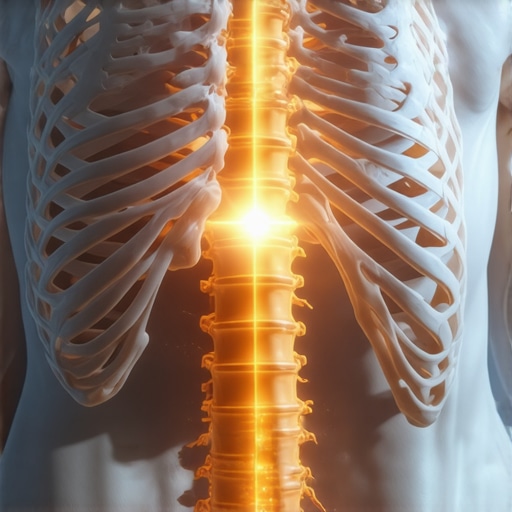
Is your diaphragm the real reason your ribs feel stuck?
Advanced rib pain often has very little to do with the ribs themselves and everything to do with the diaphragm. Your diaphragm attaches directly to the inner surface of your lower six ribs. If this muscle is chronically tight due to high stress or poor breathing habits, it acts like a tether, pulling the ribs inward and preventing that ‘bucket handle’ expansion we discussed earlier. This is where learning how to use your breath to relax your pelvic floor becomes a critical piece of the puzzle, as the entire core cylinder must work in harmony to allow the ribs to move. A study published in the Journal of Physical Therapy Science highlights that restricted thoracic expansion significantly limits lung volume, yet many practitioners overlook the muscular ‘tug-of-war’ happening beneath the surface. If you have been getting adjusted but the pain keeps returning, you might be ignoring the soft tissue tension that is pulling the joint back out of alignment. This deep dive into the mechanical ‘why’ is what a chiropractor actually looks for during your first exam to ensure the relief lasts more than a few hours. Have you ever fallen into this trap of stretching a spot that just won’t stay loose? Let me know in the comments.
Invest in the Right Tools for Your Thoracic Spine
Once you get that initial relief from a professional adjustment, the real work begins at home. I am a huge advocate for specific equipment that targets the costovertebral joints rather than just the large muscle groups. My personal favorite is the Backpod, a specialized tool developed by New Zealand physiotherapist Steve August. Unlike a standard foam roller, which can be too broad to isolate the specific ‘hinge’ where your rib meets your spine, the Backpod’s shape allows you to apply localized pressure that stretches the tight, shortened collagen of the joint capsule. In my own journey, using this tool for just a few minutes before bed was the difference between waking up with a ‘stiff’ chest and waking up feeling loose. This approach is one of the most effective mobility boosts for posture expert tips for daily adjustments you can integrate into your life. If you aren’t ready to buy a dedicated tool, you can start with a ‘peanut’—two lacrosse balls taped together—which provides a similar, albeit more aggressive, effect. I used to think my pain was a permanent feature of my anatomy, but it was just a lack of maintenance. Think of your ribs like a bicycle chain; if you never oil the links, they eventually seize up. Professional care ‘oils’ the joints, but your daily habits keep the chain spinning. By focusing on improving posture through mobility practical chiropractor strategies, you are effectively preventing the ‘rust’ from building up in your thoracic spine. 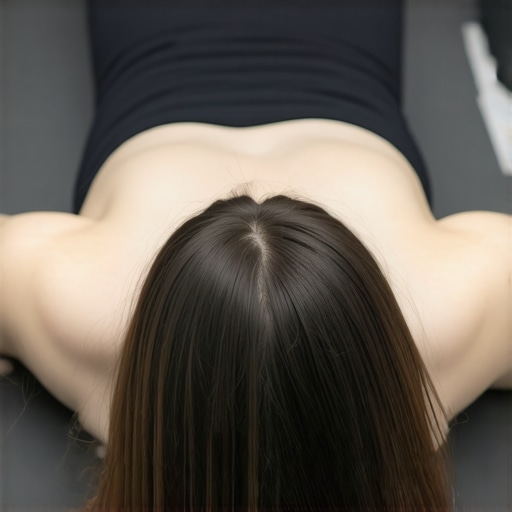
How do I keep my rib cage moving freely for the long haul?
To maintain these results, you have to look beyond the immediate pain and focus on your long-term movement hygiene. I’ve learned that why chiropractic care is your secret weapon for better posture is largely because it resets the joint mechanics, allowing you to actually perform the exercises that build strength. Looking ahead, I suspect we will see a surge in AI-driven biofeedback shirts that alert you when your rib cage has been static for too long, essentially prompting you to take a ‘mobility break.’ Until that tech is mainstream, you must be proactive. Integrating moves from revolutionize your posture with targeted mobility exercises ensures that your muscles don’t just pull your joints back into a locked state. Remember that your rib cage is a ‘use it or lose it’ system. The the ultimate guide to improving mobility and posture in 2025 highlights that the most successful individuals are those who treat mobility as a series of micro-habits rather than a weekly chore.
Move From Simple Pain Relief to Peak Performance
As your mobility improves, you’ll find that you can scale your activity without the fear of ‘re-locking’ your chest. This is the stage where how chiropractic adjustments enhance posture and mobility becomes a tool for performance rather than just survival. When your ribs can handle the torque of a golf swing or the expansion of a heavy lift, you’ve truly won the battle. My challenge for you: tonight, find a firm surface and perform sixty seconds of ‘360-degree breathing’—really push your side ribs out and hold for two seconds before exhaling. It’s the simplest way to tell your nervous system that the ‘bruised’ feeling is a thing of the past and that your body is finally safe to expand.
It took me months of shallow breathing and unnecessary anxiety to realize that my rib cage wasn’t fragile; it was just immobile. If you are currently feeling that phantom bruise every time you take a deep breath, you are likely standing where I was—searching for a structural solution to a mechanical problem. Understanding the link between mobility and posture is the first step toward reclaiming your lung capacity.
What No One Told Me About That Stabbing Rib Sensation
Through my own recovery and research, I stumbled upon a few ‘lightbulb moments’ that shifted everything for me. First, pain is a lagging indicator. By the time your ribs feel like they are being crushed by an invisible hand, the joint restriction has likely been building for weeks. Second, your body is incredibly good at ‘cheating.’ When my ribs got stiff, my neck muscles started overworking to lift my chest, leading to a whole new set of headaches. Finally, I realized that resting was actually my enemy. While I thought I was protecting my ribs by staying still, I was actually allowing the joint capsule to thicken and tighten. Breaking that cycle requires more than just patience; it requires intentional movement.
My Go-To Kit for Keeping My Thoracic Spine Loose
I don’t leave my rib health to chance anymore. I’ve curated a small toolkit that I use the moment I feel even a hint of tightness. The Peanut (two lacrosse balls taped together) is my absolute favorite for pinpointing the exact spot where the rib meets the spine. It provides a level of precision that a foam roller just can’t match. I also rely on high-resistance bands for ‘banded distractons,’ which help pull the shoulder blades out of the way so I can access the deeper rib joints. Lastly, I’ve committed to using expert chiropractic techniques in 2025 to ensure my alignment isn’t working against my breathing mechanics. These tools don’t just provide relief; they provide the maintenance required to prevent the ‘stuck’ feeling from ever returning.
#IMAGE_PLACEHOLDER_E#
Your First Full Breath Starts Right Now
You don’t have to live in a state of ‘safe’ breathing. The sensation of a bruised rib when there is no bruise is simply a signal that your system has lost its rhythm. By addressing the underlying joint mechanics, you can shift from managing pain to living with total freedom of movement. We often underestimate how much our quality of life depends on the simple, unconscious act of inhaling. When chiropractic adjustments unlock a pain-free lifestyle today, it isn’t just about the back—it’s about every breath you take. Follow the steps in the ultimate guide to improving mobility and posture in 2025 to keep your cage from becoming a prison. Have you ever been convinced a rib was broken only to find out it was just ‘stuck’ or misaligned? Let’s talk about your experience in the comments below.