

I remember the exact Tuesday morning when my left shoulder finally went on strike. I was sprinting for the 8:05 commuter rail, my laptop bag thumping rhythmically against my hip like a drum I never asked for. Suddenly, a lightning bolt of pain shot from my trap muscle straight into my temple. I had to stop dead in my tracks, gasping, while a crowd of annoyed travelers swirled around me. It wasn’t a “gym injury” or a dramatic fall. It was just the cumulative weight of a four-pound laptop and a strap that I had adjusted way too long for the sake of “looking cool.” That day, I realized my professional look was actually a recipe for chronic pain. I want to help you avoid the same trap I fell into. Today, we are going to fix your carry height, your strap tension, and your switching habits so you can get to work without needing an ice pack by noon.
My Shoulder Was Practically Touching My Ear
For years, I carried my messenger bag on the same side every single day. I was stubborn. I thought my body would just adapt, but instead, I was creating a functional disaster. I had developed a habit that mirrored why a child’s heavy backpack creates a permanent lean. My body had compensated by hiking up my right shoulder to keep the strap from slipping, which shortened my neck muscles and threw my entire ribcage out of alignment. If you’ve ever looked in the mirror and noticed that one shoulder sits higher than the other, you are likely making the same mistake I did. It is a subtle shift, but it ruins your mobility over time. Have you ever caught your reflection in a shop window and realized you were walking with a significant tilt?
Does a Different Strap Really Change Anything?
You might be skeptical. After all, it’s just a bag, right? But the physics of a single-strap bag are brutal on the human frame. Research from the Journal of Physical Therapy Science indicates that asymmetrical carrying significantly increases the risk of musculoskeletal pain by forcing the spine to curve laterally. This isn’t just about “bad posture”—it’s about how your nerves and muscles interact under constant pressure. When I finally sat down to learn what a chiropractor actually looks for during an exam, I was shocked at how much my daily bag habit had shifted my vertebrae. I’ll show you how a few simple adjustments to the strap length and the way you position the bag against your back can take that pressure off almost instantly. Let’s get into the actual mechanics of how to wear this thing properly.
Tighten the Strap Until the Bag Hugs Your Ribs
Step one is non-negotiable: shorten that strap. If your bag is swinging around your hips, it acts like a pendulum, pulling your center of gravity out of alignment with every stride. You want the main body of the bag to rest firmly against your mid-to-lower back, not your glutes. I remember a weekend trip to Chicago where I stubbornly kept my bag low for the aesthetic. By Saturday night, I was walking with a noticeable tilt, and my right trap felt like a knotted rope. The second I tightened the strap so the bag sat higher, the mechanical leverage changed. It’s similar to why chiropractic care is your secret weapon for better posture—by moving the load closer to your center of mass, you reduce the sheer force on your vertebrae.
Stop Letting the Bag Swing Near Your Thigh
Positioning is everything. A messenger bag should sit diagonally across your back, anchored by the opposite shoulder. If the bag slides to your side or front, your body will naturally lean in the opposite direction to compensate. This constant ‘counter-leaning’ is exactly why one shoulder sits higher than the other over time. When the bag is snug against your back, your core can stabilize the weight more effectively. Think of it like a rucksack; the closer the weight is to your spine, the less your muscles have to fight to keep you upright. 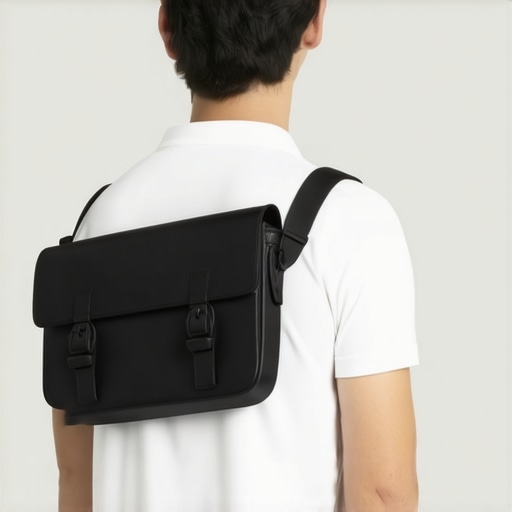
Use the Clock to Balance Your Spine
We are creatures of habit, and most of us have a ‘dominant’ carrying side. To break the cycle of asymmetrical strain, you must implement the 20-minute swap. Set a silent vibrating alert on your watch or phone. Every time it goes off, move the strap to the other shoulder. This prevents one side of your neck and upper back from becoming chronically tight. It feels awkward at first—like trying to eat with your non-dominant hand—but it is one of the most effective mobility hacks simple adjustments for a more active life. When I finally forced myself to do this, the ‘perma-ache’ in my right shoulder vanished within a week.
Keep Your Ribs Tucked and Your Core Engaged
A common mistake when carrying a heavy bag is ‘flaring’ the ribs or arching the lower back to create a shelf for the weight. This puts massive pressure on your lumbar discs. Instead, focus on keeping your ribcage stacked directly over your pelvis. Knowing how to stop your ribs from flaring when you lift your arms or carry a load is vital for long-term spinal health. If you find yourself arching, take a deep breath and ‘knit’ your front ribs together. This creates a stable pillar of support. If you’ve been carrying a bag incorrectly for years, you might need to revolutionize your posture with targeted mobility exercises to regain the flexibility needed to stand truly straight again.
The Cross-Body Stabilization Secret
Most high-quality messenger bags come with a small secondary strap that clips across your chest. Use it. This ‘stabilizer strap’ prevents the bag from sliding forward when you lean over or pick up your pace. Without it, you are constantly shrugging your shoulder to keep the bag in place. That micro-shrug, repeated thousands of times a day, is a primary cause of tension headaches. By clipping that secondary strap, you allow your shoulder to finally drop and relax, which is a key part of improving posture through mobility practical chiropractor strategies. I used to ignore that extra strap because it took five extra seconds to clip, but those five seconds saved me hours of neck pain later in the day.
The Trap of Trying to Look Like a Statue
Let’s dig deeper into a nuance that most ergonomic ‘gurus’ overlook. We’ve been conditioned to believe that ‘perfect posture’ is a static destination—a rigid, upright position we must maintain at all costs. But here is the contrarian truth: staying in any one position for too long, even if it looks ‘correct,’ is a recipe for disaster. This is exactly why your perfect posture is actually causing muscle fatigue. When you lock yourself into a stiff military stance while carrying your bag, you are actually creating isometric tension that starves your muscles of oxygen. Real spinal health isn’t about being a statue; it’s about being adaptable. This fluid relationship is the link between mobility and posture that allows you to carry weight without wearing down your joints.
Why Does Your Neck Ache Even When Your Bag Is Light?
You might have the most expensive, ergonomic bag on the market, yet you still feel that familiar throb in your upper traps. This is often due to ‘micro-bracing.’ You are likely subconsciously lifting your shoulder by a fraction of an inch to ‘secure’ the bag. Over several hours, this creates a state of chronic contraction. According to a study published in the Journal of Bodywork and Movement Therapies, static muscle loading leads to tissue ischemia, which triggers pain signals even in the absence of a ‘heavy’ load. This constant state of high-alert in your nervous system is one reason for the connection between chronic fatigue and poor spinal alignment. If you feel like your body is perpetually ‘on guard,’ you aren’t just tired; your nervous system is overtaxed by your posture.

Don’t Make the Mistake of Armoring Your Ribs
Here is the ‘oops’ factor I see most often with my advanced clients: they over-correct by ‘bracing’ their core so hard they stop breathing naturally. I call this ‘armoring.’ When you stiffen your midsection to support a messenger bag, you often lock your diaphragm. This forced rigidity is the hidden link between your breathing pattern and lower back stability. If your ribs can’t expand, your neck muscles (the scalenes) have to work double-time to help you breathe, which is why your traps are always tight even after a massage. You need to find a balance between stability and ease. This is where professional insight becomes invaluable; specifically, how chiropractic adjustments enhance posture and mobility by ensuring the joints are free to move even under a load.
Break the Cycle of Dominant Side Tightness
We all have a side we prefer, but carrying a bag exclusively on that side creates a neurological feedback loop. Your brain begins to perceive that ‘hiking’ of the shoulder as your new normal. This is why your dominant side is always tighter than the other, and simply stretching won’t fix it because the issue is rooted in your motor map. You have to ‘re-map’ your brain by introducing variety. Have you ever fallen into this trap of over-correcting until you’re stiff as a board? Let me know in the comments. Moving forward, stop trying to be ‘straight’ and start trying to be ‘mobile.’ It’s a subtle shift, but it’s the difference between chronic pain and a body that actually feels good at the end of a commute.
Stop Settling for Thin Straps and Plastic Buckles
When I finally upgraded from a cheap college bag to a professional-grade messenger, the difference wasn’t just in the aesthetics—it was in the physics. I now exclusively look for bags with a 2-inch wide, densely padded shoulder strap. Why? It’s all about pressure distribution. A narrow strap concentrates the entire weight of your laptop on a single point of your trapezius, which is why your traps are always tight even after a massage. I personally use a bag with a cam-action buckle that allows me to tighten the strap with one hand while I’m walking. This is a game changer. If I feel a dull ache starting, I can instantly cinche the bag higher to engage my mid-back instead of my neck. These small mobility hacks simple adjustments for a more active life are what keep me out of the pharmacy aisle. 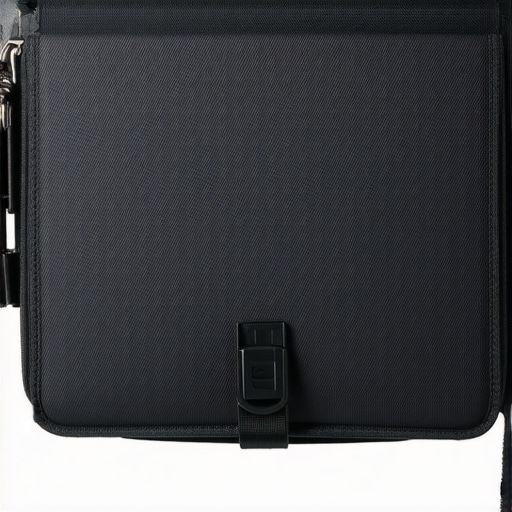
How do I maintain my shoulder alignment over time?
Consistency is more important than intensity. You can’t undo eight hours of carrying a bag with one thirty-second stretch. Maintenance is a daily commitment to ‘spinal hygiene.’ Dr. Stuart McGill, professor emeritus at the University of Waterloo and author of Back Mechanic, emphasizes that the capacity of the spine to handle load is finite; we must manage our daily movements to prevent cumulative micro-trauma. To keep my alignment in check, I schedule a weekly check-in with my mirror to see if my dominant shoulder is still ‘hiking.’ If it is, I spend the next few days switching the bag to my non-dominant side and focusing on improving posture through mobility practical chiropractor strategies. If the stiffness persists, I know chiropractic adjustments unlock a pain-free lifestyle today by resetting the joint mechanics that I’ve spent all week disrupting.
Wearable Tech Will Soon Fix Your Slouch for You
I predict that within the next few years, our bags will become active participants in our health. We are already seeing the emergence of smart straps equipped with haptic sensors that vibrate when your shoulder elevation exceeds a healthy threshold. This kind of real-time biofeedback is the cornerstone of the ultimate guide to improving mobility and posture in 2025. Until that technology becomes mainstream, you have to be your own sensor. Pay attention to the ‘pinch’ in your mid-back; if you feel it, you’ve already waited too long. Knowing how chiropractic adjustments enhance posture and mobility helps you understand that your body is a dynamic system that requires regular tuning, just like the car you drive to work every day.
Try This Two-Minute Alignment Reset Tonight
If you have been carrying your bag on one side for years, your nervous system has likely forgotten what ‘straight’ feels like. Tonight, I want you to perform a simple wall-slide test. Stand with your heels, glutes, and shoulders against a flat wall. Try to lift your arms in a ‘Y’ shape without your lower back arching away from the wall. If you feel a sharp catch or one side is significantly lower, you need to revolutionize your posture with targeted mobility exercises immediately. This simple test is one of my favorite mobility boosts for posture expert tips for daily adjustments because it gives you objective data on how your daily commute is actually affecting your frame. Don’t wait for the lightning bolt of pain to strike like it did for me on that train platform.
The Breakthroughs That Saved My Spine
The biggest shift in my thinking happened when I realized that ‘holding’ a posture is actually a form of tension. I spent months trying to pull my shoulders back into what I thought was a perfect alignment, only to realize I was making myself stiffer. Once I started focusing on the link between mobility and posture, everything changed. I learned that my body isn’t a fixed structure; it’s a dynamic system that needs to breathe and move even under the weight of a heavy bag.
- The Phantom Hike is Real: Even when I wasn’t wearing my bag, I noticed my right shoulder was still tucked toward my ear. This is a neurological habit, not just a physical one.
- Consistency Beats Effort: Doing mobility boosts for posture expert tips for daily adjustments for two minutes a day is more effective than a grueling hour-long session once a week.
- The Bag is a Tool, Not a Burden: When adjusted correctly, your messenger bag can actually act as a light stabilizer, but you have to actively manage the load.
The Tools That Keep My Alignment in Check
I don’t leave my spinal health to chance anymore. Over the years, I have narrowed down a few specific resources that I trust implicitly. First, Back Mechanic by Dr. Stuart McGill is the gold standard for anyone dealing with load management; it helped me understand the finite capacity of my spine. Second, I swear by bags with a wide, padded strap and a secondary stabilizer; high-quality messenger bags handle physics better than cheap alternatives. Finally, I regularly use revolutionize your posture with targeted mobility exercises to reset my ribcage after a long week of commuting. These aren’t just gadgets; they are investments in your long-term ability to stay active.
Don’t Wait for the Lightning Bolt
You don’t have to wait for a Tuesday morning breakdown to start taking your messenger bag posture seriously. Every small adjustment—tightening the strap, switching sides, or focusing on your breathing—adds up to a massive difference in how you feel five years from now. Your body is incredibly resilient, but it shouldn’t have to fight your daily habits. Start by implementing just one of these changes tomorrow morning. You will be surprised at how much lighter your world feels when your spine is actually supported. Have you ever noticed your dominant shoulder sitting higher than the other after a long day of carrying your bag? Let me know in the comments below!