
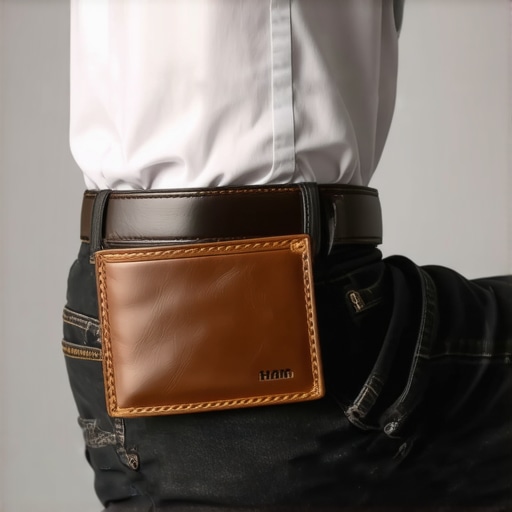
It was a Tuesday afternoon, and I was about three hours into a deep-work session when the familiar, dull throb started in my right glute. I shifted. I stood up. I even tried a quick lunge. Nothing worked. It wasn’t until I sat back down and felt that distinct, leather-bound lump under my sit-bone that it finally clicked. I wasn’t suffering from some mysterious sports injury or a sudden onset of old age; I was literally sitting on a brick of old receipts and expired loyalty cards. This tiny, everyday habit was tilting my world—quite literally. Believe me, I’ve been there, and I know how frustrating it is to feel like your body is failing you when the culprit is hiding in your own pants pocket. Today, we are going to fix that foundation and get your pelvis back on level ground.
Your Wallet is Tipping Your Whole Body Out of Alignment
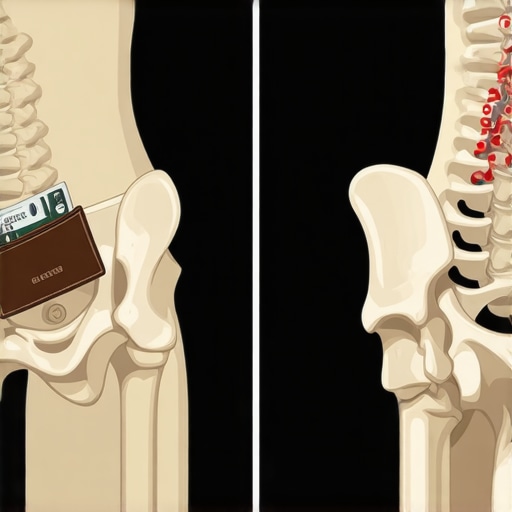
Look, I made a classic mistake for years. I assumed that because my wallet wasn’t huge, it couldn’t be the cause of my nagging lower back pain. I spent a small fortune on fancy ergonomic chairs and even more time wondering why your hamstring stretches aren’t fixing your tightness. It turns out that sitting on a wallet, even a slim one, creates a functional scoliosis. When one side of your pelvis is jacked up higher than the other, your spine has to curve to keep your eyes level with the horizon. It’s an exhausting game of muscular tug-of-war that your lower back is guaranteed to lose. Think of it as being similar to why sitting cross-legged is wrecking your hips; you’re forcing your joints to adapt to a lopsided environment they weren’t designed for. According to a study published in the Journal of Occupational and Environmental Medicine, even minor pelvic tilting during sitting can lead to significant changes in lumbar muscle activity and eventual disc strain. I lived this reality until I finally moved my cards to a front-pocket clip, and the relief was almost instantaneous.
Can a thin piece of leather really cause that much damage?
I know what you’re thinking because I thought it too: “It’s just an inch of leather, how bad can it be?” But consider the physics. That inch of lift at the base translates to a much larger shift at the shoulders and neck. I used to ignore the clicking in my back, but once I started a the morning routine that stops your back from clicking and cleared out my pockets, everything changed. If you’ve been struggling with one-sided pain, you might need the hip hinge fix for chronic lower back aches to reset those patterns, but you’ll never win the battle if you keep sitting on that uneven surface. Stop wasting time with the truth about foam rolling your lower back if the root cause is still in your pocket. Have you ever noticed that your back pain feels worse after a long drive? I’d love to hear if you’ve noticed a difference after clearing out your pockets—drop a comment below and let’s talk about it. We’re going to dive into exactly how to rehab those tilted hips next.
Stop the Tilt and Recalibrate Your Foundation
Step one is the hardest for most people: purge the back pocket. I am talking about a complete relocation. When I finally moved my essentials to a slim front-pocket clip, I felt like a lopsided table that finally got a shim under the short leg. For the first week, I was constantly checking my back pocket out of habit, but my body was already thanking me for the symmetry. This isn’t just about comfort; it is about how chiropractic adjustments enhance posture and mobility by removing the constant mechanical stress of an uneven seat. If you continue to sit on a lump, you are essentially fighting against your own biology every single hour of the workday.
Reset Your Pelvis with Targeted Mobility
Once you have cleared the obstruction, you have to deal with the muscular memory of being tilted for years. Your hip hikers—the muscles on the side you were not sitting on—have likely become chronically tight, while the other side has become overstretched and weak. You need a way to tell your nervous system that the ground is level again. I found that mobility hacks simple adjustments for a more active life are far more effective than generic static stretching. One of the best moves is a simple pelvic clock: lying on your back with knees bent and gently tilting your pelvis toward 12 o’clock and 6 o’clock. It is a subtle motion, but it breaks the functional lock that your lower back has adapted to over time.
Unlock Your SI Joint at Home
If your wallet habit was a long-term affair, your Sacroiliac (SI) joint might be stuck in a rotated or compressed position. Think of the SI joint like a shock absorber; if it is jammed, every step you take sends a jarring jolt straight up your spine. To fix this, I swear by the side lying stretch that resets your si joint. I remember a specific Tuesday after a four-hour drive where my right leg felt three inches longer than my left because of my tilted pelvis. I spent five minutes on this specific reset, felt a subtle release that was not painful—just a shift—and the nagging ache that had plagued me for days simply vanished. It is about restoring that natural glide that high-volume sitting on a brick of leather destroys.
Rebuild Your Sitting Strategy
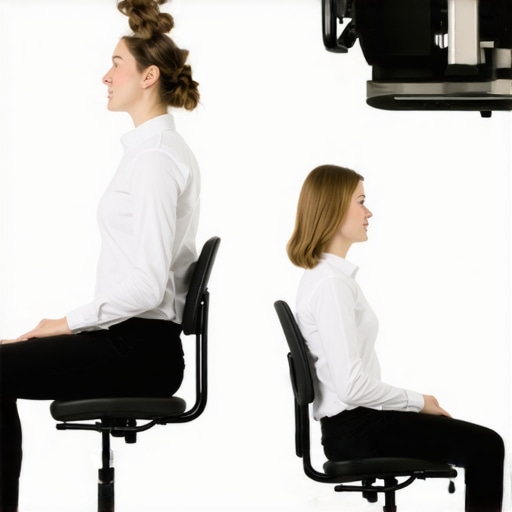
Even without a wallet, most of us still sit poorly, falling back into old, lopsided patterns. If you are recovering from a chronic pelvic tilt, you need to find the best sitting position for lower back disc bulges to prevent a relapse. Use a small lumbar roll and ensure your feet are flat on the floor, which creates a stable tripod for your spine. If you are a commuter, pay extra attention to the specific way to sit in a car for long commutes to avoid sciatica. Most car seats are bucketed, which naturally rounds the lower back and encourages the hips to tuck under; adding a small, firm cushion can counteract that sinkhole effect and keep your pelvis neutral. You can revolutionize your posture with targeted mobility exercises, but those efforts are wasted if you spend eight hours a day in a slumped, wallet-induced tilt.
Restore Symmetry to Your Hips
Finally, you must address the underlying asymmetry that remains. We often favor one side even after the wallet is gone, creating a dominant hip that does all the heavy lifting. You need to re-engage the core stabilizers that have gone dormant during your years of lopsided sitting. I suggest incorporating mobility boosts for posture expert tips for daily adjustments into your morning routine. Focus on movements like single-leg bridges or bird-dogs to force each side of your pelvis to stabilize independently. This is not about traditional strength training; it is about neurological re-education. You are teaching your brain that the center is no longer tilted, and your spine no longer needs to curve to keep you upright.
Let’s look at the nuance most people miss. We’ve been told our whole lives to “sit up straight,” but that advice is often incomplete. In my experience, the people who try the hardest to maintain “perfect” posture are often the ones in the most pain. Why? Because they’ve replaced a slumped lopsidedness with a rigid, frozen stiffness. If you’ve spent months trying to mimic a mannequin and still feel like garbage, you might finally realize why your perfect posture is actually causing muscle fatigue. The human spine is designed for dynamic movement, not for being a marble pillar. When you force yourself into a static “correct” position, you create massive isometric tension that starves your tissues of blood flow.
Why does your back still throb despite an expensive ergonomic chair?
This is the question I get most often from high-performers who have the best office gear money can buy. The “Oops” factor here is what I call the Ergonomic Trap. We buy the fifteen-hundred-dollar chair and assume it does the work for the body. However, research published in the British Journal of Sports Medicine emphasizes that “the best posture is your next posture.” Essentially, postural variability—the ability to change positions frequently—is significantly more protective than any specific seated angle. If you aren’t moving, why your ergonomic desk chair is still giving you back aches becomes obvious: your tissues are undergoing constant, low-level ischemic stress from lack of motion.
Another common myth is that chiropractic adjustments are just about “cracking” a bone back into place like a puzzle piece. In reality, why chiropractic care is your secret weapon for better posture isn’t about a single mechanical pop; it is about restoring the neurological communication between your brain and your joints. When you understand the link between mobility and posture, you stop seeing adjustments as a temporary fix and start seeing them as a tool to reset your movement baseline. This allows your nervous system to let go of that protective guarding that feels like “tightness.”
Ditch the posture brace before it makes things worse
I see many patients who reach for a velcro brace at the first sign of a slump. While it feels supportive, why most posture braces actually make your back weaker is a hard lesson for many. These devices do the work your stabilizers should be doing, leading to muscle atrophy and a complete reliance on external support. Instead of a brace, focus on mobility hacks simple adjustments for a more active life that encourage your body to find its own center. True stability is earned, not strapped on. Have you ever fallen into the trap of buying a gadget to fix your back, only for it to gather dust? Let me know in the comments—I have certainly got a drawer full of them from my early days of trying to find a shortcut to spinal health. To truly win, you need to the ultimate guide to improving mobility and posture in 2025 and commit to the daily, small adjustments that build a resilient foundation.
Once you have ditched the ‘back-pocket brick,’ the real challenge begins: not letting your body drift back into its old, crooked comfort zone. I have found that the biggest hurdle isn’t the big adjustments, but the tiny, invisible erosions of your posture throughout a busy day. To stay ahead of it, I rely on a few non-negotiables. First, I use a high-density lacrosse ball for targeted release. Unlike a soft foam roller, the lacrosse ball is small enough to pin down the piriformis—the muscle that often clamps down when you have been sitting lopsided. I spend exactly two minutes on each side before I start my workday, which is one of the most effective mobility boosts for posture expert tips for daily adjustments I have ever implemented. It is about creating a ‘clean slate’ for my nervous system every morning. 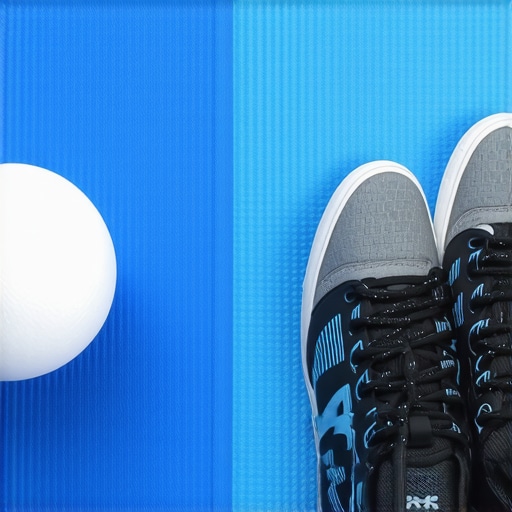
Keep Your Spine From Slipping Back Into Old Habits
Maintenance is not a static state; it is a dynamic process of recalibration. Most people fail because they stop their routine the moment the pain disappears. However, your fascia and ligaments have ‘memory,’ and they will naturally pull you back toward that tilted pelvic position if you are not diligent. I recommend setting a recurring ‘posture check’ on your phone or using a desktop app that prompts you to stand up every 50 minutes. During these breaks, I perform the 10 second move to reset your shoulders at work to ensure that my upper body isn’t collapsing over my now-level pelvis. This prevents the ‘cascading collapse’ where a stiff mid-back eventually forces the lower back to compensate by tilting or arching excessively.
How can I maintain my alignment for the long haul?
Consistency beats intensity every single time. You do not need an hour-long yoga session; you need a few ‘spinal resets’ sprinkled throughout your day. I personally integrate the logic found in the link between mobility and posture into my daily habits. Beyond the physical moves, I am looking toward the future of spinal care. I predict that in the next few years, we will all be wearing thin, haptic sensors—smaller than a band-aid—that vibrate gently when we have spent more than ten minutes in a pelvic tilt. This kind of real-time biofeedback will revolutionize how we manage our bodies because it removes the guesswork and the ‘drift’ before it becomes a chronic ache.
Build an Internal Corset for Permanent Stability
For those who want to dive deeper into the science of stability, I highly recommend looking into the work of Dr. Stuart McGill, specifically his ‘Big Three’ core stability routine. His research at the University of Waterloo has conclusively shown that building endurance in the core stabilizers is far more protective for the spine than building raw strength. If you have been struggling, do not just stretch your hamstrings; build the ‘internal corset’ that holds your pelvis in place regardless of what chair you are sitting in. You can find more on integrating these concepts in the ultimate guide to improving mobility and posture in 2025. If you really want to lock in these gains, try this advanced tip: spend five minutes every evening doing the 2 minute drill for better spinal rotation but do it with your eyes closed. Removing visual input forces your proprioceptors—the sensors in your joints—to work harder to tell your brain where you are in space, effectively hard-wiring your new, level alignment into your brain.
Lessons That Finally Made Sense After Years of Chronic Back Pain
Reflecting on my journey, the biggest lightbulb moment was realizing that pain is rarely the problem; it is simply the messenger. I spent years trying to ‘kill’ the pain when I should have been listening to what it was telling me about my environment. I learned that your body is incredibly adaptable, which is both a blessing and a curse—it will adapt to a lopsided wallet just as readily as it will adapt to a level seat. Another hard-earned truth is that improving posture through mobility practical chiropractor strategies is a marathon, not a sprint. You cannot undo a decade of tilting with a single afternoon of stretching. Finally, I discovered that ‘perfect’ posture is a myth. The goal isn’t to look like a statue; the goal is to be a fluid, resilient human who can move through space without compensation patterns dragging you down.
My Non-Negotiable Toolkit for Pelvic Symmetry
I don’t believe in hoarding secrets, so here is the exact arsenal I use to keep my spine from drifting back into old habits. First, I replaced my bulky bifold with a slim, carbon-fiber front-pocket sleeve. It sounds small, but removing that physical barrier was the catalyst for everything else. Second, I keep a high-density lacrosse ball in my desk drawer. When I feel a hint of tightness, I use it for mobility boosts for posture expert tips for daily adjustments, focusing on the glute medius. Third, I highly recommend Dr. Stuart McGill’s book, Back Mechanic. It is the gold standard for understanding spinal hygiene. Lastly, I schedule regular maintenance because I’ve seen firsthand why chiropractic care is your secret weapon for better posture—it provides the neurological reset that home exercises sometimes miss.
#IMAGE_PLACEHOLDER_E#
The Bright Future of Your Spine Begins Today
You have the knowledge now to stop being a victim of your own pockets. Transitioning away from a back-pocket wallet is one of those rare life changes that costs nothing but yields a massive return on investment for your health. As you move forward, remember that every small adjustment counts. Whether it’s choosing a better chair or committing to the ultimate guide to improving mobility and posture in 2025, you are building a foundation that will support you for decades to come. Your spine is your lifeline; treat it with the respect it deserves, and it will reward you with a life of movement and freedom. How long have you been carrying your wallet in your back pocket? Let me know in the comments if you noticed an immediate change once you moved it!