

I was catching a glimpse of my profile in a store window when it hit me like a ton of bricks. My head was drifting forward, and that dreaded little mound at the base of my neck was starting to make its debut. I felt older than I was, stiffer than I should be, and honestly, a bit panicked. It’s a classic sign of what we often call a Dowager’s Hump, or kyphosis, and if you are reading this, you have probably had that same sinking feeling while looking at a candid photo or your own reflection in a glass door. We spend so much time glued to screens that we have practically evolved to look down, but I am here to tell you that you do not have to just accept it. The truth about text neck is that it is not just about looks; it is about how your body functions every single day.
Stop Fighting Your Body and Start Working With Your Spine
When I first noticed my posture slipping, I made the classic mistake of trying to “force” myself into a straight line. I would pull my shoulders back until my blades pinched, holding my breath like a soldier on parade. It was exhausting and, frankly, totally ineffective because your perfect posture is actually causing muscle fatigue if you try to hold it through sheer willpower. I also learned the hard way that most posture braces actually make your back weaker because they do the work your muscles should be doing. The real secret to fixing that hump is not a brace or a rigid stance; it is about targeted mobility exercises that address the specific segments of your upper back that have become “stuck” from hours of sitting. Have you ever looked at a photo of yourself and realized your posture was way worse than you thought? I would love to hear if you have faced that same “lightbulb moment.”
Is this exercise actually worth your time?
You might be skeptical. I get it. We have all seen those clickbait videos promising a miracle in thirty seconds. However, when you realize that for every inch your head tilts forward, the effective weight of your head on your spine increases by an extra ten pounds (a fact famously noted by Dr. Adalbert Kapandji in The Physiology of the Joints), you start to take it seriously. Dealing with that heavy-head feeling is the first step toward reclaiming your height and your health. It is not just about standing tall; it is about relieving the massive amount of pressure on your cervical spine before it turns into chronic pain. Let me show you the one move that changed everything for me and helped me stop that hump in its tracks.
Fix the Stuck Segments in Your Mid-Back
To fix that hump, you have to realize your spine is like a series of rusty hinges. When you sit hunched over, the thoracic spine (your mid-back) loses its ability to extend. It gets locked into a forward curve. This is why targeted mobility exercises are non-negotiable. You aren’t just stretching skin; you are trying to convince your vertebrae that it is safe to move in the opposite direction. If those segments don’t move, your neck has to overcompensate, leading to that heavy, strained feeling we all dread.
Try the Wall Stretch That Opens Your Chest
One of the most immediate ways to combat this is by using a flat surface to force your body out of its shell. Stand facing a wall, place your forearms vertically against it with your elbows at shoulder height, and gently lean your chest toward the wall. You should feel a stretch across your pectoral muscles and a ‘pinch’ in your mid-back. This is the wall stretch that fixes slumped shoulders fast because it targets the exact muscles that pull your frame forward. I remember the first time I did this; my chest felt so tight I could barely get within six inches of the wall. It felt like my ribs were glued together, but after three days of consistent effort, the ‘bruised’ feeling in my mid-back started to lift.

Retrain Your Deep Neck Muscles With Chin Tucks
Once you open the chest, you have to address the ‘craning’ of the neck. Most people try to fix neck pain by rolling their heads, but you should stop rolling your neck in circles and do this instead: the chin tuck. Think of it like a sliding drawer. Without tilting your head up or down, pull your chin straight back as if you are making a double chin. This engages the longus colli muscles—the internal stabilizers of your neck. It is the secret to fixing tech neck without quitting your phone because it builds the strength needed to hold your head over your shoulders rather than in front of them.
Why I Looked Ridiculous at a Stoplight
I distinctly remember sitting at a red light on 72nd Street, practicing my chin tucks. I was so focused on pulling my head back into the headrest that I didn’t notice the teenager in the car next to me staring in total confusion. I looked like a pigeon having a glitch. It was messy, I felt self-conscious, and my neck actually felt a little sore afterward because those tiny muscles hadn’t worked in years. But when I got home and sat down to work, I realized I didn’t have that nagging urge to lean into the monitor. This is why why chiropractic care is your secret weapon for better posture; sometimes you need a professional to help clear the path so these exercises can actually take hold. You cannot build a stable house on a foundation that refuses to move.
Focus on Quality Over Repetition
It is tempting to blast through twenty reps and call it a day, but mobility doesn’t work like a bicep curl. You are aiming for a ‘reset’ of the nervous system. When you perform these moves, hold the end range for at least five seconds. You want your brain to register this new, upright position as the ‘new normal.’ Over time, this consistency is what prevents the ligaments from thickening into a permanent hump. If you feel a sharp pinch, stop and reassess, but if you feel a deep, dull ache of a muscle finally waking up, you are on the right track.
I used to think that if a muscle felt tight, the solution was simply to pull on it until it gave up. But here is the advanced truth that changed my perspective: tightness is often a protective response, not a length issue. When your brain senses that your spine is unstable or misaligned, it cranks up the tension in your surrounding muscles to act like a natural brace. If you force those muscles to relax through aggressive stretching without addressing the underlying instability, your brain will just ‘re-lock’ them even harder. This is exactly why stretching your hamstrings might actually make your back pain worse if the real issue is coming from your pelvis or lower spine. You are essentially pulling the support out from under a leaning building.
Stop Stretching Every Muscle That Feels Tight
In my experience, the biggest mistake people make is ‘chasing the pain.’ We assume that where we feel the ache is where the problem lies. However, a study published in the Journal of Bodywork and Movement Therapies suggests that myofascial trigger points are often secondary to joint dysfunction elsewhere. This means your tight neck might just be a symptom of a ‘stuck’ mid-back. If you only focus on the neck, you are ignoring the root cause. This is why chiropractic care is your secret weapon for better posture; it looks at the mechanical roadblocks that prevent your muscles from relaxing naturally. Have you ever fallen into this trap of stretching the same spot for weeks with no real change? Let me know in the comments.
Why does your back feel stiff again an hour after you stretch?
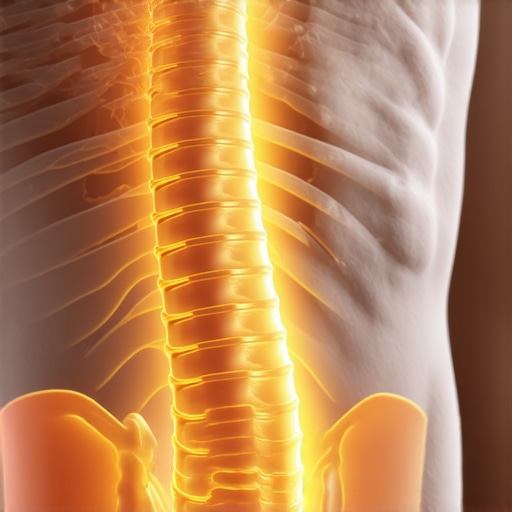
This is what I call the ‘rubber band effect.’ If you haven’t changed the neurological signal telling that muscle to stay tight, it will snap right back to its protective state within minutes of you finishing your routine. This is where how chiropractic adjustments enhance posture and mobility. An adjustment isn’t just about ‘moving bones’; it’s about sending a high-velocity, low-amplitude signal to the nervous system to ‘reboot’ the local muscle tone. When you combine that neurological reset with improving posture through mobility, you are finally speaking the same language as your brain. You are giving the body the stability it needs so it no longer feels the requirement to stay ‘guarded.’
The Trap of Chasing Symptoms Instead of Causes
Another nuance that most beginners miss is the kinetic chain. Your body is interconnected from your feet to your jaw. I’ve seen people spend hundreds on ergonomic chairs only to realize that why your wrist hurting might be a mid-back problem. If the nerves exiting your thoracic spine are irritated, they can manifest as pain or weakness all the way down your arm. This ‘hidden’ connection is why professional guidance is so vital. You can do all the ‘tech neck’ stretches in the world, but if your foundation is off, you’re just putting a fresh coat of paint on a house with a cracked foundation. To see real progress, you must move beyond generic stretches and start implementing mobility hacks and simple adjustments for a more active life that target your specific restrictions.
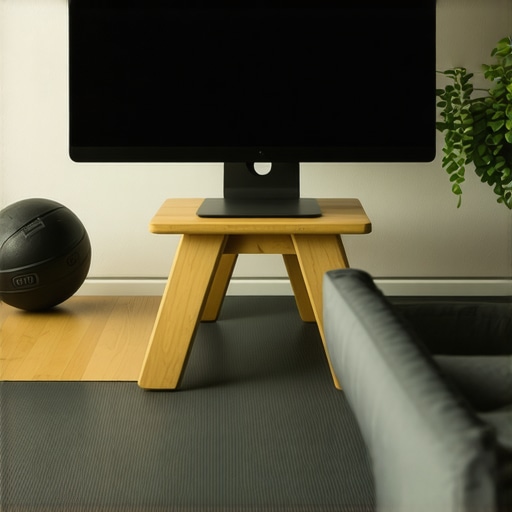
Once I stopped chasing individual aches, I realized I needed a concrete system for maintenance. I didn’t want to spend an hour every day on a foam roller, so I started focusing on high-leverage tools that offer the biggest bang for my buck. For instance, I finally stopped trusting ‘ergonomic’ labels on cheap office chairs and focused on the basics: the simple change to your monitor height that kills headaches. If your screen is even two inches too low, you are fighting gravity for forty hours a week, and no amount of stretching will win that war. I personally use a sturdy wooden monitor riser to ensure my eyes are level with the top third of the screen, which keeps my chin from drifting into that ‘hump’ position.
Stop guessing with your desk setup
Beyond the monitor, I rely on a lacrosse ball for what I call ‘targeted digging.’ Dr. Kelly Starrett, the founder of The Ready State and author of Becoming a Supple Leopard, often discusses the importance of resolving ‘upstream’ and ‘downstream’ tension. If my neck is tight, I often find the culprit is actually a knotted-up pec minor or a stiff rib cage. By spending two minutes leaning into a lacrosse ball against a door frame, I can manually release the tissues that enhance your posture with expert chiropractic techniques in 2025. It is uncomfortable, yes, but the immediate relief in my breathing and neck mobility is undeniable.
How do I maintain these posture gains over time?
Consistency beats intensity every single time. It starts with the understanding that the link between mobility and posture is a lifelong relationship, not a one-time fix. I treat my spinal health like brushing my teeth—non-negotiable and daily. I’ve found that how chiropractic adjustments enhance posture and mobility is by creating a ‘window of opportunity’ where my exercises are actually effective. Without that structural alignment, I’m just trying to move a jammed door. Looking ahead, I suspect we are moving toward a world of AI-driven haptic feedback wearables that don’t just ‘buzz’ when you slouch, but actually analyze the specific torque on your vertebrae to provide mobility boosts for posture in real-time.
My high-leverage tools for a resilient spine
If you are serious about scaling your results, you need a few staples. A firm, high-density foam roller is essential for the thoracic spine, but remember to stay off the lumbar (lower) back. I also swear by a ‘lumbar roll’ for my car seat to maintain the natural curve of my spine during long commutes. These small, environmental tweaks are what support the work done during chiropractic adjustments that unlock a pain-free lifestyle. When your environment is set up to support you, you don’t have to rely on willpower alone to stand tall. I encourage you to try this one advanced tip tonight: Spend exactly two minutes using a lacrosse ball or a tennis ball to massage the area between your shoulder blades and your spine. It is the most high-impact habit you can start today to ensure you are following the ultimate guide to improving mobility and posture in 2025.
The Hard Truths I Learned While Reclaiming My Height
Fixing my posture wasn’t a linear path, and looking back, I realize that pain is often a liar; just because your neck feels tight doesn’t mean the neck is the culprit. Most often, it’s those ‘stuck’ mid-back segments that need a targeted mobility exercise to finally wake up. I also learned the hard way that you should stop cracking your own back every hour because you are likely just moving the segments that are already hyper-mobile while the ‘frozen’ ones stay locked. Real change only happened when I paired my daily drills with chiropractic adjustments that enhance posture and mobility. It wasn’t about achieving a ‘perfect’ rigid stance; it was about giving my body the freedom to move without it being an Olympic effort.
My Non-Negotiable Kit for a Straighter Back
If you are building your own home recovery station, skip the expensive vibrating gadgets and stick to the high-leverage basics. I swear by a high-density foam roller for my thoracic spine, but I am incredibly careful to follow the truth about foam rolling your lower back and stay away from the lumbar region. For my workspace, I finally mastered the proper way to use a lumbar roll to maintain my natural curve during deep work sessions. I also recommend picking up a copy of Becoming a Supple Leopard by Dr. Kelly Starrett; it is essentially the owner’s manual for the human body. Finally, never underestimate the power of expert mobility boosts to keep your joints lubricated when your schedule gets packed.
#IMAGE_PLACEHOLDER_E#
The View From the Other Side of Kyphosis
Starting this journey can feel overwhelming, especially when you feel like you are fighting decades of gravity and screen time. However, every chin tuck and every wall stretch is a direct vote for a future without chronic stiffness and that dreaded heavy-head feeling. When you commit to the ultimate guide to improving mobility and posture in 2025, you aren’t just fixing a hump; you are reclaiming your energy, your breath, and your confidence. Your spine is meant to be a source of strength, not a source of worry. Take that first small step tonight, even if it is just a sixty-second stretch before bed. Have you noticed your head drifting forward more often during long workdays, or have you found a specific stretch that finally gave you relief? Let me know in the comments below!