

I used to think my skull was just being dramatic. Every morning, like clockwork, a dull ache would set up camp right behind my eyes, and by noon, I felt like my head was stuck in a vice. I would reach for the ibuprofen, rub my temples, and hope for the best. But there was this other thing—a sharp, rhythmic click-pop every time I chewed my breakfast or yawned too wide. I never connected the two. I figured the jaw thing was just a quirk, like being double-jointed. Boy, was I wrong. I spent a fortune on migraine meds and dark-room therapy before I realized my mouth was essentially screaming at my brain. We are going to dive into why that clicking is the smoking gun for your headaches and how you can finally get some peace without a prescription bottle.
That Popping Sound in Your Face is a Major Red Flag
For the longest time, I made the classic mistake of treating my symptoms instead of the source. I would spend twenty minutes every morning doing aggressive neck rotations, only to find that stretching your neck is making your headaches worse if you are not addressing the real culprit. My lightbulb moment happened at a routine check-up when I finally mentioned the clicking. My jaw was not just moving; it was misaligned, pulling on muscles that wrap all the way around the skull. It felt like a constant tug-of-war happening right under my skin. Most people assume a headache is a brain problem, but often, it is a hardware problem in the jaw.
Is this just a trendy diagnosis for a sore mouth?
I get it. It sounds a bit far-fetched to suggest your teeth or jaw hinges are causing a migraine. I was the biggest skeptic in the room. But the science is pretty hard to ignore. According to the National Institute of Dental and Craniofacial Research, over 10 million Americans suffer from TMJ disorders, and many do not even know it is the root of their chronic pain. When those tiny discs in your jaw joint slip out of place, your nervous system goes into overdrive. If you have ever wondered how to tell if your headache is coming from your neck or your jaw, you are not alone. It is a messy, interconnected web of nerves and fascia. I finally learned that the secret to reducing tension headaches without medication often starts with calming down the jaw muscles. Have you ever noticed your jaw clicking while you are stressed, or does it happen mostly when you are eating? Let’s look at what is actually happening inside that joint when it clicks.
The N-Position Trick That Stops Clenching Instantly
First things first, you have to retrain your mouth’s resting state. Most of us spend our days with our teeth touching, which is a one-way ticket to a tension headache. I remember sitting at my kitchen table during a particularly brutal tax season, realizing I was biting down so hard my ears were actually ringing. I started using the ‘N’ position. You simply place the tip of your tongue on the roof of your mouth, just behind your front teeth, right where you would say the letter ‘N.’ When your tongue is there, your jaw naturally drops open a few millimeters, and your teeth shouldn’t touch. This tiny gap is the difference between a relaxed face and a face that feels like it’s being crushed in a hydraulic press. Practice this every time you check your phone or hit a red light. It’s the ultimate way to learn the secret to reducing tension headaches without medication because it shuts down the masseter muscle before it can flare up. 
Your Laptop Habit Is Fueling the Fire
You can’t fix your jaw if your head is hanging off your shoulders like a heavy bowling ball. I used to spend hours hunched over my MacBook, and that ‘text neck’ was pulling the muscles in my neck so tight they were literally dragging my jaw backward. If you are constantly working from a sofa, you need to learn how to fix your posture while using your laptop on the couch to prevent this chain reaction. When your head moves forward, the jaw joint—the TMJ—is forced into an unnatural position just to keep your airway open. It’s a survival mechanism that results in a click. I found that using the 10-second move to reset your shoulders at work every hour was the only way to remind my nervous system that my head belongs on top of my spine, not in front of it.
Why Your Spine Holds the Key to a Quiet Jaw
It sounds weird, but the nerves that control your jaw muscles actually share space in the brainstem with nerves from your upper neck. This is why a misalignment in your top two vertebrae can manifest as a clicking jaw or a stabbing headache behind the eye. I once went in for a neck adjustment because I couldn’t turn my head to the left, and within ten minutes of the session, the clicking in my jaw stopped completely. It was like someone finally oiled the hinges of a rusty door. This is exactly why chiropractic care is your secret weapon for better posture and jaw relief. By using improving posture through mobility practical chiropractor strategies, you address the hardware issues that stretching alone won’t touch. If you have a setup with multiple screens, be extra careful; why your dual-monitor setup is twisting your neck might be the primary reason your jaw is struggling to find its center. Focus on keeping your eye line level and your ears stacked over your shoulders to give those jaw joints a fighting chance.
Most health gurus tell you to sit up straight, pull your shoulders back, and tuck your chin until you look like a toy soldier. I tried that for six months, and my jaw pain actually doubled. Why? Because holding a rigid, static position is like holding a bicep curl for eight hours; eventually, the muscle is going to scream. The reality is that the truth about perfect posture and why it doesn’t exist is one of the hardest pills to swallow for those of us in chronic pain. Your spine was built for movement, not for being a statue. When we force ourselves into these artificial alignments, we actually increase the tension in the very muscles we are trying to save. Let’s peel back the curtain on why your ‘good’ habits might be your biggest enemies.
Why the Search for Perfect Posture is a Dead End
The nuance most people miss is that ‘posture’ isn’t a destination; it is a dynamic process. A 2021 study published in the Journal of Clinical Medicine highlights that postural variability—essentially, how often you change positions—is far more important for reducing musculoskeletal discomfort than the specific angle of your spine. If you are not moving, you are loading. Constant static loading is exactly what sends those jaw joints into a tailspin. I spent years trying to be ‘aligned’ when I should have been focused on being ‘mobile.’ This is where mobility hacks simple adjustments for a more active life become more valuable than any ergonomic chair you can buy. 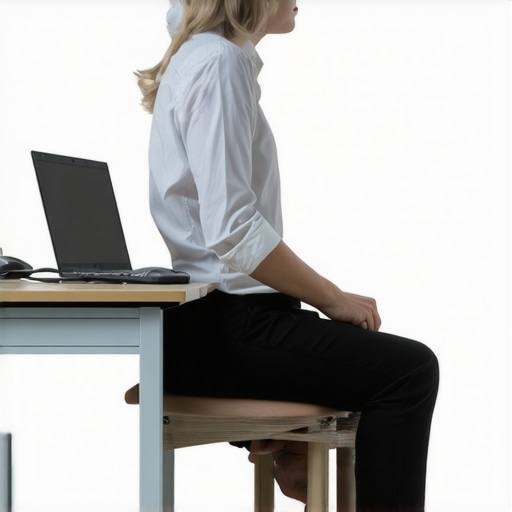
Is your daily stretching routine secretly fueling inflammation?
The biggest ‘oops’ factor I see in my own journey and with others is trying to ‘stretch away’ a mechanical joint issue. If your jaw is clicking because a disc is physically displaced, or if your neck is locked up, pulling on those muscles with aggressive stretches is like pulling on a knotted shoelace—it just makes the knot tighter. This is why your gentle stretching is actually causing more inflammation if the underlying joint isn’t seated correctly. You are essentially tugging on over-sensitized nerves. I also had a bad habit of trying to fix things myself, but I eventually learned the truth about cracking your own back for relief: you are usually just moving the joints that are already too loose, while the ones that are actually stuck remain frozen. It provides a temporary chemical high but does nothing for the structural cause.
The Danger of the Self-Adjustment Habit
We have all done it—that quick twist of the neck to hear a ‘pop’ and get a moment of relief. But as I dug deeper into the mechanics of the upper cervical spine, I realized I was making myself less stable. Professional how chiropractic adjustments enhance posture and mobility work differently because they target the specific segment that isn’t moving. When you self-crack, you’re taking the path of least resistance. You might also be tempted to use tools to fix things at home, but be careful; the truth about foam rolling your lower back or your neck is that if you don’t know the direction of the misalignment, you could be pushing the bone further out of place. This is why professional care is often the missing link. Have you ever fallen into this trap of trying to self-adjust or forcing ‘perfect’ posture? Let me know in the comments. I’d love to hear if you’ve noticed your symptoms getting worse when you try ‘too hard’ to sit up straight.
I spent a fortune on fancy ergonomic ‘thrones’ before I realized that my twenty-dollar lumbar roll was doing more work than the thousand-dollar mesh seat. The trick isn’t the price tag; it’s the support for your specific spinal curve. If you are stuck in an office chair all day, learning how to use a lumbar roll correctly in an office chair is the single most cost-effective thing you can do for your jaw and neck health. When your lower back is supported, your head doesn’t have to crane forward to find balance, which stops that clicking jaw before it even starts. In my experience, even the desk setup trick for people who hate standing desks often boils down to this: get your monitor high enough that you aren’t looking down, and get your lower back supported so your pelvis doesn’t tilt.
Why a $20 tool beat my $1000 ergonomic chair
For years, I ignored the ‘maintenance’ side of things. I would get an adjustment, feel like a new person for forty-eight hours, and then go right back to my old habits. It was a cycle of relief and relapse. Now, I use a high-tech approach mixed with low-tech tools. My favorite high-tech ‘hack’ is actually a simple open-source software called Stretchly. It forces me to take micro-breaks every twenty minutes. During those breaks, I don’t just scroll through my phone; I do the ‘N’ position I mentioned earlier and a quick neck glide. This is the ultimate guide to improving mobility and posture in 2025: it’s not about one big workout, but a hundred tiny corrections throughout the day. 
How do I maintain my mobility without a daily chiropractor visit?
This is the question I get most often from friends who see me actually enjoying a pain-free life now. The secret is that professional how chiropractic adjustments enhance posture and mobility creates a ‘window of opportunity’ where your joints are moving freely. You have to fill that window with good movement habits. Every night, I follow the 3-minute evening routine for a less stiff morning to ensure I’m not bringing the day’s stress into my sleep. According to spinal biomechanics expert Dr. Stuart McGill in his seminal work ‘Back Mechanic,’ the concept of ‘spine hygiene’ is about minimizing the number of times you bend your spine under load during the day. It’s not just about the big lifts; it’s about how you brush your teeth and how you sit on the couch.
Your future spine will be managed by AI sensors
Looking ahead, I predict we are going to see a massive shift toward biofeedback wearables. We already have watches that track our steps, but soon we will have small sensors integrated into our shirts that vibrate the moment our shoulders hunch or our jaw clenches. We won’t have to ‘remember’ to sit up straight because our tech will remind us in real-time. Until then, we have to be our own sensors. If you’re feeling stuck, don’t hesitate to reach out via our contact us page to share your progress. My challenge for you this week: Download a simple break reminder app today. When it goes off, don’t just stand up—do one set of ‘N-position’ jaw drops and a quick shoulder reset. It sounds too simple to work, but consistency is the only thing that actually changes your biology.
The Hard Lessons My Misaligned Jaw Taught Me
Looking back, I realize I spent years treating the smoke while my jaw was the fire. Here is what I wish I knew on day one: First, clicking is never ‘normal’—it is your joint’s way of shouting for help before the nerves get inflamed. Second, your jaw and neck are best friends; if one is out of alignment, the other is suffering. This is why chiropractic care is your secret weapon for better posture because it resets that crucial relationship. Finally, the best treatment is the one you do daily, not just when it hurts. Micro-habits are the only way chiropractic adjustments unlock a pain-free lifestyle today for the long haul.
The Exact Tools That Kept Me Out of the Pharmacy
I do not believe in gadgets for the sake of gadgets, but these specific items changed my daily comfort levels. I never sit at my desk without knowing how to use a lumbar roll correctly in an office chair because it prevents the ‘forward-head’ slouch that crushes the TMJ hinges. I also suggest checking your bedding; is your pillow too flat? How to check in 5 seconds is a life-saver for side sleepers. #IMAGE_PLACEHOLDER_E# For reading, Dr. Stuart McGill’s Back Mechanic provided the blueprint for my ‘spine hygiene,’ and I pair that knowledge with the 3-minute evening routine for a less stiff morning to decompress before bed.
Your Path to a Pain-Free Life Starts with One Small Move
You do not have to live with the vice-grip feeling around your temples forever. By connecting the dots between your jaw clicking, your screen habits, and your spinal alignment, you are already ahead of most chronic pain sufferers. It is time to stop chasing the symptom and start supporting the structure with better mobility. Consistency is your greatest ally. Have you noticed your headaches get worse after a long day of jaw clenching or clicking? Let me know in the comments below!