
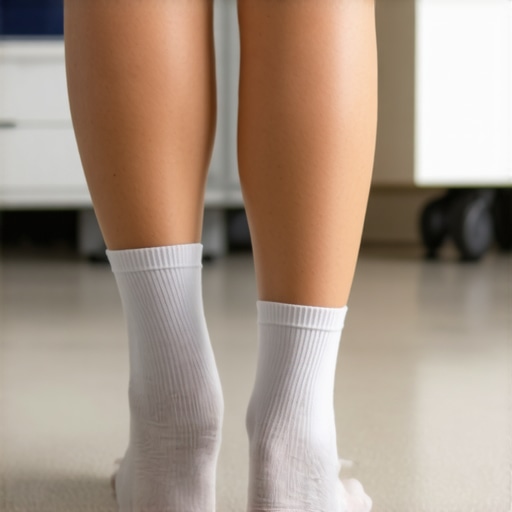
I thought I was saving my spine, but I ended up punishing my feet instead. I vividly remember the first week after I finally assembled my beautiful, motorized standing desk. I felt like a productivity pioneer for about two hours, standing tall and feeling focused. But then, the throbbing started. It wasn’t just a bit of tiredness; it was a sharp, nagging ache in my heels that made every step to the kitchen feel like a trek through broken glass. I’d fallen head-first into the classic trap of the over-eager convert, and my arches were paying the price for my enthusiasm. We are often told that sitting is the ultimate health villain, yet we rarely discuss how standing still on a hard floor is essentially a slow-motion crush injury for your plantar fascia. I made the mistake of thinking my body would just ‘know’ how to stand for eight hours straight because I’ve been walking since I was a toddler. I was wrong, and if you are currently hobbling around your home office, you are probably making the same mistakes I did. Today, I want to show you why this transition is currently backfiring and how you can reclaim your comfort without dragging your old office chair back out of the garage.
The standing desk trap that nobody warns you about
Most of us treat the switch to a standing desk like a binary choice. Either you are a ‘sitter’ or you are a ‘stander.’ I certainly did. I went from zero standing to trying to hammer out a full workday on my feet without a second thought. It was a total disaster for my lower limbs. The reality is that your feet are complex architectural marvels made of 26 bones and dozens of ligaments that have likely been ‘sleeping’ in the shadows of supportive chairs for years. When you suddenly demand they carry your full weight for hours on end, they don’t just adapt; they rebel. This sudden increase in mechanical load is the biggest mistake people make when using a standing desk. You aren’t just standing; you are compressing your tissues in a way they aren’t conditioned to handle yet. This compression is often the root cause behind why your feet burn after a day at the office, signaling that your soft tissues are overworked and your circulation is struggling to keep up with the gravity.
Is standing actually worth the hype if it hurts this much?
It is a completely fair question to ask. Why bother standing if you are simply trading a stiff lower back for screaming arches? I almost gave up and listed my desk for sale after the first week. However, the answer doesn’t involve going back to your chair forever; it involves changing your strategy. I spent far too much time early on looking for ‘magic’ shoes, when the secret was actually in improving my foot mechanics and understanding how to restore your natural arch without expensive-orthotics. According to the Cornell University Ergonomics Lab, standing for more than 20 minutes at a time without movement can lead to significant circulatory strain and localized fatigue. The goal of a ‘sit-to-stand’ transition isn’t to become a statue; it is to introduce dynamic movement into your day. Have you found yourself leaning heavily on one hip or constantly shifting your weight just to survive the afternoon? That is your body’s way of screaming that the system is overloaded. We need to stop the ‘static’ standing and start moving correctly.
Stop acting like a statue while you work
Standing still is essentially just “sitting 2.0” for your joints. The mistake most of us make is thinking that replacing a chair with a desk means we should remain perfectly still in a vertical position. You need to think of your standing desk area as a dynamic playground for your lower body rather than a fixed station. The first thing I changed in my routine was my weight distribution. Instead of locking my knees—which essentially turns your leg bones into rigid pillars that crush your ankle joints—I started keeping a “soft” bend in my legs. This small adjustment allows your muscles to take the load rather than your cartilage and ligaments.
Find the sweet spot for your elbows
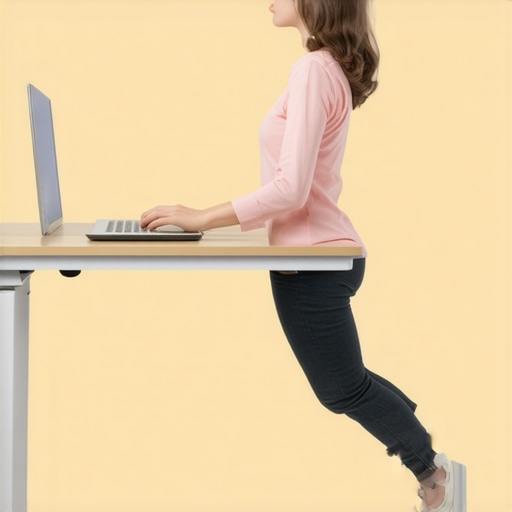
If your desk is positioned too high, you will naturally hunch your shoulders; if it is too low, you will lean forward, putting massive pressure on the balls of your feet. I realized that why most standing desks are set at the wrong height is because we often measure by eye level rather than the angle of our elbows. Your keyboard should be at a height where your forearms are parallel to the floor. When I dropped my desk just two inches, the burning sensation in my heels subsided almost instantly because my center of gravity shifted back over my mid-foot where it belongs.
The thirty-second reset for your hips
Every hour, I perform a quick pelvic reset. Think of your pelvis like a bowl of water; if it tilts too far forward or back, the water spills, and your lower back takes the hit. By implementing the 30-second move that opens up tight hips in seconds, I stopped that nagging pull in my lower back that usually accompanied my foot pain. This reset is vital because hip tightness often travels down the kinetic chain, causing you to stand awkwardly and put uneven pressure on your arches.
Move your weight every five minutes
You do not need to do calisthenics, but you do need to oscillate. I treat my standing time like a slow-motion dance. One minute I am resting my left foot on a small footstool—this is the daily move that prevents hip impingement by changing the angle of the femur—and the next, I am shifting to the outer edges of my feet. If you stay in one spot, blood pools in your ankles. By constantly changing your stance, you act as a manual pump for your circulatory system, pushing blood back up toward your heart and reducing the inflammatory pressure in your feet. I remember one Tuesday I was so deep in a project I forgot to move for two hours. My feet felt like lead. I grabbed a tennis ball from the dog’s toy bin and started rolling it under my arch while still typing. This simple act of active recovery while working was a game-changer; it is one of those mobility hacks for a more active life that actually works in real-time.
Why your floor surface is lying to you
Hardwood and carpeted concrete are the enemies of your plantar fascia. I initially thought my thick rug was enough, but it offered zero rebound. Investing in a high-quality topographical anti-fatigue mat changed everything. These mats are not flat; they have ramps and mounds that force your feet to engage in different ways. This is a core part of improving posture through mobility and practical chiropractor strategies. When your feet are constantly negotiating a non-flat surface, they stay “awake,” and the fatigue that leads to sharp heel pain never gets a chance to settle in.
Lose the over-cushioned shoes
You might think thick, pillowy sneakers are the answer, but they often hide the problem rather than fixing it. I found that learning the best way to transition to minimalist footwear allowed my toes to splay naturally, which provided a wider, more stable base for standing. This is the simple trick to standing for hours without back fatigue: let your feet do the work they were naturally designed to do, rather than letting layers of foam do it for them. When your foot functions as a single unit, the pressure is distributed across the entire surface area instead of being concentrated on the heel.Let’s dig deeper into the stuff most people ignore because they’re too busy buying more ergonomic gadgets. If you’ve been aggressively pulling on your hamstrings because your back feels stiff, you might be doing more harm than good. I see this all the time—people think ‘tight’ means ‘short.’ In reality, your brain often keeps muscles tight as a protective splint because it doesn’t feel stable. This is exactly why stretching your hamstrings won’t fix your tight back; you’re essentially trying to stretch a safety cable that the brain is intentionally locking down. If you force it, your body just tightens up more to compensate, which is why your gentle stretching is actually causing more inflammation rather than providing relief.The most dangerous trap I fell into was mistaking nerve tension for muscle tightness. I once spent a month trying to ‘stretch out’ a nagging ache in my leg, only to realize I was cheese-gratering my sciatic nerve against my vertebrae. This is why your hamstring stretch is actually irritating your sciatic nerve. If you feel a ‘zing,’ a tingle, or a numbing sensation that gets worse when you reach for your toes, stop pulling immediately. You’re not stretching a muscle; you’re tensioning a nerve that is already under duress.#IMAGE_PLACE_HOLDER_C#
Why does your dominant side always feel tighter than the other?
It’s a question I get asked constantly, and the answer isn’t just because you use it more. Your body is naturally asymmetrical—your internal organs aren’t mirrored, and your diaphragm is larger on one side. This creates a natural bias in how we shift our weight. Understanding why your dominant side always feels tighter than the other is the first step in realizing that ‘symmetry’ is a myth. Instead of trying to make both sides identical, you should focus on making both sides functional. We also need to debunk the obsession with ‘perfect’ posture. If you try to stand like a soldier all day, you’re just creating a different kind of static stress. I finally learned the truth about perfect posture and why it doesn’t exist through a lot of trial and error. Your ‘best’ posture is actually your next posture. The goal is adaptability, not rigidity. When you are rigid, you are brittle.Research by Dr. Heidi Haavik, a leading neuroscientist, highlights that spinal dysfunction interferes with how the brain perceives the body’s position in space. This is how chiropractic adjustments enhance posture and mobility—it’s like cleaning the lens of a camera so the brain can see the body clearly again. Without that clear signal, your brain will keep your muscles in a state of high-alert ‘guarding,’ no matter how much you stretch. If you’re struggling with localized fatigue, don’t just blame the desk. Look at your overall strategy. Are you moving or just standing? Are you stretching or just irritating your nerves? Have you ever fallen into this trap of over-stretching a problem that actually needed stability? Let me know in the comments below, I’d love to hear your transition stories.Maintenance isn’t a chore; it’s an insurance policy for your long-term mobility. I treat my personal desk setup as a living laboratory, constantly tweaking the variables to see what keeps my spine happiest. If I start feeling a nagging twinge in my hip, I don’t wait for it to become a full-blown spasm that ruins my weekend. I immediately audit my inputs. Am I using my topographical mat? Have I been neglecting my ‘perching’ intervals? I’ve found that why chiropractic care is your secret weapon for better posture often comes down to the simple fact that we cannot self-correct what we cannot feel. A professional adjustment effectively resets the sensory map of the body, allowing you to move with precision rather than guesswork. Combined with the specific tools I use daily, it creates a feedback loop of health rather than a cycle of recurring pain. One of the most effective tools in my arsenal is a high-density lacrosse ball. I use it for exactly two minutes under each foot every single morning while my coffee is brewing. This keeps the plantar fascia supple and ready for the day’s load. I also recommend investing in a topographical anti-fatigue mat rather than a flat one. These mats feature mounds and ramps that force your ankles and calves to stay active. This is a core part of mobility boosts for posture and expert tips for daily adjustments. If your floor is perfectly flat, your brain eventually goes to sleep, and your posture collapses into a ‘slumped standing’ position that is just as bad as sitting. 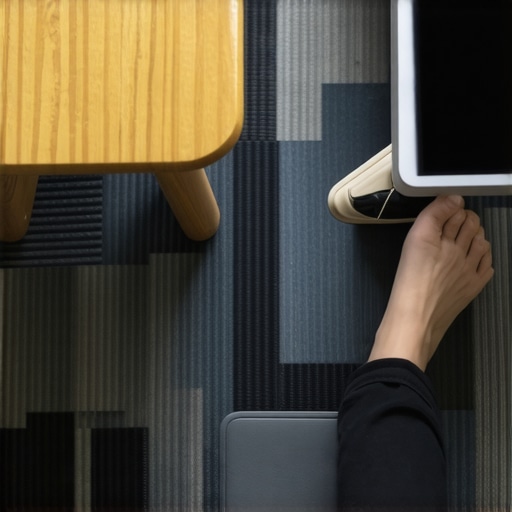
How can I maintain these gains for years?
Consistency beats intensity every single time. You don’t need a grueling two-hour gym session to fix your back; you need three minutes of focused, intentional movement peppered throughout your day. I personally use the 3-minute evening routine for a less stiff morning as a hard reset before I climb into bed. It signals to my nervous system that it’s time to let go of the day’s accumulated postural stress. Looking toward the future, I believe we are moving toward an era of ‘passive mobility.’ I predict we will soon see smart floors and desks that use haptic feedback to subtly nudge our bodies into new positions without us even thinking about it. This will make the concept of ‘static’ furniture completely obsolete. Dr. Galen Cranz, a professor at UC Berkeley and author of the seminal work The Chair: Rethinking Culture, Body, and Design, emphasizes that the body is simply not designed for the fixed 90-degree angles of traditional furniture. Her research highlights that ‘the next position is the best position.’ This philosophy is exactly why I rotate between standing, perching on a tall stool, and even kneeling. It ensures that chiropractic adjustments unlock a pain-free lifestyle today because the adjustment isn’t constantly fighting against eight hours of a single, locked-in posture. If you really want to level up your physical health, I challenge you to try this advanced tip: for the next three days, don’t stay in the exact same stance for more than five minutes. Shift your weight, lift one foot, or tilt your pelvis. You’ll be amazed at how much energy you have left by the end of the day. For more detailed strategies on building these habits, dive into the ultimate guide to improving mobility and posture in 2025.
The Bitter Pill I Swallowed About Standing Still
After months of trial and error, I realized that standing still is just another form of self-imposed rigidity. Here are a few realizations that changed my perspective on office health:
- Pain is a messenger, not a malfunction. When my feet burned, I used to think I needed more foam. Now, I know it means I haven’t moved enough and my tissues are starved for blood flow.
- Static is the enemy of the spine. Whether sitting or standing, the lack of variation is what causes the ‘guarding’ response in our nervous system, leading to that familiar stiffness.
- Ergonomics is a verb, not a noun. It’s something you do through constant movement and micro-adjustments, not just something you buy at a high-end furniture store.
My Minimalist Toolkit for Pain-Free Work
You don’t need a thousand-dollar setup to feel better tomorrow. I rely on a few simple things to keep my body functional. First, a simple high-density lacrosse ball for rolling out my arches while I’m on a call; it is one of those mobility hacks for a more active life that costs almost nothing but yields massive results. Second, I always suggest reading The Chair by Galen Cranz to understand why our modern environments are so taxing. Finally, I maintain my alignment with professional help, because why chiropractic care is your secret weapon for better posture usually comes down to resetting the body’s internal map so you can move with precision.
Build a Body That Adapts Rather Than Breaks
Making the switch to a healthier workspace isn’t about achieving a rigid, military-style posture from day one. It is about listening to the subtle signals your body sends and responding with variety and grace. By focusing on how chiropractic adjustments enhance posture and mobility and staying consistent with your daily micro-movements, you can finally enjoy that standing desk without the screaming heels or a throbbing lower back. You have the tools now to take control of your physical longevity and turn your office into a place of health rather than a source of strain. For a deep dive into long-term habits, explore the ultimate guide to improving mobility and posture in 2025. What is the very first thing that starts hurting when you’ve been standing for more than an hour? Let me know in the comments below!