

I was hunched over, struggling to tie my left sneaker, when a sharp, electric bite in my groin made me gasp and stand bolt upright. For months, I’d been telling myself I was just “getting older” or that I’d had a particularly hard leg day, but this was different. This wasn’t a muscle ache; it felt like a mechanical block, as if two gears in my hip were grinding together. If you’ve ever felt that frustrating “catch” when you try to pull your knee toward your chest or wondered how to fix a pinch in your hip when you squat deep, you know exactly the kind of silent desperation I was feeling. It makes you hesitant to move, hesitant to exercise, and eventually, hesitant to even get out of a car. Today, I want to share the exact realization that changed everything for me and the one daily movement that finally gave my hip joint the breathing room it desperately needed.
My journey from a stuck hip to pain-free squats
I spent the first three months of my hip pain making a massive, common mistake: I thought my hip flexors were just “tight” and needed to be punished with more stretching. I would lunge and pull and strain, thinking if I could just lengthen the muscle, the pinch would go away. In reality, I was just jamming the head of my femur further into the socket, making the inflammation worse. This is a classic trap many of us fall into, much like why your hamstring stretches arent fixing your tightness—we treat the symptom rather than the mechanics. I finally learned that hip impingement, or FAI, isn’t always about muscle length; it’s about how the bone sits in the joint space. According to a study in the Journal of Orthopaedic & Sports Physical Therapy, nearly 30% of athletes show signs of impingement on imaging without even knowing it, but when it starts to hurt, your body is telling you that the “clearance” is gone. I had to stop the aggressive stretching and start focusing on joint centration. Have you ever felt like your hip literally “locks” up after you’ve been sitting at your desk for too long?
Does one move really make that much difference?
You might be skeptical that a single daily adjustment could undo years of sitting or heavy lifting. I was too. I thought I needed a complex 15-minute flow to open up sticky hips every single morning just to function. But the truth is, consistency beats intensity every time. The move I’m going to show you works by creating “posterior glide,” essentially teaching your hip bone to sit back in its pocket instead of sliding forward and pinching the sensitive labrum. This is the same principle behind why your hip feels stuck when you try to cross your legs. When we fix the positioning, the “tightness” we feel often vanishes because the body no longer feels the need to guard the joint with muscle tension. It’s a total game-changer for anyone who wants to stay active without feeling like their skeleton is fighting against them.
Reset your hip socket with banded distraction
To stop the grinding sensation in your hip, we have to move beyond soft tissue and address the joint capsule itself. Think of your hip joint like a trailer hitch. If the ball (your femur) isn’t perfectly centered in the socket, the hitch grinds and eventually gets stuck. For most of us, especially those who sit for hours, that ball slides too far forward in the socket. This is where the ‘pinch’ comes from when you try to squat or bring your knee to your chest. We use a heavy-duty resistance band to provide what we call ‘posterior distraction’—a fancy way of saying we are pulling the bone back into the center of the pocket. This isn’t just a stretch; it is one of those improving posture through mobility practical chiropractor strategies that changes the mechanical environment of the joint. 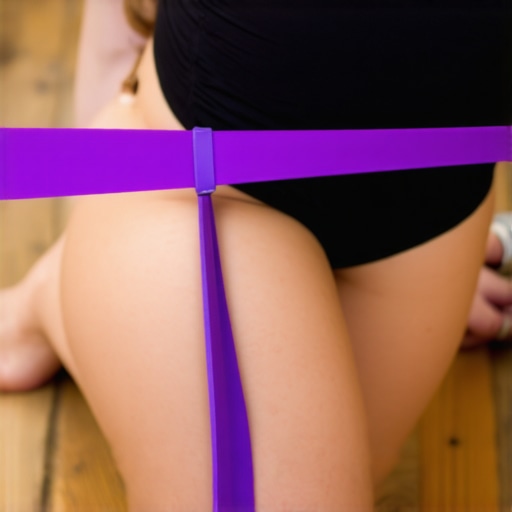
Anchor the band at the highest point of your thigh
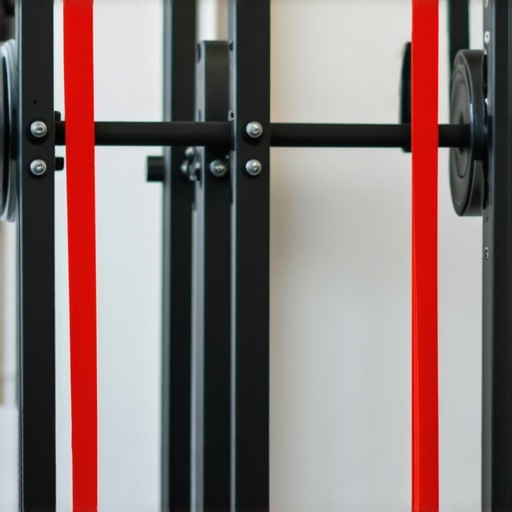
The biggest mistake I made when I first started this was placing the band too low on my leg. I remember being in a crowded gym, sweating over a thick purple band, only to realize it was just pulling on my skin and making my knee feel weird. You have to hike that band up as high as it will go—literally right under your gluteal fold. Anchor the other end to a squat rack or a heavy table leg. Step out until there is significant tension pulling your hip backward. This tension is the ‘secret sauce’ that creates the space you’ve been missing. If you have been struggling with the hip hinge fix for chronic lower back aches, you’ll likely find that once the hip is centered, your lower back stops trying to compensate for the lack of hip depth.
Drive the tension deep into the joint
Once the band is pulling your hip back, drop into a half-kneeling position (one knee down, one foot forward). The leg with the band around it should be the one with the knee on the ground. Slowly rock your hips forward and backward, but focus on the ‘back’ part. Let the band pull the femur into the back of the socket. You aren’t trying to force a muscle to relax; you are trying to convince the nervous system that the joint is safe. I spent years thinking the truth about foam rolling your lower back would save my hips, but until I actually reset the femoral head, the relief was always temporary. When you feel that subtle ‘opening’ in the front of the hip, hold it for at least two minutes.
Why your pelvis position makes or breaks the move
A common pitfall is letting your lower back arch excessively during this distraction. If you let your back cave in, you lose the leverage on the hip joint. You must keep a slight ‘tuck’ in your tailbone. Imagine your pelvis is a bowl of water, and you don’t want a single drop to spill out the front. This stabilization is part of the link between mobility and posture that many people miss. By keeping the core braced, you isolate the movement to the hip capsule. This is significantly more effective than a 15-minute flow to open up sticky hips because it targets the specific mechanical obstruction. When I finally mastered this pelvic tuck while under band tension, that ‘electric bite’ in my groin disappeared almost instantly during my next set of squats.
Most people think that ‘good posture’ is a position you hold like a statue, but that’s a dangerous trap. If you try to force yourself into a rigid upright stance all day, you will quickly find out why your perfect posture is actually causing muscle fatigue. Your body isn’t meant to be frozen; it is meant to be dynamic. True chiropractic adjustments aim to restore fluid movement, not lock you into a specific, uncomfortable angle.
Let’s talk about the ‘Oops’ factor: the over-stretcher. I see people at the gym constantly wrenching their necks or hips because they feel ‘tight.’ The nuance they miss—and the one that changed my clinical approach—is that tightness is often a protective tension, not a short muscle. If you keep stretching a joint that is already unstable, your brain will just tighten the muscles further to protect you from an injury. This is exactly why most posture braces actually make your back weaker; they provide a false sense of security while your stabilizing muscles essentially ‘go to sleep’ and atrophy.
Why does my hip still feel ‘stuck’ even though I am flexible?
This is the million-dollar question for the advanced mover. You might have a massive range of motion but zero control at the end of that range. This is where ‘joint centration’ becomes the missing link. A study published in the Journal of Bodywork and Movement Therapies highlights that sensory-motor control and the ‘Neutral Zone’ of the joint are just as critical as the mechanical range itself. If your femur isn’t centered in the socket because your stabilizers aren’t firing, no amount of passive stretching will fix the ‘pinch.’ You are simply stretching a dysfunctional system. 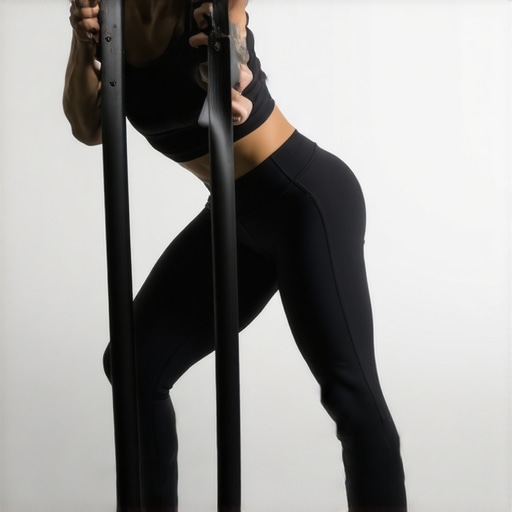
Instead of just trying to ‘open’ the hip, you need to ‘own’ the hip. This means integrating the banded distraction we discussed with active core bracing. When you create space in the joint, you must immediately follow it up with a movement that challenges your stability in that new space. This is the core of the link between mobility and posture. Without that active ‘re-wiring,’ your brain will revert to its old, tight patterns within twenty minutes of leaving the gym. Have you ever fallen into this trap of stretching the same spot for years without it ever actually getting looser? Let me know in the comments—I’d love to hear your experience with the ‘tightness’ loop.
Why a cheap grocery store band won’t cut it
When I started this journey, I tried to save a few bucks by using those flimsy, colorful bands you find in the ‘fitness’ aisle of the local supermarket. Within two weeks, one snapped and slapped my thigh so hard I had a welt for a week. More importantly, they simply didn’t provide enough lateral tension to actually shift the femoral head. For joint distraction, you need serious resistance. I personally use the Rogue Monster Bands (the green or blue ones) because they provide the 50-100 pounds of tension required to actually overcome the strong ligaments surrounding the hip. This isn’t just about ‘stretching’; it’s about mechanical leverage. If you aren’t using a band that feels slightly intimidating, you aren’t getting the mobility hacks simple adjustments for a more active life that actually stick. Research by Dr. Brian Mulligan, the creator of the ‘Mulligan Concept’ of Mobilization with Movement, emphasizes that the force applied must be sustained and specific to the joint plane to create lasting change in the capsule.
How do I maintain these hip gains over time?
Maintenance isn’t about doing a two-hour session every Sunday; it’s about micro-dosing your movement. I’ve found that the most successful way to stay mobile is to tie your joint resets to existing habits. For me, that means doing my banded distractions right after I finish my last set of squats or deadlifts while the joint is warm and the nervous system is already ‘listening.’ If you wait until you’re cold and stiff at 9 PM on the couch, your body will fight you. Integrating the ultimate guide to improving mobility and posture in 2025 into your daily flow makes it effortless. I also recommend checking your pelvic alignment during mundane tasks; learning the bracing technique that protects your spine during heavy yard work or even while standing in the grocery line can prevent the ‘reset’ from being undone by poor daily habits.
The future of spinal health is digital
I predict that in the next few years, we are going to see a massive shift toward wearable biofeedback for joint positioning. We already have watches that track heart rate, but soon we’ll have sensors integrated into our clothing that vibrate the moment your hip shifts into that ‘pinching’ anterior tilt or your lower back loses its neutral curve. This real-time data will take the guesswork out of improving posture through mobility practical chiropractor strategies. Until then, we have to rely on our own internal sensors. If you want to keep your progress, you have to master the core move that prevents lumbar disc bulges—the abdominal brace. It’s the glue that holds your mobility work together. My challenge to you today: don’t just read this and nod. Go find a heavy band, anchor it to something that won’t move, and spend exactly two minutes in a banded distraction. Your hips will thank you before you even stand back up.
The Truth About Why My Hips Stayed Stuck for Years
For a long time, I treated my body like a collection of separate parts rather than a single, integrated system. Here are the lightbulb moments that finally fixed my ‘pinch’ and changed my approach to joint health:
- Stop blaming the muscle. I realized that my hip flexors weren’t actually short; they were working overtime because my joint wasn’t centered. Once the bone sat correctly, the muscle let go on its own.
- The mirror is a liar. I used to think I looked ‘upright,’ but I was actually over-extending my low back to compensate for stiff hips. I had to learn how to fix the way you stand in line to save your hips just to stop the daily irritation from recurring.
- Habits beat heroes. Doing one massive stretching session on Sunday didn’t matter if I spent the rest of the week in a position that jammed the joint. Small, daily mobility boosts for posture are what actually stick.
- Respect the click. I stopped ignoring that small ‘pop’ or ‘catch’ during my warmup. It was a mechanical warning, not a soundtrack to my workout.
My Go-To Mobility Arsenal
If you are serious about fixing your hip impingement, you need more than just a yoga mat. These are the tools that changed the game for me and why they are non-negotiable:
- Heavy-Duty Resistance Bands: As I mentioned, the Rogue Monster Bands are essential. You need that 50-100 lbs of pull to move the hip capsule. A light band is just skin-deep. #IMAGE_PLACEHOLDER_E#
- The Mulligan Concept: This is a manual therapy approach focused on ‘mobilization with movement.’ It’s the gold standard for joint-based issues and completely changed how I view the effectiveness of professional chiropractic adjustments.
- A Targeted Morning Flow: I swear by the morning routine that stops your back from clicking because it addresses the spine and hips together before I even get into my car for the commute.
Reclaim Your Squat and Your Freedom
You aren’t ‘getting old’ and your hips aren’t permanently broken. You are likely just dealing with a mechanical traffic jam that needs a little bit of space and some better signaling to your brain. When you start focusing on joint centration rather than just stretching through pain, you’ll find that your squats feel deeper and your body feels lighter. Remember that understanding why sitting cross-legged is wrecking your hips is often about the constant pressure we put on the joint capsule over time. Take it slow, use the band, and own your movement. Have you ever felt that annoying ‘catch’ in your hip while squatting? Let me know in the comments below if this banded reset helps you clear that pinch!