

We have all been there. You sit down on a Friday evening to watch just one episode of that new sci-fi series, and suddenly it is 2:00 AM. You have finished the entire season, and your body feels like it has solidified into the cushions. When I finally stood up after my last epic movie marathon, my hips let out a collective, metaphorical scream. I could barely straighten my legs. In my early days as a mobility enthusiast, I made the classic mistake of immediately jumping into deep, aggressive lunges to fix this stiffness. All that did was strain my already angry hip flexors. It turns out, forcing cold, locked-up muscles into intense positions is a recipe for disaster.
The Real Reason Sitting Kills Your Hip Mobility
When you sink into a soft sofa for hours, your hips are kept in constant flexion. Your glutes turn off completely, and your hip flexors shorten and tighten up. I used to think my back was the main issue, but I soon realized that the connection between hip tightness and lower back spasms is incredibly direct. If your hips cannot move, your lower back has to pick up the slack. To make matters worse, most of us do not sit correctly; we slouch back and compress our lumbar discs. If you want to keep enjoying your favorite shows without the physical tax, you need to learn the best way to sit on a sofa to protect your discs. But when the damage is already done, a gentle, passive approach is always better than forcing a deep stretch.
Is a simple couch stretch actually worth the hype?
You might be skeptical that a lazy-looking stretch can undo hours of binge-watching. I certainly was. However, targeted passive stretching is highly backed by science. According to a study published in the Journal of Sports Science & Medicine, prolonged static positions require low-intensity, longer-duration stretches to safely restore tissue elasticity without triggering a protective muscle spasm. By using the couch itself for support, you can systematically release the tension in your anterior hip chain without stressing your knee joints or lower back. It is a simple, highly effective strategy that fits right into your lazy Sunday routine. Have you ever stood up from a long movie only to find your hips completely locked in place? Let me know in the comments below, because today we are going to fix that exact issue with a simple couch-potato stretch you can do while the credits roll.
The 3-Step Sofa Reset to Reclaim Your Hip Alignment
Restoring locked-up joints after a long sit requires a systematic approach. Think of your tight hips like a stubborn, coiled spring. If you pull both ends suddenly, it snaps or deforms. Instead, you have to heat the spring up first and gently ease it open. This routine is designed to do exactly that, using your living room sofa as a tool to leverage your body into proper pelvic alignment.
Step 1: The Assisted Sofa Low Lunge
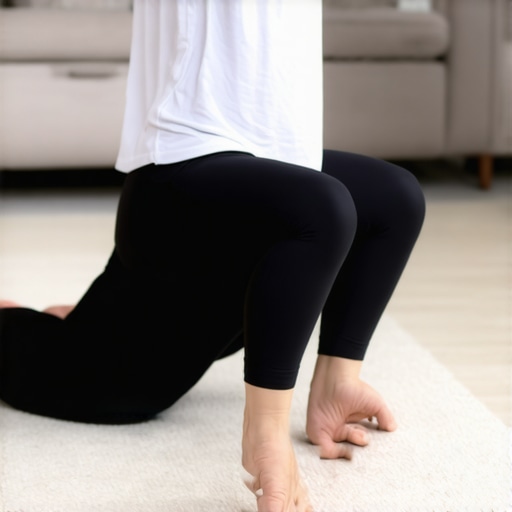
Start by kneeling on the floor facing away from your couch. Carefully place your right knee near the base of the sofa, letting your right foot rest vertically against the cushions behind you. Step your left foot forward into a wide lunge, keeping your left knee directly above your ankle. Keep your hands on your front thigh for balance. If this feels too intense, push your body slightly forward away from the sofa cushion to reduce the angle of knee flexion. Focus on tucking your tailbone under. This small pelvic adjustment is what targets the deep psoas muscle, preventing the stretch from dumping pressure into your lower back.

Step 2: Activating the Glutes to Force Hip Release
Once you are in position, do not just hang out there passively. This is the exact mistake I made during a cold winter evening back in 2021. I fell asleep in a deep hip stretch while watching a documentary, only to wake up with a burning sensation in my groin. True progress happens when you combine passive length with active tension. To do this, squeeze your right glute muscle as hard as you can for five seconds, then release. This biological phenomenon, known as reciprocal inhibition, forces the opposing muscle group—your tight hip flexors—to relax. Repeating this contract-relax cycle five times will yield a deeper release than twenty minutes of static hanging.
Step 3: The Lateral Reach for Lateral Chain Release
Now that your front hip is open, it is time to release the side muscles. While keeping your pelvic tuck and your right glute engaged, slowly raise your right arm straight up toward the ceiling. Gently lean your torso to the left, away from the back leg. You will feel an intense but satisfying stretch travel from your hip crest up into your obliques and side ribs. Hold this position for three deep belly breaths, focusing on expanding your ribcage. Incorporating these simple movement patterns can act as excellent mobility boosts for posture, helping reset your spine after hours of compression.
How to Maintain Your Newly Opened Hips Every Day
Stretching once is a quick fix, but creating lasting change requires a change in daily habits. When your joints remain restricted, they alter how your entire lower body moves. This biomechanical compensation is often the hidden link between your ankles and your chronic hip ache. To prevent your body from instantly snapping back into its old, hunched pattern, you need to active-proof your posture. Try standing up every time a new episode starts, or perform the simple hip reset for people who sit all day to keep blood flowing and maintain joint lubrication before stiffness takes root.
When you have been melting into your sofa for a long evening of streaming, the sudden realization of how stiff you are usually prompts an immediate reaction: you want to stretch as deep and as hard as possible. We have all done it. But as a mobility specialist, I have to tell you that this is where most people get it completely wrong. There is a massive, underlying nuance to restoring your body that conventional wisdom completely ignores. Let’s dig deeper into why your recovery efforts might actually be keeping you locked in a cycle of chronic tightness.
The Core-Stability Illusion That Ruins Hip Release
Everyone tells you to stretch your hip flexors, but in my experience, aggressively stretching a muscle that has been shortened for hours without stabilizing your pelvis first is completely useless. When you force a deep stretch on an unstable pelvis, your body senses danger. It thinks your hip joint is about to subluxate, so it triggers a protective spasm to lock the joint down even tighter. A study published in the Archives of Physical Medicine and Rehabilitation highlights that targeted neural stabilization must precede passive lengthening to prevent compensatory joint strain. If you do not stabilize your core, you are just pulling on a sensitive nerve package and pretending it is a muscle release.
Why does stretching my hamstrings make my lower back feel tighter?
This is one of the most common questions I get from people trying to fix their posture. They spend hours reaching for their toes, only to find their lower back aching even more the next day. The truth is that your hamstrings are often feeling tight because they are working overtime to hold your pelvis in place because your deep hip flexors and glutes have completely checked out. When you blindly stretch them, you strip away the only stability your pelvis has left. Instead of forcing deep, passive stretches, you should focus on why stretching your hamstrings won’t fix your tight back and look at stabilizing your pelvis first. This is where professional guidance can make all the difference, helping you understand how how chiropractic adjustments enhance posture and mobility by aligning the joints before you stretch the surrounding soft tissues.
The Trap of Passive Adjustments Without Active Integration
Another classic mistake is relying solely on passive therapies to fix your alignment issues. Getting a professional adjustment can feel like a miracle, instantly relieving pressure in your joints. However, if you immediately go back to slumping on your sofa without retraining your nervous system, your muscles will pull your bones right back into their old, dysfunctional positions. To make lasting changes, you have to pair passive relief with active, targeted movement. Learning how to properly incorporate mobility boosts for posture into your day ensures that your nervous system registers the new, open joint angles as safe and permanent. Have you ever fallen into this trap of stretching out a sore muscle only to have it tighten up again an hour later? Let me know in the comments below, and let’s start focusing on stability rather than just raw flexibility.
To stop your body from reverting to a stiff, slouched state after a long day of sitting, you need to active-proof your posture. True physical freedom is not a one-time event; it is a continuous maintenance loop. Over the years, I have tested countless recovery gadgets, from vibrating foam rollers to expensive percussion guns. While those fancy tools have their place, the real secret to staying open lies in inexpensive, targeted equipment and structured daily habits that build long-term resiliency. If you want to sustain the changes you make on the yoga mat or the treatment table, you have to prioritize daily micro-doses of movement.
How do I maintain my mobility gains over time?
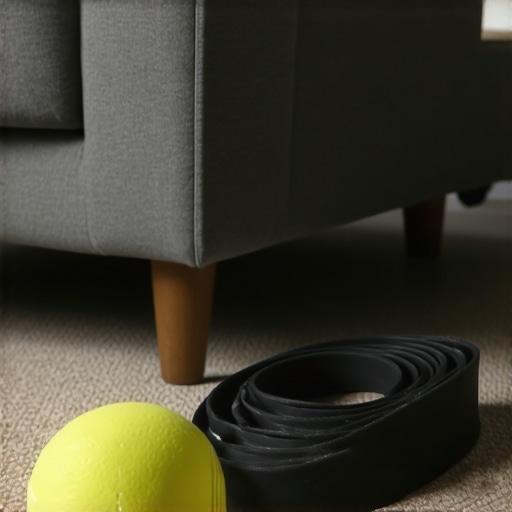
Consistency beats intensity every single time. To maintain your joint health, you need to transition away from aggressive, desperate weekend stretching sessions and focus instead on gentle, daily resets. Personally, I rely on a simple 50-millimeter lacrosse ball and a heavy-duty, loop-style resistance band. By spending just two minutes a day using the lacrosse ball to roll out my glutes and the bottom of my feet, I can keep my entire posterior chain relaxed. Furthermore, keeping your joints properly aligned through regular clinical care is a game-changer; understanding how chiropractic adjustments enhance posture and mobility provides the perfect foundation, making your daily homework ten times more effective because your bones are actually starting in the right place.
The Tech-Forward Future of Movement Longevity
As we look toward the future of physical wellness, the intersection of technology and biomechanics is rapidly evolving. We are already moving past generic posture trackers that simply buzz when you slouch. According to Dr. Stuart McGill, a leading authority on spine mechanics at the University of Waterloo, real-time biofeedback that measures pelvic tilt and lumbar shear is the future of preventing chronic lower back fatigue. Within the next few years, I predict we will see smart furniture integrated with wearable sensors that subtly adjust your sitting angle before your hip flexors even have a chance to tighten up. Until then, we have to manually take control of our environments. Using smart tools to schedule regular movement breaks is the easiest way to incorporate mobility boosts for posture without disrupting your busy workday.
Build a Lifelong Sanctuary for Your Joints
If you truly want to live without chronic stiffness, you have to treat your body like a high-performance machine that requires daily calibration. Combining passive structure with active strength is the only path forward. To begin, I highly encourage you to try the advanced lateral chain reach we discussed earlier right after your next long driving shift or office meeting. Do not let your body calcify into the shape of your chair. If you are ready to take your physical alignment to the next level and design a customized recovery plan, explore the ultimate guide to improving mobility and posture in 2025 to discover advanced, clinical-grade strategies that will keep you moving fluidly for decades to come.
When you have been melting into your sofa for a long evening of streaming, the sudden realization of how stiff you are usually prompts an immediate reaction: you want to stretch as deep and as hard as possible. We have all done it. But as a mobility specialist, I have to tell you that this is where most people get it completely wrong. There is a massive, underlying nuance to restoring your body that conventional wisdom completely ignores. Let’s dig deeper into why your recovery efforts might actually be keeping you locked in a cycle of chronic tightness.
The Core-Stability Illusion That Ruins Hip Release
Everyone tells you to stretch your hip flexors, but in my experience, aggressively stretching a muscle that has been shortened for hours without stabilizing your pelvis first is completely useless. When you force a deep stretch on an unstable pelvis, your body senses danger. It thinks your hip joint is about to subluxate, so it triggers a protective spasm to lock the joint down even tighter. A study published in the Archives of Physical Medicine and Rehabilitation highlights that targeted neural stabilization must precede passive lengthening to prevent compensatory joint strain. If you do not stabilize your core, you are just pulling on a sensitive nerve package and pretending it is a muscle release.
Why does stretching my hamstrings make my lower back feel tighter?
This is one of the most common questions I get from people trying to fix their posture. They spend hours reaching for their toes, only to find their lower back aching even more the next day. The truth is that your hamstrings are often feeling tight because they are working overtime to hold your pelvis in place because your deep hip flexors and glutes have completely checked out. When you blindly stretch them, you strip away the only stability your pelvis has left. Instead of forcing deep, passive stretches, you should focus on why stretching your hamstrings won’t fix your tight back and look at stabilizing your pelvis first. This is where professional guidance can make all the difference, helping you understand how how chiropractic adjustments enhance posture and mobility by aligning the joints before you stretch the surrounding soft tissues.
The Trap of Passive Adjustments Without Active Integration
Another classic mistake is relying solely on passive therapies to fix your alignment issues. Getting a professional adjustment can feel like a miracle, instantly relieving pressure in your joints. However, if you immediately go back to slumping on your sofa without retraining your nervous system, your muscles will pull your bones right back into their old, dysfunctional positions. To make lasting changes, you have to pair passive relief with active, targeted movement. Learning how to properly incorporate mobility boosts for posture into your day ensures that your nervous system registers the new, open joint angles as safe and permanent. Have you ever fallen into this trap of stretching out a sore muscle only to have it tighten up again an hour later? Let me know in the comments below, and let’s start focusing on stability rather than just raw flexibility.
To stop your body from reverting to a stiff, slouched state after a long day of sitting, you need to active-proof your posture. True physical freedom is not a one-time event; it is a continuous maintenance loop. Over the years, I have tested countless recovery gadgets, from vibrating foam rollers to expensive percussion guns. While those fancy tools have their place, the real secret to staying open lies in inexpensive, targeted equipment and structured daily habits that build long-term resiliency. If you want to sustain the changes you make on the yoga mat or the treatment table, you have to prioritize daily micro-doses of movement.
How do I maintain my mobility gains over time?
Consistency beats intensity every single time. To maintain your joint health, you need to transition away from aggressive, desperate weekend stretching sessions and focus instead on gentle, daily resets. Personally, I rely on a simple 50-millimeter lacrosse ball and a heavy-duty, loop-style resistance band. By spending just two minutes a day using the lacrosse ball to roll out my glutes and the bottom of my feet, I can keep my entire posterior chain relaxed. Furthermore, keeping your joints properly aligned through regular clinical care is a game-changer; understanding how chiropractic adjustments enhance posture and mobility provides the perfect foundation, making your daily homework ten times more effective because your bones are actually starting in the right place.
The Tech-Forward Future of Movement Longevity
As we look toward the future of physical wellness, the intersection of technology and biomechanics is rapidly evolving. We are already moving past generic posture trackers that simply buzz when you slouch. According to Dr. Stuart McGill, a leading authority on spine mechanics at the University of Waterloo, real-time biofeedback that measures pelvic tilt and lumbar shear is the future of preventing chronic lower back fatigue. Within the next few years, I predict we will see smart furniture integrated with wearable sensors that subtly adjust your sitting angle before your hip flexors even have a chance to tighten up. Until then, we have to manually take control of our environments. Using smart tools to schedule regular movement breaks is the easiest way to incorporate mobility boosts for posture without disrupting your busy workday.
Build a Lifelong Sanctuary for Your Joints
If you truly want to live without chronic stiffness, you have to treat your body like a high-performance machine that requires daily calibration. Combining passive structure with active strength is the only path forward. To begin, I highly encourage you to try the advanced lateral chain reach we discussed earlier right after your next long driving shift or office meeting. Do not let your body calcify into the shape of your chair. If you are ready to take your physical alignment to the next level and design a customized recovery plan, explore the ultimate guide to improving mobility and posture in 2025 to discover advanced, clinical-grade strategies that will keep you moving fluidly for decades to come.
What My Worst Injuries Taught Me About Hip Mechanics
The hardest lesson I ever learned about physical health was that you cannot force your joints to submit. I used to think that pushing through a sharp pinch in my groin was a sign of mental toughness. Instead, it was my body crying out for core stability. When my hips locked up after hours of travel, my instinct was to perform violent, static stretches. That stubbornness set me back months. Now, I understand that true joint release requires establishing trust with your nervous system first. This means combining gentle adjustments with active muscle activation. Overcoming chronic stiffness requires you to drop the ego and focus on subtle, controlled movements rather than raw flexibility.
My Go-To Mobility Toolkit for Busy Days
You do not need a gym full of expensive equipment to keep your joints healthy. Over the years, I have narrowed down my personal recovery kit to just three highly effective, budget-friendly tools. First, a standard lacrosse ball is unmatched for pinpointing glute tension and restoring foot mechanics. Second, a heavy-duty, long-loop resistance band allows me to perform dynamic joint distraction, which gently creates space inside the hip socket. Finally, I regularly seek professional spinal alignments; understanding why chiropractic care is your secret weapon for better posture has completely changed how I sequence my daily movement work, as keeping the skeleton aligned makes every home stretch twice as effective.
Your Next Step Toward Pain-Free Movement
Reclaiming your natural alignment is not about achieving perfect flexibility overnight; it is about making small, consistent updates to how you move every single day. By starting with stable joints and integrating passive stretches with active strength, you can build a resilient body that resists the structural strain of modern life. Incorporating regular mobility hacks simple adjustments for a more active life will pay massive dividends as you age, keeping you active and pain-free. Have you ever struggled with the transition from deep stretching to active pelvic stabilization? Let me know your experiences in the comments below!