
Last Tuesday, I tried to stand up from my expensive ergonomic chair after a four-hour writing marathon and… nothing happened. My legs felt like they belonged to a rusted-out mannequin. I was stuck in a semi-crouch, waddling toward the kitchen like a confused penguin. It wasn’t just a bit of stiffness; it was a deep, dull ache radiating from my hip sockets right into my lower back. I realized in that moment that my body was literally molding itself into the shape of my seat. If you have ever felt that sudden ‘catch’ in your hip when you finally stand up for a coffee break, you know exactly the fear I felt.
Stop stretching your hips until they scream
For years, my go-to move was the aggressive lunging hip flexor stretch. I thought if I could just pull the muscle hard enough, it would finally let go. I was wrong. In fact, I eventually learned that my gentle stretching was actually causing more inflammation and keeping me in a cycle of pain. I was treating my body like a piece of cold plastic that needed to be forced into shape, rather than a living system that needed a neurological reset. Today, I am going to show you the exact move that changed everything for me—a simple hip reset that takes less than two minutes and actually sticks.
Is this hip reset just another fitness trend?
I get it. Every week there is a new ‘hack’ promising to fix your life. You might be wondering if your hips are too far gone or if you need a professional to ‘pop’ something back into place. While improving mobility and posture is a long game, the reset we are discussing is grounded in how our nerves communicate with our muscles. It is not about flexibility; it is about stability. When you sit all day, your brain ‘forgets’ how to engage your glutes, leaving your hip flexors to do all the heavy lifting. This imbalance is why you might also be dealing with knee pain caused by tight hip flexors without even realizing the two are connected.
Your chair is winning the war against your pelvis
The reality is quite startling: according to research cited by the Mayo Clinic, people who sit for more than eight hours a day with no physical activity have a risk of dying similar to the risks of dying posed by obesity and smoking. It sounds dramatic, but your pelvis is the foundation of your entire skeletal structure. When it stays locked in a seated position, your hamstrings shorten, your glutes go dormant, and your lower back begins to compensate for the lack of movement. I made the mistake of ignoring the warning signs until I couldn’t ignore the chronic lower back aches anymore. We are going to stop that cycle right now. Have you noticed that your hips feel ‘pinched’ after a long Zoom call? Let’s dive into the mechanics of why that happens and how this 30-second move opens up tight hips effectively.
Trade your lunges for a neurological override
Think of your tight hips like a tripped circuit breaker. No matter how much you pull on the light switch (stretching the muscle), the light won’t turn on until you reset the breaker at the source. This source is your nervous system. When you spend hours seated, your brain sends a constant signal to your hip flexors to stay shortened. If you try to yank them long with a lunge, your body perceives it as a threat and actually tightens up further to protect the joint. This is exactly why your gentle stretching is actually causing more inflammation rather than relief. To fix this, we need to provide a new signal that tells the brain the front of the hip is safe to let go because the back of the hip—the glutes—is ready to work.
Reset your pelvic floor to stop the pinching
The first step is identifying your current alignment. Most of us walk around with an ‘anterior pelvic tilt,’ where our tailbone sticks out and our lower back arches excessively. This position physically jams the head of your femur into the front of the hip socket. Learning how to fix your pelvic tilt for a flatter stomach look isn’t just about aesthetics; it is about creating space in the joint. Before you move, place your hands on your hip bones and imagine your pelvis is a bucket of water. If you are sitting or standing poorly, you are ‘spilling’ water out the front. Level the bucket by tucking your tailbone slightly under until your core feels engaged.
Turn on the glute switch
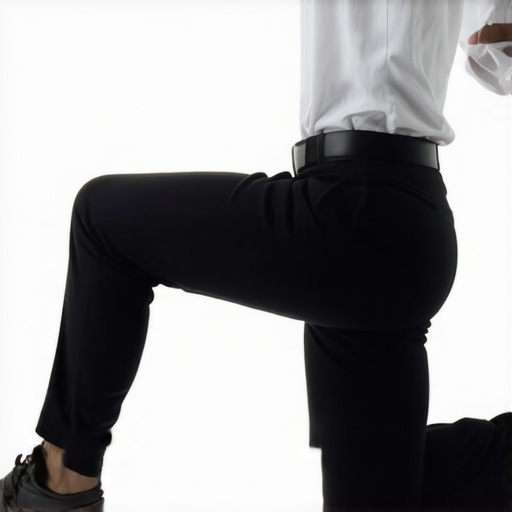
Once your pelvis is level, you have to wake up the muscles that have been ‘sleeping’ while you work. This is the part most people skip. If you find why your glutes fail to activate during lunges, it is likely because your brain is over-relying on your quads and lower back. To fix this, perform a ‘glute squeeze’ while in a half-kneeling position. The goal isn’t to move forward, but to tighten the glute of the trailing leg as hard as possible. This creates ‘reciprocal inhibition’—a fancy way of saying that when one side of a joint contracts, the brain automatically tells the opposite side to relax. It is the most efficient way to ‘unstick’ a tight hip flexor without any aggressive pulling.
Run the 30-second drill anywhere
Last month, after a delayed flight left me cramped in a middle seat for six hours, I literally couldn’t stand up straight at the baggage claim. I didn’t look for a space to do a full yoga routine; I found a wall, stood with my back against it, and executed this 30-second reset. I tucked my pelvis, drove my heels into the floor, and squeezed my glutes for ten seconds, followed by five deep diaphragmatic breaths. I felt my pelvis ‘drop’ back into place. This is one of those mobility hacks simple adjustments for a more active life that works because it addresses the neurological root of the tension. By combining these mobility hacks with a basic understanding of the link between mobility and posture, you can effectively run this 30-second move that opens up tight hips while waiting for your coffee to brew or between back-to-back meetings.
We need to address the elephant in the room: most ‘posture’ advice is actually making you stiffer. You have probably been told to ‘sit up straight’ or ‘pull your shoulders back’ until your mid-back burns. This is a mistake because the truth about perfect posture and why it doesnt exist is that your body is designed for movement, not statuesque stillness. When you force a rigid position, you are just trading one type of tension for another. True mobility is about the brain’s ability to control a joint through its entire range of motion, not just how far you can pull a limb.
Stop cracking your own back for temporary relief
One of the biggest traps I see people fall into—and I was guilty of this for years—is the ‘relief-seeking’ self-adjustment. If you find yourself cracking your own back every hour, you aren’t actually fixing a restriction. You are likely manipulating the ‘hypermobile’ segments—the parts of your spine that are already moving too much—while the truly ‘stuck’ segments remain frozen. This provides a temporary endorphin rush but leaves your nervous system more unstable in the long run. Professional chiropractic adjustments enhance posture and mobility by targeting the specific vertebrae that aren’t moving, rather than just the ones that make the loudest noise.
Why does my left hip always feel tighter than my right?
This is a question I get constantly from people who have already mastered the basics. It usually isn’t about the muscle itself, but rather a structural asymmetry in how we are built. Most humans have a natural ‘right-side’ bias due to our internal organ placement and how our diaphragm attaches. Research published in the Journal of Bodywork and Movement Therapies suggests that your breathing pattern determines your lower back stability because the diaphragm acts as a primary stabilizer. If you are breathing poorly, your brain will lock down the hip as a backup stabilizer. This is why your left hip always feels tighter than your right; it is your body’s way of trying to find a center that doesn’t exist.
The myth of the perfect posture mannequin
To get past this plateau, you have to stop looking at the hip in isolation. You need to look at the link between mobility and posture as a global conversation. Have you ever fallen into the trap of stretching the same spot for months without results? It is often because the brain doesn’t feel safe letting go of that tension until the core and deep neck stabilizers are firing correctly. Using expert chiropractic techniques in 2025 involves resetting these neurological pathways so your body naturally gravitates toward a neutral state. Have you ever fallen into this trap? Let me know in the comments, and let’s figure out which ‘signal’ your brain is missing.
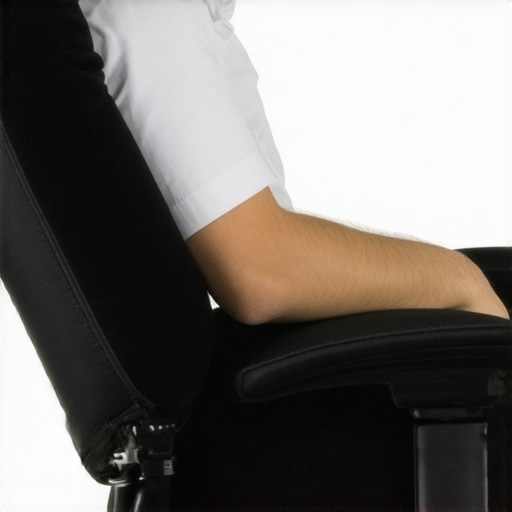
I have spent a small fortune on high-back ergonomic chairs and vibrating massagers, but I eventually learned that fancy gear is just a band-aid if you don’t have the right tools to maintain your progress. My favorite piece of equipment is actually a simple $20 foam cylinder. If you haven’t learned how to use a lumbar roll correctly in an office chair, you are missing out on the easiest way to prevent your pelvis from tipping backward during long work sessions. This isn’t just about comfort; it is about keeping your lumbar spine in its natural curve so your hip flexors don’t have to work overtime just to keep you upright. This is the ultimate desk setup trick for people who hate standing desks but still want to protect their discs.
Build a spine that doesn’t buckle under pressure
Maintenance isn’t about doing an hour of yoga every day; it’s about high-yield movements that provide the biggest ROI for your nervous system. I swear by the dead bug variation that actually protects your spine because it teaches your brain how to keep your ribs down and your core braced while your limbs are moving. Dr. Stuart McGill, a world-renowned expert in spine biomechanics at the University of Waterloo, emphasizes that core stability is about creating a ‘stiffness’ that protects the spine from micro-movements that lead to pain. When you combine these movements with periodic chiropractic adjustments that enhance posture and mobility, you are attacking the problem from both a structural and a functional perspective. Integrating the best exercises for building a spine that doesnt ache ensures your body stays resilient even when you’re forced to sit for hours.
How do I maintain this mobility when life gets chaotic?
The secret is to weave your resets into the ‘dead time’ of your day. I do the daily move that prevents hip impingement while I’m brushing my teeth and use the 3-minute evening routine for a less stiff morning to decompress before I hit the sheets. If you are struggling with consistency, start with the smallest possible win. My favorite is the 10-second move to reset your shoulders at work whenever you finish a phone call. These tiny mobility hacks stack up over time, preventing that ‘rusted-out’ feeling from returning.
The future of posture is hidden in your wearable tech
I predict that by 2026, we will see a massive shift away from passive stretching toward ‘haptic biofeedback.’ Instead of trying to remember to sit up, our smartwatches will detect the exact moment our glutes go dormant or our head slumps forward, sending a tiny pulse to trigger a neurological correction. We are moving toward a world where chiropractic adjustments unlock a pain-free lifestyle not just by fixing what’s broken, but by optimizing how our tech-heavy lives interact with our ancient biology. I want you to try this right now: the next time you feel that mid-back burn, execute the 10-second shoulder reset and focus on breathing into your back ribs. It is the fastest way to tell your brain that you’re safe and ready to move.
Three Hard Truths About Living Without Hip Pain
Looking back at my journey from that rusted-out mannequin feeling to moving with ease, the biggest shock was realizing that I couldn’t just ‘stretch’ my way out of a desk job. I had to learn that the brain prioritizes safety over flexibility every single time. Here are the lightbulb moments that finally made the difference for me:
- I stopped looking for ‘tightness’ and started looking for ‘weakness.’ My hip flexors were only tight because my glutes were taking a permanent vacation while I sat.
- There is a massive difference between nerve pain and muscle soreness, and mistaking one for the other led me to push when I should have rested.
- Your body responds better to a 30-second ‘conversation’ (the reset) than a 30-minute ‘argument’ (aggressive stretching).
My Personal Shortcuts for Better Movement Every Day
I don’t believe in complicated routines that no one has time for. Instead, I rely on a few high-yield tools and strategies that keep me from sliding back into old habits. First, using a lumbar roll correctly was the cheapest investment I ever made for my daily comfort. It keeps my pelvis from tucking under and pulling on my lower back while I type. When I have to stand for long periods, I use the simple trick to standing for hours—shifting my weight mindfully to keep my core active. For those deep structural shifts that a foam roller just can’t reach, chiropractic care is your secret weapon for better posture and long-term joint health. I also recommend checking out mobility boosts for posture expert tips if you need a quick way to integrate these changes into a busy schedule.
#IMAGE_PLACEHOLDER_E#
Reclaiming the Freedom to Move Without Thinking
At the end of the day, your body isn’t a problem to be solved; it is a system designed to support your life. You don’t need a perfect skeletal structure to live without pain, but you do need to give your nervous system the right signals. By using these simple resets and staying consistent with small adjustments, you stop being a passenger in your own body. You deserve to stand up from your desk and feel light, balanced, and ready for whatever comes next. Which part of your body feels the ‘tightest’ after a long day at the desk—is it your hips, your neck, or your lower back? Let me know in the comments below!