
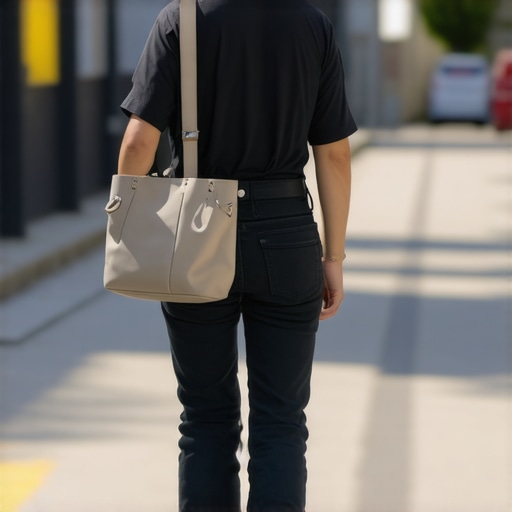
I still remember the afternoon my right shoulder finally staged a full-scale mutiny. I was power-walking to the train, my oversized canvas tote stuffed with a laptop, three notebooks, and a liter of water. Suddenly, a sharp, searing heat radiated from my neck down to my ribcage. I had to stop in my tracks, gasping, because it felt like my spine was literally being pulled into a permanent ‘C’ shape. For years, I ignored the warning signs, thinking a little stiffness was just the price of being productive. It turns out, I was committing a slow-motion crime against my own posture, and my dominant shoulder was paying the ultimate price.
Stop the One-Shoulder Lean Before Your Back Locks Up
We’ve all been there. You grab that beautiful, bottomless bag and fill it until the seams groan. But here is the cold, hard truth: your body isn’t a forklift. When you hang all that weight off one side, your muscles go into overdrive to keep you upright. This constant tug-of-war is exactly why your dominant side is always tighter than the other, creating a ripple effect of tension that can lead to chronic misalignment. I used to think I was being efficient by carrying everything at once. In reality, I was just setting myself up for a future of chiropractic adjustments to unlock a pain-free lifestyle. According to research published by Harvard Health, carrying a heavy bag on one shoulder causes the opposite side of the body to overcompensate, which eventually leads to muscle strain and potential disc issues. It’s not just a sore muscle problem; it’s a structural integrity problem. If you’ve ever noticed why your shoulders burn after a long day, it might not be the desk—it might be your commute. Today, I’m going to show you exactly how to distribute that load and keep your spine happy without ditching your favorite bag.
Is a tote bag really that much worse than a backpack?
I get it. Backpacks can feel a bit like middle school. You want the style of a tote but the comfort of an ergonomic rucksack. Skeptics often ask if the bag type actually matters if the weight is the same. The answer is a resounding yes. While a backpack distributes weight across both shoulders and the hips, a tote forces a single-sided load that wreaks havoc on your natural gait. However, you don’t have to give up your aesthetic entirely. Learning the proper way to carry a single strap bag can make all the difference in how your back feels by 5 PM. But I want to hear from you first—have you ever reached for your keys and realized your entire shoulder was frozen solid from a heavy bag? Tell me about your heavy bag struggles in the comments!
Fix the Load Instead of Your Posture
I remember standing in the middle of a grocery aisle, paralyzed by a sharp spasm because I tried to reach for a high shelf while my 12-pound work bag was still anchored to my right shoulder. It was a messy, embarrassing wake-up call that forced me to realize my body was constantly fighting a lopsided battle. To stop the cycle, you have to treat your bag like a piece of precision equipment rather than a bottomless pit. The first rule is a ruthless audit: if you haven’t used an item in three days, it doesn’t belong in your daily carry. Reducing the sheer mass is the most effective mobility hack you can implement immediately to save your cervical spine from unnecessary torque.
Pack Heavier Items Near Your Spine
Think of your bag like a lever. The further the weight sits from your center of gravity, the harder your muscles have to work to keep you upright. Place your laptop or heavy books in the internal pocket closest to your hip or back. When I started doing this, the “pulling” sensation in my neck diminished almost instantly. This simple change helps maintain the link between mobility and posture by preventing your torso from rotating under the weight. By keeping the load close, you reduce the strain on the levator scapulae muscle, which is often the culprit behind those agonizing knots.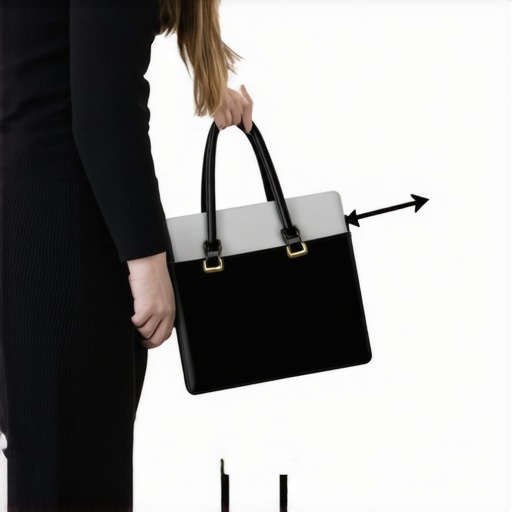
Switch Sides Every Two Blocks
We are creatures of habit, and most of us have a “favored” shoulder that feels more natural. However, keeping a bag on one side for a 30-minute commute is a recipe for structural disaster. Set a timer or use landmarks—like a specific coffee shop or bus stop—to remind yourself to swap sides. This prevents your obliques and quadratus lumborum from becoming chronically short on one side. If you ignore this, you’ll eventually find why your dominant side is always tighter than the other and may require professional intervention to reset your skeletal alignment.
Reset Your Frame with Targeted Movements
Carrying weight isn’t just about the act itself; it’s about how you recover once the load is gone. Once you drop the bag at your desk, your body remains in a “guarded” state, with the shoulder still hiked toward your ear out of muscle memory. You need to signal to your nervous system that the threat is gone. This is where mobility boosts for posture become your best defense against long-term injury.
The Wall Stretch That Fixes Slumped Shoulders Fast
I swear by this specific move after a long day of travel or commuting. Find a flat wall, place your forearms against it in a “goalpost” position, and slowly lean forward until you feel the chest open. This releases the pectoral muscles that get tight when you’re subconsciously clutching a bag strap. Implementing the wall stretch that fixes slumped shoulders fast counteracts the internal rotation caused by the bag’s weight. When I first tried this after a cross-country flight, I actually felt my upper back “unzip” as the tension let go. It’s about more than just feeling good; it’s about revolutionizing your posture with targeted mobility exercises so your spine doesn’t settle into a permanent slouch. If you feel a sharp catch when moving your arm, you are likely dealing with the reason why your shoulder clicks every time you reach for the seatbelt, which is often a sign of shoulder blade misalignment from improper carrying habits.
Why Your Obsession with Standing Straight is Backfiring
Let’s dig deeper into the mechanics of how we hold ourselves. We’ve been told since kindergarten to “stand up straight,” but here is the nuance most people miss: posture is a dynamic process, not a static pose. If you try to hold your body in a rigid, “perfect” position all day, you are actually restricting blood flow to your paraspinal muscles and creating a state of constant isometric tension. This is exactly why your perfect posture is actually causing muscle fatigue. In my experience, the healthiest spine isn’t the one that never moves; it’s the one that moves through its full range of motion frequently. Experts at the Mayo Clinic emphasize that “postural stress” occurs when you maintain any position for too long, even one that looks textbook-correct on the outside. The real goal is postural variability—the ability of your body to shift weight and engage different muscle groups so that no single structure bears the brunt of gravity for too long.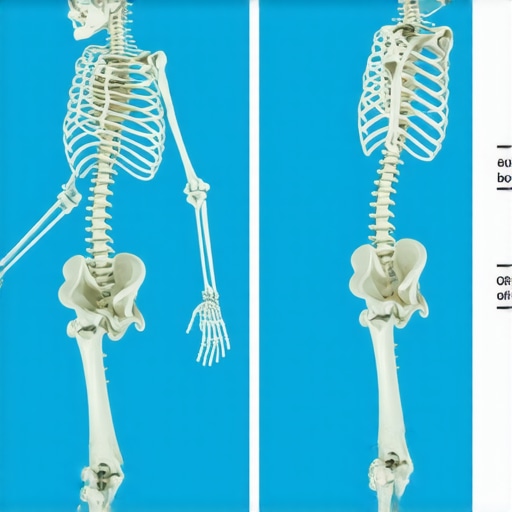
Stop Relying on Braces to Do the Work for You
One of the biggest traps I see patients fall into is buying those velcro posture correctors they see on social media. It seems like an easy fix to have a strap pull your shoulders back for you. But here is the “oops” factor: when a brace holds you up, your nervous system receives a signal that your stabilizer muscles are no longer needed. Over time, this leads to functional atrophy, meaning why most posture braces actually make your back weaker and leave you more prone to injury the second you take the garment off. You aren’t fixing the underlying structural imbalance; you’re just outsourcing your stability to a piece of nylon while your core goes to sleep. To truly fix the “one-shoulder lean” or the “commuter’s slump,” you must engage in active improving posture through mobility rather than passive restriction.
Can your quest for a “perfect” posture actually cause more fatigue?
Many advanced readers ask why they feel more exhausted after a day of conscious sitting than a day of lounging. The answer lies in the over-activation of the superficial muscles instead of the deep stabilizers. When you force a straight back, you’re often gripping your upper trapezius and latissimus dorsi, which are designed for power, not for eight hours of endurance. This is exactly what a chiropractor actually looks for during your first exam—the balance between your skeletal alignment and the neural signals controlling those muscles. A study published in the Journal of Manipulative and Physiological Therapeutics found that how chiropractic adjustments enhance posture and mobility is by resetting the proprioception, which is your brain’s internal map of where your body is in space. Without that neural reset, you’re essentially fighting your own reflexes every time you try to stand up tall. Have you ever fallen into this trap of trying to force yourself into a position only to end up in more pain? Let me know in the comments!
Put Your Spine on a Maintenance Schedule
I used to think of my visits to the clinic as a ‘fix-it’ shop. I’d walk in with a literal pain in the neck and walk out feeling like a new person. But the real magic happens in the weeks between those visits when you take ownership of your structural health. Maintaining your frame isn’t about doing an hour of yoga every morning; it’s about those 30-second mobility hacks that you pepper throughout your day. Think of it like brushing your teeth—you don’t wait for a cavity to start cleaning. I personally use a simple lacrosse ball for my upper back tension because it targets the specific tissue layers that a standard massage often misses. This is especially vital when you realize why your traps are always tight even after a massage; usually, it’s a deep-seated neural guarding that needs consistent, gentle pressure to release.
Why Your Recovery Tools Might Actually Be Hurting You
I see so many people go out and buy every gadget on the market—percussion guns, vibrating rollers, and high-tech wedges. But here is the catch: if you use them incorrectly, you are just bruising your muscles instead of releasing them. For example, the truth about foam rolling your lower back is that it can often cause more harm than good if you’re rolling directly over the lumbar spine where there isn’t much rib protection. Instead, I focus on the ‘hot spots’ around the hips and the mid-back. As Dr. Stuart McGill, a world-renowned expert in spine biomechanics and author of Back Mechanic, points out, the goal for most people shouldn’t be more flexibility, but rather ‘sufficient’ mobility paired with core stability. He argues that over-stretching the ligaments of the spine can actually lead to instability and more pain long-term.
How Do I Keep My Mobility Progress from Disappearing?
Consistency over intensity is the golden rule. Looking ahead to 2025, I predict we will see a massive shift toward wearable haptic feedback technology—clothing that gently vibrates when your shoulders begin to roll forward or when your pelvic tilt shifts out of alignment. This kind of ‘passive coaching’ will make the ultimate guide to improving mobility and posture in 2025 much more about real-time data than guesswork. For now, your best tool is a simple check-in every time you sit down. I’ve found that why chiropractic care is your secret weapon for better posture is that it resets your baseline, but your daily habits build the foundation. If you want to take your recovery to an elite level, I highly recommend trying a daily 2-minute ‘nerve glide.’ It sounds technical, but the nerve glide that stops sciatica in the shower can be a total game-changer for anyone who spends more than four hours a day at a desk. Give that a try tonight and see if you don’t wake up feeling three inches taller.
What My Body Taught Me About Lopsided Carrying
After years of lugging a heavy laptop bag across the city, I realized that the hardest part of healing wasn’t just the physical muscle strain; it was retraining my brain to stop bracing for a load that wasn’t there. The ‘Phantom Strap’ effect is very real; even when I wasn’t carrying anything, my right shoulder stayed hiked toward my ear out of habit. I finally understood that why your traps are always tight even after a massage is often due to this neurological guarding rather than just a simple knot. Symmetry is an active, daily choice that feels incredibly awkward at first because your brain is wired for efficiency on your dominant side, but pushing through that ‘clumsy’ phase is the only way to save your spine from permanent rotation. I also learned that rest is a skill—simply dropping the bag isn’t enough; you have to actively signal to your nervous system to let go using specific mobility hacks that reset your baseline.
Tools That Keep My Spine in Check
I don’t leave my structural health to chance anymore. My essential toolkit starts with a standard lacrosse ball, which I use for pinpointing tension in the rhomboids that a foam roller just can’t reach. For those who want to understand the ‘why’ behind the pain, I highly recommend the work of Dr. Stuart McGill, specifically his insights on how to avoid the pitfalls of foam rolling your lower back. To stay ahead of the curve, I also follow the latest updates on how to enhance your posture with expert chiropractic techniques in 2025, which focuses on long-term structural integrity through functional movement. These resources have been the backbone of my recovery, moving me away from temporary relief toward a sustainable, active lifestyle.
Build a Frame That Supports Your Life
Your body is incredibly resilient, but it needs you to give it a fair fight against the weight of the world. By distributing your daily load and being mindful of your symmetry, you can turn a grueling commute into a chance to practice better habits that lead to chiropractic adjustments to unlock a pain-free lifestyle. Don’t wait for a major spasm or a locked-up neck to serve as your wake-up call. Start small, switch sides often, and remember that every small adjustment today is a deposit into your future mobility. Have you ever tried the side-swapping trick with your bag for a whole week, or do you have one ‘fixed’ side you just can’t seem to quit? Let me know your struggles in the comments below!