

I remember standing in my kitchen, simply reaching for a dropped spoon, when I felt that sickening click in my lower back. In an instant, I wasn’t just a guy picking up silverware; I was a statue frozen by a lightning bolt of pain. For years, I made the classic mistake of thinking a strong core meant doing endless sit-ups to get a six-pack. I was wrong, and my spine paid the price every time I tried to carry groceries or even tie my shoes. I lived in constant fear that one wrong twist would lead to a lifetime of surgery and limitations. But then I discovered a single, foundational move—a way of bracing the spine from the inside out—that changed everything. Today, I want to share that secret with you so you can stop living in fear of the dreaded ‘pop.’
Stop Sucking in Your Gut and Start Protecting Your Spine
The biggest lie I ever believed was that I should ‘pull my belly button to my spine’ to protect my back. It sounds logical, right? But that hollowed-out position actually leaves your vertebrae vulnerable to the shearing forces that cause bulges. To truly stabilize the lumbar region, you need to master intra-abdominal pressure. Think of your torso like a soda can; if the can is empty and open, it crushes easily, but if it is sealed and pressurized, you can stand on it without a dent. This bracing is the bracing technique that protects your spine during everything from heavy yard work to just getting out of a chair. When I finally stopped trying to look thin and started trying to create that internal ‘shield,’ my chronic tweaks vanished. It is about creating a 360-degree cylinder of tension that locks your discs into place, ensuring they don’t migrate toward your nerves when you move.
Does this simple move actually work for everyone?
It is natural to be skeptical, especially if you have been told for years that your back is ‘weak’ or that you have ‘bad genetics.’ You might wonder if a single adjustment to how you hold your breath and tension can really override years of wear and tear. The answer is a resounding yes, because it addresses the physics of the spine rather than just the symptoms. Even if you are currently seeking chiropractic adjustments to unlock a pain-free lifestyle, this move is the ‘homework’ that makes those adjustments stick. According to a landmark study by Dr. Stuart McGill, a leading expert in spine biomechanics, creating this type of stiffness in the torso is the primary way the body prevents the vertebral joints from buckling under load. Have you ever felt that sharp, sudden catch in your back while doing something as simple as sneezing or brushing your teeth? If so, your internal ‘can’ might be losing its pressure right when you need it most. We are going to fix that today by shifting your focus from ‘abs’ to ‘stability.’ If you are currently struggling with existing discomfort, knowing the best sitting position for lower back disc bulges is a great first step, but learning to move with intent is what keeps the pain from coming back.
How to Build Your Internal Shield with 360-Degree Expansion
Start by forgetting everything you know about “sucking it in” to look thinner. Instead, place your hands on your waist, just above your hips, with your fingers in the front and your thumbs wrapping toward your back. Take a deep breath not into your chest, but down into your belly and lower torso. You should feel your fingers and thumbs being pushed outward by your internal pressure. This is where the hidden link between your breathing pattern and lower back stability becomes obvious. If your shoulders are rising toward your ears when you inhale, you are breathing vertically and leaving your lumbar spine unsupported. When you breathe low and wide, you are filling the “soda can” we discussed, creating a pressurized chamber that makes your torso rigid and resilient. 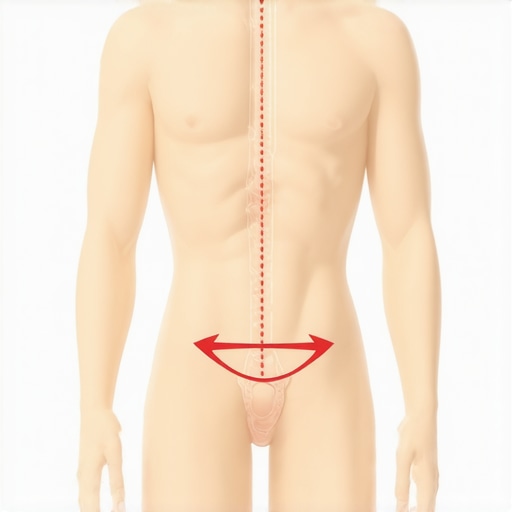
Expand the Cylinder from the Inside Out
Once you have the breathing pattern down, you need to learn to “stiffen” that pressure without actually moving your spine. Imagine someone is about to punch you in the gut or that you are about to lift a massive weight. Your natural reaction isn’t to pull your belly in; it is to push out and create a hard wall of muscle. That sensation of pushing against your fingers—all the way around to the sides and back—is the brace. You are looking for a 360-degree expansion. If you only tighten the front, your back remains vulnerable to the shearing forces that cause disc issues. This is especially true if how your breathing habits are creating tightness in your scalenes has already caused your neck and upper back to overwork and stiffen. By locking in the bottom of the ribcage to the top of the pelvis, you create a rigid bridge that protects your discs from migrating.
Apply the Brace Before the Movement Starts
I remember a specific Saturday when I was helping a friend move. I was tired, my focus was slipping, and I reached for a heavy box of books without thinking. I felt that old, familiar twinge—the warning shot before a full-blown spasm. I immediately stopped, reset my breath, and focused on that internal expansion before I even touched the handles again. The difference was night and day. The pain didn’t escalate because the spine didn’t buckle under the load. This applies to the most mundane tasks, even when you are simply figuring out how to fix your posture while folding laundry. You must engage the brace *before* you reach, lift, or twist, not while you are in the middle of the movement.
Use These Simple Daily Adjustments for Better Results
Think of your spine as a series of blocks held together by high-tension wires. If the wires are slack, the blocks slide and grind. If you are already dealing with referred symptoms, it is vital to learn how to tell if your leg pain is actually coming from your spine rather than a local muscle issue. Often, that radiating pain is the result of the vertebrae shifting and pinching a nerve because the brace wasn’t there to hold them in place. By integrating mobility boosts for posture expert tips for daily adjustments, you ensure that your body remains supple enough to reach that braced position without fighting against your own stiff, compensatory muscles. When your joints move well, the bracing becomes second nature.
Once you master the art of the internal brace, it is tempting to think that you should hold that tension every second of the day. But here is the nuance most people miss: stability is not the same as rigidity. I see so many people trying to maintain a military-grade upright position while sitting at their desks, only to find themselves exhausted and in more pain by noon. The reality is that why your perfect posture is actually causing muscle fatigue comes down to the fact that muscles aren’t designed to be held in a static, ‘perfect’ position forever. They need micro-movements to pump blood and clear out metabolic waste. If you are forcing yourself into a rigid shape, you are essentially strangling your own circulation. True spinal health is about being able to move in and out of different positions while maintaining the capacity to brace when things get heavy.
Your quest for a straight spine is likely wearing you out
One of the most common myths I encounter is that a ‘good’ spine is a straight one. In reality, your spine needs its natural curves to act like a spring. When you try to flatten your back against a chair or pull your shoulders back until your blades touch, you are fighting your own anatomy. This is why improving posture through mobility practical chiropractor strategies focuses on functional movement rather than just looking good in a mirror. A study published in the Journal of Physical Therapy Science highlighted that subjects who maintained a rigid ‘upright’ posture for long periods actually showed higher levels of muscle strain and discomfort compared to those who allowed for natural, relaxed spinal curvature. The ‘trap’ here is thinking that posture is a destination rather than a dynamic process. If you aren’t changing your position every twenty minutes, you are setting yourself up for failure, no matter how ‘straight’ you think you are sitting.
Why does it feel like your joints need to pop every twenty minutes?
This is the question that separates the beginners from the experts. Many people get addicted to the ‘crack.’ They twist their necks or backs in their office chairs, seeking that instant relief. But have you ever noticed the relief only lasts for a few minutes? This is because you are likely ‘self-adjusting’ the segments that are already moving too much—the hypermobile ones—while the segment that is actually stuck stays frozen. When you learn the truth about cracking your own knuckles and neck at home, you realize you are actually making your instability worse over time. You are stretching out the ligaments that are supposed to hold you together, which creates a cycle where you feel more ‘tight’ because your muscles are now spasming just to keep your spine from sliding around. This is why why you should stop rolling your neck to get rid of cracks is some of the best advice I can give. You are chasing a ghost. 
Stop chasing the pop and start finding real stability
The secret is that an adjustment performed by a professional is specific; it targets the ‘stuck’ joint to restore motion so that the ‘loose’ joints don’t have to work so hard. This is how chiropractic adjustments enhance posture and mobility without creating that dangerous cycle of hypermobility. If you find yourself constantly needing to pop your own back, it is a massive red flag that your internal ‘can’ is leaking pressure. Instead of twisting, try the 360-degree expansion breath we discussed. Often, that feeling of ‘needing a crack’ is actually your nervous system screaming for stability, not more movement. By providing that internal pressure, you often find the urge to crack simply disappears. Have you ever fallen into this trap of constantly cracking your own neck or back for temporary relief? Let me know in the comments. It’s a habit that is hard to break, but understanding the physics behind it is the first step toward long-term relief. Integrating mobility hacks simple adjustments for a more active life will help you stay loose without compromising the integrity of your spinal ligaments.
I’ve seen so many people try to solve their back pain by buying the most expensive chair on the market. I did it too. I spent nearly a thousand dollars on a mesh throne, thinking it would magically fix my slouch. But here’s the truth: an expensive chair is useless if you don’t know the proper way to use a lumbar roll in your office chair to maintain your natural curve. I personally carry a small, firm D-shaped roll in my backpack wherever I go. It forces my spine into a neutral position regardless of whether I’m in a crowded coffee shop or an airplane seat. If you’re currently using a foam roller on your lower back to ‘loosen up,’ you might be doing more harm than good. I learned the truth about foam rolling your lower back the hard way—it can actually destabilize the lumbar segments you’re trying to protect by stretching ligaments that need to stay tight. Instead, focus on using tools that provide structural support rather than just temporary massage.
How can you keep your results from fading away?
Consistency is the only thing that beats gravity over the long haul. I recommend a specific protocol that I call ‘The Spine Reset.’ Every morning, I spend five minutes doing the morning routine that stops your back from clicking, which involves slow, controlled movements to wake up the stabilizers before I even have my first cup of coffee. This isn’t about getting a workout; it’s about checking in with your nervous system. For long-term results, think of your body like a high-performance vehicle. You wouldn’t drive 50,000 miles without an oil change, yet we expect our spines to last 80 years without a professional tune-up. This is why chiropractic care is your secret weapon for better posture—it deals with the mechanical hitches you can’t feel yet but that will eventually cause a breakdown. I predict that by 2030, we’ll all be using AI-powered wearables that vibrate the moment our 360-degree brace fails, but until then, you have to be your own bio-feedback sensor. 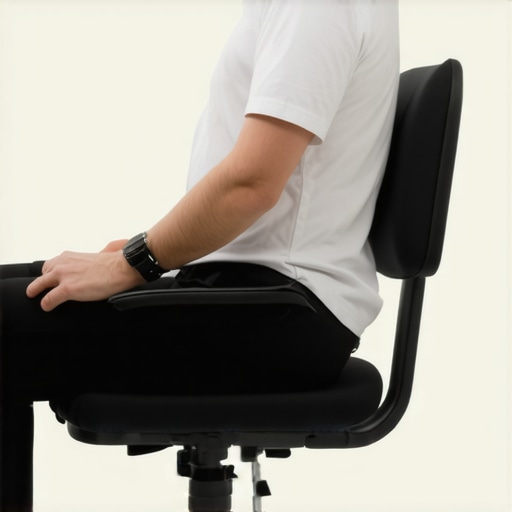 To scale your progress, you need to transition from simply fixing pain to actively optimizing performance. Start by using mobility hacks simple adjustments for a more active life, like standing on one leg while brushing your teeth to challenge your deep stabilizers. If you really want to level up, look into the ‘Big Three’ exercises popularized by Dr. Stuart McGill, a world-renowned expert in spine biomechanics. His research shows that these specific movements build endurance in the muscles that protect your spine without placing high, dangerous loads on the discs. For anyone serious about their long-term health, following the ultimate guide to improving mobility and posture in 2025 will give you the roadmap to move from a statue frozen in pain to a resilient, moving human being again. Try this tonight: before you sit down for dinner, perform one 10-second 360-degree brace to ‘set’ your spine for the meal. It’s a small win that builds the habit of protection.
Looking back, the biggest shifts in my recovery didn’t come from a single massive overhaul, but from small, consistent realizations that changed how I interacted with the world. For the longest time, I thought I was failing because I couldn’t maintain ‘perfect’ posture for eight hours a day. I didn’t realize that my body was actually craving movement, not a static prison of supposedly correct alignment.
What I Finally Realized After Years of Chasing Symptoms
The road to a pain-free life is paved with a few hard-won truths that I wish I had known from day one. First, your body isn’t a collection of separate parts; it is a tensegrity structure where a tight jaw can actually contribute to lower back instability. Secondly, ‘strength’ is often less important than ‘stiffness’ at the right moments. I spent years trying to get a stronger back when I really needed a more stable one. Most importantly, I learned that the link between mobility and posture is the key to unlocking long-term comfort. If you can’t move through a full range of motion, your body will always find a way to cheat, and that ‘cheat’ usually ends in a flare-up. Lastly, I stopped trying to be my own doctor. While self-care is vital, how chiropractic adjustments enhance posture and mobility taught me that some mechanical blocks require an expert hand to reset.
#IMAGE_PLACEHOLDER_E#
The Daily Essentials in My Spine Care Toolkit
I don’t leave my spinal health to chance anymore. Over the years, I have narrowed down my ‘must-haves’ to a few specific things that keep me upright and active. My first recommendation is always Dr. Stuart McGill’s ‘Back Mechanic’—it is essentially the owner’s manual for the human spine. Next is my firm D-shaped lumbar roll; it’s a non-negotiable for any car ride longer than twenty minutes. I also rely on a simple ‘standing desk’ setup that allows me to alternate positions every half hour, preventing the static fatigue that used to ruin my afternoons. If you are looking for a structured plan, the ultimate guide to improving mobility and posture in 2025 provides the exact framework I used to transition from chronic pain to daily activity. These aren’t just gadgets; they are the environmental supports that make ‘good’ habits easier than ‘bad’ ones.
Start Building Your Resilient Future Today
You don’t have to live in fear of your own movements. The ‘click’ in your back or the ‘pop’ in your neck doesn’t have to be the start of a week-long crisis. By mastering the 360-degree brace and respecting the natural mechanics of your joints, you are taking the power back from the pain. This journey is about progress, not perfection. Every time you choose to breathe low and wide or reach out to a professional for a tune-up, you are investing in a version of yourself that can play with your kids, excel at your job, and enjoy your hobbies without a shadow of discomfort. Remember, why chiropractic care is your secret weapon for better posture often comes down to the simple fact that a well-aligned spine allows your nervous system to function at its peak. What is the one daily habit you have tried for your back that actually made a noticeable difference? Let me know in the comments below!