

I was halfway through an afternoon spreadsheet when it happened—a localized, white-hot spark right under my left shoulder blade. I didn’t fall or lift anything heavy; I simply reached for my water bottle. For the next three days, every breath felt like a tiny dagger was twisting in my upper back. I did what most people do: I grabbed a tennis ball and tried to massage the life out of it. Spoiler alert: it didn’t work. In fact, I made it so angry I could barely turn my head to check my blind spot while driving. I felt like a creaky old porch door that had been kicked off its hinges and left to rust in the rain. If you are tired of that nagging knot that won’t quit, you are in the right place. Today, I’m going to share the exact routine I used to finally settle that fire down and why your current attempts at relief might be fueling the flames. It’s not about raw strength; it’s about mechanical harmony.
Stop Rubbing Your Back and Start Fixing the Root Cause
We have all been there, standing against a door frame trying to hit that one spot that feels like a permanent marble under the skin. My biggest mistake early on was assuming the pain was the problem. I thought the muscle was tight, so I stretched it until I was blue in the face. But here is the reality: your shoulder blade is often the victim, not the villain. Often, the issue is actually coming from your neck or a rib that has lost its rhythm. I learned the hard way that stretching your neck is making things worse if the underlying joint is stuck. When you pull on an already irritated nerve, it doesn’t relax; it tightens up to protect itself. [image placeholder] When I finally stopped attacking the muscle and started focusing on how to stop your rib cage from feeling stuck, the pinch vanished within hours. It turns out, that pinch is often a protective spasm. Your brain is essentially putting the area in a tiny straightjacket because it feels unstable. According to research in the Journal of Manual & Manipulative Therapy, thoracic joint dysfunction is a primary trigger for this kind of localized pain, yet we keep treating it like a simple muscle cramp. Have you ever felt that sharp, stabbing sensation right between your spine and your wing bone and wondered if you’d just have to live with it forever? Reach out and let me know—I’ve been there, and the frustration is real.
Won’t this just go away if I ignore it long enough?
It is tempting to think that a few days of taking it easy will solve the issue. I tried that too. I sat on the couch, avoided the gym, and waited. The sharp pain faded into a dull ache, but the moment I went to adjust your steering wheel or reach for a high shelf, it snapped right back. Ignoring it usually just leads to your body compensating, which means your neck and lower back start doing extra work. You might notice the reason your neck clicks more often is because your mid-back isn’t carrying its weight. Instead of waiting for a miracle, you need a reset your shoulders at work strategy that addresses the mechanical snag. We need to stop the bullying of the muscle and start the conversation with the joints. By the time we’re done today, you’ll have a roadmap to moving without that wincing zap that ruins your focus and your mood.
Move Your Spine Like It Was Meant to Glide
Thinking of your upper back as a solid block of wood is the quickest way to end up in a world of hurt. Your thoracic spine is designed to be a series of fluid, mobile hinges. When one of those hinges rusts shut, the muscles surrounding it have to scream just to get your attention. I remember sitting at my desk, trying to power through a deadline while my rhomboid felt like it was being poked by a hot needle. I finally gave up, laid on the floor, and tried a specific rotation drill. The first three reps were crunchy and painful. On the fourth, I felt a tiny pop—not a scary one, but a release. Suddenly, my lungs could actually expand again. That was the moment I realized the knot wasn’t a knot at all; it was a joint lockout. It is why chiropractic adjustments unlock a pain-free lifestyle today for so many—they address the mechanical hinge rather than just rubbing the surface.
Find the Movement Gap in Your Rib Cage
Most people treat a mid-back pinch by pulling their arm across their chest. Please, stop doing that. You are just over-stretching a muscle that is already over-extended. Instead, focus on thoracic rotation. Lie on your side with your knees tucked to your chest. Keep your bottom hand on your knees to pin them to the floor, and reach your top arm over to the other side like you are opening a massive book. If your arm stops halfway, that is your stuck point. Don’t force it; breathe into it. This is how you begin revolutionize your posture with targeted mobility exercises. You are teaching the ribs to slide over one another again instead of clumping together like a handful of dry spaghetti. 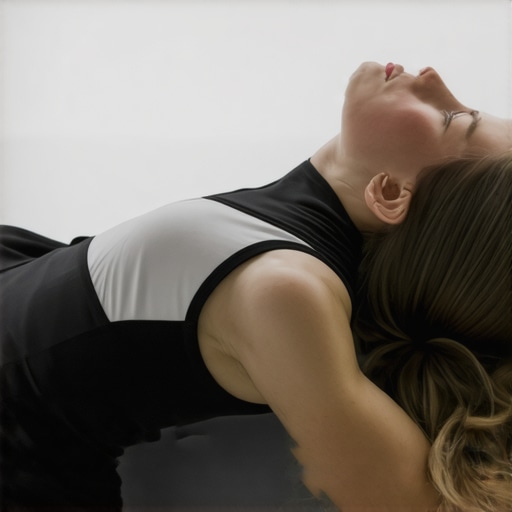
Activate the Muscles That Actually Support Your Blades
Once you have the joint moving, you need to tell the brain it is safe to keep it that way. This is where most people fail. They find relief for ten minutes, then go right back to slouching. You need to wake up the serratus anterior—the finger-like muscles on your ribs. Instead of the typical static hold, try the 30-second drill for better overhead shoulder mobility to give your shoulder blade a stable platform to sit on. If that platform is wobbly, your brain will lock down the rhomboids again to prevent a perceived injury. You might think your back is the primary culprit, but the reality is that why stretching your hamstrings wont fix your tight back is the same logic here: you cannot fix a stability problem with a flexibility solution.
Send Air Where It Actually Needs to Go
If you are a chest-breather, you are essentially constant-loading the muscles in your neck and upper back. Every breath is a tiny shrug. To break the cycle of that sharp under-the-blade pain, you have to learn how to breathe into your back to relieve rib tension. Imagine your back has gills. When you inhale, try to push your breath into the space between your shoulder blades. This internal pressure acts like a hydraulic jack, pushing the ribs out from the inside. This is one of the most effective mobility hacks simple adjustments for a more active life because it happens 20,000 times a day. If you get your breathing right, you are essentially getting 20,000 mini-adjustments for free. For a more robust foundation, incorporating the best exercises for building a spine that doesnt ache will ensure these temporary fixes become permanent lifestyle shifts.
Stop Chasing the Ghost of Perfect Posture
We have been sold a lie that there is one “perfect” way to sit or stand. In reality, your best posture is your next posture. When we try to force ourselves into a rigid, upright position, we create isometric tension that eventually leads to the very spasms we are trying to avoid. Understanding the truth about perfect posture and why it doesnt exist is the first step toward freedom. Most people spend so much energy trying to look aligned that they actually restrict their natural rib movement, which brings us right back to that sharp pain under the blade. This mechanical stiffness isn’t a lack of discipline; it is a lack of variety. If you stay in any position—no matter how ‘correct’ it looks in a mirror—for too long, your tissues will eventually complain.
Why Cracking Your Own Back is a Recipe for Instability
I used to be a serial back-cracker. Every 45 minutes, I would twist my chair or pull on my neck until I heard that satisfying ‘pop.’ I thought I was doing my own maintenance, but I was actually creating a dangerous cycle of hypermobility. When you self-manipulate, you are almost always hitting the joints that are already moving too much—the ones above and below the actual problem. The truly stuck segment remains frozen. This is why you should stop cracking your own back every hour. You are essentially stretching a rubber band that is already overstretched. Real chiropractic adjustments unlock a pain-free lifestyle today because they target the specific, restricted joint that you cannot reach on your own. Relying on the ‘home version’ often leads to ligament laxity, making that nagging knot feel more unstable over time. Have you ever fallen into this trap where the relief only lasts ten minutes before you feel the urge to crack again? Let me know in the comments—it is a harder habit to break than most people admit. 
Why does my mid-back keep locking up even after a professional adjustment?
This is the question that separates the beginners from the pros. If you get a great adjustment and why you feel taller after a spinal adjustment makes total sense for a day, but the pain returns by Tuesday, you likely have a ‘regional interdependence’ problem. This concept, extensively discussed in the Journal of Manipulative and Physiological Therapeutics, suggests that your thoracic spine might be locking up because your neck or hips are failing to do their job. If your neck is stiff or your hips lack extension, your mid-back will overwork to compensate for that lack of motion. Without enhance your posture with expert chiropractic techniques in 2025 that look at the whole kinetic chain, you are just playing whack-a-mole with symptoms. To truly win, you need to understand the relationship between different spinal regions. The insight the link between mobility and posture a chiropractors guide provides is that the site of pain is rarely the site of the problem. By addressing the ‘silent’ stiffness in your hips or upper neck, you take the pressure off your shoulder blades, allowing those muscles to finally stand down from their protective guard. This isn’t just about moving more; it’s about moving right.
Understanding regional interdependence was my ‘aha’ moment, but the real work began when I had to figure out how to keep those joints moving between office visits. It is one thing to feel great after a session; it is another to maintain that ‘gliding’ sensation when you are deep in a six-hour coding session. I stopped looking for a magic bullet and started building a tactical toolbox. For me, the game-changer wasn’t a thousand-dollar chair; it was a simple double lacrosse ball taped together—often called a ‘peanut.’ I use this specifically to target the lamina groove on either side of the spine, providing a localized fulcrum that a standard foam roller simply cannot reach. This is how you implement mobility boosts for posture expert tips for daily adjustments without needing a second pair of hands.
Why Your High-End Standing Desk is Probably Failing You
I see so many people buy expensive standing desks only to end up with more back pain than before. The problem is usually the setup. If your monitor is even two inches too low, you are trading lower back compression for ‘text neck’ and that familiar sting under the shoulder blade. I discovered that why most standing desks are set at the wrong height is usually due to people prioritizing their wrists over their eye line. Your elbows should be at 90 degrees, but your gaze must be level with the top third of the screen. If you find yourself leaning on one hip, you are essentially creating a functional scoliosis for hours on end. I personally use a small footstool to shift my weight every fifteen minutes, which prevents the hip-to-spine compensation we discussed earlier. This is a core component of the ultimate guide to improving mobility and posture in 2025: the best position is the one that is constantly changing.
How can I maintain these mobility gains without living in a clinic?
Maintenance is less about heavy lifting and more about ‘spinal hygiene,’ a term popularized by Dr. Stuart McGill, a leading expert in spine biomechanics. In his research, specifically within the book Low Back Disorders, he emphasizes the importance of ‘bracing’ rather than ‘hollowing’ the core to protect the thoracic segments. I’ve integrated the dead bug variation that actually protects your spine into my morning routine to ensure my ribs stay anchored. If the ribs are flared, the mid-back is locked. By spending just 180 seconds on the 3-minute evening routine for a less stiff morning, you are essentially clearing the ‘mechanical cobwebs’ that accumulate during the day. 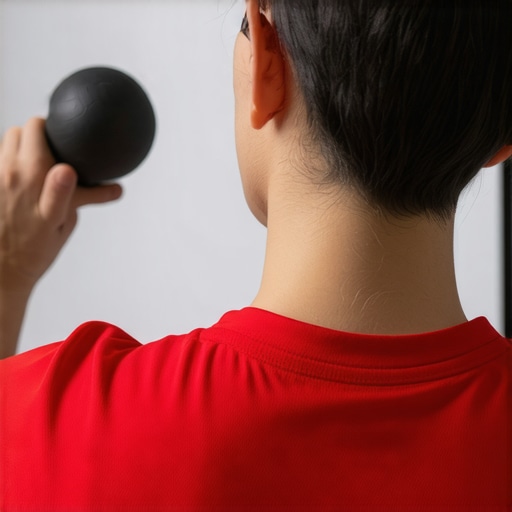 We are moving toward a future where wearable biofeedback sensors will likely alert us the moment our thoracic rotation drops below a certain threshold, but for now, your best sensor is your own awareness of that ‘stuck’ feeling.
I predict that within the next few years, ergonomics will shift away from ‘static support’ and toward ‘active instability’—forcing our postural muscles to stay awake rather than letting them atrophy against a headrest. If you want to stay ahead of the curve, stop trying to sit still. Revolutionize your posture with targeted mobility exercises that focus on the hinges, not just the muscles. My challenge to you: tonight, before you get into bed, try three minutes of back-breathing. If you can feel your ribs expand against the floor, you are winning. If you need more specific guidance on how these pieces fit your unique history, you can always contact us to bridge the gap between temporary relief and long-term resilience.
Understanding regional interdependence was my ‘aha’ moment, but the real work began when I had to figure out how to keep those joints moving between office visits. It is one thing to feel great after a session; it is another to maintain that ‘gliding’ sensation when you are deep in a six-hour coding session. I stopped looking for a magic bullet and started building a tactical toolbox. For me, the game-changer wasn’t a thousand-dollar chair; it was a simple double lacrosse ball taped together—often called a ‘peanut.’ I use this specifically to target the lamina groove on either side of the spine, providing a localized fulcrum that a standard foam roller simply cannot reach. This is how you implement mobility boosts for posture expert tips for daily adjustments without needing a second pair of hands.
What I Learned After Years of Mistreating My Own Rib Spasms
The most profound realization I ever had was that the localized fire under my blade was actually a cry for help from a joint that had simply stopped moving. I spent years trying to massage away a protective reflex, not realizing that I was fighting my body’s own defense system. Another lightbulb moment was discovering how my hips were actually dictating the tension in my mid-back; when my lower body was stiff, my thoracic spine had to pay the price. Finally, I realized that breath is the ultimate internal mobilization tool. If you aren’t using your diaphragm to expand your ribs, you are effectively letting those joints rust in place.
The Tools I Use to Keep My Spine From Locking Up
I don’t leave my mobility to chance anymore. My daily toolkit includes a taped-together double lacrosse ball for deep spinal work and a commitment to the 3-minute evening routine for a less stiff morning. I also stopped guessing about my workstation and finally applied the desk setup trick for people who hate standing desks to ensure I wasn’t creating new knots while I worked. For the deeper, structural issues that I can’t reach, I rely on enhance your posture with expert chiropractic techniques in 2025 to clear the neurological path. [image placeholder] These aren’t just luxuries; they are the essential maintenance for a body that spends hours behind a screen.
Your Path to a Spine That Moves Like Silk Again
You don’t have to accept that sharp, stabbing sensation as a permanent part of your life. By shifting your focus from ‘fixing’ a muscle to restoring mechanical glide, you can reclaim the freedom of movement you thought was gone. Whether you start with mobility boosts for posture expert tips for daily adjustments or decide that chiropractic adjustments unlock a pain-free lifestyle today, the most important step is simply to stop ignoring the signal. Your spine is incredibly resilient when you give it the right environment to thrive. If you’re ready to stop the cycle of spasms and start living with fluid ease, don’t hesitate to reach out via our contact us page. Have you ever felt that specific sharp breath-taking pinch right after reaching for something simple like a water bottle or your phone? Let me know in the comments below.