

I used to sit at my kitchen table, hunched over a laptop, feeling like a giant was squeezing my chest. Every time I tried to take a deep, satisfying breath, I would hit a literal wall in my mid-back. It was infuriating. I even spent a whole weekend convinced I had a cracked rib from nothing more than sitting too long. I eventually realized that my body had forgotten how to expand backward. I was a classic chest breather, constantly pulling air up into my neck, which is exactly why your traps are always tight even after a massage. I made the huge mistake early on of thinking I just needed to stretch my chest more. I would pull, I would twist, and I would foam roll until I was bruised, but the tension always returned. It was not until I learned to breathe into my back that the iron corset finally snapped open. Today, I am going to show you how to send that oxygen to your posterior ribs to fix that stuck feeling for good.
Your ribcage is designed to move like an accordion
Most of us treat our mid-back like a solid piece of plywood. We move our arms and legs, but that space between our shoulder blades stays frozen. When you are under pressure, it is even worse; why your ribs feel tight when you are under high stress is often because your nervous system goes into a shallow-breathing survival mode. You stop using the posterior part of your lungs, and the joints where your ribs meet your spine start to get sticky. While I found that how a single rib adjustment can stop that sharp pain when breathing is a great jumpstart, you need a daily way to keep those ribs moving.
Is this breathing stuff actually worth the hype?
I get it. If someone told me to just breathe when I was in the middle of a painful flare-up, I would have rolled my eyes. It sounds too simple to be effective. However, the science is undeniable. According to a study in the Journal of Physical Therapy Science, targeted breathing exercises significantly improve the mobility of the thoracic spine and the ribcage expansion. This is not just mindfulness fluff; it is mechanical engineering for your torso. By forcing air into the back of your lungs, you are stretching your muscles from the inside out. [image_placeholder] If you have been struggling with that persistent knot under your shoulder blade, you might be surprised to find that the solution is not more pressure—it is more air. Have you ever felt like you just could not get a full breath because your back was too tight? Understanding how to fix a rib that feels out of place starts with the way you inhale.To get those back ribs moving, you need to put your body in a position where the front is closed off. Think of it like a garden hose; if you kink the front, the water has nowhere to go but out the back. Sit on a firm chair and round your upper back slightly—not a lazy slouch, but a purposeful curve. This closes the gate on your chest. I remember trying this for the first time during a brutal 10-hour editing session when my mid-back felt like it was fused together. I was so tight I actually heard a faint pop on my third exhale, which was just my costovertebral joints finally deciding to participate in the conversation. It was not a single rib adjustment in a clinic, but it felt like a mini-reset.
Slump forward to open the back
Place your elbows on your knees while sitting. This position naturally rounds the thoracic spine. Now, instead of taking a big gulp of air through your mouth, inhale slowly through your nose. Imagine you have two balloons tucked under your shoulder blades. Your goal is to fill those balloons without letting your collarbones rise toward your ears. If your shoulders start creeping up, you are falling back into old habits, which is why your traps are always tight even after a massage. You want to feel the skin across your mid-back stretch as the ribs move apart. 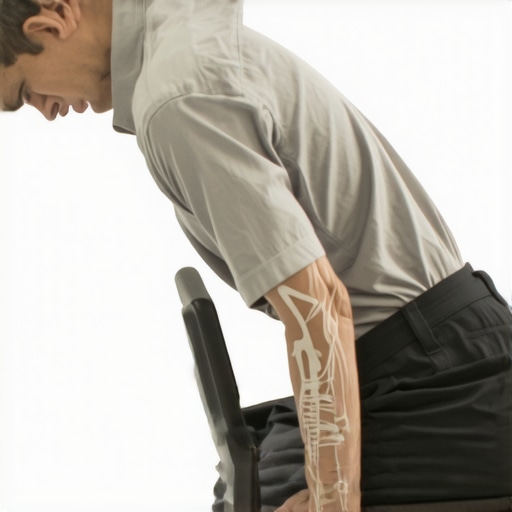
The silent expansion technique
Once you are in that elbows-to-knees position, exhale until you feel your ribs drop down and your abs slightly engage. This is not about a gentle sigh; you want to blow out all the air until you feel your ribcage shrink toward your spine. Hold that empty feeling for just two seconds—this is the reset for your diaphragm. When you finally inhale, do it silently. A loud, gasping inhale usually means you are using your neck muscles to suck air in rather than letting your diaphragm pull it down. This silent inhale forces the diaphragm to work harder and pushes those back ribs outward. This is a core part of targeted mobility exercises that actually change how you move. I used to do this in my car at red lights, and it is a much better use of time than checking your phone, especially because the best way to sit in a car involves maintaining that internal space.
Watch out for the common neck pull
The biggest mistake people make is trying to force the air. If you see your neck tendons popping out in the rearview mirror, stop. You are trying to pull air into the top of the lungs instead of pushing it into the back. This habit is a major contributor to why your head feels heavy. Instead, keep your jaw soft and your tongue on the roof of your mouth. If you struggle with this, the 60-second fix for a stiff jaw can help relax those secondary breathing muscles so the ribcage can actually take over the work.
Add a reach to multiply the effect
If you want to take this to the next level, reach one arm forward toward the floor while you breathe into that same side. This creates a massive internal stretch between the spine and the scapula. I used this trick when I felt a pinch developing after a long flight, much like the correct way to stretch your neck after a long flight. By reaching forward, you are physically pulling the shoulder blade out of the way, giving those posterior ribs even more room to expand. You will feel a tugging sensation right under the shoulder blade—that is exactly what you want. It is the feeling of internal real estate being reclaimed.Building on that internal expansion, I need to address the elephant in the room: the ‘sit up straight’ myth. Most people think ‘good posture’ means pinning your shoulder blades back and puffing out your chest like a drill sergeant. In reality, why your perfect posture is actually causing muscle fatigue is because you are creating a rigid, static tension that the body was not built to sustain. Real health comes from ‘dynamic’ posture—the ability of your spine to move through its full range without getting stuck. This is why the link between mobility and posture is so critical; if you cannot move, you cannot truly align.
Stop trying to pin your shoulders back
When you force your shoulders back, you often end up ‘shingling’ your ribs. This means your lower ribs kick forward, your lower back arches excessively, and you lose all that back-pressure we just worked so hard to create. It is a massive ‘oops’ moment that leads to how to stop your ribs from flaring when you lift your arms. Instead of pulling your shoulders back, think about growing ‘tall’ through the crown of your head while keeping your front ribs ‘heavy’ and tucked toward your belt line.
Why does my mid-back keep locking up even after an adjustment?
This is the question I get from the most advanced readers. They get chiropractic adjustments that unlock a pain-free lifestyle, but the tension returns within 48 hours. The secret usually lies in the relationship between your eyes and your ribcage. A study published in the Journal of Bodywork and Movement Therapies suggests that our visual focus—staring at a fixed point like a screen—can actually inhibit the natural micro-movements of the thoracic spine. If your eyes are locked, your spine often follows suit. 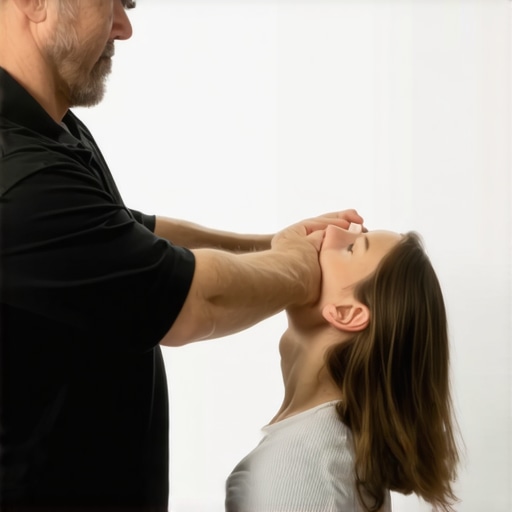
The danger of over-stretching the wrong areas
Another common trap is the obsession with ‘opening up.’ If you spend all day foam rolling your mid-back without ever building the stability to hold that new space, your nervous system will just tighten the muscles right back up to protect you. You need targeted mobility exercises that combine the stretch with a breath-hold or a slight muscle contraction. This tells your brain that this new range of motion is safe. Have you ever fallen into this trap of stretching for hours only to feel tighter the next day? Let me know in the comments. We have to stop treating the body like a series of isolated parts and start seeing it as an integrated system where how chiropractic adjustments enhance posture and mobility depends entirely on how you move between visits.Maintaining the space you have worked so hard to create is where most people fail. They find relief, go back to their old habits, and end up right back where they started. I call this the ‘posture yo-yo.’ To break it, you have to realize that chiropractic adjustments unlock a pain-free lifestyle, but your daily habits are what keep the door open. I personally swear by a ‘peanut’—which is just two lacrosse balls taped together—to target the costovertebral joints. I use it every evening for exactly three minutes. I don’t just roll around aimlessly; I find a tight segment in my mid-back, stay there, and perform three of those silent back-breaths I mentioned earlier. This combination of mechanical pressure and internal expansion is the only way I have found to stop the ‘stuck’ feeling from returning after a long day at the desk. As Steve August, a renowned physiotherapist and developer of the Backpod, explains, the collagen in the ligaments of your ribcage actually toughens over time if not moved, creating a ‘mechanical block’ that no amount of stretching can fix without specific, localized pressure.
The tools that actually earned a spot in my home gym
You do not need a room full of expensive equipment. Beyond the lacrosse balls, I recommend a simple resistance band. I use it for ‘banded pull-aparts’ not to build muscle, but to wake up the serratus posterior muscles that help with inhalation. This is a huge part of improving posture through mobility because it shifts the work away from your neck and back to your ribcage. 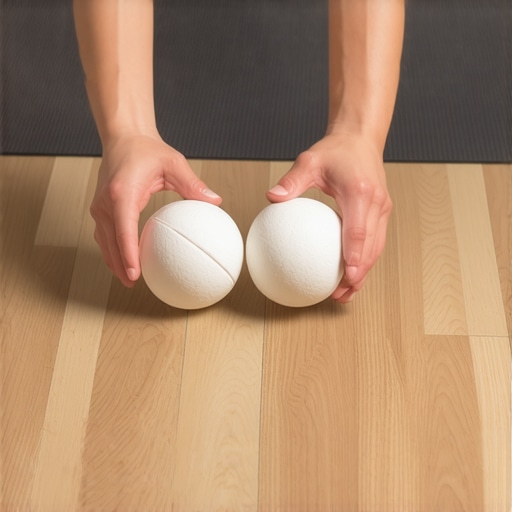
How do I maintain my thoracic mobility over time?
Maintenance is not about hour-long sessions; it is about micro-dosing movement. I have a rule: every time I finish a Zoom call, I perform one ‘reach and breathe’ cycle. By integrating mobility hacks for a more active life, you prevent the stiffness from ever becoming permanent. Looking ahead, I predict we will soon see a surge in ‘smart apparel’—shirts with integrated biofeedback sensors that vibrate when your ribs start to flare or your breathing becomes too shallow. This real-time data will change how we approach mobility and posture, making it a conscious, automated habit rather than a chore.
Scale your results with consistency
If you are just starting out, do not try to do everything at once. Start with the ‘peanut’ release for one week. You will likely find that why chiropractic care is your secret weapon for better posture is because it resets the nervous system, allowing these home tools to actually work. If your spine is already locked, a ball is just going to bruise you. Get the adjustment, then use the tools. For those who feel like their progress has plateaued, try adding a 5-second breath hold at the top of your ‘back-inhalation.’ This extra pressure from the inside is like a hydraulic jack for your ribs. My challenge to you today: find two tennis or lacrosse balls, tape them together, and spend three minutes tonight breathing into that tight spot between your shoulder blades. You might just feel that ‘iron corset’ loosen for the first time in years.
Three Hard-Won Truths from My Journey to Better Mobility
Reflecting on years of struggle, I realized that my biggest mistake was treating my ribcage like a problem to be solved with force. First, I learned that more pressure is rarely the answer; if you are already in a flare-up, grinding into a foam roller can actually trigger more muscle guarding. Second, your eyes act as the steering wheel for your spine. I found that how your vision is forcing your neck into a forward lean actually locks the very ribs you are trying to free. Lastly, consistency beats intensity every single time. Five silent breaths a day are worth more than a two-hour mobility marathon once a month.
What I Keep in My Daily Toolkit for a Supple Spine
I have narrowed my routine down to a few items that offer the highest return on investment. The ‘peanut’ (two lacrosse balls taped together) is non-negotiable for anyone serious about mobility hacks for a more active life. I also keep a light resistance band nearby to activate the muscles that hold my ribs in place after a session. #IMAGE_PLACEHOLDER_E# For those who want a deep dive into the ‘why’ behind these moves, I highly recommend checking out the ultimate guide to improving mobility and posture in 2025. These are not just gadgets; they are the anchors that prevent you from drifting back into old, painful patterns.
Your Path to a Life Without the Iron Corset
You do not have to live with that suffocating tightness forever. By combining these daily breathing micro-habits with professional guidance, you can finally feel what it is like to have a ribcage that moves like an accordion. Remember, why chiropractic care is your secret weapon for better posture often comes down to creating the initial space so your home exercises can actually take root. Don’t wait for the pain to become unbearable—start your expansion today. Have you ever felt a ‘pop’ of relief in your back just by changing the way you breathe? Let me know in the comments below!