

I’ll never forget the sight of my youngest son, barely ten years old, groaning as he stood up from the dinner table. He was rubbing his lower back with a look of genuine discomfort that you usually only see in people twice his age. It hit me like a ton of bricks. We expect our kids to be made of rubber—bouncing back from every fall and sleeping in pretzel shapes without a care. But lately, I’ve been seeing more and more little old people in my neighborhood. My own mistake? I thought it was just growing pains. I was wrong. It wasn’t growth; it was gravity and bad habits winning the war on a developing spine. Today, I’m going to share exactly why this is happening and how we can pivot before these minor aches turn into permanent structural changes.
The day I realized my kid moved like an old man
When I first noticed the slouching, I figured a quick ‘stand up straight!’ would solve it. It didn’t. In fact, it made things worse because I wasn’t addressing the root cause of why he was hurting. We are living through a quiet epidemic of pediatric back pain. Between heavy school bags and the way your teenager always slouches on the sofa, their spines are under constant siege. I want to help you spot the red flags I missed. We’re going to look at everything from how your child’s desk height is impacting their growing spine to the subtle signs of the truth about text neck and long term nerve damage. It’s about more than just aesthetics; it’s about making sure they can run, jump, and play without feeling like they need a hip replacement at fifteen. Have you noticed your child rubbing their neck or back after a few hours of gaming or homework?
Is this just a phase or something more serious?
It’s tempting to brush it off as ‘just kids being kids,’ but the data tells a different story. According to the American Chiropractic Association, the sheer weight of school supplies is a leading cause of early spinal issues, often exceeding 10% of a child’s body weight. This constant load creates a ripple effect. If you aren’t sure about the load, you need to check how to tell if your child’s backpack is too heavy before they head out the door tomorrow. The reality is that their bodies are still ossifying—literally turning from soft cartilage into hard bone—and when we apply constant pressure to those developing structures, they grow into the shape we provide.
Our living rooms are built for slouching
We’ve traded outdoor play for ‘tech-posture.’ I’ve spent way too much time watching my kids curled into a C-shape on the couch, and frankly, I’ve been guilty of it too. This isn’t just about ‘looking bad’; it’s about the physical development of their bones and joints. When they spend hours in these positions, their muscles actually start to adapt to the dysfunction. It’s why your balance decreases as your head slumps forward, a problem that shouldn’t plague a twelve-year-old. We need to stop treating the symptoms with heating pads and start looking at the environment we’ve built for them. It’s about creating a space where movement is natural and their spine is supported, even when they’re just relaxing.
We can’t just yell “sit up” and expect magic to happen. Think of your child’s spine like a young sapling; if you tie it to a crooked stake, the tree grows into that bend. I had to learn this the hard way. My first real move was addressing the literal weight on my son’s shoulders that he lugged around every morning. Stop treating the backpack like a weightlifting competition. Most kids carry packs that weigh as much as a small boulder, and if you haven’t yet, you really need to see how to tell if your child’s backpack is too heavy before another school week starts. I actually weighed my son’s bag on the bathroom scale and it was nearly 20% of his body weight—no wonder he was groaning like he’d just finished a shift in a coal mine. Check the straps, lighten the load, and make sure the bottom of the bag rests in the curve of the lower back, not hanging down past their tailbone.
Fixing the homework station once and for all
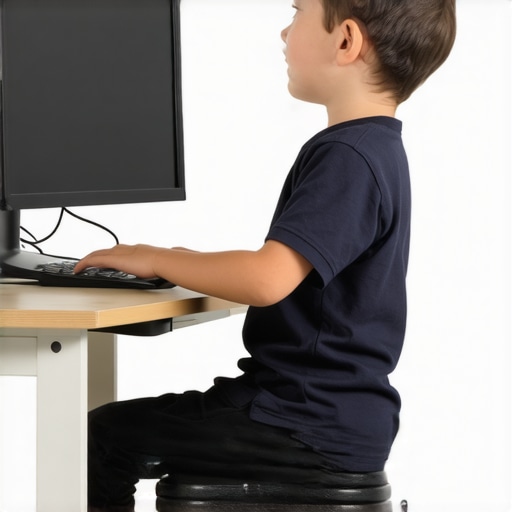
Next, I looked at where he does his math. I thought I was being a genius by piling up old encyclopedias and a few Harry Potter books to raise his laptop, but it backfired spectacularly. He ended up leaning forward even more to reach the keyboard, creating a weird, gargoyle-like perch. This taught me that how your child’s desk height is impacting their growing spine is the most underrated fix in the house. The screen needs to be at eye level so they aren’t looking down, but the elbows have to stay at a comfortable 90-degree angle. If their feet are dangling from a high chair, put a stool under them. Grounding the feet is the first step to grounding the spine.
Why movement beats stretching every single time
We also started focusing on “active” breaks rather than just sitting in a different chair. Instead of just taking a break to lie on the floor and scroll through a tablet, we started doing three-minute mobility drills every hour. You can revolutionize your posture with targeted mobility exercises that actually feel like play rather than a chore. We’d do “wall angels” or “cat-cows” right on the living room rug. These mobility boosts for posture keep the joints lubricated and prevent that stiff, locked-in feeling that leads to chronic aches. It’s about teaching the body that it’s allowed to move in more than just one direction.
Professional eyes on their alignment
Finally, I stopped trying to DIY every aspect of his spinal health. I realized that while I could fix the desk and the bag, I couldn’t see what was happening underneath the surface. This is where a professional touch changes the game. Many parents don’t realize why chiropractic care is your secret weapon for better posture, especially during those massive growth spurts when bones and muscles are playing a constant game of catch-up. It’s not about “cracking” things; it’s about clearing the path for the nervous system to communicate properly without the static of a misaligned joint. When we got his first adjustment, he actually told me he felt like he could breathe deeper, which was a red flag I didn’t even know to look for.
Most parents think the goal is ‘perfect posture,’ but here’s the truth: the truth about perfect posture and why it doesn’t exist is that the human body isn’t meant to be a statue. I spent months obsessing over my son’s ‘slump’ before I realized that rigidity is actually the enemy. We often mistake stillness for stability, but for a growing spine, stability comes from controlled, varied motion. If your child is sitting in a ‘perfect’ ergonomic chair but remains frozen for two hours, they are still causing micro-trauma to their spinal discs. Research from the Cornell University Ergonomics Research Lab emphasizes that ‘static loading’—remaining in any one position too long—is the real culprit behind musculoskeletal pain, regardless of how ‘upright’ the child looks.
Why your ‘helpful’ stretches might be backfiring
One of the biggest traps I fell into was forcing my son to do long, static neck stretches when he complained of tightness. I thought I was helping him loosen up, but I didn’t realize that why your gentle stretching is actually causing more inflammation can be a real issue when the underlying joint is restricted. If the vertebrae are ‘locked,’ pulling on the attached muscles simply irritates the nerve endings further. It’s like trying to untie a knot by pulling both ends of the rope harder. Instead, we shifted toward functional mobility. This is where how chiropractic adjustments enhance posture and mobility changes the game; it’s about restoring the joint glide before you ever try to lengthen the muscle.
What should I do if my child’s neck clicks during these movements?
It’s a common worry for parents, and usually, the reason your neck clicks when you look over your shoulder is just harmless gas bubbles releasing in the joint fluid. However, the ‘oops’ factor happens when kids start doing it on purpose. I caught my son ‘self-cracking’ his neck ten times a day to find temporary relief. I had to sit him down and explain why you should stop cracking your own back every hour: when you self-adjust, you’re usually just popping the hyper-mobile segments above or below the actual restriction, which actually increases spinal instability over time.
Look at the feet to save the neck
We focus so much on the shoulders that we often forget the foundation. If your child has subtle issues with their gait, it changes the tilt of the pelvis, which then forces the neck to crane forward just to keep the eyes level. This is often how to tell if your back pain is coming from your shoes or their foot structure. You can buy the most expensive desk in the world, but if the foundation is off, the spine will always compensate in ways that lead to pain. This level of nuance is exactly why chiropractic care is your secret weapon for better posture; a professional looks at the entire kinetic chain from the heels to the skull. Have you ever noticed your child’s posture improving after a shoe change, or have you ever fallen into the trap of over-stretching a sore muscle? Let me know in the comments below.
I used to think that once we ‘fixed’ my son’s slouch, the job was done. I was incredibly wrong. Keeping these results alive is a daily practice, not a one-time event. It’s about building a lifestyle where improving posture through mobility becomes as natural as brushing their teeth. I’ve realized that the best way to ensure his spine stays resilient is by focusing on ‘micro-adjustments’ throughout the week rather than waiting for another flare-up to occur.
Keep the momentum going every single morning
Our morning routine shifted from a frantic rush to the door to five minutes of spinal prep. We started using a very specific high-density thoracic roller. Most people buy the soft foam ones, but those don’t provide the targeted pressure needed for the mid-back. This is where the truth about foam rolling your lower back is vital—you need to focus on the upper back to relieve the strain that’s being pulled from below. We follow the National Academy of Sports Medicine (NASM) Corrective Exercise Specialist guidelines, which emphasize that the goal of these tools isn’t just to ‘roll,’ but to find the tender spots and hold the pressure for thirty seconds to ‘inhibit’ the overactive muscle. It’s a game-changer for a kid who has been hunched over a tablet.
The tool that actually reaches my stubborn mid-back
I also stopped buying into the hype of wearable straps. I found that why most posture braces actually make your back weaker is because they do the work for your muscles, allowing them to atrophy further. Instead, I invested in a simple lumbar roll for his desk chair and a high-quality laptop stand. We also use a ‘psoas release tool’ that helps open up the hips after long school days. This ensures that chiropractic adjustments unlock a pain-free lifestyle today and stay effective long-term. If the muscles aren’t fighting the adjustment, the spine stays happy.
How do I keep my spine healthy as I age?
Maintenance is about consistency over intensity. I tell my son that his spine is like a bank account; every time he slouches for three hours, he’s making a withdrawal. Every time we do mobility boosts for posture, he’s making a deposit. To keep the results, you need a mix of professional checks and home-based drills. I’ve noticed that when we stay on top of targeted mobility exercises, he doesn’t just look better—his mood is better, and he has more energy for soccer practice. We also look ahead to the ultimate guide to improving mobility and posture in 2025 to stay updated on new techniques as his body continues to change.
What the next decade of posture looks like
I predict that in the next few years, we are going to see a massive shift toward AI-driven posture tracking. We are already seeing apps that use your webcam to alert you when your head slumps too far forward. While the tech is cool, it’s no replacement for the physical awareness we are building now. My goal is to get him to the point where he can feel the slump before it becomes a pain. I want to challenge you: pick one thing from today, whether it’s checking the backpack weight or grabbing a firm roller, and try it for seven days straight. You’ll be surprised how quickly the ‘little old man’ groans disappear when the spine is finally allowed to do its job. It’s about making sure how chiropractic adjustments enhance posture and mobility becomes a foundation for his entire adult life.
The Most Important Lessons from My Family’s Posture Journey
Reflecting on the last year of rehabilitating my son’s alignment, I realized that nagging is the least effective tool in a parent’s belt. Instead, I learned that environment dictates behavior. If the couch is soft and the screen is low, they will slouch. Changing the physical space did more for his back than a thousand reminders ever could. I also discovered that ‘growing pains’ are often actually ‘mechanical pains’—signs that the body is struggling to adapt to a specific stressor. Finally, the biggest lightbulb moment was seeing the link between mobility and posture a chiropractors guide provides; it isn’t just about how they look, but how well their joints actually glide through space. Small, consistent mobility hacks like five-minute floor breaks are far more effective than a once-a-week marathon stretching session.
The Tiny Toolkit That Fixed Our Slouching Habits
We didn’t need a room full of equipment to see a change. I trust these specific tools because they are simple and grounded in biomechanical logic. First, a high-density thoracic roller is a non-negotiable for us; unlike soft rollers, it actually provides enough leverage to open up the mid-back. We also rely on a simple adjustable footstool for his homework desk because grounding the feet is essential for pelvic stability. Lastly, I keep a copy of the latest expert chiropractic techniques on hand to remind myself that professional adjustments are the ‘reset button’ that makes home exercises actually work. These aren’t just gadgets; they are the mobility boosts for posture that keep my kids from feeling like ‘little old people’ after a long day of school.
You Are Building Their Health for the Next Fifty Years
It can feel overwhelming to manage every aspect of a child’s health, but remember that you are currently laying the foundation for how their body will feel decades from now. By addressing these issues early, you are providing them with more than just a straight back; you are giving them better lung capacity, higher energy levels, and even the secret to reducing tension headaches before they ever start. Don’t feel like you have to fix everything overnight. Every time you encourage them to move or adjust their screen height, you are making a massive deposit into their long-term wellness. The future of their posture is bright as long as we stay proactive today. Which part of your child’s daily routine is the hardest on their back right now? Let me know in the comments below!