

I sat there, rubbing the base of my skull for the tenth time that hour, wondering why my “perfectly ergonomic” desk setup felt like a torture rack. I’d done the stretches. I’d even tried cracking my own neck every sixty minutes—a massive mistake that only made the inflammation worse. But the real “aha!” moment didn’t happen at my desk. It happened at the optometrist. As she switched the lenses during a routine exam, my entire neck suddenly let go of a tension I didn’t even know I was holding. It turns out, I wasn’t just slouching; my eyes were leading my spine on a wild goose chase. [image_placeholder_1]
Your Eyes are the Boss of Your Shoulders
Most of us treat neck pain like a localized hardware issue. We think if we just get the right chiropractic adjustments or a fancy pillow, the problem will vanish. But your body is a closed-loop system. When your eyes struggle to track text or focus on a screen, your neck muscles reflexively tighten to “help” stabilize your head. I learned the hard way that why your dual monitor setup is twisting your neck isn’t just about the screen’s position, but about how your eyes are actually processing the light.
Is my vision really the problem here?
It sounds a bit “woo-woo,” doesn’t it? You might be thinking your 20/20 vision means you’re in the clear. I thought the same thing. However, “functional vision”—how your eyes work together—is a different beast. According to the American Optometric Association, digital eye strain can lead to significant musculoskeletal issues because we subconsciously tilt our heads to find the “sweet spot” of focus. Today, we are going to bridge that gap between your vision and your vertebrae. I’m going to show you how to stop your eyes from sabotaging your spine so you can finally find relief from those tension headaches.
The Early Blunder I Want You to Avoid
Early on, I spent a small fortune on posture braces. I thought if I forced my shoulders back, the neck pain would quit. It was a disaster. As I’ve mentioned before, most posture braces actually make your back weaker because they let your muscles go to sleep. The real fix wasn’t external force; it was realizing that my neck was simply following my eyes. If you’ve been using your laptop on the couch and feeling that burn, have you ever noticed if you’re squinting or leaning forward just to read the small print? Drop a comment below if you’ve ever felt like your eyes were “tired” long before your neck started to throb—I’d love to hear your story.I used to think my monitor height was fine until I realized I was spending eight hours a day looking slightly downward. It wasn’t much—maybe two inches—but that small angle forced my suboccipital muscles to work overtime just to keep my head level. I finally caved and bought a proper monitor riser. The first two days were weird; my eyes felt tired because they weren’t used to looking ‘straight,’ but by day four, that burning sensation at the base of my skull vanished. If you’re struggling with this, the first thing you need to do is ensure your eye line hits the top third of your screen. This stops the ‘forward head carriage’ that leads to the truth about text neck and long-term nerve damage.
Stop Chasing the Screen with Your Chin
The most common mistake I see is people leaning their chin toward the monitor to read small text. You’re essentially telling your spine to follow your gaze, which is why why your shoulders burn after a long zoom call. Instead of leaning in, zoom in. Increase your browser font to 110% or 120%. It feels like cheating, but your neck will thank you. When your eyes don’t have to strain, your nervous system doesn’t feel the need to ‘brace’ for impact. If you find your mobility is already shot, you might need to look into improving posture through mobility practical chiropractor strategies to unlock the joints that have already stiffened up. 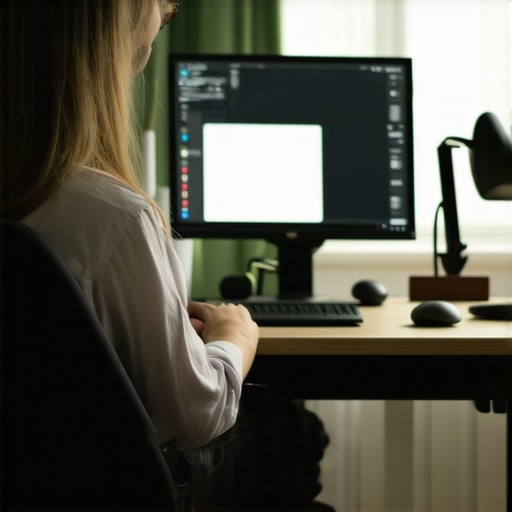
The 20-20-20 Rule is Your New Best Friend
To break the visual-mechanical loop, you have to force a reset. Every 20 minutes, look at something 20 feet away for at least 20 seconds. This relaxes the ciliary muscles in your eyes. I started setting a silent haptic alarm on my watch to remind me. During those 20 seconds, I also perform the 10 second move to reset your shoulders at work. It’s a double-whammy of relief. You’re clearing the visual ‘fog’ and the physical tension at the same time.
Why Mobility and Adjustments Go Hand-in-Hand
Once you’ve fixed the visual triggers, you have to deal with the residual physical damage. If your neck has been stuck in a forward position for years, simply moving your monitor won’t be a magic wand. This is where how chiropractic adjustments enhance posture and mobility play a crucial role. An adjustment clears the mechanical interference, while mobility boosts for posture expert tips for daily adjustments help you maintain that new range of motion.
A Simple Exercise to Reverse the Slouch
When I was at my worst, I couldn’t even stand against a wall without my head being inches away from the surface. I started practicing the single best exercise for preventing a dowagers hump every morning. It’s not about strength; it’s about retraining the neural pathways. You’re teaching your brain that it’s safe to keep the head back. Even if you’re currently dealing with things like why most people do the cat cow stretch wrong, focus on the upper back and neck integration first. Your eyes set the stage, but your habits build the set.
Here’s the thing that most ergonomic gurus won’t tell you: there is no such thing as a perfect, static posture. We’ve been sold this idea that if we just sit like a mannequin, our pain will disappear. But in my experience, and backed by research in the Journal of Electromyography and Kinesiology, postural variety is far more important than any single ideal position. When you try to hold yourself perfectly upright, you create a different kind of isometric tension. I spent years trying to maintain a military posture, only to realize the truth about perfect posture and why it doesnt exist is that your best posture is actually your next posture. Movement is the only real solution to the static loads of modern work.

Stop Stretching Your Neck Into Oblivion
One of the biggest mistakes I see—and one I’m personally guilty of making—is over-stretching a neck that is already screaming for help. When your neck muscles are tight because they are protecting an unstable joint or compensating for eye strain, yanking on them with aggressive stretches is like pulling on a knot in a rope; it just gets tighter. I’ve seen so many people find that why stretching your neck is making your headaches worse is actually due to micro-trauma and neurological guarding. If you are constantly stretching and the tension returns ten minutes later, you aren’t fixing a mobility issue—you’re ignoring a stability or alignment issue. In fact, why your gentle stretching is actually causing more inflammation often comes down to the fact that the muscle is already over-lengthened and weak. You cannot stretch a muscle into becoming stronger.
Does my mobility routine actually target the real problem?
This is the question that separates the beginners from the experts. You can foam roll your upper back until you’re blue in the face, but if the underlying vertebrae are restricted or subluxated, you’re just tenderizing the meat without fixing the frame. This is where chiropractic adjustments unlock a pain-free lifestyle today by restoring the actual joint mechanics. Once the joint moves, then your mobility work finally starts to stick. Without that mechanical reset, you’re just spinning your wheels and wasting time. I used to fall into the mobility trap where I’d spend 40 minutes a day on a roller, only to have my neck lock up the moment I sat back at my desk. It wasn’t until I combined specific adjustments with mobility boosts for posture expert tips for daily adjustments that I saw permanent changes. Have you ever fallen into this trap of endless stretching with no results? Let me know in the comments below, because I’d bet my bottom dollar you’re not alone.
I’m a bit of a nerd when it comes to the gear that keeps my body functional. It’s not just about fancy chairs; it’s about the software that protects my eyes. I personally swear by a tool called f.lux (or Iris for the power users). These programs automatically warm up your screen colors as the sun goes down. Why does this matter for your neck? Because high-energy blue light creates a specific kind of retinal fatigue that makes you lean closer to the screen to resolve images. When I started using blue-light blockers and screen-dimming software, my tendency to ‘hunch’ late in the workday dropped significantly.
Beyond software, I never sit without a lumbar roll anymore. Learning how to use a lumbar roll correctly in an office chair was a game-changer because it maintains the natural curve of the lower back, which indirectly keeps the neck from shearing forward. It’s a chain reaction. If your pelvis is stable, your neck doesn’t have to compensate. I found that even the most expensive ergonomic chairs sometimes lack the specific support my body needs, and a simple ten-dollar foam roll often does a better job of locking me into a neutral position.
How can I keep my spine aligned year after year?
Maintenance isn’t a destination; it’s a series of small, intentional resets. I treat my spinal health like I treat my car’s oil changes. Even when I feel ‘fine,’ I schedule periodic check-ups because why chiropractic care is your secret weapon for better posture often comes down to catching tiny misalignments before they become chronic pain. In between those visits, I rely on mobility hacks simple adjustments for a more active life to keep the joints lubricated. You can’t just fix your posture once and expect it to stay fixed while you live in a world designed to make you slouch.
Dr. James Sheedy, a leading expert at the Vision Performance Institute at Pacific University, has extensively documented how ‘Computer Vision Syndrome’ (CVS) causes people to adopt a ‘head-forward’ posture to compensate for poor visual clarity or glare. This validates what I’ve felt personally: your eyes are the steering wheel of your spine. If you aren’t managing your visual environment, you’re fighting a losing battle with your biomechanics.
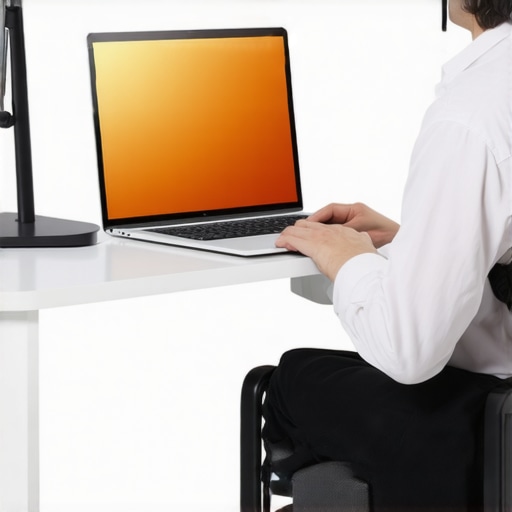
I predict that in the next five years, we won’t just have posture sensors on our backs, but AI-integrated webcams that track eye-strain patterns and tell you exactly when to stand up before the pain even starts. Until that tech is built into every laptop, you have to be your own advocate. You need to master the best standing desk interval for maximum back health—usually switching between sitting and standing every 30 to 45 minutes—to prevent your muscles from ‘setting’ into a molded shape.
If you want to stop the cycle of recurring stiffness, you have to look at revolutionize your posture with targeted mobility exercises as a daily hygiene habit, just like brushing your teeth. Consistency beats intensity every single time. My challenge for you this week is to download a blue-light filter and commit to one five-minute mobility routine during your lunch break. You’ll be surprised how quickly those ‘permanent’ knots start to dissolve when you stop feeding the fire of static tension.
The Hard Truths About My Spinal Sabotage
Reflecting on my journey from chronic stiffness to fluid movement, I realized I was looking for complex solutions to simple mechanical errors. First, I had to accept that the truth about perfect posture and why it doesnt exist is that my body needs to move, not just sit still. Second, I learned that my eyes were literally steering my vertebrae into a forward tilt; if my vision was tired, my chin would ‘reach’ for the screen. Finally, I discovered that chasing the pain with stretches was often a mistake because why stretching your neck is making your headaches worse is usually down to over-sensitizing already stressed tissues. You cannot force a muscle to relax if the nervous system still feels the need to protect the joint.
Tools That Saved My Spine from My Screen
You don’t need a thousand-dollar chair to fix your life, but you do need a few intentional tools. I swear by f.lux for warming up screen light, which keeps my eyes from ‘squinting’ my neck into a spasm. I also never work without knowing how to use a lumbar roll correctly in an office chair, because supporting the low back takes the ‘pull’ off the cervical spine. For the physical resets, I’ve found that mobility hacks simple adjustments for a more active life are far more effective than one long, grueling gym session once a week. And of course, I rely on regular professional maintenance because why chiropractic care is your secret weapon for better posture is that it clears the mechanical static so your healthy habits can actually take root. [image_placeholder_e]
Take Back Control of Your Daily Movement
Your spine was designed to carry you through a lifetime of adventure, not just survive a forty-hour work week. By syncing your visual environment with your physical alignment, you stop fighting against your own biology. Start with the small stuff: zoom in on your text, move your monitor up, and remember that chiropractic adjustments unlock a pain-free lifestyle today by giving your nervous system the reset it deserves. You don’t have to live in a cycle of tension. With mobility boosts for posture expert tips for daily adjustments, you can rebuild a foundation that supports your eyes, your neck, and your future. Have you ever noticed your neck pain getting worse specifically after a long day of screen time? Let me know in the comments below!