

I remember hobbling out of bed three years ago after a personal best on my deadlift. My back didn’t just hurt; it felt like someone had poured concrete into my joints while I slept. I blamed the volume. I blamed the weights. I even blamed my age. But the truth was staring me in the face—or rather, it was twisted under my hip. I was sleeping in a way that actively fought against the work I did in the gym. If you are training hard and still feeling like a rusted hinge in the morning, your bed posture is likely the culprit. We are going to fix that today by aligning your sleep with your fitness goals.
Stop Waking Up Like a Human Pretzel
You spend hours perfecting your form at the gym, but then you spend eight hours in a ‘crushed bug’ position. This is the nighttime habit that is ruining your spinal alignment and blunting your hard-earned gains. I made the massive mistake of thinking recovery happened the moment I stepped out of the shower and downed a protein shake. Wrong. Recovery is a 24-hour cycle, and your pillow is just as important as your foam roller. If you are a side sleeper like I was, you might be crushing your shoulder and wondering why your bench press is stalling or why your traps feel like piano wires. According to the National Sleep Foundation, deep sleep is the primary window for the body to release growth hormone and repair muscle tissue. However, if your spine is twisted into a corkscrew, your nervous system stays on high alert, preventing that deep, restorative state from ever fully taking hold. Often, why your neck hurts after a session at the gym isn’t the workout itself, but the lack of support while you dream.
Does my bed really matter that much?
It is easy to be skeptical. I used to think the ‘sleep hygiene’ crowd was just trying to sell me $200 pillows and fancy lavender mists. But when you realize your body is a biological machine that requires precise alignment to heal, the lightbulb finally flickers on. Have you ever woken up feeling stiffer than you did before you went to bed? I would love to hear your story—reach out and tell me if you have faced that specific morning ‘rigor mortis.’ Before you consider an expensive overhaul of your bedroom, it is worth looking at your setup. You might just need a small change, like the ones found in this 4-point checklist for choosing a new mattress, to finally allow your muscles to relax. We are going to dive into the specific mechanics of how to prop yourself up so your body can finally do its job.
Engineer Your Body for Maximum Recovery
Think of your spine like a suspension bridge. If the cables—your muscles and ligaments—are pulled too tight on one side and slack on the other for eight hours, the whole structure starts to sag. To prevent this, we need to use pillows as ‘shims’ to level the deck. When I first tried to fix my hip tilt, I felt ridiculous. I bought a massive, six-foot body pillow. I looked like I was wrestling a giant marshmallow every night, and my wife definitely laughed at the ‘pillow wall’ between us. But three days later? That nagging ‘click’ in my lower back when I got out of bed was gone. It wasn’t magic; it was just basic geometry. This type of alignment is why many find that chiropractic adjustments enhance posture and mobility—they reset the foundation, but your sleep habits maintain it.
Stop Crushing Your Shoulders Like a Paper Cup
If you sleep on your side, your bottom shoulder often ends up pinned under your chest, rotating your upper back and straining your rotator cuff. This is exactly how to sleep on your side without crushing your shoulder: you need to pull your bottom shoulder slightly forward so you aren’t resting directly on the joint. Then, hug a pillow to your chest. This ‘spacers’ the distance between your arms, preventing your top shoulder from collapsing inward and pulling on your mid-back muscles. When your shoulders are rounded forward all night, you develop ‘tech neck’ even while unconscious. Propping your arm up reduces the tension on your pec minor, which is often why your traps are always tight even after a massage. 
Use a Knee Pillow to Save Your Lower Back
When you lie on your side without support, your top leg falls forward, twisting your pelvis and tugging on the lumbar spine. It’s like leaving a heavy weight hanging off one side of a scale. By placing a firm pillow between your knees and ankles, you keep your hips stacked. This is one of the most effective mobility boosts for posture you can implement tonight. If you’ve been struggling with SI joint issues, pairing this with the side-lying stretch that resets your SI joint before bed will create a massive difference in how your hips feel during your morning squats. I found that once I stabilized my pelvis at night, I didn’t need to spend twenty minutes on a foam roller just to put my socks on. This consistent alignment is part of improving posture through mobility because it prevents the ‘setting’ of bad patterns while the tissue cools down and repairs.
Check Your Pillow Height for Better Alignment
Your neck should stay neutral, not cranked toward the ceiling or sinking toward the mattress. If your pillow is too thin, your head drops, stretching the nerves on one side and compressing them on the other. You can perform a quick diagnostic to see if your pillow is too flat in about five seconds. The goal is to fill the gap between your ear and the edge of your shoulder perfectly. Using the pillow height trick that stops morning neck stiffness involves stacking or folding until your nose is perfectly aligned with the center of your chest. This isn’t just about comfort; it’s about ensuring your nervous system isn’t being pinched while you’re trying to grow muscle. When the neck is out of whack, it creates a chain reaction down the spine, often leading to why your wrist hurting might be a mid-back problem due to nerve interference. Keep the head level, and the rest of the body follows suit.Let’s dig deeper. Most people think mobility is about being as flexible as a gymnast, but that’s where the first major mistake happens. We’ve been sold this idea that ‘perfect’ posture means sitting at 90-degree angles with our shoulders pinned back like a Victorian soldier. In reality, that rigid stillness is exactly why your perfect posture is actually causing muscle fatigue. Your body wasn’t designed to be a statue; it was designed to be a river. When you force yourself into a static ‘ideal’ position, you create isometric tension that starves your muscles of blood flow and eventually leads to the very aches you are trying to avoid. Have you ever fallen into this trap of trying to sit ‘correctly’ only to end up in more pain? Let me know in the comments.
Is my search for perfect alignment actually hurting me?
The short answer is yes, if you are sacrificing movement for a specific look. A 2018 study in the Journal of Orthopaedic & Sports Physical Therapy highlighted that there is no single ‘correct’ posture that prevents back pain; rather, the real issue is ‘posture duration.’ The best posture is always your next posture. This is a nuance that many beginners miss: they focus on the position rather than the transition. When you stay in any one spot too long, even a ‘good’ one, your tissues start to creep and lose their elastic integrity. This is often where we see people develop chronic stiffness that doesn’t respond to traditional stretching.
The Tight Hamstring Delusion
Here is the ‘oops’ factor I see most often in the gym: people who spend twenty minutes a day cranking on their legs, yet they stay as stiff as a board. This is usually because they are dealing with neural tension, not short muscles. In these cases, why your hamstring stretch is actually irritating your sciatic nerve becomes the central problem. If you pull on a nerve that is already sensitized or ‘tethered’ by poor spinal alignment, the brain will tighten the muscle further as a protective mechanism. You are essentially fighting your own nervous system. If you feel a ‘zing’ or a tingling sensation while stretching, that is a warning sign. This explains why your hamstring stretches aren’t fixing your tightness; you’re simply irritating the conduit that carries the signals. 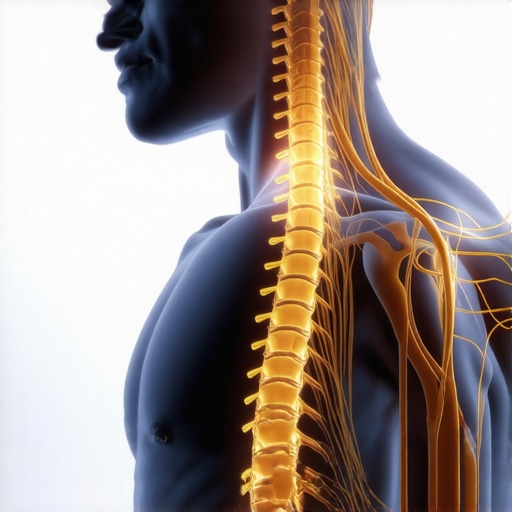
Your Brain is the Ultimate Mobility Gatekeeper
This is where the nuance of professional help becomes vital. People often think a chiropractic adjustment is just about ‘putting a bone back in place.’ In reality, it’s about providing specific neurological input. Understanding the link between mobility and posture requires realizing that your brain controls your muscle tone based on the signals it receives from your joints. If a joint in your spine or pelvis isn’t moving through its full range, the brain ‘locks’ the surrounding area to prevent injury. That’s why chiropractic care is your secret weapon for better posture—it’s not just a mechanical fix, it’s a nervous system reboot. You cannot out-stretch a brain that thinks it needs to protect you from movement. By using improving posture through mobility, you aren’t just forcing your body into a shape; you are teaching your nervous system that those ranges of motion are safe to inhabit again. Stop trying to win a tug-of-war with your own ligaments and start working with your biology.Maintaining your progress isn’t about doing more; it’s about being more intentional with the minutes you have. I used to spend forty-five minutes every morning stretching, but I realized I was just treading water because I wasn’t addressing the underlying mechanical blocks. This is where how chiropractic adjustments enhance posture and mobility—they give you a clean slate so your daily maintenance actually sticks.
How do I maintain my mobility results over time?
The secret isn’t a weekend marathon of yoga; it’s what Dr. Kelly Starrett, author of Becoming a Supple Leopard, calls ‘mobilizing in position.’ This means checking your alignment while you are actually doing the work. If you are sitting, you check your lumbar curve. If you are lifting, you find your hip hinge. I treat my body like a high-performance vehicle that needs a weekly alignment check. Small mobility hacks simple adjustments for a more active life are the bread and butter of long-term success. I personally use a simple lacrosse ball for targeted trigger point work because it gets into the tissue much deeper than a standard roller. In fact, the truth about foam rolling your lower back is that it often misses the deeper psoas and quadratus lumborum muscles that are truly causing your stiffness. 
Why Your Recovery Kit Needs More Than Just a Foam Roller
To keep things working, you need tools that offer precision. I’ve found that a percussion massage gun is great for blood flow, but nothing replaces a firm surface to ‘smash and floss’ your tissues. When I’m traveling, I use a specific ‘Voodoo Floss’ band to create joint distraction and shear force, which helps reset the joint capsule in ways a stretch never could. This is one of those mobility boosts for posture that takes two minutes but feels like a professional session. I also rely on improving posture through mobility by incorporating active hangs from a pull-up bar every single day to decompress my spine.
The Future of How We Move and Align
Looking ahead, I predict we are going to see a massive shift toward biofeedback-integrated clothing. We are already seeing prototypes of ‘smart’ shirts that vibrate when your shoulders round too far forward during a deep-work session. This real-time neurological feedback will make why chiropractic care is your secret weapon for better posture even more effective because we will be able to track our spinal health as closely as we track our heart rate. If you want to start today, try this: set a timer for every 30 minutes and perform one 10-second ‘sternum lift.’ It sounds simple, but it’s the most effective way to fight the gravity of a desk job. If you’re feeling stuck, don’t hesitate to contact us to get a professional look at your alignment.
Why I Stopped Chasing the Perfect Posture Statue
After years of trial and error, the hardest lesson I learned was that immobility is the real enemy, not a specific position. I used to spend hours trying to sit ‘correctly,’ only to realize that why your perfect posture is actually causing muscle fatigue was my lack of variety. My second ‘lightbulb’ moment came when I realized my brain was the one holding the brakes. If your nervous system feels unsafe, it will lock your joints regardless of how much you stretch. This is where improving posture through mobility becomes a game of neurological safety rather than just pulling on tight tissues. Lastly, I realized that recovery is cumulative; a bad night of sleep with poor spinal alignment is like taking two steps back for every step you take in the gym. #IMAGE_PLACEHOLDER_E#
The Practical Toolkit for Staying Fluid Every Day
You do not need a gym full of equipment to maintain your results, but you do need tools that provide specific input. I always keep a standard lacrosse ball in my bag for targeted trigger point work on the glutes and shoulders. I also frequently revisit the 4-point checklist for choosing a new mattress because your foundation determines your recovery potential for a third of your life. For deeper reading, I highly suggest ‘Becoming a Supple Leopard’ by Dr. Kelly Starrett—it is the ultimate manual for human maintenance. If you are constantly on the move, these mobility hacks simple adjustments for a more active life are the low-hanging fruit that keep you from tightening up during long workdays.
Your Future Without the Morning Rigor Mortis
Stepping out of bed shouldn’t feel like a chore. By aligning your sleep habits with your physical goals, you are finally giving your body the permission it needs to heal. You have the tools now—from pillow shims to shoulder spacers—to stop fighting your own biology. Achieving long-term success in the ultimate guide to improving mobility and posture in 2025 is about the small, daily choices that add up to a pain-free life. If you find that you are still hitting mechanical roadblocks that won’t budge, do not hesitate to contact us for a professional assessment. Have you ever tried a knee pillow and noticed an immediate change in your lower back pain? Let me know your experience in the comments below!