

I remember the sound vividly—a sharp, satisfying crack that echoed through my quiet home office every sixty minutes like clockwork. I would grab the arms of my chair, take a deep breath, and wrench my torso to the left until I felt that familiar release. For about five minutes, I felt like a new person. But then, the tightness would creep back in, grittier and more insistent than it was before. I was addicted to the pop, and honestly, I thought I was doing myself a favor by performing my own little adjustments. I was my own worst enemy, chasing a short-term hit of dopamine while my spine was screaming for actual stability. My biggest mistake early on was confusing ‘movement’ with ‘health.’ I assumed that because I could make my back click, I was mobile. In reality, I was just hyper-extending the same few joints over and over while the truly stiff areas stayed locked up tight. It is a trap that many of us fall into, especially when why your back pops every time you twist in your office chair becomes a source of temporary relief rather than a warning sign.
Stop treating your spine like a glow stick
The satisfying sensation you get from a self-crack isn’t actually your bones moving back into place. It is a gas bubble collapsing—a process called cavitation. When you do this every hour, you aren’t fixing a problem; you are likely creating one called hypermobility. I learned the hard way that by constantly forcing those joints to pop, I was stretching out the ligaments that were supposed to keep my spine stable. It’s a vicious cycle: the more you crack, the looser the ligaments get, which makes the joint feel ‘unstable,’ which then makes you feel like you need to crack it again to feel ‘right.’ You are essentially self-inducing a state of instability. Instead of focusing on the noise, we need to focus on why that tension is building up in the first place. Often, it’s not a lack of cracking, but a lack of controlled movement. I eventually found that the morning routine that stops your back from clicking was far more effective than my hourly twisting habit ever was. [image placeholder]
Is it actually dangerous to crack your own back?
This is the question I get asked most often by neighbors and friends when they see me doing mobility drills instead of chair-twists. The short answer is: not usually in a ‘broken bone’ kind of way, but it is incredibly counterproductive. Research published in the Journal of Physical Therapy Science suggests that repetitive self-manipulation can lead to localized muscle guarding, as your body tries to stiffen up to protect the joints you’ve made too loose. You’re essentially fighting your own biology. Have you ever felt like you physically couldn’t stop yourself from cracking your neck or back just to get through a long meeting? I’ve been there, and I want to tell you that there is a way to break that ‘need’ for the pop. We are going to look at how to address the root causes of that pressure. Before we dive into the fixes, we have to understand the truth about cracking your own knuckles and neck at home and why your spine requires a much more delicate touch than your fingers do. Let’s start looking at how we can replace that frantic twisting with movements that actually build a resilient, quiet spine.
Find the frozen segments instead of the loose ones
Think of your spine like a rusty chain. When you twist and crack, you are only moving the links that are already loose. The rusty, stuck links stay exactly where they are. To fix this, you have to learn how to test your own spinal rotation at home to identify those ‘dead zones’ where the rust has truly set in. Most people who habitually crack their backs have plenty of movement in their lower back but are completely ‘frozen’ in their thoracic spine (the mid-back). When you force a twist, the mid-back stays stiff, and the lower back—which is already over-mobile—takes the brunt of the force. This is why you feel the need to do it again ten minutes later.
The slow motion fix for a crunchy spine
Instead of a violent twist, you need to perform what I call ‘segmental peeling.’ Imagine your spine is a piece of Velcro being pulled apart slowly, one hook at a time. Start on all fours and slowly arch your back, but instead of moving the whole thing at once, try to move only the base of your neck, then the space between your shoulder blades, then the middle of your back. I remember trying this for the first time after a three-day tech conference where I’d spent twelve hours a day in a terrible plastic chair. My instinct was to grab a door frame and twist until I heard a dozen pops. Instead, I spent five minutes doing the 2-minute drill for better spinal rotation with zero clicking. My back felt ‘boring’ afterward—no rush of endorphins, just a quiet, functional absence of pain. 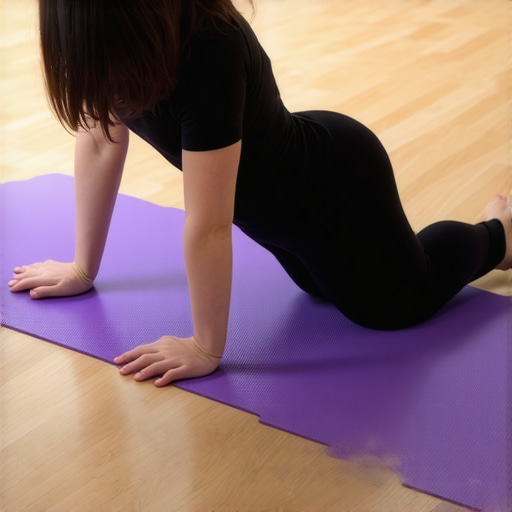
Stop the rib flare to protect your lumbar
A huge reason we feel the urge to crack our mid-backs is that our ribs are ‘flaring’ out. This happens when your core isn’t engaged, and your mid-back has to arch excessively to keep you upright. You are essentially pinching your own facet joints. To fix this, you need to learn how to breathe into your back to relieve rib tension. When you inhale, try to push your breath into the space between your shoulder blades rather than letting your belly and chest puff forward. This creates internal pressure that ‘adjusts’ you from the inside out without the need for a high-velocity crack. If you can master this, you’ll find that the bracing technique that protects your spine during heavy yard work starts with your breath, not just your muscles.
Isolate your neck movements
The same logic applies to your neck. Most people roll their heads in big, grinding circles, which is just rubbing the joints together like sandpaper. It feels ‘productive’ because of the noise, but you’re actually just wearing down the cartilage. You should stop rolling your neck in circles and do this instead: perform ‘tucks’ and ‘protrusions.’ Draw your chin straight back as if you’re making a double chin, then slowly rotate only a few degrees. You’ll likely find a spot that feels tight but won’t pop. That is the area that actually needs the blood flow. By avoiding the easy pop, you force the body to actually mobilize the stiff tissue. It takes more discipline than a quick twist, but it’s the only way to stop the ‘heavy head’ feeling that leads to chronic tension.
Moving beyond the immediate gratification of a self-crack requires a shift in how we think about our bodies. We’ve been conditioned to believe that ‘stiffness’ always equals ‘tightness’ that needs to be stretched out, but that is one of the most common myths in the world of mobility. In my journey from a chronic self-adjuster to someone with a quiet spine, I realized that many of my ‘stretching’ habits were actually making my pain worse. Let’s dig deeper into the nuances that most people—and even some trainers—get wrong about how the spine actually functions.
Stop trying to sit like a statue
The most pervasive lie we’ve been told is that there is a ‘perfect’ posture we must hold at all costs. You’ve seen the diagrams: ears over shoulders, shoulders over hips, 90-degree angles everywhere. But research published in the Journal of Bodywork and Movement Therapies suggests that ‘postural variability’—the ability to move through many different positions—is far more important than the quality of any single static pose. When you try to maintain a rigid, upright position for hours, you are essentially asking your postural muscles to perform a marathon-length isometric hold. This is exactly why your perfect posture is actually causing muscle fatigue. Instead of focusing on being ‘straight,’ focus on being ‘fluid.’ Your best posture is your next posture.
Don’t take your foam roller to your lower back
Here is a massive ‘oops’ factor I see in gyms every single day: people laying flat on a foam roller and rolling their lumbar spine. This is a dangerous trap. Unlike your mid-back, which is protected by your rib cage, your lower back is relatively unsupported. When you put the full weight of your torso on a hard roller in that area, you risk jamming the facet joints together and putting unnecessary pressure on your spinal discs. I learned the hard way that the truth about foam rolling your lower back is that it usually creates more inflammation than relief. If your lower back feels tight, the problem is almost never the lower back itself—it’s usually coming from ‘stuck’ segments above or below it. 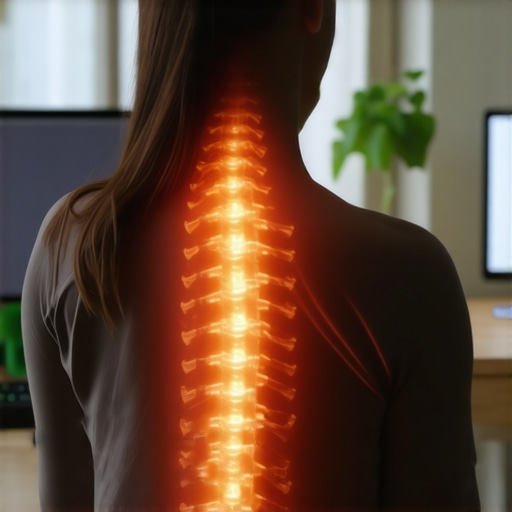
Why does the tension return minutes after a stretch?
If you find yourself stretching your hamstrings every morning only for them to feel like steel cables by noon, you aren’t ‘tight’; you are likely experiencing ‘neural tension.’ Your brain is keeping those muscles stiff to protect your sciatic nerve or to stabilize an unstable pelvis. This is a sophisticated nuance: sometimes your body uses tightness as a secondary brace because your core isn’t doing its job. This is why stretching your hamstrings might actually make your back pain worse if the root cause is actually a pelvic tilt issue. Have you ever fallen into this trap of stretching the same spot for years with no permanent change? Let me know in the comments.
The hidden connection between your shoulders and your spine
We often treat a ‘stuck’ feeling in the neck as an isolated incident, but the body doesn’t work in silos. If you notice the truth about why one shoulder sits higher than the other, it’s rarely just a shoulder problem. It is usually a sign that your rib cage is rotated or your mid-back has lost its ability to side-bend. This is where professional intervention becomes a game-changer. Understanding how chiropractic adjustments enhance posture and mobility involves more than just ‘cracking’ joints; it’s about restoring the specific mechanical communication between your brain and those frozen segments we talked about earlier. When you stop chasing the noise and start addressing the mechanical ‘dead zones,’ your spine finally gets the permission it needs to be quiet. It takes patience to stop the ‘hourly pop,’ but the reward is a body that feels light, capable, and ready for more than just a desk chair.
I used to think I needed a $2,000 ergonomic throne to fix my issues, but I was wrong. I spent years buying every gadget on the market, but the truth is that your best friend is often a simple $5 rubber ball. I personally use a ‘peanut’—two lacrosse balls taped together—every single evening before bed. I place it right between my shoulder blades and just lean back. Why? Because unlike a broad foam roller, the peanut allows your spine to sit in the gap while the rubber targets the tight paraspinal muscles. It is a targeted hit that actually addresses the ‘rust’ we talked about earlier. When you pair these home tools with professional guidance, you start to see why chiropractic care is your secret weapon for better posture; the pros handle the mechanical ‘hardware,’ and you handle the daily ‘software’ maintenance through movement.
How do I maintain a quiet spine over time?
Consistency beats intensity every single time. You don’t need a 60-minute yoga flow; you need what I call ‘movement snacks.’ I set a timer for every 50 minutes of work. When it goes off, I perform one minute of back-breathing and ten slow, controlled shoulder rolls. It is about signaling to your nervous system that it doesn’t need to lock down into a defensive posture. This is the core of mobility hacks and simple adjustments for a more active life. As Dr. Stuart McGill, a world-renowned biomechanics expert and professor emeritus at the University of Waterloo, famously points out, ‘proximal stiffness leads to distal mobility.’ If you build that core stability and quiet the ‘pop’ habit, your limbs and neck will naturally feel looser without the constant need for stretching. 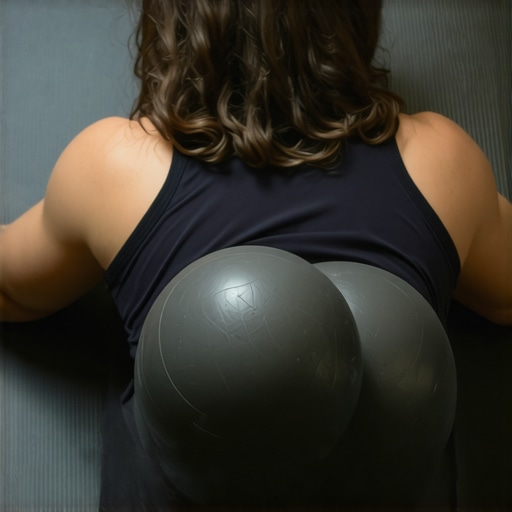
Look out for the AI posture revolution
We are moving into an era where our devices will finally start helping us instead of just hurting us. I am already seeing apps and monitor extensions that use your webcam to track your eye level and alert you when you start the ‘gamer lean.’ In the next few years, I predict we will see biofeedback sensors built directly into our office clothing that vibrate the moment your lower traps stop firing. This tech will make the ultimate guide to improving mobility and posture in 2025 look like ancient history. But until that tech is perfected, we have to rely on our own awareness and the right professional experts. If you are tired of the DIY guessing game and want to stop the cycle of stiffness, do not hesitate to contact us to find a plan that actually sticks. My advanced tip for you today: tonight, instead of scrolling on your phone in bed, spend two minutes breathing into your back while lying on the hard floor. It is the fastest way to downregulate your nervous system and tell those ‘clicky’ joints to finally relax.
The Hardest Lesson I Learned While Chasing the ‘Pop’
Reflecting on my journey, the most profound realization was that my ‘need’ to crack was actually a cry for help from a nervous system that felt unsafe. I spent years thinking I was a pro at ‘self-adjusting,’ but here is what I eventually discovered through trial, error, and research:
- Stability is the real goal: Movement without control is just chaos. I had to learn that how chiropractic adjustments enhance posture and mobility isn’t about making noise; it’s about restoring the mechanical communication between the brain and the bone.
- Noise is often a distraction: The louder the pop, the less likely you actually moved the segment that was truly stuck. The ‘rust’ stays stuck while the loose, hypermobile links do all the work.
- Stiffness isn’t your enemy: Your body creates stiffness as a secondary brace to protect you. Instead of fighting it with a violent twist, you have to learn to support it with better core mechanics.
My Minimalist Toolkit for a Resilient Back
You don’t need a basement full of expensive gym equipment to find relief from chronic tension. These are the specific tools I use every week to keep my spine from reverting to its old, crunchy ways:
First, the Lacrosse Ball Peanut. It is more effective than a broad foam roller because it allows the spinous processes to sit in the gap while the rubber targets the tight paraspinal muscles. Second, the book Becoming a Supple Leopard by Dr. Kelly Starrett is an absolute game-changer for anyone who wants to understand human maintenance. Third, I use a simple Interval Timer app to remind me to take those ‘movement snacks’ every hour. Finally, nothing replaces professional assessment; following the ultimate guide to improving mobility and posture in 2025 will show you that while tech is helping us, a skilled set of hands is still your best resource for finding those ‘dead zones.’
Your Journey to a Pain-Free Spine Starts Here
Breaking the habit of self-cracking is one of the kindest things you can do for your future self. It won’t happen overnight, and you might still feel that phantom ‘itch’ to twist for a while. But as you incorporate mobility hacks and simple adjustments for a more active life, you’ll eventually notice the silence. You’ll wake up without that immediate urge to wrench your neck, and you’ll sit through a long meeting without feeling like your back is made of dry twigs. If you’re ready to stop the guessing game and want a professional roadmap, feel free to contact us today. You deserve a body that supports your life rather than one that demands your constant, frantic attention. Which part of your back feels the most ‘stuck’ or ‘clicky’ right now? Let’s talk about it in the comments below.