
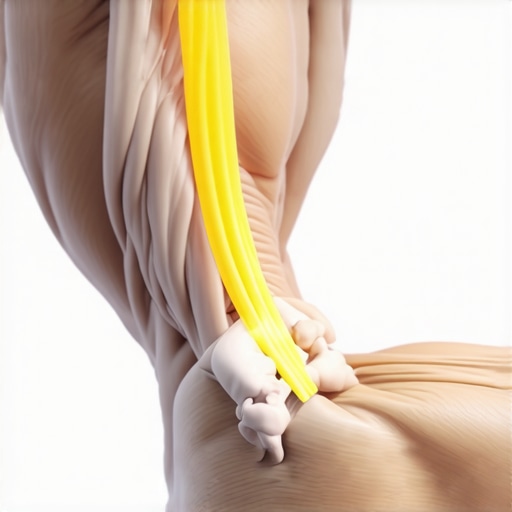
I was hunched over on my living room floor, face turning a deep shade of purple as I tried to force my forehead to touch my shins. I was convinced that if I could just get my hamstrings to ‘let go,’ my nagging lower back pain would vanish like a bad dream. Instead, I felt a hot, electric wire snap from my glute all the way to my heel. It wasn’t the ‘good’ kind of stretch—it was my sciatic nerve screaming for mercy. Many of us fall into this trap because we’ve been told since middle school gym class that flexibility is king. But when it comes to the complex relationship between your spine and your legs, why stretching your hamstrings might actually make your back pain worse is a reality many people ignore until they are hobbling. Today, I am going to show you why your routine is backfiring and how to finally find relief without the self-sabotage.
Stop Yanking on Your Legs and Start Listening
The biggest lie I ever believed was that my body was a piece of stiff leather that just needed more tension to become ‘supple.’ I spent months religiously following every flexibility drill I could find, yet my legs felt tighter every morning. I did not realize that I was dealing with neural tension, not muscle tightness. Nerves are not like muscles; they do not want to be pulled long. They need space to slide. When you over-stretch, you are essentially tugging on a delicate thread that is already snagged in your spine. This is often the real reason your hamstrings stay tight despite stretching—your brain is literally tightening the muscle to protect the nerve from being snapped.
Is this stretch actually worth the agony?
You might be wondering if you should just stop moving altogether. I get it. The fear of that lightning-bolt pain is real. But the solution is not total rest; it is smarter movement. According to the American Physical Therapy Association, traditional static stretching can often aggravate an already inflamed nerve, whereas dynamic ‘gliding’ techniques provide the relief you are actually looking for. Have you ever felt that weird tingling or numbness after a long yoga session or a deep stretch? If so, you are likely irritating the very thing you are trying to heal.
The Mistake That Left My Foot Tingling for Days
Early on, I made the classic error of ignoring the difference between ‘tight’ and ‘tethered.’ I thought I could power through the discomfort. I would grab a strap, loop it around my foot, and pull until I saw stars. I did not know the difference between a pulled muscle and a slipped disc, so I treated every sensation like a simple knot. That ego-driven approach led to a week of sleeping with a pillow between my knees just to stop the throbbing. If you have been doing the same thing—pulling, pushing, and wondering why the results are not coming—it is time to pivot. We need to focus on things like the hip hinge fix for chronic lower back aches instead of just mindless reaching. Let us look at how to tell if your nerve is the one calling the shots. Have you ever noticed your symptoms get worse after you try to ‘stretch them out’?
Stop Yanking and Start Gliding Your Nerves
To stop the cycle of back pain, you have to transition from aggressive stretching to “nerve flossing.” Think of your sciatic nerve like a piece of delicate silk thread running through a long, narrow plastic straw—this straw represents your spinal canal and the muscle tissue of your leg. If that silk thread gets snagged on a rough edge inside the straw, grabbing both ends and pulling with all your might will only fray the silk or snap it. This is exactly what you do when you perform a static hamstring stretch while your nerve is irritated. Instead, if you gently slide the thread back and forth, you can smooth out the snags without causing permanent damage. This is why the nerve glide that stops sciatica in the shower is significantly more effective than a traditional toe-touch. You aren’t trying to make the nerve longer; you are teaching it to slide through the surrounding tissues again without triggering a protective “clamp” from your nervous system.
How I Finally Broke the Cycle of Tightness
I’ll never forget the Tuesday afternoon I decided to stop the “big stretches” and try a simple seated glide instead. I sat on the edge of my kitchen chair, slumped my upper back slightly to put the nerve on a bit of tension, and then slowly straightened my right knee while simultaneously looking up at the ceiling. When I bent my knee back down, I looked down at my chest. It felt remarkably easy—almost too easy to be working. There was no “burn” or “pulling” sensation that I had grown to associate with “progress.” I did ten repetitions and stood up to walk to the fridge. For the first time in three years, that heavy, leaden feeling in my calf was gone. I realized then that my “tightness” was never about short muscles; it was a defensive shield my brain had created to prevent me from snapping a tethered nerve. 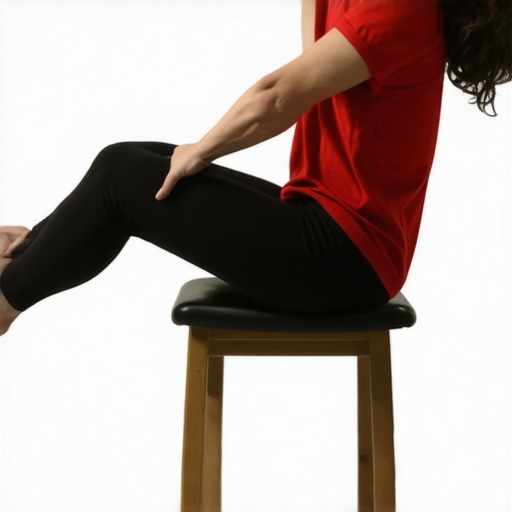
Master the Hip Hinge to Save Your Spine
Once you stop the nerve from screaming, you have to address the movement pattern that started the fire. Most people bend at the waist, which puts massive, uneven pressure on the lumbar discs and yanks on the nerve roots. Learning the hip hinge fix for chronic lower back aches is the single most important skill you can develop for long-term relief. It shifts the load from your vulnerable lower back to your powerful glutes and hamstrings. If you feel a “catch” in your groin or a sharp pull while trying this, you might need to learn how to fix a pinch in your hip when you squat deep to ensure your pelvis is rotating correctly. Proper hip mechanics ensure that the “straw” your nerve lives in stays wide and unobstructed.
Check the Foundation of Your Alignment
You can glide your nerves and hinge your hips all day, but if the “exit door” for your nerves—your spine—is restricted, you are essentially trying to drive a car with a bent frame. This is why chiropractic care is your secret weapon for better posture and nerve health. An adjustment can take the physical pressure off the nerve root at the source, making your mobility work ten times more effective because you aren’t fighting an anatomical roadblock. Don’t waste your time with the truth about foam rolling your lower back—it often does more harm than good by pushing on unstable joints or inflamed discs. Instead, focus on targeted movements that create space and stability in the joints that actually need it.One of the biggest mistakes I see people make—and one I lived through myself—is the obsession with ‘perfect’ posture. We’ve been conditioned to think that sitting as rigid as a board is the gold standard. In reality, why your perfect posture is actually causing muscle fatigue is a lesson in the law of diminishing returns. When you hold your body in a fixed, ‘ideal’ position for hours, you’re essentially asking your postural muscles to run a marathon without a break. This static tension restricts blood flow and leads to the very stiffness you’re trying to avoid. True posture isn’t a position; it’s the ability to move through positions fluidly.
Why do my joints feel like they need to pop all the time?
This is where most people fall into the ‘self-adjustment’ trap. I used to be the person who would twist my torso in my office chair just to hear that satisfying *crack*. It felt like instant relief, but ten minutes later, the tension was back, usually worse. This is a phenomenon known as ‘hypermobility in the wrong places.’ When you crack your own back, you are usually hitting the segments that are already moving too much, rather than the stuck ones that actually need help. The truth about cracking your own knuckles and neck at home is that you are creating a cycle of instability. You’re giving yourself a ‘junk fix’ that ignores the underlying restriction. To fix this, you have to understand that a real adjustment isn’t just about moving a bone; it’s about a neurological reset. Research by Dr. Heidi Haavik, a leading neuroscientist in chiropractic research, suggests that spinal adjustments actually change the way the brain perceives and controls the body by improving the integration of sensory input. It’s about ‘tuning’ the nervous system, not just ‘fixing’ a joint. This is exactly how chiropractic adjustments enhance posture and mobility—they clear the static on the line between your brain and your muscles. If you’ve been struggling with recurring tightness, it’s likely because you’re focusing on the symptom (the tight muscle) rather than the source (the neurological signal). This is why you feel taller after a spinal adjustment; your brain finally allows your muscles to relax because the ‘threat’ of a restricted joint has been removed. As we move forward, we are seeing a shift toward more integrated care. You can enhance your posture with expert chiropractic techniques in 2025 by combining these adjustments with the nerve gliding and hip hinging we discussed earlier. The nuance here is that your body isn’t a collection of separate parts; it’s a living, breathing network. If you ignore the foundation of your spine while trying to fix your hamstrings, you’re just painting a house that has a crumbling basement. Have you ever fallen into this trap of ‘over-stretching’ or constant self-cracking? Let me know in the comments below—I’d love to hear how you broke the cycle or what’s currently holding you back.
I used to think that as long as I got my spine adjusted once a month, I could spend the rest of my time crumpled over a laptop like a gargoyle. I was wrong. Maintenance isn’t just about showing up to an appointment; it is about the environment you build around your body. To truly scale your results, you need a toolkit that supports your nervous system while you aren’t thinking about it. My first big win was ditching the stock monitor stand. I realized that the simple change to your monitor height that kills headaches is the lowest-hanging fruit in ergonomics. I now use a gas-spring monitor arm that keeps the center of my screen exactly at eye level, preventing that slow, creeping chin-tuck that leads to ‘text neck.’ If you are constantly rubbing your temples at 3:00 PM, you might also need to find the exact spot to press for instant tension headache relief, but remember—that’s just a band-aid for a poorly positioned screen.
Equip Your Workspace Like a Spine Specialist
The second tool in my arsenal is a simple Lacrosse ball. I don’t use it on my lower back—that’s a recipe for disaster—but I use it to pin and stretch the muscles between my shoulder blades against a wall. This helps maintain the thoracic mobility that professional chiropractic adjustments unlock a pain-free lifestyle today by preventing the ‘stuck’ feeling in my mid-back. I also had to learn the hard way that why most standing desks are set at the wrong height is a major reason why people still have back pain even after ‘leveling up’ their office. Your elbows should be at a 90-degree angle, and your wrists should be neutral. If you’re reaching up or down to type, you’re creating a lever that pulls on your neck all day long.
How do I keep my spine healthy over the long haul?
Maintenance is a game of ‘spinal hygiene.’ Dr. Stuart McGill, a world-renowned expert in spine biomechanics and author of Low Back Disorders, often explains that the spine has a ‘fatigue life.’ This means every time you round your back under load, you are using up a bit of your spine’s longevity. To preserve it, you have to revolutionize your posture with targeted mobility exercises that focus on core stability rather than just raw flexibility. I personally perform the ‘McGill Big 3’ every single morning. It takes eight minutes and creates a ‘muscular corset’ that protects my discs while I’m doing mundane things like unloading groceries or picking up my dog. It is the insurance policy that keeps my adjustments ‘holding’ for weeks instead of days.
Smart Wearables and the Next Frontier of Movement
Looking toward the future, I predict we are going to see a massive shift from passive furniture to active biofeedback. We are already seeing the rise of wearable sensors that vibrate gently when your shoulders slump forward, essentially acting as a digital ‘posture coach.’ By 2026, I expect this tech to be integrated into our earbuds and glasses, using accelerometers to map our spinal curves in real-time. This real-time data will allow us to catch a ‘posture collapse’ before it turns into a pinched nerve or a migraine. For now, my best advice is to set a ‘movement snack’ timer. Every 30 minutes, I stand up, perform three deep diaphragmatic breaths, and do a quick wall-slide. It sounds small, but these micro-adjustments are what prevent the long-term ‘set’ of poor posture. My challenge for you this week: Raise your monitor by just two inches—use a stack of books if you have to—and see if those afternoon headaches don’t miraculously vanish.
The Three Truths That Saved My Sciatic Nerve
Reflecting on my journey from chronic pain to fluidity, I realized a few things that shifted everything. First, more tension is rarely the answer for a nerve that is already on high alert. If you feel like you are fighting your own body, you probably are. I learned that why your hamstring stretches arent fixing your tightness is usually because the problem is neurological, not muscular. Second, your body is incredibly smart; that ‘tight’ feeling is often a protective guard. Finally, consistent micro-movements are worth more than a single hour of aggressive yoga once a week. This is how you build the link between mobility and posture into your everyday life.
A Few Simple Tools for Your Spine Health
If you want to stop guessing and start healing, I recommend three specific starting points. For professional guidance, a qualified chiropractor can identify the exact segment of your spine that is stuck, which is much safer than a ‘self-crack.’ I also highly suggest checking out Back Mechanic by Dr. Stuart McGill; it changed how I viewed my daily movement. For your home office, check out the best monitor height for preventing tension headaches to ensure you aren’t undoing your progress while you work. Finally, keep a Lacrosse ball at your desk to address upper back tension before it migrates down to your lumbar spine.
#IMAGE_PLACEHOLDER_E#
Your Path to Pain-Free Movement Begins Now
You don’t have to live with the constant ‘shadow’ of back pain or the fear of a sudden flare-up. By shifting your focus from aggressive stretching to gentle gliding and smart ergonomics, you are giving your nervous system the safety it needs to relax. Using mobility hacks and simple adjustments will eventually make these movements feel like second nature. Remember, your spine is your foundation, and it deserves more than just a quick fix. Have you ever felt that strange ‘electric’ sensation during a stretch? Let me know in the comments below—I’d love to hear your story.