
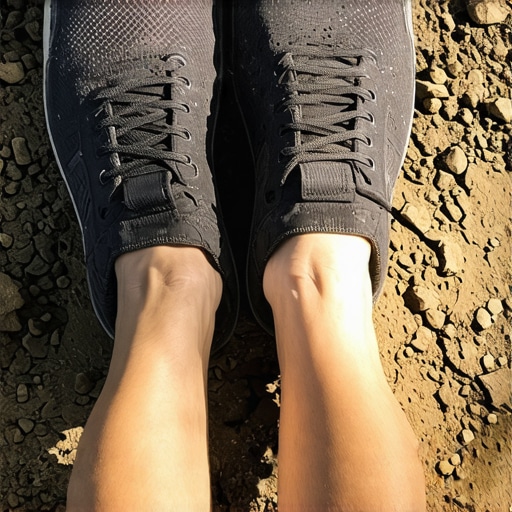
I’ll never forget the morning I tried to jump out of bed and nearly collapsed because my heels felt like they’d been hit with a sledgehammer. I’d just spent my first full day in “barefoot” shoes, convinced that my years of athletic experience made me immune to any transition period. I was wrong. Dead wrong. I made the classic mistake of treating my feet like they were already prepared for the wild, when in reality, they’d been living in padded coffins for over thirty years. If you’re feeling that nagging ache in your heel or wondering why your calves are suddenly as tight as piano wires, you aren’t alone. My ego got in the way of my anatomy, and it cost me three weeks of limping. But here’s the good news: you don’t have to repeat my failure. I’m going to show you exactly how to wake up your feet and reclaim your natural gait without the misery.
Stop Treating Your Feet Like They Are Fragile
We spend so much time focusing on daily mobility adjustments for our necks and backs that we often forget where the whole chain starts: the ground. When you strip away the thick foam, the air bubbles, and the elevated heels, you aren’t just changing your shoes; you’re changing the entire foundation of your skeletal system. For years, I ignored how my back pain was coming from my shoes, thinking a more expensive mattress or a fancy ergonomic chair was the fix. It wasn’t. Traditional shoes act like casts, causing the 29 muscles in each of your feet to atrophy from lack of use. Moving to a minimal sole allows those muscles to fire again, which is a glorious thing, but it’s also a shock to a system that has been sedentary for decades. You have to realize that your feet are currently in a state of rehabilitation, not just adaptation.
Is Minimalist Footwear Actually Worth the Hype?
You might be skeptical—especially if your first attempt at going barefoot left you sore and frustrated. I certainly was. But the science behind “foot freedom” is hard to ignore. According to research from Harvard University, walking and running in minimal footwear can significantly increase the strength of the intrinsic foot muscles, which are the primary stabilizers of your arches. The goal isn’t just to look trendy in toe-shoes; it’s to restore your natural arch and reclaim the structural integrity that modern footwear has stripped away. When your feet work correctly, your knees, hips, and lower back start to fall into alignment naturally. I finally understood the connection between my flat feet and hip pain once I stopped leaning on artificial supports and started building my own internal ones. But the catch is that you can’t rush biology. My biggest early mistake was thinking I could just swap my shoes and keep my same mileage. I didn’t follow the safe way to transition to zero-drop shoes, and my plantar fascia paid the price. Have you ever tried a pair of minimal shoes only to feel like you were walking on needles after just an hour? Let me know in the comments, because that’s the first sign your transition plan needs a major tweak. We are going to fix that today by looking at the specific mechanical shifts you need to make before you ever head out for a long walk.
Change How You Strike the Ground
Traditional shoes with thick, padded heels encourage a “heel-first” landing. This sends a jarring force through your skeleton that your knees and lower back have to absorb. When you switch to zero-drop soles, you must shift to a mid-foot or forefoot strike. Think of it like landing softly like a cat rather than stomping like an elephant. If you keep your old gait in new shoes, you’re basically inviting a stress fracture. I learned this the hard way on a morning run where I kept slamming my heels down; by mile two, my shins felt like they were vibrating. You need to shorten your stride and increase your cadence. Smaller, more frequent steps allow your feet to land directly under your center of mass, which is the best way to transition to zero-drop shoes safely.

Force Your Feet to Work Again
Your feet have been dormant. To wake them up, you need more than just new shoes; you need active mobility. Most people think stretching is the answer, but why your hamstring stretches aren’t fixing your tightness is often because the issue is neurological, not just length-based. The same applies to your feet. Start by “spreading” your toes manually. It sounds silly, but sitting on the floor and weaving your fingers between your toes can break up years of restricted fascia. I spent ten minutes every night doing this while watching TV, and within a week, the “crampy” feeling in my arches started to fade. This is how you begin to restore your natural arch from the inside out.
Spend Time Barefoot at Home First
Before you ever head out for a three-mile walk in minimalist gear, spend your evenings completely barefoot on hardwood or tile. This exposes your nerves to different textures and pressures without the risk of high-impact injury. It’s a low-stakes way to build the link between mobility and posture. I used to wear slippers the second I walked through the door, but switching to “true barefoot” at home prepared my skin and my small stabilizing muscles for the rigors of the outdoors. If you feel a “burn” in your soles, that’s good—it’s the intrinsic muscles finally doing their job.
Respect the Adaptation Curve
The biggest trap is the “all-or-nothing” mentality. Your bones and tendons take significantly longer to adapt than your muscles. I remember a specific Tuesday when my feet felt great, so I decided to wear my minimal shoes for an entire day of errands. By 4 PM, I was literally crawling to my car because my Achilles tendons were screaming. You should only increase your “barefoot time” by about 10% each week. This slow-loading approach is vital if you want to avoid the common difference between a sore muscle and a slipped disc or a severe tendon strain. Listen to the feedback your body gives you; if your calves feel like tight piano wires, you’ve done too much. Back off for a day, use a lacrosse ball to roll out the tension, and try again tomorrow with a shorter duration.
While fixing your feet is the first step, the real nuance—the part that most people miss—is what happens once you start working your way up the kinetic chain. I see it every day: people walking into the clinic with their shoulders pinned back so tightly they look like they’re wearing an invisible corset. They think they’ve mastered the “correct” way to stand, but in reality, they’re just creating a new set of compensation patterns. One of the biggest myths in the wellness world is that there is a single, static “perfect” position you should hold all day. In my experience, the quest for a rigid spine is exactly why your perfect posture is actually causing muscle fatigue. Your body wasn’t designed to be a statue; it was designed to be a spring.
Ditch the Military Stance
Everyone tells you to “pull your shoulders back and down,” but if you hold that position with brute force, you’re essentially suffocating your mid-back. This over-correction creates a massive trap: you end up locking your rib cage, which restricts your diaphragm and forces you to become a shallow chest-breather. I’ve seen patients who developed sharp, stabbing pains in their chest because they were trying so hard to look “upright.” Sometimes, how a single rib adjustment can stop that sharp pain when breathing is the only way to reset the system after months of postural over-achieving. True stability comes from dynamic movement, not from clamping your muscles into a specific shape. Have you ever tried so hard to sit up straight that your back actually hurt worse than when you were slouching? Let me know in the comments, because you’ve likely fallen into the “bracing” trap.
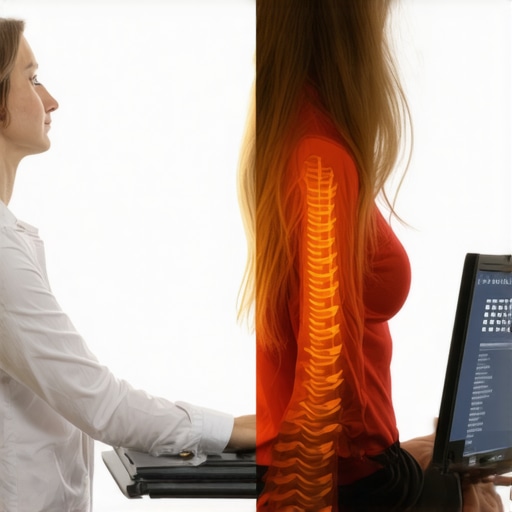
Does Rigid Sitting Kill Your Core Strength?
This is the question that separates the beginners from the pros. When you rely on willpower to stay upright, your deep stabilizer muscles actually stop firing because you’re overusing your large, superficial “mover” muscles like the traps and lats. This is also why most posture braces actually make your back weaker—they do the work for you, allowing your internal support system to go on vacation. A study published in the Journal of Bodywork and Movement Therapies highlights that “postural variability,” or the frequency of small movements, is a better predictor of spinal health than maintaining a fixed alignment. If you aren’t moving, you aren’t stabilizing. This is where how chiropractic adjustments enhance posture and mobility becomes a game changer; the goal isn’t just to “crack” a bone, but to restore the neurological feedback loop so your body moves naturally again.
The Danger of Over Stretching
Another nuance people get wrong is the difference between “tightness” and “weakness.” If your chest feels tight, your instinct is to stretch it for twenty minutes. But often, that tightness is actually a protective mechanism because your upper back is too weak to support your head. If you just keep stretching the “tight” area without building the underlying strength, you’re just making the joint more unstable. This is a core pillar in the ultimate guide to improving mobility and posture in 2025. You have to stop treating the symptom and start addressing the structural imbalance. We need to move away from the idea of “fixing” a position and toward the idea of “unlocking” a range of motion. The real secret isn’t sitting better; it’s moving more often and with more variety.
Once you’ve stopped making the rookie mistakes of over-bracing or rushing your shoe transition, you have to find a way to maintain that freedom without it becoming a second full-time job. I’ve gone through every gadget on the market—from vibrating massage guns to expensive ergonomic kneeling chairs—and honestly, most of it is just expensive clutter. My daily maintenance toolkit is surprisingly low-tech and focuses on high-impact results. My absolute go-to tool is a standard lacrosse ball for targeted myofascial release. While everyone else is busy foam rolling their lower back, which is one of those common errors I cover when explaining the truth about foam rolling your lower back, I am using the density of the lacrosse ball to find specific hot spots in my glutes and around my shoulder blades. This is where I integrate mobility hacks simple adjustments for a more active life to keep things fluid throughout a workday.

I also swear by tack-and-stretch techniques using compression bands. Dr. Kelly Starrett, the founder of The Ready State and a pioneer in the movement world, frequently emphasizes that the goal of mobility work is to restore ‘sliding surfaces’ between your muscle and fascia. If your tissues are glued together, no amount of traditional stretching will fix the underlying restriction. This is why I use Voodoo Floss bands for joint distraction on my ankles and knees before any heavy lifting or long walks. It’s about creating space in the joint capsule so the bones can move through their full range without friction. When these self-care tools aren’t enough to clear the fog, that is exactly why chiropractic care is your secret weapon for better posture; sometimes you need an external force to restore the motion that your own tools can’t reach. It’s the difference between greasing the gears and realigning the entire machine.
How do I keep these mobility gains for the next decade?
Maintenance isn’t about doing more; it’s about being more consistent with less. I see people go through a ‘mobility phase’ where they spend an hour a day on the floor, only to burn out and go back to being stiff within a month. The secret is the ‘minimum effective dose.’ I’ve found that three minutes of targeted work on my most restricted areas—usually my hips and ankles—yields better long-term results than a weekly marathon session. This consistency is a core pillar in the ultimate guide to improving mobility and posture in 2025. You have to treat your mobility like dental hygiene; you wouldn’t skip brushing your teeth for six days and then brush for two hours on Sunday. Your spine and joints require the same daily attention to prevent the ‘rust’ of a sedentary lifestyle from settling in. This is especially true if you are trying to revolutionize your posture with targeted mobility exercises that actually stick.
Looking forward, I predict that we are entering the era of ‘active’ bio-feedback. We are already seeing the rise of smart clothing and wearables that don’t just track your steps, but measure the specific torque and tension in your paraspinal muscles. In the future, your phone might nudge you not just to stand up, but to perform a specific nerve glide because it detects a lack of variability in your seated position. This shift from reactive treatment to proactive, data-driven micro-adjustments will fundamentally change how we view spinal health. We are moving away from the idea of ‘fixing’ ourselves and toward a model of constant, subtle refinement. If you want to get ahead of this curve, start with the basics right now. Pick one tool—a lacrosse ball or a simple stretch—and commit to just two minutes tomorrow morning before you even check your email. That tiny investment is the only way to ensure your body feels as good in twenty years as it does today.
The Hardest Lesson I Learned About Forcing My Alignment
For the longest time, I thought that fixing my body was a matter of sheer force. I believed that if I just stood up straighter or bought the ‘right’ shoes, the pain would vanish. But the lightbulb moment for me was realizing that posture isn’t a position you hold; it’s a capacity you build. I spent months trying to mimic what a ‘healthy’ person looked like, only to realize I was just creating new layers of tension. Your body needs variety, not just ‘correctness.’ If you spend all day in a rigid military stance, you aren’t healthy; you’re just brittle. The real breakthrough came when I started using improving posture through mobility practical chiropractor strategies rather than just trying to muscle my way into a straight line. I had to learn to trust the feedback loop of my own nervous system—if it hurts, something is off, regardless of how ‘perfect’ my stance looked in the mirror.
The High-Value Tools That Actually Saved My Back
You don’t need a thousand-dollar setup to fix your movement. If I had to start over with just three things, this would be my shortlist. First, a standard lacrosse ball is non-negotiable for breaking up those deep knots in the hips and shoulders. Second, a simple yoga block—not just for stretching, but for elevating one foot while standing to reset the pelvis. And third, a commitment to barefoot intervals on varied terrain like grass or sand. These tools work because they force your nervous system to wake up. When self-care isn’t enough to break the cycle of stiffness, that’s when I recommend looking into how chiropractic adjustments enhance posture and mobility. Sometimes the gears are simply stuck, and you need a professional to hit the reset button so your daily stretches actually start to work again. I trust these methods because they address the structural reality of the body, not just the temporary symptoms.
Ready to Feel Human Again?
Reclaiming your natural movement is a marathon, not a sprint. You didn’t lose your mobility in a day, and you won’t get it back in a single session. But every time you choose to sit on the floor instead of the sofa, or take a walk in minimal shoes, you are casting a vote for your future self. We are moving toward a time where ‘spine health’ is as common as ‘heart health,’ and you are already ahead of the curve. Don’t be afraid to fail, to feel a little sore, or to realize your old habits are hard to break. The goal is to revolutionize your posture with targeted mobility exercises that fit your life, not to live your life around your exercises. Stay consistent, stay curious, and keep moving. Have you ever noticed your back pain disappearing when you changed your footwear or started a new movement habit? Let me know in the comments below—I’d love to hear what finally clicked for you.