
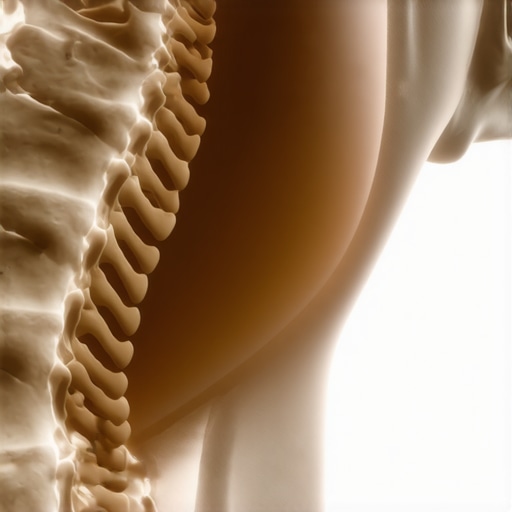
I was backing out of my driveway last Tuesday when it happened—that loud, dry crack right at the base of my skull. It did not just sound like a knuckle pop; it sounded like someone snapped a dry twig inside my head. My wife, sitting in the passenger seat, actually winced. “Was that you?” she asked. Yeah, it was. And honestly, it has been happening every time I check my blind spot lately. If you have ever felt that weird grit or heard that rhythmic clicking when you turn your head, you know exactly how unsettling it is. You start wondering if your head is actually going to stay attached or if you are grinding your vertebrae into dust. I remember one specific morning trying to do a simple shoulder check while merging onto the highway; the pop was so visceral I actually thought I had hit something. My heart was racing. That was the moment I realized my “ignoring it” strategy was a total failure. We often think of our bodies like cars—if there is a noise, something must be broken. But usually, the noise is just a signal that the lubrication and alignment are off. Today, I am peeling back the curtain on why this happens and how we can get things moving smoothly again.
Stop worrying about your noisy neck bones
The truth is, most of us spend way too much time staring at screens, which turns our neck muscles into tight guitar strings. I spent years thinking my neck was just “bad,” but the real culprit was usually my posture and a lack of mobility. Most of us are walking around with what I call “statue neck.” We sit so still for so long that our joints literally get thirsty for movement. When you finally do move, it is like opening a rusty gate. One of the biggest blunders I made early on was trying to force a stretch. I thought if I just pulled my head hard enough to the side, I could “un-stick” whatever was grinding. But I learned the hard way that stretching your neck improperly can actually make your headaches worse. You are not fixing the clicking; you are just straining the already sensitive ligaments. I also used to think the answer was to just keep cracking it myself to “release the pressure.” Huge mistake. In fact, learning why you should stop cracking your own back was the first real step in my recovery.
Does all that clicking mean I have early-onset arthritis?
It is the first thing everyone fears. You hear a crunch, and suddenly you are picturing your spine crumbling into powder. While it is true that wear and tear can play a role, most of the time it is just nitrogen bubbles or a tight tendon snapping over a bone. According to Harvard Health Publishing, joint sounds are extremely common and usually do not indicate a serious problem unless they come with sharp pain or numbness. The key is not to silence the noise, but to restore the underlying movement. If you are tired of feeling like a creaky floorboard, focusing on how chiropractic adjustments can unlock a pain-free lifestyle can be a total game-changer for getting those joints back in alignment. Have you ever had a neck pop so loud it actually made you jump or scared the person standing next to you? Tell me about your loudest “crack” in the comments below. Setting up a solid morning routine that stops your back from clicking is the first step toward a quieter, more mobile life.
Get your head out of your lap and save your spine
Most people treat their phone like a magnet for their chin. I caught myself doing this at a coffee shop last month—my chin was literally touching my collarbone while I scrolled through emails. This “text neck” adds about 60 pounds of pressure to your cervical spine. Instead of looking down, bring the world up to you. I started holding my phone at eye level, and while I felt like a bit of a dork for the first two days, the grinding noise in my neck decreased by half within a week. You can actually find the secret to fixing tech neck without quitting your phone if you just adjust the geometry of your daily life. It is not about giving up the tech; it is about changing how you interface with it.
Why mobility beats aggressive stretching every time
I used to be a stretching addict. I thought if I could just pull my ear to my shoulder with enough force, the clicking would vanish. One Saturday morning, I yanked so hard I felt a sharp zing travel all the way into my thumb. It was terrifying. I was not helping my neck; I was irritating my nerves. That was the moment I pivoted to mobility exercises—slow, controlled movements that tell the brain it is safe to move again. You can revolutionize your posture with targeted mobility exercises that focus on gentle flow rather than brute force. 
The wall stretch that actually works
Instead of pulling on your head, use the environment around you. I started doing a specific move where I would stand against a flat surface to reset my shoulder blades. It feels less like a workout and more like a physical recalibration. If you are struggling with rounded posture that leads to that dry clicking sound, the wall stretch that fixes slumped shoulders fast is a massive help for opening up the chest and taking the tension off those noisy neck joints. It is like taking a kink out of a garden hose.
Reset your shoulders while you work
We often get stuck in a forward-slump during long video calls or deep work sessions. I now set a silent timer for every 45 minutes to perform a quick physical reset. It is a simple shrug-and-roll that keeps the blood flowing to the upper traps. Incorporating the 10-second move to reset your shoulders at work prevents that rust from building up in the first place. Think of it like a quick squirt of oil on a squeaky hinge before it has the chance to seize up.
When the clicking needs a professional touch
Sometimes, the clicking is a sign that things are physically out of whack, not just tight. I resisted seeing a professional for years, thinking I could foam roll my way out of a crooked neck. When I finally gave in and sought help, the relief was almost immediate. Understanding how chiropractic adjustments can unlock a pain-free lifestyle changed my entire perspective on maintenance. It is not about a one-time fix; it is about keeping the hardware aligned so the software—your muscles—can do their job without screaming at you every time you turn your head to merge into traffic.
Stop trying to sit like a statue
Everyone tells you to stand up straight, pull your shoulders back, and puff out your chest like a drill sergeant. But here is the thing: trying to maintain ‘perfect’ posture is actually exhausting your muscles and making you stiffer. In my experience, the obsession with a static, rigid spine is the biggest roadblock to actual relief. I used to spend my entire workday trying to keep my ears perfectly over my shoulders, and by 5:00 PM, my neck felt like it was made of dry concrete. The truth is that why your perfect posture is actually causing muscle fatigue is a phenomenon rooted in how our nerves respond to constant tension. A study in the Journal of Physical Therapy Science (2015) found that prolonged static postures lead to increased muscle fatigue and decreased concentration, regardless of how ‘correct’ the alignment is. Your body craves variability, not a fixed position. That is why the truth about perfect posture and why it doesnt exist is the first lesson I share with anyone who feels stuck.
The posture brace trap you need to avoid
Many of my readers ask if they should just buy one of those velcro harnesses that pulls their shoulders back. Please, save your money. This is the ultimate ‘oops’ factor. When you rely on an external device to hold you up, your internal support system—the deep stabilizer muscles of your spine—goes on a permanent vacation. You are essentially outsourcing your strength, and why most posture braces actually make your back weaker becomes painfully obvious once you take the brace off and feel even more slumped than before. Real progress comes from retraining the brain-to-muscle connection through movement, not by strapping yourself into a straightjacket. 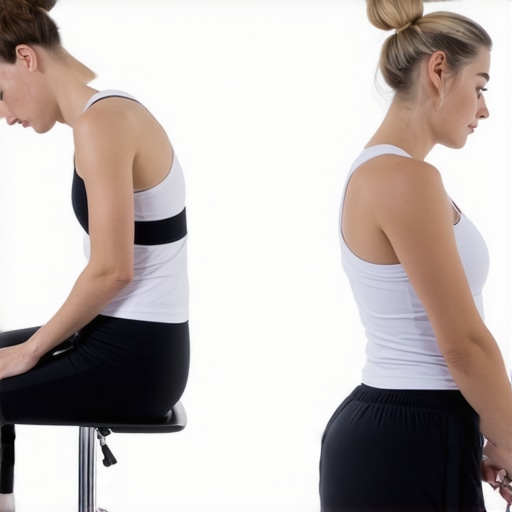
Why does that dry crunch persist even after buying the best ergonomic gear?
You can buy the most expensive chair on the market, but if you sit in it for eight hours straight, you are still going to hear that rhythmic clicking. I see people transition to yoga balls or standing desks thinking it will solve everything, but the truth about exercise balls as desk chairs is that they often lead to more instability if your core isn’t already firing. The hidden nuance most people miss is that your joints are like sponges; they need movement to ‘pump’ fluid in and out of the cartilage. Without that movement, the tissue dries out, leading to that visceral grinding sound you hear when you check your blind spot. By focusing on the link between mobility and posture a chiropractors guide, you learn that the ‘clicks’ are often just thirsty joints. Have you ever fallen into this trap? Let me know in the comments.
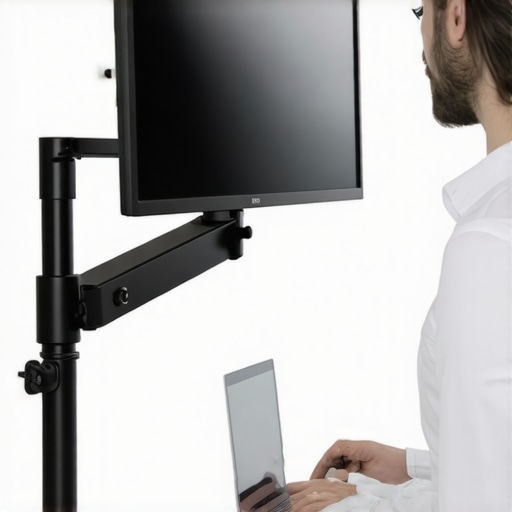
I used to think a fancy ergonomic chair was the holy grail of back health. I spent nearly a thousand dollars on a mesh throne that promised to align my chakras and my vertebrae simultaneously. It didn’t. What actually changed the game for me wasn’t the chair itself, but a simple gas-spring monitor arm. By getting my screen high enough that I literally cannot slouch without losing sight of the pixels, I forced my body into a neutral position. It is the only tool I recommend without hesitation because it removes the temptation to lean in. If you are still working on a laptop, you are fighting a losing battle against gravity. I highly suggest checking out the best standing desk interval for maximum back health to understand why even the best gear needs a movement strategy to back it up.
How do I keep my spine feeling young over time?
Maintenance isn’t about one hour at the gym; it is about what Dr. Stuart McGill, a world-renowned expert in spine biomechanics, calls “spinal hygiene.” This means moving in ways that spare your discs throughout the day. I have integrated a routine where I perform a quick check-in every morning. If I feel a bit of tension in my face, I use the 60-second fix for a stiff jaw after waking up to release the cranial pressure that often trickles down into the neck. Consistency beats intensity every single time. You do not need a 90-minute yoga session; you need three minutes of focused movement every few hours. To see where you currently stand, you should learn how to test your own spinal rotation at home to identify which side is locking up before it starts clicking.
Your future self will probably wear sensors instead of braces
I predict that within the next few years, we will see a massive shift away from passive supports like braces and toward active biofeedback. We are already seeing the early stages of wearable sensors that vibrate when your shoulders reach a certain degree of internal rotation. This is the future of the ultimate guide to improving mobility and posture in 2025. Instead of a brace doing the work for you—and making you weaker—these tools train your brain to recognize the slump. It is about building a better software map of your body. When you combine this kind of tech with regular professional care, you create a feedback loop of health. I have found that how chiropractic adjustments enhance posture and mobility is largely due to the way they ‘reset’ the nervous system, allowing these new habits to actually stick.
If you want to truly level up, stop looking for a magic pill and start looking at your daily flow. My advanced tip for the week? Try a “dead hang” from a pull-up bar for 30 seconds twice a day. It uses your own body weight to decompress the spine in a way no stretch ever could. It feels like your vertebrae are finally getting room to breathe. Give it a shot today and see if that afternoon ‘crunch’ starts to fade away.
The biggest shifts in how I think about my spinal health
One of the most profound realizations I had was that the noise in my neck wasn’t the problem—it was just the messenger. For years, I treated my body like a collection of parts that needed fixing, but I eventually learned that my fear of the noise was making me move less, which only made the stiffness worse. Movement is lubrication; I used to think the clicking meant bone-on-bone damage, but it is often just gas bubbles or tendons snapping over tight muscles. Movement actually fixes this by pumping fluid into the joints. Consistency also beats intensity—a three-minute daily routine is infinitely better than a grueling session once a week. While why chiropractic care is your secret weapon for better posture is a massive piece of the puzzle, the daily habits I practice between visits are what keep the progress alive.
My go-to resources for a quieter neck
If you are ready to stop guessing and start feeling better, here are the specific tools that actually moved the needle for me. First, a simple gas-spring monitor arm; it forces eye-level viewing so you are not constantly fighting gravity. Second, I swear by a basic pull-up bar for daily dead hangs to decompress the spine naturally. Third, I highly recommend reading up on spinal hygiene to understand how to move without stressing your discs. Finally, if you are feeling a sharp zing rather than just a click, knowing how to fix a pinched nerve in your shoulder blade is essential for your recovery toolkit. I also frequently check the ultimate guide to improving mobility and posture in 2025 to keep my own routine fresh and effective.
Take the first step toward a more mobile future
You do not have to live with a neck that sounds like a bowl of rice cereal. By shifting your focus from rigid, perfect alignment to fluid, consistent movement, you are giving your nervous system the green light to relax. Remember, your body is incredibly resilient. Those clicks and pops are often just a reminder that you were built to move, not to sit like a statue. Start with one small change today—whether it is raising your phone to eye level or trying a 10-second shoulder roll—and watch how your body responds. You deserve to move with ease and reclaim your range of motion. Have you ever had a specific stretch or move finally silence a click in your neck? Let me know in the comments below!