
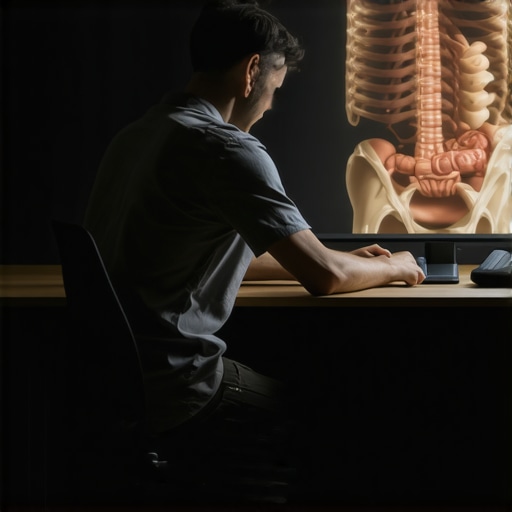
I was sitting at my kitchen table, nursing a cup of peppermint tea and wondering why my stomach felt like it was in a vice grip. I’d eaten a simple salad. I’d walked. I’d done everything “right.” Then, I adjusted my seat, sat up straight to reach for a napkin, and felt an immediate, audible release of pressure. That was the moment I realized my gut wasn’t the problem—my spine was. I had been folding my body into a human pretzel for hours, and my internal organs were paying the price. We often talk about back pain or neck strain, but the physical compression of your digestive tract is a silent cost of our modern, sedentary habits. Today, I want to show you why your midday bloat might actually be a structural issue and how you can fix it.
Give Your Organs the Space They Need to Work
For a long time, I made the classic mistake of thinking posture was just about looking “professional” or preventing a dowager’s hump. I spent a small fortune on probiotics and eliminated half the foods I loved, yet the sluggish digestion persisted. It turns out, when you are using your laptop on the couch or hunched over a phone, you are physically shortening the space in your abdominal cavity. Your intestines aren’t just tubes; they are muscles that require movement and space to perform peristalsis—the wave-like contractions that move food along. If you’re constantly slouching on the sofa, you’re essentially putting a kink in a garden hose. It’s not just uncomfortable; it’s mechanically inefficient. We need to stop treating our bodies like a collection of separate parts and start seeing how mobility and posture are deeply intertwined with our internal health.
Can a simple slouch really cause major gut issues?
It sounds a bit far-fetched, doesn’t it? I was the biggest skeptic until I looked at the mechanics. When we slump, we increase intra-abdominal pressure. According to research cited by Harvard Health Publishing, this physical pressure can actually push stomach acid back up into the esophagus, leading to significant heartburn and reflux. I realized that my own improper desk height was forcing me into a crunch that mimicked chronic indigestion. By improving posture through mobility, we aren’t just helping our backs; we are literally decompressing our stomachs. Have you ever noticed that your heartburn or bloating seems to flare up specifically after a long day of sitting? If so, you aren’t alone, and the solution might be simpler than another restrictive diet. We are going to dive into the specific adjustments that can reopen that digestive highway.
Reclaim Your Digestive Space with These Daily Shifts
Imagine your digestive tract is a high-traffic highway. When you slouch, you aren’t just hurting your neck; you are essentially placing orange traffic cones and concrete barriers across every lane. To get things moving again, we have to physically lift the weight of the ribcage off the soft tissues of the abdomen. The first step is acknowledging that your gut needs room to breathe. I learned this the hard way during a three-hour marathon of back-to-back video calls. By the end, I felt like I’d swallowed a brick. I realized my shoulders were burning and my midsection was completely collapsed. I stood up, performed a quick spinal reset, and felt my digestive system ‘wake up’ with an audible gurgle. It wasn’t the coffee; it was the space.
Stop the Fold and Master the Hip Hinge
Most of us bend at the belly button when we lean forward to look at a screen or pick up a pen. This ‘waist-creasing’ is the primary enemy of your intestines. Instead, you need to transition to using your hips as the primary pivot point. Utilizing the hip hinge fix for chronic lower back aches does more than just save your spine; it keeps your abdominal wall long and taut rather than folded and cramped. When you hinge at the hips, you maintain the natural ‘S’ curve of your spine, which provides the maximum volume for your stomach to process food. I started practicing this every time I sat down or stood up, and the chronic ‘afternoon bloat’ began to vanish because I stopped treating my stomach like an accordion. 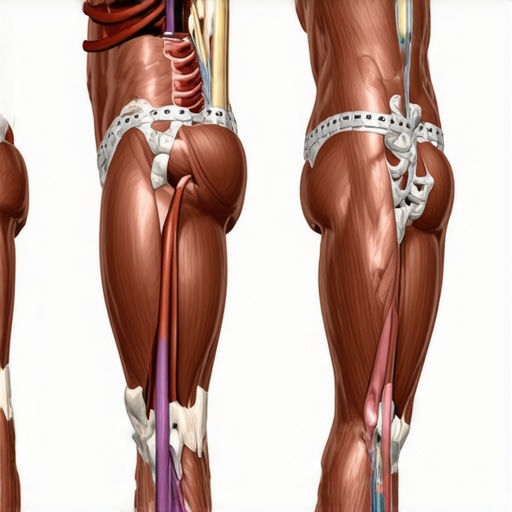
Massaging Your Organs from the Inside Out
We often think of breathing as something that happens only in the lungs, but your diaphragm is the most important digestive pump you own. When you are hunched, you likely resort to shallow chest breathing. This leaves your internal organs stagnant. By focusing on why your breathing pattern determines your lower back stability, you learn to send your breath deep into your belly and back. This downward movement of the diaphragm acts as a rhythmic, gentle massage for your colon, physically aiding the movement of waste. If you feel stuck, try to breathe into your back to relieve rib tension. This expansion clears the ‘kinks’ in the hose and allows your nervous system to switch from ‘fight or flight’ (which halts digestion) to ‘rest and digest.’
Timed Intervals to Prevent Organ Compression
Your body is designed for motion, not static compression. Even with the best chair, gravity eventually wins if you don’t fight back. I started setting a timer for 25 minutes. Every time it went off, I’d use mobility hacks and simple adjustments to reset my vertical height. If you work at a desk, finding the best standing desk interval for maximum back health is a game-changer. It’s not about standing all day—that brings its own set of issues—but about the transition between sitting and standing. These transitions act like a ‘reset button’ for your intra-abdominal pressure, ensuring that no single part of your digestive tract is being squeezed for too long.Let’s dig deeper into the biggest lie we’ve all been told: that there is a single “perfect” position you should maintain. I used to spend my entire workday trying to pin my shoulder blades back and keep my chin tucked, only to find my neck screaming by 3 PM. The reality is that the truth about perfect posture and why it doesn’t exist is the first lesson any expert should teach. Research published in the Journal of Orthopaedic & Sports Physical Therapy confirms that there is no “gold standard” for posture; rather, the most important factor for spinal health is “postural variability”—how often you change positions. By trying to be a statue, you are creating ischemic muscle pain because your blood flow is restricted by constant tension. Essentially, why your perfect posture is actually causing muscle fatigue comes down to the fact that you are overworking certain muscles while others go dormant, leading to a collapse of your metabolic efficiency. 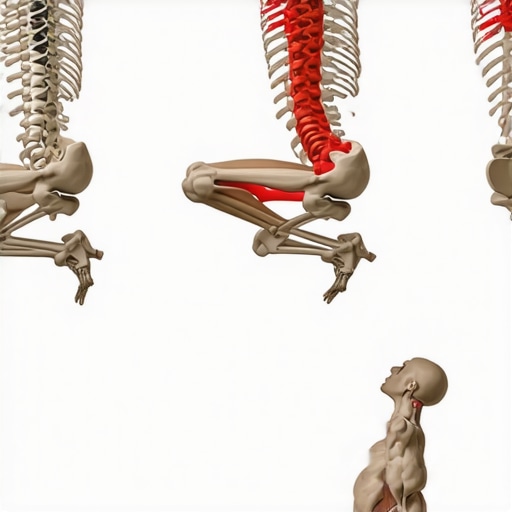
Why Your Search for Perfection is Hurting You
One of the most common mistakes I see is the “over-correction” trap. People feel a slouch coming on and immediately yank their shoulders back with extreme force. This doesn’t just create new tension; it can actually lead to rib dysfunction. If you find yourself constantly adjusting, you might be fighting a losing battle against your own habits. Instead of forcing a look, we need to focus on dynamic capacity. Reaching for the ultimate guide to improving mobility and posture in 2025 is more about teaching your nervous system to feel safe in multiple positions rather than just one. When your body is terrified of slouching, it stays in a state of high alert that ironically makes your muscles tighter and less mobile.
Can you really fix your alignment by yourself?
Many of my readers ask if they can just “stretch it out” or crack their own neck to get relief. This is where the “oops” factor hits hard. If you are constantly trying to self-adjust, you might be creating hypermobility in the wrong joints. Understanding why you should stop cracking your own back every hour is vital because you are usually hitting the segments that are already moving too much, while the truly “stuck” joints remain frozen. Furthermore, if you are relying on external aids, proceed with caution. I have seen hundreds of people buy those “posture correctors” online, but why most posture braces actually make your back weaker is a hard pill to swallow—they act as a passive crutch that allows your natural stabilizer muscles to atrophy. Another nuance most people miss is the difference between flexibility and true mobility. You might be “stretching” the pain away temporarily, but why your gentle stretching is actually causing more inflammation often stems from over-pulling on nerves that are already under tension from your desk setup. Instead of just pulling on a muscle, professional chiropractic adjustments enhance posture and mobility by targeting the specific joint restrictions that prevent your body from finding its natural, fluid center. Real alignment isn’t about being straight; it’s about being free to move. Have you ever fallen into the “posture statue” trap? Let me know in the comments.Once I stopped trying to be a statue, I realized I needed a system to keep my mobility from backsliding. It isn’t enough to just ‘know’ better; you have to build an environment that makes movement inevitable. I personally swear by a high-quality monitor arm. It sounds simple, but if your screen isn’t at eye level, your neck will always lose the battle. I use the desk setup trick for people who hate standing desks because it allows me to pivot my monitor based on whether I’m leaning back or sitting forward. This small adjustment prevents that mid-back ‘lock’ that happens when you’re fixed in one plane for too long. For those quick resets, I rely on mobility boosts for posture expert tips for daily adjustments every time I take a water break. 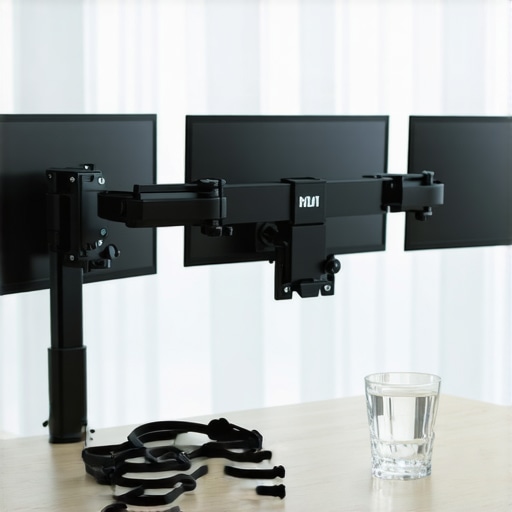
Ditch the Expensive Gadgets and Focus on These Basics
I used to think I needed every ‘smart’ wearable on the market to fix my spine, but the most effective tools in my kit are actually low-tech. A simple pair of resistance bands kept under my desk has done more for my shoulder health than any vibrating sensor ever could. The key is to create physical triggers. When I finish a long email, I grab the bands and perform a quick set of face-pulls. This integrates targeted mobility exercises into my workflow so they don’t feel like a chore. I also prioritize my footwear, even when working from home, because the foundation of your posture starts at the ground. If your feet are unsupported, your pelvis will tilt, and your gut will compress all over again.
Why Professional Guidance Beats Blind Guessing
However, tools only go so far if the underlying structure is compromised. This is why I view professional support as a maintenance requirement, not a crisis response. I’ve seen how chiropractic adjustments enhance posture and mobility by resetting the joint receptors that tell my brain where ‘center’ actually is. In her book The Chair: Rethink Culture, Body, and Design, Professor Galen Cranz notes that our environment is often at odds with our biological needs. By utilizing chiropractic care as your secret weapon for better posture, you aren’t just ‘fixing’ a problem; you’re providing your nervous system with the clarity it needs to hold itself upright without conscious effort. It’s the difference between forcing a jammed door open and simply oiling the hinges so it swings freely on its own.
How do I maintain these structural gains over time?
Consistency in maintenance is the only way to avoid the ‘yo-yo’ effect of feeling great for a week and then waking up stiff again. I recommend looking at the ultimate guide to improving mobility and posture in 2025 to build a tiered routine that fits your schedule. On busy days, focus on ‘micro-doses’ of movement. You can find success by choosing a few key movements that address your specific ‘stuck’ points. I also schedule a monthly check-in with my provider because chiropractic adjustments unlock a pain-free lifestyle today much more effectively than trying to self-treat every minor ache. The goal is to stay ahead of the curve so that you never reach that point of total digestive or spinal collapse again.
The Future of Posture is Predictive, Not Just Reactive
Looking forward, the trend in spinal health is moving away from passive ‘braces’ and toward active haptic feedback and AI-driven ergonomics. We are going to see chairs and workstations that use high-precision sensors to suggest shifts in position before your muscles even begin to fatigue. It’s an exciting shift toward a more intuitive way of living. Until then, you have the power to make these changes manually. Try the 10-second move to reset your shoulders at work right now—literally as you finish this sentence—and feel the immediate relief in your upper back and the sudden ‘opening’ of your abdominal space.
What Nobody Tells You About the Gut-Spine Connection
After years of trial and error, I realized that the secret to a happy gut isn’t always found in a pill bottle or a restrictive diet. Here are the lightbulb moments that finally clicked for me once I stopped looking at my body as a collection of isolated parts:
- Your organs are literal space-seekers: When you prioritize the link between mobility and posture, you aren’t just standing taller; you are giving your small intestine the literal cubic inches it needs to process nutrients and move waste efficiently.
- The ‘Invisible Kink’ is real: Much like a garden hose, a slumped midsection creates physical resistance for food movement. This is why improving posture through mobility is often the missing piece in solving chronic digestive puzzles that even probiotics can’t touch.
- Pain is a late-stage warning: I eventually noticed my stomach would bloat or feel acidic hours before my back actually started to ache. If you wait for the pain to migrate to your spine, you’ve already been compressed for too long.
My Personal Toolkit for a Happy Gut and a Strong Back
I stopped buying ‘magic’ posture shirts and high-priced gadgets and started focusing on these foundational shifts that actually work. If you’re looking to start your own journey, these are the resources I trust personally:
- Low-Tech Resistance Bands: Forget the vibrating sensors; a simple set of bands for targeted mobility exercises can wake up the posterior chain muscles that hold your ribcage high and your abdominal cavity open.
- The 25-Minute Movement Rule: I use mobility hacks and simple adjustments every time my phone timer goes off. This prevents the ‘statue effect’ that halts metabolic efficiency and traps gas.
- The Expert Alignment Check: When I feel physically stuck, I remember that chiropractic care is your secret weapon for better posture because it targets the specific joint restrictions I simply cannot reach with a foam roller or a stretch.
Start Reopening Your Internal Highways Today
You don’t need a perfect body to have a functional one; you just need to stop being a human pretzel. By integrating the movement strategies from the ultimate guide to improving mobility and posture in 2025, you can reclaim the internal space your body deserves. Every time you choose to hinge at the hips instead of the waist, or take a deep belly breath that expands your ribcage, you are choosing long-term health over immediate convenience. It’s time to let your digestive system breathe again. While chiropractic adjustments unlock a pain-free lifestyle today, it is your commitment to daily movement that ensures that freedom stays yours for a lifetime. Have you ever noticed that your digestion feels ‘stuck’ specifically after a long day of sitting at a desk? Let me know in the comments below!