
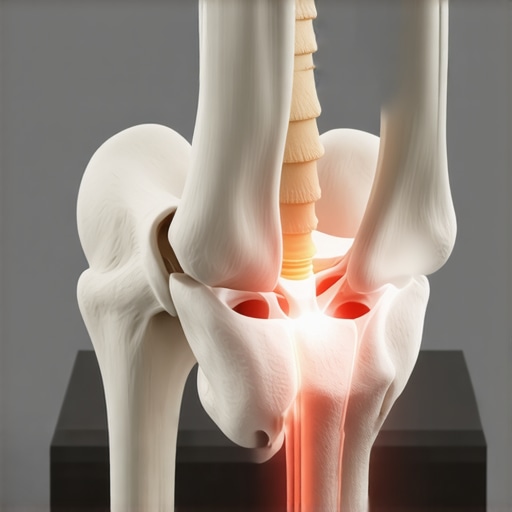
I remember the exact moment I realized my hip was “broken.” I was at a wedding, trying to look relaxed in a folding chair, but every time I tried to cross my right leg over my left, my hip joint felt like it was hitting a literal brick wall. It wasn’t a muscle stretch; it was a hard, mechanical stop. I felt like a rusty Tin Man in front of a room full of people. I had spent months trying to stretch my way out of it, but nothing worked. It turns out, I was making a classic mistake: I was treating a joint positioning problem like a flexibility problem. If you’ve ever felt that sharp, “jammed” sensation in the crease of your thigh, you know exactly how frustrating it is. Today, I am going to show you why that happens and how to actually unstick things so you can sit comfortably again without that annoying pinch.
Stop Blaming Your Muscles for a Bone Problem
When my hip first started acting up, I did what everyone does—I doubled down on lunges and deep stretches. I thought if I just pulled on the muscle hard enough, the joint would eventually give in. I was wrong. In fact, stretching your hamstrings won’t fix a tight back or a jammed hip if the femur isn’t sitting right in the socket. That “pinched” feeling is often your hip bone literally bumping into the edge of the socket because your pelvis is tilted or rotated. According to the experts at the Mayo Clinic, this is frequently related to femoroacetabular impingement, where the joint doesn’t have the clearance it needs to move freely through its full range of motion. I spent years fighting my own anatomy because I didn’t understand that the link between mobility and posture is the foundation of how our joints function. If the socket is poorly positioned, no amount of yoga will make that leg cross comfortably.
Is this just a permanent part of getting older?
I hear this skepticism all the time. People assume that once you hit a certain age, your joints just decide to retire and get “stuck.” But the “jammed” feeling is rarely a death sentence for your mobility; it is usually a signal that your alignment is off. Maybe your wallet in your back pocket is destroying your hips by tilting your pelvis every time you sit, or perhaps your daily habits have left you with a restricted range of motion. I made the mistake of ignoring the clunking for a year, thinking it would just go away. It didn’t. It only got better when I stopped focusing on “stretching” and started focusing on “space” within the joint. Have you ever had to physically use your hands to lift your leg over the other just to sit cross-legged? If that’s you, you need to tell if your hip pain is actually a bursitis issue or a simple mechanical blockage. Let me know in the comments if you’ve felt that sharp pinch—it helps to know I wasn’t the only one struggling with this. Before we dive into the exercises, we have to understand that creating room in the joint is the first priority.Imagine your hip joint is a heavy door. If a tiny pebble gets caught in the hinge, you can pull on the door handle until the wood cracks, but that hinge isn’t going to swing any wider. You have to remove the pebble first. In your hip, that ‘pebble’ is usually a lack of joint space. I remember one Tuesday afternoon at the gym; I was trying to hit a new personal best on squats, but every time I hit the bottom of the movement, my left hip felt like it was being poked by a hot needle. I stopped, grabbed a thick resistance band, looped it around a squat rack and the very top of my thigh, and let it pull my femur away from the socket. It felt like someone finally took the parking brake off my leg. This is what professionals call joint distraction, and it is the first step in knowing the difference between a sore muscle and a misaligned joint.
Shift the Bone to Clear the Path
To stop that pinching, you need to create ‘slack’ in the joint capsule. Most people jump straight into a pigeon stretch, but if the bone is already jammed forward, you’re just smashing it further into the socket wall. Instead, find a way to gently pull the femur head away from the acetabulum. You can do this by using a ‘long-axis’ distraction: lie on your back, hook a band around your ankle, and let it pull your leg toward the wall. When I finally tried the 30-second move that opens up tight hips in seconds, I realized my ‘tightness’ was actually just a bone-on-bone traffic jam. 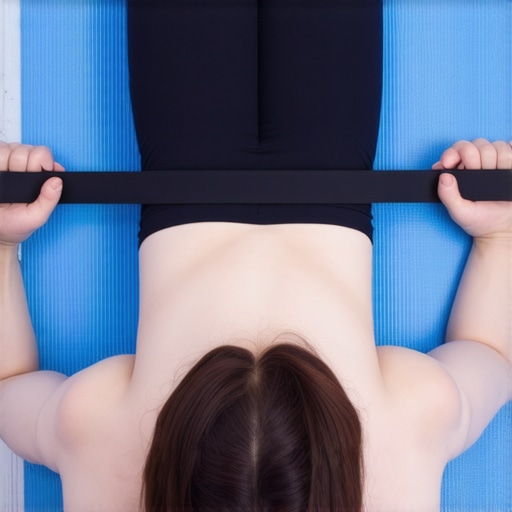
Stop the Pelvic Tilt Trap
If your pelvis is constantly dumped forward—what we call an anterior pelvic tilt—your hip socket is essentially rotated into a position that makes it impossible for your leg to move freely. You can’t fix a hip problem if you don’t fix your pelvic tilt first. Think of your pelvis as a bowl of water; if the water is spilling out the front, your hip bones are already ‘pre-blocked.’ I spent weeks focusing on my core stability, and the results were almost immediate. I learned that why your breathing pattern determines your lower back stability is actually the secret to keeping your pelvis level. If you can’t breathe into your lower belly and ribs, your hip flexors will stay on ‘high alert’ to stabilize you, keeping that joint jammed tight.
Use This Simple Reset Every Afternoon
For those of you stuck at a desk, the compression is constant. You need a way to decompress without looking like a gymnast in your cubicle. I started using the simple hip reset for people who sit all day which involves a small, subtle internal rotation move. By slightly turning the toes inward and pushing the hips back while seated, you create a tiny bit of internal space that lets the joint breathe. It’s the difference between a hip that feels like a rusted bolt and one that moves like a well-oiled machine. I remember feeling that first ‘pop’ of relief—it wasn’t a loud crack, but a sensation of air finally entering a room that had been sealed shut for years.
Most people treat their bodies like a piece of dry leather that just needs to be pulled and tugged until it’s soft again. But here is the contrarian truth: you cannot stretch your way out of a joint that your brain has decided to lock down for safety. When I first started digging into the mechanics of my own hip issues, I realized that why your gentle stretching is actually causing more inflammation is often down to the fact that you’re pulling on irritated nerves rather than elongating muscle fibers. If the joint isn’t ‘centrated’—meaning the ball isn’t sitting perfectly in the middle of the socket—your nervous system will create a muscular splint to prevent you from damaging the labrum. You aren’t tight; you are protected.
Your Brain is the Real Handbrake
I see this ‘oops’ factor constantly: someone feels a pinch in their hip, so they go even harder on the foam roller. However, the truth about foam rolling your lower back or your hip flexors is that if you’re just smashing the tissue without changing the joint position, you’re essentially screaming at a car to move while the parking brake is still engaged. You might get a temporary release because of the ‘pain-gate’ theory—where the new sensation of the roller masks the old ache—but the second you stand up, the brain re-tensions the muscle to protect the unstable joint. This is a primary reason why your dominant side always feels tighter than the other; your body is compensating for a structural shift elsewhere. Have you ever fallen into this trap? Let me know in the comments—I spent three years doing it before I realized I was fighting a losing battle against my own reflexes.
Can Too Much Flexibility Actually Ruin Your Progress?
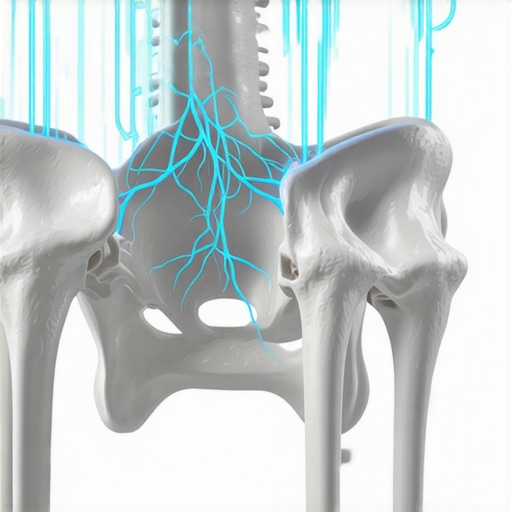
It sounds like a paradox, but for many of us, the goal shouldn’t be more flexibility, but more controlled stability. According to a 2019 study published in the Journal of Manipulative and Physiological Therapeutics, spinal adjustments can immediately alter the nervous system’s motor output to the limbs. This suggests that the ‘stuck’ feeling in your hip might be a software issue in your spine rather than a hardware issue in your leg. This is why chiropractic care is your secret weapon for better posture; it’s about clearing the communication lines so the brain stops sending ‘tension’ signals to your hips. When I finally combined joint distraction with targeted stability, I stopped needing to stretch every ten minutes. I realized the difference between nerve pain and muscle soreness was the key to knowing when to push and when to back off. Instead of forcing a range of motion you haven’t earned, focus on improving posture through mobility practical chiropractor strategies that prioritize the ‘stack’ of your ribcage over your pelvis. When the stack is right, the ‘jammed’ hip often disappears on its own because the bone finally has the clearance it needs to glide. Don’t chase the stretch; chase the space.
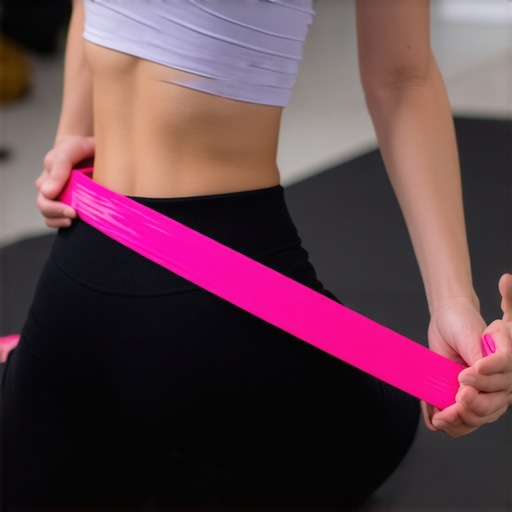
I didn’t reach this level of mobility by just crossing my fingers or hoping the ‘jammed’ feeling would disappear on its own. I had to build a small, intentional arsenal of tools that I actually use every single day. My first absolute must-have is a high-tension resistance band. I don’t use it for traditional strength training; I use it for ‘lateral distraction.’ By looping it around my hip crease and letting it pull my femur slightly away from my body while I am in a half-kneeling position, I am manually resetting the joint’s position in the socket. This is how you can practically start implementing mobility hacks simple adjustments for a more active life without needing a full-time therapist on speed dial.
The Two Cheap Tools That Rescued My Hips
My second essential tool is a standard lacrosse ball. It is significantly firmer than a tennis ball, which is vital for getting into the deep rotators and the tensor fasciae latae (TFL). I think of it this way: a foam roller is a shotgun, but a lacrosse ball is a sniper rifle. I place it right where the glute meets the side of the hip and let my body weight do the work of releasing those ‘guarding’ muscles. If you are following the ultimate guide to improving mobility and posture in 2025, you know that consistency with these specific inputs is what prevents that frustrating bone-on-bone sensation from returning every time you sit down.
How do I keep my hips open for the long haul?
Maintenance isn’t about doing an exhausting 60-minute routine once a week; it is about the five minutes you spend on mobility boosts for posture expert tips for daily adjustments every time you get up from your desk. I have found that even on my busiest days, doing three reps of an ‘active hang’ or a quick seated hip swivel keeps the motor patterns fresh. This is also why seeking enhance your posture with expert chiropractic techniques in 2025 is becoming so essential—people are realizing that the joint needs regular ‘software updates’ to stay aligned. Think of it like a car’s wheel alignment. You can have the best tires in the world, but if the axle is crooked, you are going to have a blowout. I recommend a monthly check-in to ensure your revolutionize your posture with targeted mobility exercises are actually working and not just masking a deeper structural shift.
Wearable Biofeedback is the Next Frontier
Looking ahead, I predict we are going to see a massive shift toward biofeedback-integrated apparel. We are already seeing companies like DynaPro developing sensors that vibrate when your pelvic tilt exceeds a certain degree. This real-time data will take the guesswork out of how chiropractic adjustments enhance posture and mobility because you will see the immediate impact on your smartphone screen. However, you don’t need a PhD in biomechanics to start. Dr. Kelly Starrett, the niche expert behind The Ready State, emphasizes that all human beings should be able to perform basic maintenance on themselves. He is right. If you can understand how to breathe into your back to relieve rib tension, you are already miles ahead of the general population. My advanced tip for you today: next time you feel that hip pinch, try a ‘prying’ squat. While in a deep squat, use your elbows to gently push your knees outward while maintaining a perfectly flat back. It forces the femur to sit back where it belongs. Try that for 30 seconds before your next workout—it’s a total game changer.
What I Learned the Hard Way About Fixing My Stiff Hips
The biggest lightbulb moment for me was realizing that why your gentle stretching is actually causing more inflammation is often because you are tugging on an angry nerve or an impinged joint rather than a tight muscle. I spent years forcing movements my body wasn’t ready for, only to feel more ‘jammed’ the next morning. I finally learned that knowing the difference between a sore muscle and a misaligned joint is the absolute key to progress. If the joint feels like it is hitting a physical wall, you have to stop pulling and start repositioning. Another major realization was that my ‘tight’ hips were often just my brain’s way of protecting an unstable spine; once I addressed my core, the hips finally let go.
Tools I Use to Keep the ‘Tin Man’ Feeling Away
I don’t leave my house for a long trip without a standard lacrosse ball; it is the only tool firm enough to tackle those deep hip rotators that foam rollers simply can’t reach. I also rely on mobility hacks simple adjustments for a more active life like using a heavy resistance band for lateral joint distraction before my workouts. For those who feel like they are constantly ‘out of alignment,’ I’ve found that why chiropractic care is your secret weapon for better posture isn’t just a marketing slogan—it’s about resetting the communication between your brain and your joints so your muscles stop over-tightening in self-defense. I also highly recommend the work of Dr. Kelly Starrett for anyone wanting to master their own body mechanics.
Your Body is Not a Lost Cause
It is incredibly easy to feel like you are just ‘built’ tight or that age has finally caught up to your joints, but your body is remarkably adaptable when given the right mechanical inputs. By following the ultimate guide to improving mobility and posture in 2025, you can shift away from that ‘jammed’ sensation and back into fluid, effortless movement. You aren’t stuck; you might just be misaligned. Don’t let a stiff joint dictate your quality of life or keep you from the activities you love. Have you ever felt that sharp ‘hitting a wall’ sensation when trying to cross your legs or sit in a deep chair? Let me know in the comments below—I’d love to hear how you’ve been trying to ‘unstick’ things.