
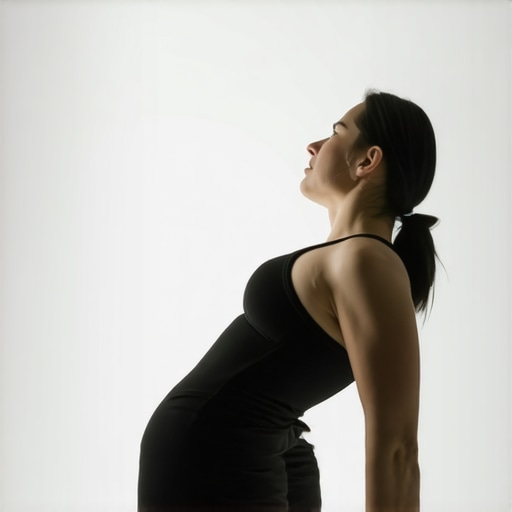
I remember the exact moment I realized my body was essentially a collection of compensations. I was standing in front of a mirror, trying to figure out why one of my pant legs always dragged on the floor while the other sat perfectly above my shoe. It wasn’t a tailor’s mistake. My belt line was slanted at a fifteen-degree angle, making my whole torso look like it was trying to escape to the left. For years, I just assumed I was born crooked. I even made the classic rookie error of buying a heel lift for my ‘short’ leg, which only made my lower back scream in protest because I wasn’t addressing the real culprit: a tilted pelvis. Learning how to spot a pelvic tilt in the mirror was the wake-up call I needed to stop guessing and start fixing. Today, I’m going to share the three specific moves that finally leveled me out, because you shouldn’t have to feel like you’re walking on a side-hill every time you’re on flat pavement.
My skewed hips were a sitting-desk souvenir
When I first started digging into why my hips felt ‘stuck,’ I realized my 9-to-5 was basically a training camp for bad posture. We spend so much time folded into chairs that our hip flexors become like tight guitar strings, pulling the front of the pelvis down and creating that ‘duck butt’ look. It’s not just about aesthetics, though fixing your pelvic tilt for a flatter stomach look is a nice side effect. It’s about the fact that your spine is built on this foundation. If the foundation is slanted, everything upstairs—your lower back, your rib cage, even your neck—has to twist to keep you upright. I spent way too long trying to ‘stretch it out’ with basic floor touches, but I eventually learned that stretching your hamstrings won’t fix your tight back if the pelvis is the thing pulling them taut in the first place.
Does this crookedness actually go away with age?
Many people I talk to worry that once the hips shift, they stay that way forever. It’s a valid fear, especially when you feel that ‘jammed’ sensation every time you try to stand up straight. However, the human body is remarkably plastic. According to research published by the National Institutes of Health, postural deviations like anterior pelvic tilt are often functional rather than structural, meaning they are caused by muscle imbalances we can actually change. You aren’t stuck; you’re just ‘set’ in a certain pattern. Have you ever noticed your belt line sitting unevenly or felt like one hip was higher than the other when you’re just standing in line at the grocery store?
Stop the compensation cycle before it breaks something
Before we dive into the moves, we have to talk about why we’re doing them. When your pelvis tilts, your glutes essentially go on vacation. They stop firing because they’re being held in a stretched-out, weakened position. This forces your lower back to do all the heavy lifting. I used to get these dull aches after just twenty minutes of walking, and it was because my back was doing the job my hips were supposed to do. By using this simple hip reset for people who sit all day, I finally started feeling my glutes actually support my weight again. We’re going to focus on waking up those sleepy muscles and calming down the overactive ones so your pelvis can finally sit level again.I didn’t just wake up one morning with level hips. I had to treat my hip flexors like a tangled knot that needed slow, deliberate untying. The most effective way I found to do this wasn’t by bouncing around on a gym mat, but by using a targeted couch stretch—which is essentially a lunging position where your back knee is flush against a wall or the cushion of your sofa. I remember trying this for the first time in my living room; I couldn’t even get my torso upright. I was leaning forward at a 45-degree angle, sweating, and realizing just how much my desk job had shortened my anatomy. But after three weeks of consistency, I felt a release that I can only describe as a rubber band finally losing its tension. This is a core part of the simple hip reset for people who sit all day. 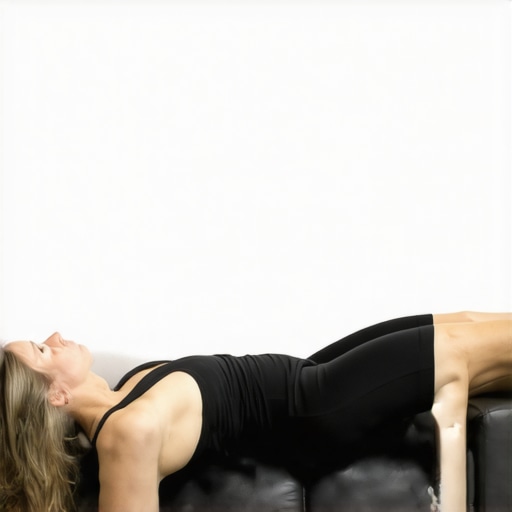
Unclamping the front of your hips
To perform this properly, you need to tuck your tailbone under. Most people make the mistake of arching their back to get more of a ‘stretch,’ but that actually bypasses the hip flexor and jams the lumbar spine. Instead, think about pulling your belly button toward your chin. If the hip flexors are the thieves stealing your mobility, the glutes are the security guards who fell asleep on the job. When your pelvis is tilted forward, your glutes are physically inhibited. You can do a thousand squats, but if your pelvis is out of alignment, your quads and lower back will steal all the work. I learned this the hard way when I realized why your glutes fail to activate during lunges; I was just reinforcing my bad posture rather than fixing it.
Waking up the engine room
To fix this, you have to master the pelvic tuck while lying flat on your back. It’s a tiny movement—think of it as trying to squash a grape between the small of your back and the floor. This tiny adjustment engages the lower abs and forces the pelvis into a neutral position. Once you can hold that, you move into the dead bug variation that actually protects your spine. This isn’t just an ab workout; it’s a recalibration of your internal GPS. Many people think they can just stretch their way out of this, but improving posture through mobility practical chiropractor strategies requires more than just flexibility. It requires stability.
Moving with intent instead of just stretching
If you have mobility without stability, you’re just a loose cannon. You need to teach your brain that the ‘new’ neutral position is safe. Take the cat-cow, for example. It’s a staple in every yoga class, yet why most people do the cat-cow stretch wrong is because they dump all the movement into their lower back rather than articulating each individual vertebra. When I finally slowed down and focused on moving my pelvis independently of my rib cage, I felt a pop in my mid-back that felt like a light switch turning on. This kind of control is what eventually leads to mastering the hip hinge secret for pain-free deadlifts, turning every gym session into a posture-correcting session.
I used to obsess over sitting perfectly upright, but the truth about perfect posture and why it doesnt exist is that your body wasn’t designed to be a statue. The most common advanced mistake I see is people trying to force their spine into a rigid, military-style line. Real posture is dynamic; it is the ability to move through different positions without pain. If you are just holding yourself stiffly, you are actually creating a whole new set of tension patterns. Have you ever noticed that after a day of trying to ‘sit straight,’ your mid-back feels more exhausted than if you had just slumped? That is because you are fighting your own anatomy instead of working with it.
The stretching trap that makes things worse
Everyone says that if a muscle feels tight, you should stretch it. However, in my experience, this is exactly where most people break their progress. If your pelvis is tilted, your hamstrings are already being pulled tight like a bowstring. Stretching them further is a huge ‘oops’ factor because you are essentially pulling on a muscle that is already at its end-range. This is often why your gentle stretching is actually causing more inflammation instead of relief. You are irritating the attachment points rather than solving the tilt. I have seen so many people develop chronic tendinitis because they wouldn’t stop stretching a muscle that was actually crying out for stability, not length. 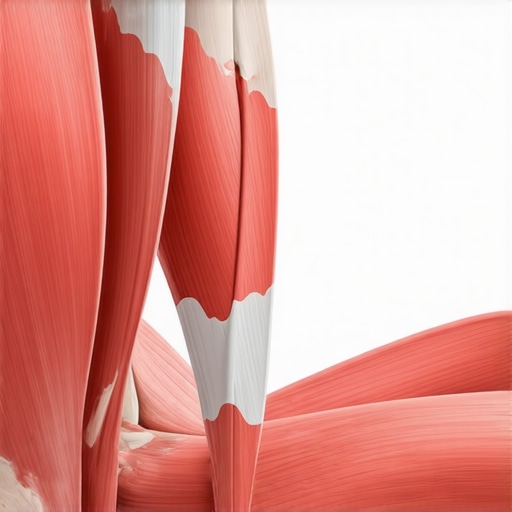
Why your brain locks your joints
This is where the nuance of how chiropractic adjustments enhance posture and mobility really shines. It is not just about moving bones; it is about resetting the signal between your brain and your joints. According to a study published in the Journal of Physical Therapy Science, postural control is deeply linked to proprioception—your brain’s ability to sense where your body is in space. If a joint is misaligned, your brain ‘locks’ the surrounding muscles as a protective mechanism. No amount of foam rolling will fix this because the ‘lock’ is in your nervous system, not the muscle fiber itself. In fact, you have to be careful, as the truth about foam rolling your lower back is that it can often bypass the structural issue and just irritate the nerves further.
Can you actually retrain a nervous system that has been ‘crooked’ for years?
The human body is incredibly adaptable, but you have to address the difference between a sore muscle and a misaligned joint to see real change. You cannot exercise your way out of a joint that isn’t moving correctly, and you cannot adjust your way out of a muscle that is too weak to hold the new position. It is a two-way street. When I finally combined targeted stability work with professional alignment, my hips stopped feeling like they were ‘jammed’ every morning. I stopped looking at my body as a set of parts to be stretched and started seeing it as a system that needed a reboot. Have you ever fallen into this trap of stretching a ‘tight’ muscle only to have it feel tighter the next day? Let me know in the comments.
Your office chair is lying to you
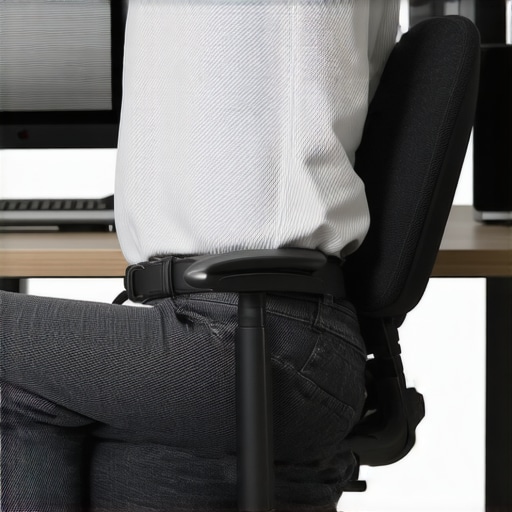
Even the most expensive ergonomic chair won’t fix a tilted pelvis if you don’t know how to sit in it. I spent thousands on a high-end mesh chair only to realize I was still slouching into my posterior tilt. The breakthrough came when I started learning how to use a lumbar roll correctly in an office chair. It’s not just about lumbar support; it’s about creating a wedge that prevents your pelvis from tucking under. When you maintain that slight natural curve, your hip flexors don’t have to work overtime to keep you upright. If you are planning a change in your workspace, make sure you transition from a sitting desk to a standing desk the right way, otherwise, you’re just swapping one set of compensations for another. I’ve found that alternating every 30 minutes is the ‘goldilocks’ zone for keeping the hips from locking up.
The one tool I actually pack in my suitcase
Whenever I travel, my hips are the first things to protest. I’ve learned that a simple lacrosse ball is more valuable than any fancy massage gun. By pinpointing the TFL (tensor fasciae latae)—that small muscle on the side of your hip—you can release the tension that often pulls the pelvis out of alignment. I place the ball against a wall and lean into those ‘hot spots’ for two minutes. This is a vital part of mobility boosts for posture expert tips for daily adjustments that you can do anywhere. Dr. Stuart McGill, a leading expert in spine biomechanics, often discusses the importance of ‘spine hygiene’—the idea that small, repeated movements are more important than one-off gym sessions. If you can’t maintain a neutral spine during the mundane tasks of life, your workouts will always be uphill battles.
How do I keep my hips level for the long haul?
Consistency is the only real secret. You have to treat your alignment like a bank account; you’re making small deposits every time you choose a better sitting position or do a hip reset. I personally use a ‘trigger’ system: every time I finish a phone call, I do a 10-second pelvic tilt check in the mirror. This helps recalibrate my brain’s internal map. Furthermore, how chiropractic adjustments enhance posture and mobility plays a massive role in this maintenance phase. Getting adjusted isn’t just about ‘cracking’ something; it’s about ensuring the proprioceptors in your joints are sending the correct signals to your brain. If the hardware is misaligned, the software (your nervous system) will keep running the wrong movement patterns.
The future of standing straight is digital
I predict that in the next five years, we will see a massive shift toward AI-integrated wearables that track pelvic tilt in real-time. We already have watches that track steps and heart rate, but the next frontier is ‘posture-tech’ that vibrates when your glutes turn off or your pelvis dips. Until then, we have to rely on our own awareness and the occasional improving posture through mobility practical chiropractor strategies. The goal isn’t perfection; it’s the ability to self-correct before the dull ache turns into a chronic injury. I want you to try one thing today: next time you’re standing in a checkout line, check if your weight is shifted to one leg. If it is, level yourself out and squeeze your glutes for five seconds. It’s the smallest habit that yields the biggest results.
I remember the exact moment I realized my body was essentially a collection of compensations. I was standing in front of a mirror, trying to figure out why one of my pant legs always dragged on the floor while the other sat perfectly above my shoe. It wasn’t a tailor’s mistake. My belt line was slanted at a fifteen-degree angle, making my whole torso look like it was trying to escape to the left. For years, I just assumed I was born crooked. I even made the classic rookie error of buying a heel lift for my ‘short’ leg, which only made my lower back scream in protest because I wasn’t addressing the real culprit: a tilted pelvis. Learning how to spot a pelvic tilt in the mirror was the wake-up call I needed to stop guessing and start fixing. Today, I’m going to share the three specific moves that finally leveled me out, because you shouldn’t have to feel like you’re walking on a side-hill every time you’re on flat pavement.
My skewed hips were a sitting-desk souvenir
When I first started digging into why my hips felt ‘stuck,’ I realized my 9-to-5 was basically a training camp for bad posture. We spend so much time folded into chairs that our hip flexors become like tight guitar strings, pulling the front of the pelvis down and creating that ‘duck butt’ look. It’s not just about aesthetics, though fixing your pelvic tilt for a flatter stomach look is a nice side effect. It’s about the fact that your spine is built on this foundation. If the foundation is slanted, everything upstairs—your lower back, your rib cage, even your neck—has to twist to keep you upright. I spent way too long trying to ‘stretch it out’ with basic floor touches, but I eventually learned that stretching your hamstrings won’t fix your tight back if the pelvis is the thing pulling them taut in the first place.
Does this crookedness actually go away with age?
Many people I talk to worry that once the hips shift, they stay that way forever. It’s a valid fear, especially when you feel that ‘jammed’ sensation every time you try to stand up straight. However, the human body is remarkably plastic. According to research published by the National Institutes of Health, postural deviations like anterior pelvic tilt are often functional rather than structural, meaning they are caused by muscle imbalances we can actually change. You aren’t stuck; you’re just ‘set’ in a certain pattern. Have you ever noticed your belt line sitting unevenly or felt like one hip was higher than the other when you’re just standing in line at the grocery store?
Stop the compensation cycle before it breaks something
Before we dive into the moves, we have to talk about why we’re doing them. When your pelvis tilts, your glutes essentially go on vacation. They stop firing because they’re being held in a stretched-out, weakened position. This forces your lower back to do all the heavy lifting. I used to get these dull aches after just twenty minutes of walking, and it was because my back was doing the job my hips were supposed to do. By using this simple hip reset for people who sit all day, I finally started feeling my glutes actually support my weight again. We’re going to focus on waking up those sleepy muscles and calming down the overactive ones so your pelvis can finally sit level again.I didn’t just wake up one morning with level hips. I had to treat my hip flexors like a tangled knot that needed slow, deliberate untying. The most effective way I found to do this wasn’t by bouncing around on a gym mat, but by using a targeted couch stretch—which is essentially a lunging position where your back knee is flush against a wall or the cushion of your sofa. I remember trying this for the first time in my living room; I couldn’t even get my torso upright. I was leaning forward at a 45-degree angle, sweating, and realizing just how much my desk job had shortened my anatomy. But after three weeks of consistency, I felt a release that I can only describe as a rubber band finally losing its tension. This is a core part of the simple hip reset for people who sit all day.
Unclamping the front of your hips
To perform this properly, you need to tuck your tailbone under. Most people make the mistake of arching their back to get more of a ‘stretch,’ but that actually bypasses the hip flexor and jams the lumbar spine. Instead, think about pulling your belly button toward your chin. If the hip flexors are the thieves stealing your mobility, the glutes are the security guards who fell asleep on the job. When your pelvis is tilted forward, your glutes are physically inhibited. You can do a thousand squats, but if your pelvis is out of alignment, your quads and lower back will steal all the work. I learned this the hard way when I realized why your glutes fail to activate during lunges; I was just reinforcing my bad posture rather than fixing it.
Waking up the engine room
To fix this, you have to master the pelvic tuck while lying flat on your back. It’s a tiny movement—think of it as trying to squash a grape between the small of your back and the floor. This tiny adjustment engages the lower abs and forces the pelvis into a neutral position. Once you can hold that, you move into the dead bug variation that actually protects your spine. This isn’t just an ab workout; it’s a recalibration of your internal GPS. Many people think they can just stretch their way out of this, but improving posture through mobility practical chiropractor strategies requires more than just flexibility. It requires stability.
Moving with intent instead of just stretching
If you have mobility without stability, you’re just a loose cannon. You need to teach your brain that the ‘new’ neutral position is safe. Take the cat-cow, for example. It’s a staple in every yoga class, yet why most people do the cat-cow stretch wrong is because they dump all the movement into their lower back rather than articulating each individual vertebra. When I finally slowed down and focused on moving my pelvis independently of my rib cage, I felt a pop in my mid-back that felt like a light switch turning on. This kind of control is what eventually leads to mastering the hip hinge secret for pain-free deadlifts, turning every gym session into a posture-correcting session.
I used to obsess over sitting perfectly upright, but the truth about perfect posture and why it doesnt exist is that your body wasn’t designed to be a statue. The most common advanced mistake I see is people trying to force their spine into a rigid, military-style line. Real posture is dynamic; it is the ability to move through different positions without pain. If you are just holding yourself stiffly, you are actually creating a whole new set of tension patterns. Have you ever noticed that after a day of trying to ‘sit straight,’ your mid-back feels more exhausted than if you had just slumped? That is because you are fighting your own anatomy instead of working with it.
The stretching trap that makes things worse
Everyone says that if a muscle feels tight, you should stretch it. However, in my experience, this is exactly where most people break their progress. If your pelvis is tilted, your hamstrings are already being pulled tight like a bowstring. Stretching them further is a huge ‘oops’ factor because you are essentially pulling on a muscle that is already at its end-range. This is often why your gentle stretching is actually causing more inflammation instead of relief. You are irritating the attachment points rather than solving the tilt. I have seen so many people develop chronic tendinitis because they wouldn’t stop stretching a muscle that was actually crying out for stability, not length.
Why your brain locks your joints
This is where the nuance of how chiropractic adjustments enhance posture and mobility really shines. It is not just about moving bones; it is about resetting the signal between your brain and your joints. According to a study published in the Journal of Physical Therapy Science, postural control is deeply linked to proprioception—your brain’s ability to sense where your body is in space. If a joint is misaligned, your brain ‘locks’ the surrounding muscles as a protective mechanism. No amount of foam rolling will fix this because the ‘lock’ is in your nervous system, not the muscle fiber itself. In fact, you have to be careful, as the truth about foam rolling your lower back is that it can often bypass the structural issue and just irritate the nerves further.
Can you actually retrain a nervous system that has been ‘crooked’ for years?
The human body is incredibly adaptable, but you have to address the difference between a sore muscle and a misaligned joint to see real change. You cannot exercise your way out of a joint that isn’t moving correctly, and you cannot adjust your way out of a muscle that is too weak to hold the new position. It is a two-way street. When I finally combined targeted stability work with professional alignment, my hips stopped feeling like they were ‘jammed’ every morning. I stopped looking at my body as a set of parts to be stretched and started seeing it as a system that needed a reboot. Have you ever fallen into this trap of stretching a ‘tight’ muscle only to have it feel tighter the next day? Let me know in the comments.
Your office chair is lying to you
Even the most expensive ergonomic chair won’t fix a tilted pelvis if you don’t know how to sit in it. I spent thousands on a high-end mesh chair only to realize I was still slouching into my posterior tilt. The breakthrough came when I started learning how to use a lumbar roll correctly in an office chair. It’s not just about lumbar support; it’s about creating a wedge that prevents your pelvis from tucking under. When you maintain that slight natural curve, your hip flexors don’t have to work overtime to keep you upright. If you are planning a change in your workspace, make sure you transition from a sitting desk to a standing desk the right way, otherwise, you’re just swapping one set of compensations for another. I’ve found that alternating every 30 minutes is the ‘goldilocks’ zone for keeping the hips from locking up.
The one tool I actually pack in my suitcase
Whenever I travel, my hips are the first things to protest. I’ve learned that a simple lacrosse ball is more valuable than any fancy massage gun. By pinpointing the TFL (tensor fasciae latae)—that small muscle on the side of your hip—you can release the tension that often pulls the pelvis out of alignment. I place the ball against a wall and lean into those ‘hot spots’ for two minutes. This is a vital part of mobility boosts for posture expert tips for daily adjustments that you can do anywhere. Dr. Stuart McGill, a leading expert in spine biomechanics, often discusses the importance of ‘spine hygiene’—the idea that small, repeated movements are more important than one-off gym sessions. If you can’t maintain a neutral spine during the mundane tasks of life, your workouts will always be uphill battles.
How do I keep my hips level for the long haul?
Consistency is the only real secret. You have to treat your alignment like a bank account; you’re making small deposits every time you choose a better sitting position or do a hip reset. I personally use a ‘trigger’ system: every time I finish a phone call, I do a 10-second pelvic tilt check in the mirror. This helps recalibrate my brain’s internal map. Furthermore, how chiropractic adjustments enhance posture and mobility plays a massive role in this maintenance phase. Getting adjusted isn’t just about ‘cracking’ something; it’s about ensuring the proprioceptors in your joints are sending the correct signals to your brain. If the hardware is misaligned, the software (your nervous system) will keep running the wrong movement patterns.
The future of standing straight is digital
I predict that in the next five years, we will see a massive shift toward AI-integrated wearables that track pelvic tilt in real-time. We already have watches that track steps and heart rate, but the next frontier is ‘posture-tech’ that vibrates when your glutes turn off or your pelvis dips. Until then, we have to rely on our own awareness and the occasional improving posture through mobility practical chiropractor strategies. The goal isn’t perfection; it’s the ability to self-correct before the dull ache turns into a chronic injury. I want you to try one thing today: next time you’re standing in a checkout line, check if your weight is shifted to one leg. If it is, level yourself out and squeeze your glutes for five seconds. It’s the smallest habit that yields the biggest results.
The Most Surprising Lessons from My Own Posture Journey
If I could go back to the version of myself that was wearing uneven pant legs, I’d share a few things that would have saved me years of frustration. First, symmetry is often a result of relaxation, not force; if you try to ‘stiffen’ yourself into a straight line, you’re just creating a new problem. Second, I realized that why your breathing pattern determines your lower back stability is the ultimate game-changer. If you can’t expand your rib cage, your pelvis will always hunt for stability elsewhere. Lastly, stop looking at your feet to fix your gait; look at your hips. Your pelvis is the steering wheel of your entire body, and when that is aligned, the rest of the journey gets a lot smoother.
#IMAGE_PLACEHOLDER_E#
The Simple Items That Actually Support Your Hips
You don’t need a thousand-dollar bio-hacking kit to keep your foundation level. I keep my toolkit lean and focused on things that provide immediate feedback. A standard lacrosse ball is essential for breaking up the tension in the TFL muscle that pulls the pelvis forward. I also never work without a lumbar support; how to use a lumbar roll correctly in an office chair is a foundational skill for anyone with a desk job. For those ready to dive deeper into the science of movement, I highly recommend looking at mobility hacks simple adjustments for a more active life as a daily checklist. These small, reliable tools are the bridge between ‘feeling okay’ and actually thriving.
Take Your First Step Toward a Balanced Spine
Walking through life with level hips isn’t about achieving a perfect anatomical photo; it’s about freedom of movement. When your foundation is level, your energy goes into your activities rather than managing your pain. You have the knowledge now to move from guessing to acting with precision. For a comprehensive look at how to maintain this progress, refer to the ultimate guide to improving mobility and posture in 2025. Your body is ready to recalibrate; you just have to give it the right signals. Have you ever noticed your belt line sitting at an angle or felt like you were ‘leaning’ more on one leg than the other when standing still? Let me know in the comments below!