

It happened on a Tuesday afternoon while I was folding a mountain of laundry. My fourteen-year-old daughter bent down to snag a stray sock from the floor, and my heart nearly stopped. One side of her rib cage seemed to jut up higher than the other, like a small, unexpected hill under her t-shirt. I had spent months nagging her about standing up straight, assuming her slouch was just a phase of teenage lethargy or perhaps a side effect of how your teenager’s backpack is actually changing their spine shape. In that split second, I realized I was looking at something structural, not just a bad habit. I felt a wave of guilt wash over me. How had I missed this? I’m going to show you exactly how to perform a simple check at home so you don’t have to live with that same ‘how did I miss it’ feeling. We are going to look for the subtle red flags that often hide behind baggy hoodies and growing pains.
Don’t Just Nag Them to Stand Up Straight
Early on, I made the mistake of thinking that the truth about perfect posture meant everyone should just look like a soldier on parade. I was so focused on her rounded shoulders that I completely missed the asymmetry in her waistline. This is a common trap for parents. We see our kids complaining about discomfort and assume it is just part of growing up, but why your children are complaining about back pain so early often has a deeper root in spinal alignment. According to the American Association of Neurological Surgeons, scoliosis affects about 2% to 3% of the population, which is roughly 6 to 9 million people in the United States alone. That is a lot of growing spines to keep an eye on. Have you ever noticed your child’s clothes hanging unevenly and wondered if it was just the fabric or something more?
Is this something only a professional can see?
You might be worried that you aren’t qualified to judge a spinal curve, but you are the person who sees your child every day. You know their body better than anyone. While you aren’t providing a medical diagnosis, you are the first line of defense in noticing when one shoulder sits higher than the other or if their hip seems slightly off-kilter. I used to think I needed a degree to even look, but catching a curve early is often about simple observation. We aren’t looking for perfection; we are looking for symmetry. If you have ever wondered how your child’s desk height is impacting their growing spine, you already have the observant eye needed to spot these changes. [image placeholder]
The Simple Test You Can Do in Your Living Room
Now that we know what to look for, we need to talk about the physical signs that appear when they move. It isn’t just about how they stand; it’s about how the spine behaves under tension.To move past the guesswork, we need to use a clinical standard called the Adam’s Forward Bend Test. Think of the spine like the central mast of a sailboat; if the support wires on one side are tighter than the other, the mast doesn’t just lean—it twists. That twisting is what we are looking for. Have your child stand with their feet together and arms hanging loosely like a rag doll. Ask them to slowly bend forward at the waist as if they are trying to touch their toes. You should be standing behind them, looking down the level of their back.
Perform the Adam’s Forward Bend Test Correctly
When they are in that bent-over position, look for any prominence or a ‘hump’ on one side of the rib cage. This isn’t about them being ‘out of shape’ or having tight hamstrings. It is about the rib cage following the rotation of the vertebrae. In my house, this was the moment of truth. I remember making my daughter stand in front of the hallway mirror, and as she reached down, she groaned, thinking I was just being a ‘posture-obsessed’ mom again. But as her back leveled out, the ridge on her right side became undeniable. Knowing the difference between a sore muscle and a misaligned joint is what finally convinced me to stop second-guessing my gut and take it seriously. 
Look for the Rib Hump and Shoulder Blade Asymmetry
While they are still bent forward, check if one shoulder blade sticks out more than the other. Often, a curve in the upper back will push one scapula toward the ceiling. If you see a distinct elevation on one side of the spine, it is a significant indicator of a structural curve rather than just a temporary slouch. This is where the link between mobility and posture becomes very clear; if the joints are physically locked into a rotation, no amount of ‘standing up straight’ will fix the visual appearance.
Check if the Waistline Slants or Hips are Uneven
Once they stand back up, have them relax their shoulders. Look at the space between their arms and their torso. Is the gap wider on one side? Does one hip look like it is jutting out more than the other? You can also how to spot a pelvic tilt in the mirror by looking at the waistband of their pants. If it slopes to one side like a crooked picture frame, the foundation of the spine—the pelvis—is likely unlevel.
Test Their Range of Motion
Finally, have them tilt their head from side to side and rotate their torso. If they feel ‘stuck’ turning one way but move freely the other, it is a sign that the nervous system and the joints aren’t communicating properly. Understanding how chiropractic adjustments enhance posture and mobility can be eye-opening here, as those specific movements are often the first things to improve when the spine is brought back into alignment. This isn’t just about how they look; it’s about making sure their body has the freedom to move without restriction as they grow.But here is where things get tricky, and where I see most parents (and even some fitness pros) go wrong. Most of us are taught that if a muscle feels ‘tight,’ we should stretch it until it gives up. However, why stretching your hamstrings won’t fix your tight back is often because that tightness is a protective mechanism. When the spine is curving or rotating, your body ‘locks down’ the surrounding muscles to prevent further shifting. If you force those muscles to relax through aggressive stretching, you might actually be removing the only thing keeping the curve from progressing faster. I’ve seen so many well-meaning people realize that why your gentle stretching is actually causing more inflammation rather than providing relief because they were stretching a joint that was already hypermobile or out of alignment.
Can your brain actually ‘forget’ what straight feels like?
The short answer is yes. This is a concept called proprioception. When a child’s spine begins to shift, their internal GPS recalibrates. What looks ‘crooked’ to you feels ‘straight’ to them. This is why how chiropractic adjustments enhance posture and mobility isn’t just about moving bones; it’s about rebooting the nervous system so the brain recognizes a neutral position again. A study published in the Journal of Physical Therapy Science highlights that spinal stabilization exercises are significantly more effective than general stretching for improving spinal curvature and quality of life. 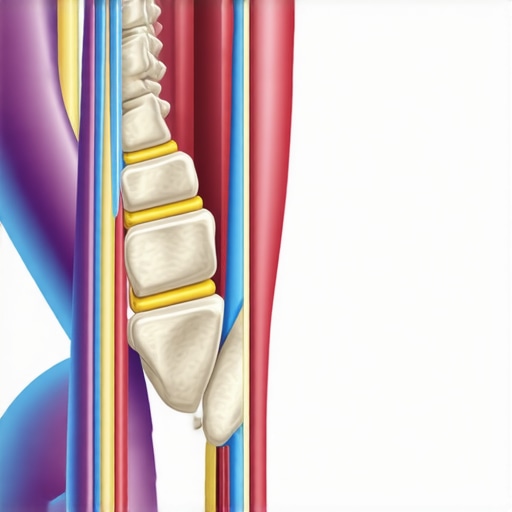
The Trap of Focusing Only on the Upper Back
Another mistake I see is ‘tunnel vision.’ Parents focus so much on the shoulders that they ignore the foundation. I learned the hard way that the connection between flat feet and recurring back pain is real. If the arches of the feet collapse, the entire kinetic chain—from the ankles to the neck—is thrown off. You can spend thousands on braces and therapy, but if you don’t look at how your footware choices are affecting your neck alignment, you’re just fighting an uphill battle. This is why improving posture through mobility requires a full-body assessment. Have you ever fallen into this trap of focusing on the ‘symptom’ rather than the source? Let me know in the comments. It is so easy to get caught up in the visual ‘fix’ that we miss the structural root. Truly revolutionize your posture with targeted mobility exercises by looking at the body as an interconnected system, not a collection of separate parts.Once you’ve spotted the signs of scoliosis or postural shift, the real work shifts toward preservation. I quickly realized that a single visit to a specialist wasn’t a magic wand; it was more like a front-end alignment on a car—you still have to avoid the potholes. To keep my daughter’s progress from slipping, I started looking for tools that actually reinforced her alignment during the eight hours she spent at a desk. I became a huge advocate for learning how to use a lumbar roll correctly in an office chair. It isn’t just about comfort; it’s about providing a physical cue to the lower back so the upper spine doesn’t have to compensate by slouching. If the foundation of the low back is supported, the ‘rib hump’ we worked so hard to minimize is far less likely to return during a long study session.
Stop the Slouch Before It Starts
I don’t just recommend tools because they look high-tech; I use them because they provide constant feedback. For example, I’ve found that using a simple wedge cushion or a lumbar roll prevents the pelvis from tucking under—a move that eventually leads to that dreaded ‘C-curve’ in the spine. This is why mobility boosts for posture are so vital; they act as the daily maintenance that keeps the joints moving through their full range. I also integrated the dead bug variation that actually protects your spine into our morning routine. This specific exercise is a game-changer because it teaches the core to stabilize the spine while the limbs are moving, which is exactly what a growing child needs when they are carrying a heavy backpack or playing sports. 
How do I maintain these spinal gains over time?
Consistency beats intensity every single time. You don’t need a two-hour gym session; you need three minutes of intentional movement. Dr. Stuart McGill, a world-renowned expert in spine biomechanics, emphasizes that ‘proximal stiffness yields distal mobility.’ This means that by strengthening the core and the muscles directly surrounding the spine, we allow the rest of the body to move freely. I’ve seen this firsthand: when my daughter focuses on her ‘Big Three’ stabilization exercises, her gait is more even and her shoulders naturally sit lower. We are moving toward a future where the ultimate guide to improving mobility and posture in 2025 will likely include wearable AI sensors that vibrate when your spinal alignment shifts out of a safe zone. We are already seeing the early stages of this technology, and it’s going to make our jobs as parents much easier. But for now, we rely on the tools we have. I challenge you to try the ‘Dead Bug’ exercise with your child tonight—watch their form and see if they can keep their lower back glued to the floor. It’s the simplest way to see if their internal stabilizers are actually firing.
The Reality of Spinal Health Beyond the Mirror
One of the hardest lessons I learned is that a straight spine isn’t just about aesthetics; it’s about the communication between the brain and the body. When we focus purely on how a child looks, we miss the functional gaps. I realized that why chiropractic care is your secret weapon for better posture isn’t just a marketing slogan—it’s about restoring that internal map so the body knows where it is in space. It is much easier to maintain a curve than it is to correct one that has been ignored for years.
I also learned to stop fearing the word ‘scoliosis.’ It isn’t a life sentence of pain, but it is a call to action. By incorporating mobility hacks into our daily life, we turned a scary diagnosis into a family routine of health. We learned that the specific exercise that stabilizes a hypermobile spine is often more important than the ones that just make you flexible.
Tools and Resources That Actually Make a Difference
If you are looking for where to go from here, I highly recommend building a small toolkit. I personally trust the following resources because they moved the needle for us:
- The McGill Big Three: These are non-negotiable for spinal stability. We use them every morning to ‘wake up’ the core.
- Lumbar Supports: Don’t underestimate a simple roll for the car or school chair. It provides the constant physical cue teenagers need.
- Professional Guidance: You don’t have to do this alone. Learning how to enhance your posture with expert chiropractic techniques in 2025 can give you a roadmap that a Google search simply cannot.
- Balance Training: Improving the nervous system’s control over the joints is key. We focus on how to improve your balance by adjusting your spine to ensure those mobility gains actually stick.
#IMAGE_PLACEHOLDER_FINAL#
Give Your Child the Gift of a Strong Foundation
As parents, we want to give our kids every advantage, from the best education to the right sports gear. But their spinal health is the literal foundation for everything else they do. Whether they want to be an athlete, an artist, or a gamer, their ability to move without pain will dictate their quality of life. Don’t wait for them to complain about pain; be the detective they need today. By staying observant and using improving posture through mobility as your guide, you are setting them up for a lifetime of freedom and strength. Have you tried a home spinal check before, or is this your first time looking for these signs? Let me know in the comments below.