
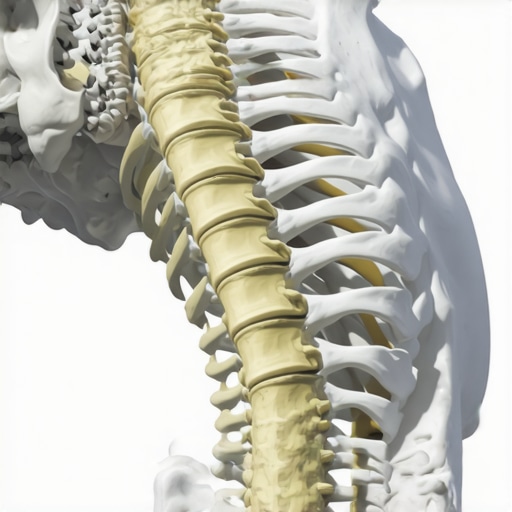
I still remember the exact Tuesday morning my living room rug became a crime scene of joints popping. I lay on my back, bent my knees, and pressed my hips upward into a standard glute bridge. Click. It wasn’t a painful pop, but it was loud enough to make my dog tilt her head in utter confusion. Every single repetition sounded like a tiny dry twig snapping right at my waistline. Back then, I panicked. I immediately assumed my spine was crumbling, so I did what most people do: I ignored the movement altogether and stopped doing my bridges. That was a massive mistake, and it only made my hips tighter and my posture worse over the next few months.
The Real Reason Your Lumbar Spine Sounds Like Bubble Wrap
When you lift your hips off the floor, you are asking your body to transition from hip flexion to hip extension. If you are anything like I was, you might spend most of your day sitting at a desk. This constant sitting locks your hip flexors into a shortened state. When you finally try to bridge, your tight hips refuse to open up fully. To make up for this restriction, your lower back arches excessively to get your hips high into the air. This sudden pelvic shift often causes a tendon to snap over a bony prominence, or it rapidly changes the pressure inside your facet joints, releasing tiny gas bubbles. Understanding the connection between hip tightness and lower back spasms helped me realize that a clicking back is usually a loud cry for better movement mechanics, not a death sentence for your joints. Today, we are going to get to the bottom of why your spine is making these noises and how you can fix your form to enjoy quiet, stable movement.
Is a clicking back actually a sign of permanent damage?
It is easy to let your mind wander to the worst-case scenario when your skeleton starts making music. However, joint cavitation—the scientific term for that popping sound—is incredibly common. According to a landmark study on joint sounds published by the National Institutes of Health, joint cracking without accompanying pain is generally benign and simply relates to rapid pressure changes within the synovial fluid. Early on in my fitness journey, I mistakenly believed that I needed to manually pop my back even more to ‘align’ myself. In reality, forcing these noises only created temporary hypermobility in my lower back while my actual problem areas—my stiff hips and locked-up mid-back—remained completely frozen. To fix this, you have to address the root issue by focusing on targeted mobility hacks for daily life. Have you ever felt or heard that frustrating click during your home workouts? Tell me about your experience in the comments below! If we want to quiet down that click, we first need to look at how we prep our body before we even lift our hips off the floor.
My own turning point came on a Thursday afternoon. I had committed to doing twenty glute bridges every day, but the persistent clicking in my lower back was driving me mad. Out of sheer frustration, I stopped trying to force my hips to the ceiling. Instead, I focused on locking my ribs down and keeping my pelvis level. Suddenly, the clicking vanished. I realized that my body was simply starved for proper alignment, and I had been forcing a range of motion my tight hips couldn’t support. To quiet the noise, you must master the mechanics of pelvic control before your feet ever leave the floor.
Rebuild Your Bridge from the Ground Up
Fixing a clicking spine isn’t about pushing through the noise; it is about changing how your pelvis interacts with your lower back. Think of your pelvis as a bucket filled to the brim with water. When you sit all day, your tight hip flexors pull the front of the bucket down, spilling water forward. If you try to bridge from this position, you compress the facet joints in your lower back, causing that classic popping sound. To stop the spill, you need a systematic approach to stabilize your spine and open your hips.
Tuck Your Tailbone Before You Lift
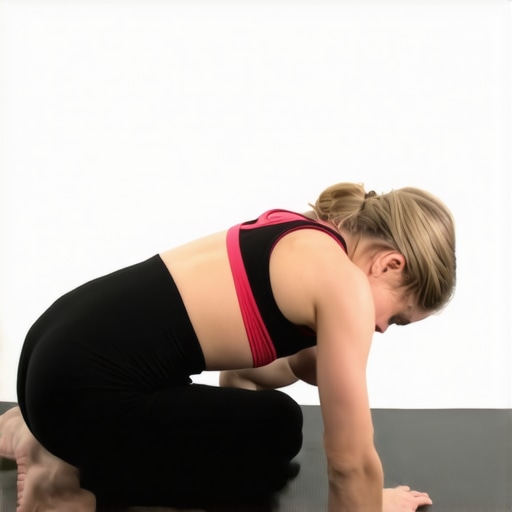
The absolute first step is to establish a posterior pelvic tilt. Lie on your back with your knees bent and feet flat on the floor. Before you even think about lifting your hips, press your lower back firmly into the floor. Imagine trying to squash a grape hidden directly under your waistband. This simple action rotates your pelvis backward, instantly taking the pressure off your lumbar spine and engaging your lower abdominal muscles. If you struggle to feel this adjustment, learning how to spot a pelvic tilt in the mirror can give you the visual feedback you need to master this movement.
Drive Through Your Heels, Not Your Toes
Once your tailbone is tucked, push your weight directly down through your heels. Pushing through your toes activates your quadriceps and hip flexors, which pulls your pelvis right back into that arched, clicking position. By driving through your heels, you force your glutes and hamstrings to do the heavy lifting. This mechanically opens up the front of your hips without forcing your lower back to arch. It is a simple shift in focus, but it acts as a natural brake against spinal hyperextension.
Limit Your Range of Motion
Many of us are guilty of thinking that higher is always better. In a glute bridge, trying to get your hips as high as possible usually results in a dramatic arch in your lower back. Instead, only rise to a height where your knees, hips, and shoulders form a straight line. If you feel your back start to arch or hear a click, you have gone too far. Keeping a shorter, controlled range of motion is one of the most effective mobility hacks for daily life because it teaches your muscles to stabilize your joints within a safe, pain-free boundary. Over time, your hip mobility will naturally improve, allowing you to bridge higher without the clicking.
Wake Up Your Glutes First
If your glutes are asleep from a long day of sitting, your lower back muscles will try to take over the work of the bridge. Before starting your bridges, spend two minutes doing a simple glute activation drill. Lie on your stomach and squeeze one butt cheek as hard as you can for five seconds, then release. Doing this simple mind-muscle warm-up ensures that your glutes are actually awake and ready to support your pelvis, which keeps your lumbar spine perfectly quiet and protected.
The Self-Manipulation Trap That Ruins Your Progress
When most people start noticing joint sounds during home workouts, they immediately fall into a classic self-treatment trap: they assume their body is a collection of static puzzle pieces that just need to be jammed back into place. Everyone says you need to stretch more or manually pop your joints to feel better, but in my experience, chasing that temporary release is actually holding you back. If you are constantly twisting your spine to get that satisfying pop, you are likely creating hypermobility in the segments of your lower back that actually need stability. I used to do this daily until I realized I was just treating a symptom while ignoring my frozen hips.
Why does stretching your tight hamstrings make your clicking worse?
This is the ultimate hidden nuance of lower back and hip mechanics. Many people assume that their lower back clicks because their hamstrings are incredibly tight, so they spend hours performing classic forward folds. However, as noted in a study on hamstring length and pelvic biomechanics published in the Journal of Physical Therapy Science, stretching muscles that are already chronically over-lengthened due to a tilted pelvis actually destabilizes your pelvis further. Your hamstrings are often feeling tight because they are desperately trying to hold your pelvis back from tipping forward. When you stretch them, you lose that passive tension, causing your pelvis to tilt even more during movements like glute bridges and leading to louder, more frequent clicks in your lumbar spine. Instead of mindless stretching, focusing on targeted targeted mobility exercises that strengthen the deep core and glutes is what actually stabilizes the joint.
The Dynamic Illusion of Posture and Mobility
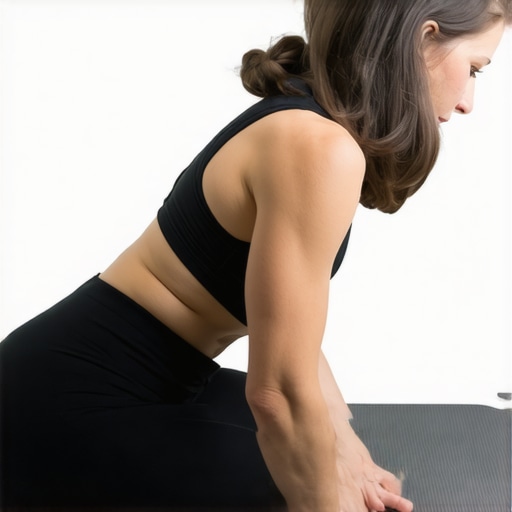
Another common myth is that good posture is a rigid, military-style position you must force yourself into throughout the day. This static mindset is why many people fail to see results. Real posture is dynamic; it is your body’s ability to transition smoothly through various ranges of motion without compensation. When you understand the link between mobility and posture, you realize that a clicking spine is simply your nervous system screaming that it does not feel safe in the range of motion you are forcing. If you try to build strength on top of a dysfunctional movement pattern, your body will always find the path of least resistance—which, in the case of the glute bridge, means shearing forces at your lower lumbar joints.
The Right Way to Think About Adjustments and Alignment
If you have been struggling to quiet your noisy joints on your own, it might be time to look at how professional care can accelerate your recovery. While daily mobility hacks are essential, they work best when your joints are actually moving along their proper axes. Learning how chiropractic adjustments enhance posture and mobility can give you a clean slate. A precise adjustment restores segment-by-segment movement in your spine and hips, making it infinitely easier to perform your pelvic tilts and glute bridges without compensation. Have you ever fallen into the trap of constantly cracking your own back for temporary relief? Let me know in the comments below!
My obsession with silencing the pops in my lumbar spine eventually led me to realization that passive resting is the enemy of progress. If you want to maintain a healthy, quiet spine, you have to actively build structural resilience. Once I stopped trying to force the alignment on my own, I turned my attention to daily self-care tools and a highly structured, long-term maintenance routine. I quickly discovered that the right approach isn’t about using every fancy gadget on the market, but rather using specific, targeted tools that actually respect your body’s biomechanical laws.
How do I maintain my spine alignment and mobility over time?
Consistency beats intensity every single time when it comes to spinal health. To preserve the progress you make from daily workouts, you must establish a non-negotiable daily check-in. For me, this means taking exactly three minutes every single afternoon to perform the simple hip reset for people who sit all day. This movement acts as an immediate circuit breaker for the tight hip flexors that pull your pelvis out of alignment during long desk sessions. Over time, as your body adapts, you will find that your pelvis naturally stays in a neutral position, meaning those sudden joint clicks during glute bridges will become a distant memory.
When it comes to physical tools, I am incredibly picky. I completely avoid generic back stretchers or aggressive rolling devices that force the lower back into hyperextension. Instead, my absolute go-to tool is a firm, double-lacrosse ball (often called a peanut roller). I place this tool specifically under my thoracic spine—the middle part of the back—to release tension without placing any direct, shearing pressure on my sensitive lumbar joints. I also heavily rely on a simple resistance loop band placed just above my knees during my glute bridges. According to Dr. Stuart McGill, a world-renowned expert on spine biomechanics, introducing lateral resistance against a band forces the deep hip external rotators to fire, which automatically stabilizes the pelvis and prevents the lower back from taking on excessive load. This simple, cheap band completely changed how my hips felt during training.
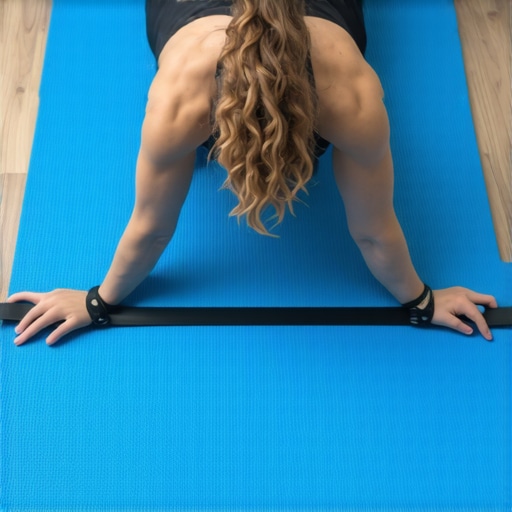
Looking ahead, I predict that the future of posture and mobility will shift heavily away from static ergonomic chairs and move toward dynamic, movement-rich workspaces. We are already seeing a massive trend toward active sitting surfaces and wearable biofeedback sensors that gently remind us to adjust our pelvic tilt in real-time. But you don’t have to wait for futuristic tech to start feeling better. If you want to accelerate your journey to a pain-free, fully mobile body, combining these daily tools with professional care is the ultimate shortcut. Understanding how why chiropractic care is your secret weapon for better posture can give your joints the precise mobilization they need to respond to your daily home exercises. I challenge you to grab a simple resistance band for your very next workout and try performing ten slow, controlled glute bridges with your tailbone tucked. Feel the difference in your glutes, listen to the silence in your lower back, and let’s keep moving forward.
What No One Tells You About Spine Clicks and Self-Adjustments
When I first set out to silence my noisy hips, I fell headfirst into the self-cracking trap. I thought that if I could just twist my torso far enough to hear that loud pop, my joints would slide back into perfect alignment. It took years of trial, error, and biomechanical study to realize that manually forcing a joint to click only targets the segments that are already hypermobile. Your nervous system uses that loud click as a safety valve because the adjacent joints—your stiff hips and rigid mid-back—are completely locked down. Forcing the pop actually worsens joint instability over time. True structural correction doesn’t come from aggressive self-manipulation; it comes from training your nervous system to stabilize your pelvis during dynamic movement.
My Essential Spinal Health Toolkit
You do not need a room full of expensive gym equipment to restore healthy alignment. Over the years, I have narrowed my daily physical maintenance down to three highly specific, non-negotiable tools that protect my spine from daily wear and tear:
- A High-Density Peanut Roller: Placing this double-lacrosse ball specifically under my thoracic spine helps restore extension to my mid-back. This relieves the excessive mechanical strain on my lumbar spine and prevents that deep, burning discomfort. If you are struggling with a stiff upper body, understanding the 30-second fix for a stuck feeling in your middle back is an excellent starting point.
- A Loop Resistance Band: Placing a light band just above my knees during glute bridges forces my deep hip rotators to activate. This mechanical change naturally pulls my pelvis into a neutral alignment, instantly quieting the joint clicking in my lower back.
- The Daily Pelvic Reset: Taking three minutes every single afternoon to neutralize my hip flexors after hours of sitting has been a total game-changer. If you spend your workday glued to a desk, mastering the simple hip reset for people who sit all day will protect your joints from the structural consequences of prolonged sitting.
Step Into a Life of Quiet and Fluid Movement
A clicking lower back is not a life sentence, nor is it a sign that you must give up on your favorite home workouts. Your body is incredibly adaptable, and those annoying joint sounds are simply a loud request for better movement mechanics. By taking a few moments to tuck your tailbone, drive through your heels, and actively wake up your glutes, you can build a strong, quiet, and resilient spine. Real progress is built on consistent, mindful habits. If you want to take your physical alignment to the next level, learning how chiropractic adjustments enhance posture and mobility can give your joints the clean slate they need to respond beautifully to your daily exercise routine. Have you ever struggled with a clicking lower back during your glute bridges or core workouts? Let me know in the comments below!